

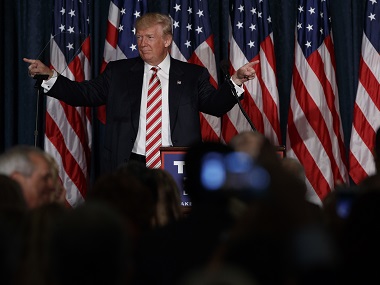
 "Donald Trump Inauguration as it happened: President tells Americans, 'Time for empty talk over'")
Reflecting on the peaceful transition in one of the oldest democracies of the world, the JCCIC has said the theme of Donald Trump’s inauguration is “Uniquely American”, which Recognises the symbolic importance of Friday’s event. “With each inauguration we embrace this uniquely American ceremony, seeing in this extraordinary ritual a reflection of the nation itself. In times of peace or war, of prosperity or crisis, inaugurations strengthen the national resolve to meet each new challenge,” the Joint Congressional Committee on Inaugural Ceremonies (JCCIC) said. “We may consider it routine, but the inaugural ceremony remains a uniquely American expression of our constitutional system. The peaceful transition between presidential administrations signals that we are united as a people behind an enduring republic,” it said reflecting on the theme of this year’s inauguration. In 1981, the inaugural ceremony struck President Ronald Reagan as being both commonplace and miraculous. “The orderly transfer of authority as called for in the Constitution routinely takes place, as it has for almost two centuries, and few of us stop to think how unique we really are,” Reagan had said his inaugural speech. [caption id=“attachment_3202012” align=“alignleft” width=“380”] President-elect Donald Trump. AP[/caption] “In the eyes of many in the world, this every-four-year ceremony we accept as normal is nothing less than a miracle,” he said. At the end of the 18th century, it was widely believed that Republican form of government was best suited to small, homogeneous societies of America. However, the United States rapidly grew in the 19th century—in geography and population—and our system of government demonstrated its remarkable ability not just to accommodate that diversity, but to draw strength from it, JCCIC said. In his second inaugural address in 1805, President Thomas Jefferson commented on the acquisition of the Louisiana Purchase. “The larger our association,” he insisted, “the less will it be shaken by local passions”. Jefferson’s faith in “association” across space would ultimately depend on knitting together the far-flung communities of the nation. President James Monroe, in his 1817 inaugural address, envisioned a network of roads and canals that would cultivate national unity. “By thus facilitating the intercourse between the states we shall shorten distances, and, by making each part more accessible to and dependent on the other, we shall bind the Union more closely together,” he had said. By the end of the 19th century, American towns and cities were linked by roads, canals, and railroads, followed by telegraph and telephone wires. Modern infrastructure expanded in the 20th century, in the form of national highways, and in the 21st century with Internet cables and wireless communications. Vast distances have been considerably reduced while knowledge, opportunity, and the shared ideals of purpose, ingenuity, and equality have been significantly expanded. “These greater connections have required bridging the gap between competing political and ideological visions, while protecting the political and civil rights of all Americans,” it said. “With each inauguration we embrace this uniquely American ceremony, seeing in this extraordinary ritual a reflection of the nation itself. In times of peace or war, of prosperity or crisis, inaugurations strengthen the national resolve to meet each new challenge,” the committee said. “With malice toward none, with charity for all,” President Abraham Lincoln proclaimed in his second inaugural address delivered during the waning days of the Civil War. “Let us strive on to finish the work we are in, to bind up the nation’s wounds,” he said. During the depths of the Great Depression, President Franklin Roosevelt declared his 1933 inauguration a “day of national consecration,” in which “we face the arduous days that lie before us in the warm courage of national unity”. President George H W Bush observed in 1989 that on inauguration day, “we remember that we are all part of a continuum, inescapably connected by the ties that bind.” “At the dawn of the 21st century,” as President William Clinton proclaimed in his 1997 address, Americans had to “shape the forces of the information age and the global society, to unleash the limitless power of all our people, and yes, to form a more perfect Union.” “On January 20, 2017, we gather at the US Capitol, the home of the legislature, along with the executive, represented by the President, and the judiciary, embodied by the Chief Justice of the United States who administers the oath. It is a meeting of the three branches of the federal government, before the people, to observe the simple yet momentous ritual of presidential oath taking,” JCCIC said. Trump Inauguration plan Timeline of Friday’s events as Donald Trump is inaugurated president of the United States (all times EST): Before the ceremony 8:30 a.m.: Donald and Melania Trump attend service at St John’s Church 9:40 a.m.: President Barack Obama and first lady Michelle Obama welcome the Trumps to the White House 9:45 a.m.: Obamas host a coffee and tea reception for the Trump family. 10:30 a.m.: Trumps, Obamas leave White House for US Capitol At the Capitol 11:16 a.m.: Sen. Roy Blunt, Inaugural Committee chairman, delivers opening remarks 11:21 a.m.: Timothy Michael Cardinal Dolan, Rev Dr Samuel Rodriguez and Pastor Paula White-Cain deliver invocations 11:30 a.m.: Senate Minority Leader Chuck Schumer delivers remarks 11:35 a.m.: Vice Presidential oath is administered by Associate Justice Clarence Thomas 11:47 a.m.: Presidential oath is administered by Chief Justice John Roberts 11:51 a.m.: President Donald Trump delivers inaugural address 12:12 p.m.: Rabbi Marvin Hier, Rev. Franklin Graham and Bishop Wayne T. Jackson deliver benedictions 12:18 p.m.: Jackie Evancho performs the National Anthem After the ceremony 12:30 pm.: Obama departs by helicopter from East Front 12:54 pm.: President’s Room signing ceremony 1:08 pm.: Luncheon 2:35 pm.: Review of the troops 3 pm.: Parade from the Capitol to the White House 7 pm.: Inaugural balls get underway 10 promises Donald Trump will immediately take But as Trump becomes president on Friday, it remains hazy as to which actions he will immediately take. The list included several items likely to fire up Republican voters but backed up by scant policy. It includes “begin removing the more than two million criminal illegal immigrants” and “cancel every unconstitutional executive action by President Obama.” Trump has already backed down from one pledge to label China a currency manipulator, recently saying he would first like to speak with the Chinese leadership. A look at 10 of the key promises Trump made for his first day as president:
- Introduce a constitutional amendment for congressional term limits.
- Freeze hiring for the federal government to reduce payrolls, although the military, public safety and public health agencies would be exempt.
- Ban White House and congressional officials from becoming lobbyists for five years after they leave the government.
- Announce plans to renegotiate the North American Free Trade Agreement with Canada and Mexico or withdraw from the deal.
- Formally withdraw from the Trans-Pacific Partnership.
- Lift restrictions on mining coal and drilling for oil and natural gas.
- Remove any Obama-era roadblocks to energy projects such as the Keystone XL pipeline.
- Cancel US payments to U.N. climate change programs and redirect the money to US water and environmental infrastructure.
- Stop all federal funding to “sanctuary cities,” places where local officials don’t arrest or detain immigrants living in the country illegally for federal authorities.
- Suspend immigration from regions associated with terrorism where vetting is difficult.
With inputs from agencies

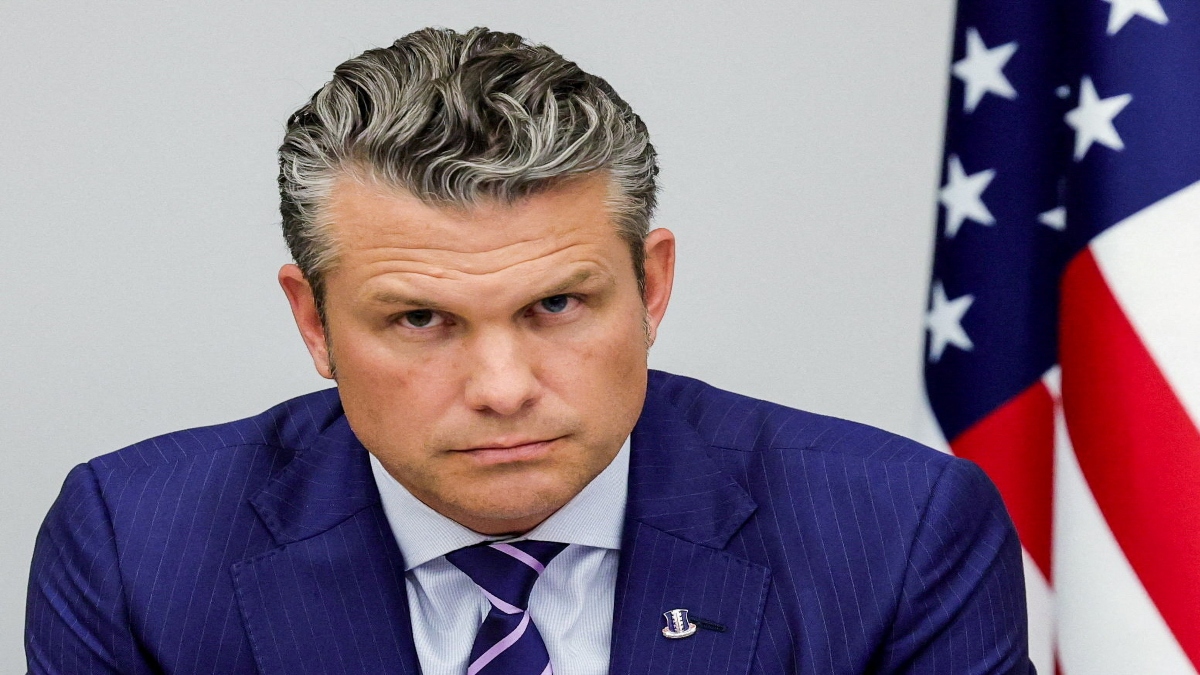 "US ready to ‘impose costs’ on Russia if war in Ukraine drags on, says Hegseth")
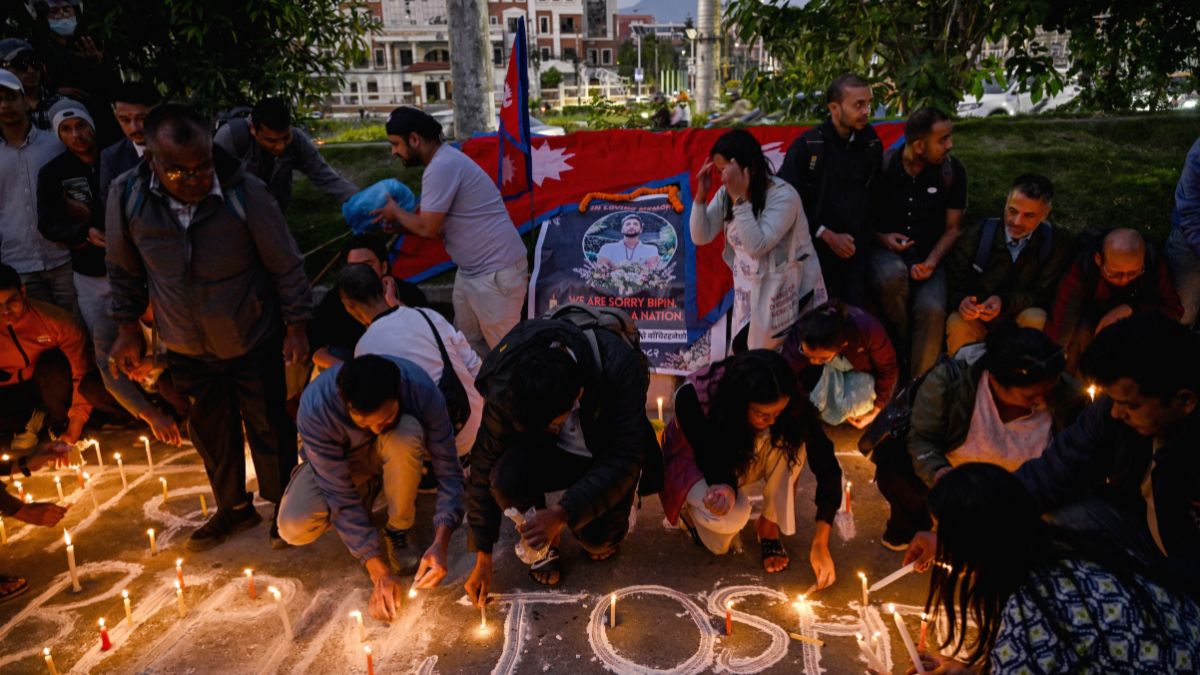 "US tells Hamas to stop violence against Gaza civilians and disarm 'without delay'")
 "China seizes 60,000 maps mislabelling Taiwan, omitting South China Sea islands")
 "Syria’s Sharaa pledges to honor Russia ties, seeks economic and military support in Kremlin visit")
 "US ready to ‘impose costs’ on Russia if war in Ukraine drags on, says Hegseth")
 "US tells Hamas to stop violence against Gaza civilians and disarm 'without delay'")
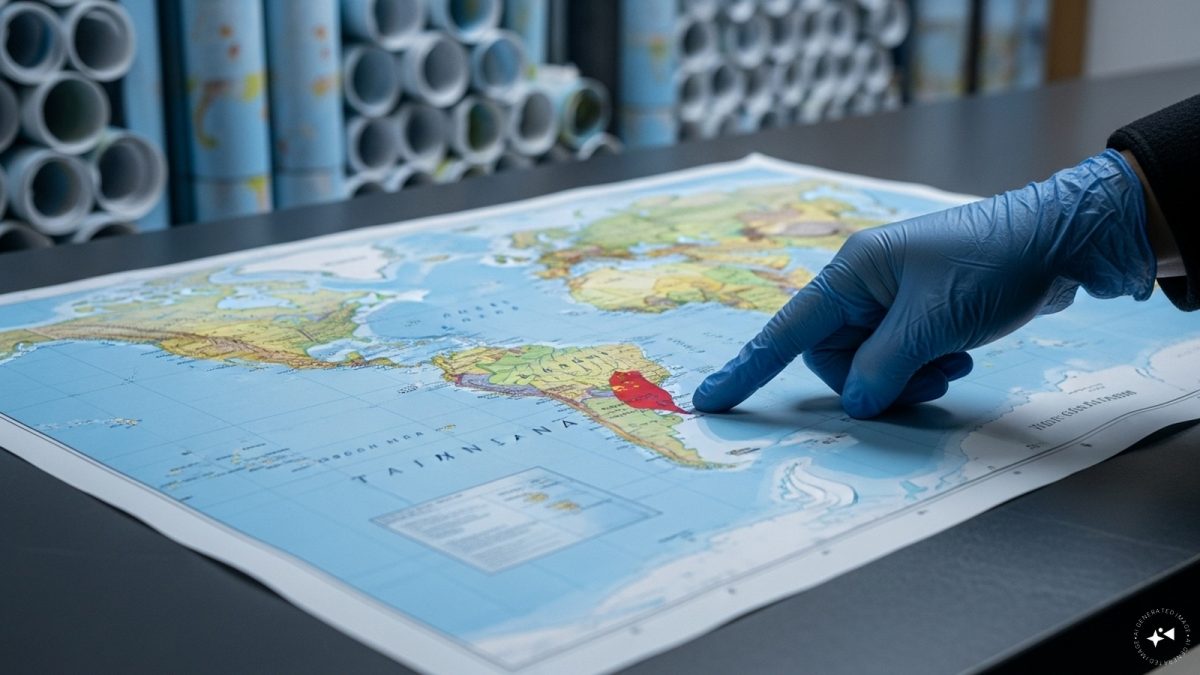 "China seizes 60,000 maps mislabelling Taiwan, omitting South China Sea islands")
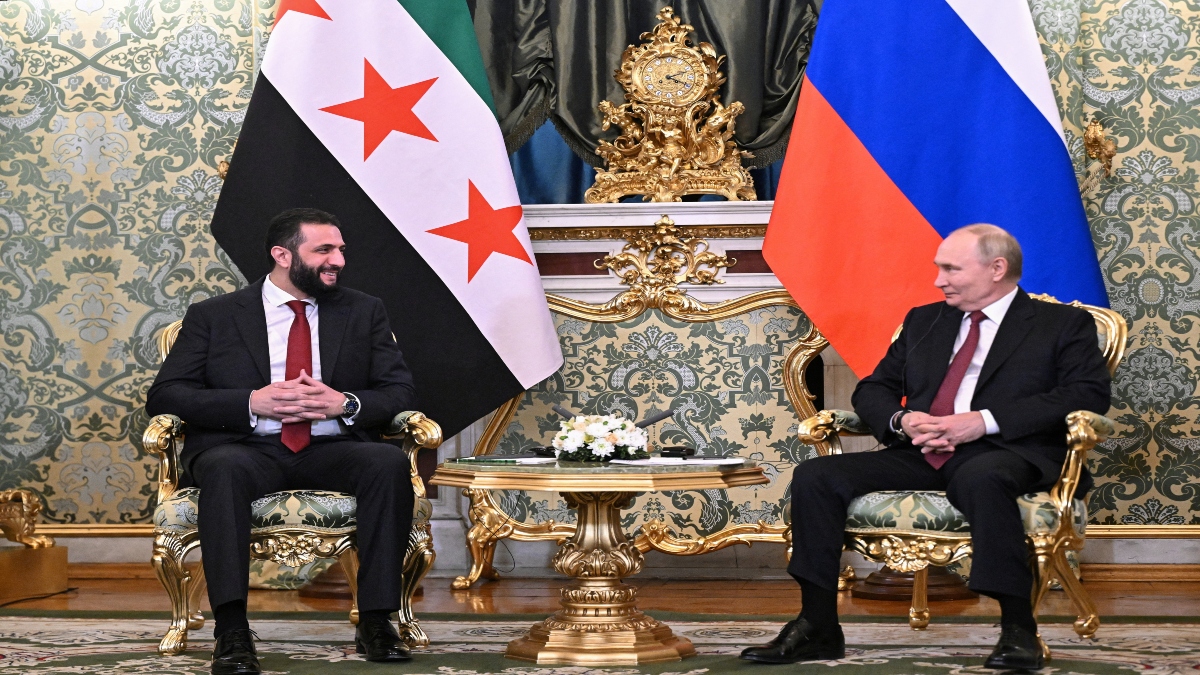 "Syria’s Sharaa pledges to honor Russia ties, seeks economic and military support in Kremlin visit")



