 "End of Nato? Why are European allies refusing to back Trump’s Iran war?")
The widening divide between the United States and its European allies has reached a defining juncture amid the ongoing Iran war, with Nato cohesion facing one of its most serious tests in decades.
As US President Donald Trump pushes for greater allied involvement, Washington has relied heavily on European infrastructure — airspace corridors, military bases, and logistical hubs — but many Nato members have stopped short of offering the level of cooperation sought by the White House.
The conflict, which began on February 28 following coordinated strikes by the United States and Israel on Iranian targets, has not only escalated tensions in West Asia but also exposed deep fractures within the transatlantic alliance.
How are European nations restricting US military access?
A defining feature of the current standoff has been the series of restrictions imposed by European countries on US military operations linked to the Iran war.
Spain has emerged as one of the most prominent dissenters. The government not only shut its airspace to US aircraft involved in the Iran conflict but also prevented American forces from using bases on Spanish soil. This restriction represents one of the strongest responses by any Nato member.
Italy has also taken a restrictive approach. US aircraft seeking to land at bases in Sicily, including the Sigonella installation, were denied permission after Italian authorities determined that their missions were directly connected to the war effort.
According to a senior official, this decision was based on the nature of the flight plans rather than a broader shift in bilateral relations, reported Bloomberg.
Another account indicated that the request for combat use of Italian facilities came after the planes were already airborne, leaving insufficient time for parliamentary consultation, a procedural requirement in Rome.
France, while less overtly confrontational, has drawn a clear line between logistical assistance and combat involvement. French authorities have allowed the use of their bases for support functions such as refuelling but have refused to permit operations linked to offensive strikes.
Portugal has similarly pointed out procedural constraints. Access to the Lajes Air Base in the Azores has been granted only within the framework of existing bilateral and Nato agreements, and strictly for logistical purposes such as transit and refuelling.
Portuguese Foreign Minister Paulo Rangel has underlined that any authorisation is limited to defensive and proportionate actions against military targets, adding that the country “will not be in this conflict” and confirming that no strike missions have originated from its territory.
Poland, another key Nato member, has resisted US suggestions to redeploy its Patriot air defence systems to West Asia. Warsaw has made it clear that it has no intention of relocating these assets, which are considered vital for its own national security, particularly given ongoing tensions in Eastern Europe.
Despite this broader trend, some countries have continued to provide limited support. Romania, for instance, has allowed the use of its bases for logistical purposes.
Romanian Prime Minister Ilie Bolojan stressed the importance of maintaining transatlantic unity, warning that a political split between Europe and the United States would have far-reaching consequences for the Western alliance.
Germany has also maintained a nuanced position. Chancellor Friedrich Merz has not blocked US access to the Ramstein air base, one of Washington’s most important military hubs in Europe, citing a post-World War II agreement that guarantees its use as long as operations comply with national and international law.
However, Merz has simultaneously voiced strong criticism of the US approach, highlighting the tension between legal obligations and political disagreement.
How has Trump & Co. responded to Nato’s reluctance?
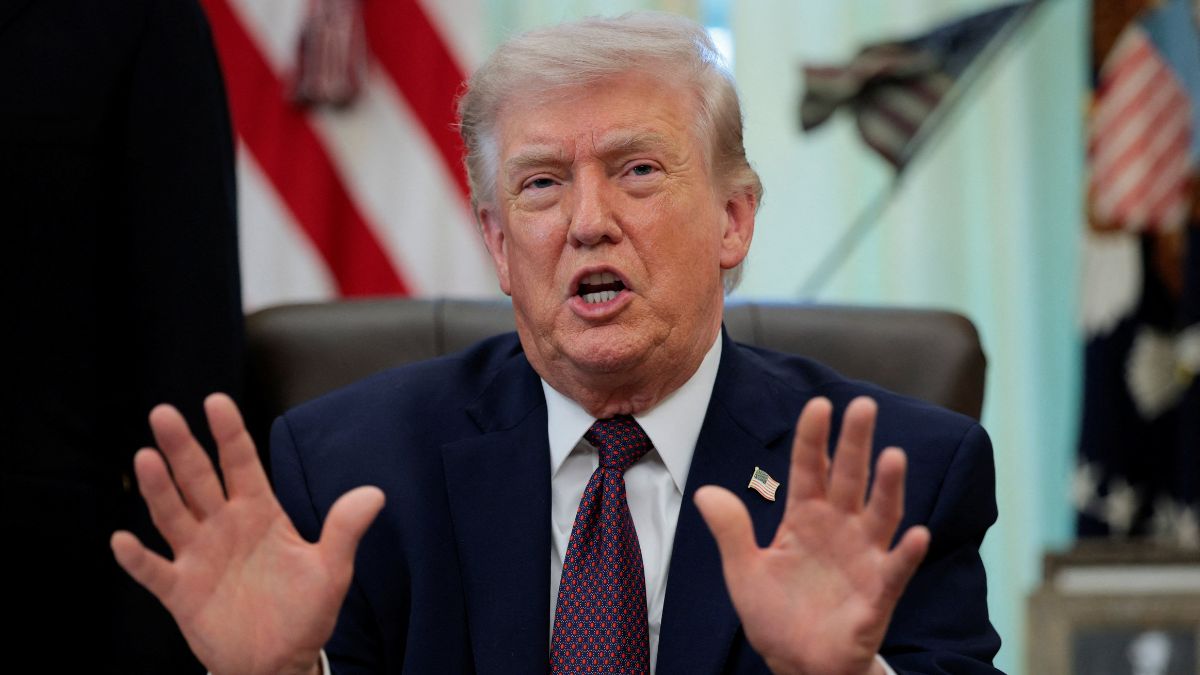
Trump has publicly criticised several Nato allies, accusing them of failing to support the United States at a critical moment.
On social media, Trump expressed dissatisfaction with France’s refusal to allow certain military flights, warning that “The U.S.A. will REMEMBER.” His comments reflect a broader sentiment within the administration that European partners are not meeting their obligations as allies.
In a more expansive post, Trump criticised multiple countries, particularly those affected by disruptions in energy supplies due to the closure of the Strait of Hormuz.
He wrote, “All of those countries that can’t get jet fuel because of the Strait of Hormuz, like the United Kingdom, which refused to get involved in the decapitation of Iran, I have a suggestion for you: Number 1, buy from the U.S., we have plenty,” Trump posted on Truth Social.
“And Number 2, build up some delayed courage, go to the Strait, and just TAKE IT. You’ll have to start learning how to fight for yourself, the U.S.A. won’t be there to help you anymore, just like you weren’t there for us. Iran has been, essentially, decimated. The hard part is done. Go get your own oil! President DJT”
He also targeted France directly, stating, “The Country of France wouldn’t let planes headed to Israel, loaded up with military supplies, fly over French territory. France has been VERY UNHELPFUL,” though French officials maintain their cooperation has been consistent with established policies.
US Secretary of State Marco Rubio has reinforced the administration’s position. He described the response of Nato allies as disappointing and suggested that the United States may need to reconsider the nature of the alliance after the conflict concludes.
Rubio framed the issue in terms of burden-sharing, questioning whether Nato continues to serve American interests if allies are unwilling to provide support during US-led operations. He said, “Ultimately, that’s a decision for the president to make, and he’ll have to make it.”
He added, “But I do think, unfortunately, we are going to have to reexamine whether or not this alliance that has served this country well for a while is still serving that purpose, or has it now become a one-way street where America is simply in a position to defend Europe, but when we need the help of our allies, they’re going to deny us basing rights, and they’re going to deny us overflight.”
At the same time, Rubio indicated that the conflict might be approaching a conclusion, stating, “We can see the finish line. It’s not today, it’s not tomorrow, but it is coming.”
He also noted ongoing communication between Washington and Tehran, saying, “There are messages being exchanged, there are talks going on. There is the potential for direct meeting at some point.”
What factors are shaping Europe’s stance?
One of the most significant factors is the question of legality. Several European leaders view the US-Israeli strikes as lacking a clear mandate under international law.
Spanish Prime Minister Pedro Sánchez has been particularly vocal, describing the war as “illegal” and framing it as a violation of established norms. This perspective has influenced policy decisions across multiple countries, leading to what has been described as a “base denial” approach.
Domestic politics also play a crucial role. Public opinion in many European countries is sceptical of military involvement in the conflict, creating a disconnect between governments and their electorates.
Analysts have pointed to growing tension between public sentiment and political decision-making, with leaders seeking to avoid backlash while maintaining alliance relationships.
The closure of the Strait of Hormuz, triggered by Iranian threats following the initial attacks, has disrupted a critical artery for global energy supplies. As a result, oil and gas prices have surged, exacerbating inflationary pressures that were already affecting European economies.
This economic strain has reinforced the reluctance to become more deeply involved in the conflict. Leaders are acutely aware that further escalation could have significant domestic consequences, particularly at a time when many countries are still grappling with the aftermath of earlier economic shocks.
At the same time, European governments have emphasised that any involvement to date has been strictly defensive.
How is Nato’s refusal affecting US ops?
Operationally, the restrictions imposed by European countries have created significant challenges for the United States.
The closure of large sections of southern European airspace has forced US aircraft to take longer routes to reach West Asia, increasing fuel consumption and placing additional strain on crews.
These logistical difficulties have been compounded by incidents such as the crash of a US KC-135 tanker in Iraq, which resulted in the deaths of all six crew members on board. The incident highlighted the risks associated with extended operations and the importance of reliable support infrastructure.
Some countries, such as the United Kingdom, initially resisted US requests for access to military bases before later allowing limited use for defensive purposes. This shift reflects the delicate balancing act faced by governments seeking to navigate competing pressures.
At the same time, there have been efforts to find common ground.
European nations have coalesced around proposals to ensure freedom of navigation in the Strait of Hormuz once active combat operations conclude, indicating a willingness to contribute to stability without directly participating in the war.
Is this the end of Nato?
The current tensions cannot be understood in isolation from the broader evolution of US foreign policy under Trump’s second term.
The administration’s 2025 National Security Strategy has introduced a new framework — often referred to as the “Trump Corollary” — which seeks to redefine America’s role in global security.
Under this approach, the United States aims to reduce its commitments in certain regions and encourage allies to take on greater responsibility for their own defence.
This shift has already had tangible effects. The decision to end military aid to Ukraine earlier in 2025 placed increased pressure on European countries to support Kyiv independently.
At the same time, Washington has prioritised strategic competition with China and efforts to counter Iran, treating European security concerns as a secondary issue.
These changes have been accompanied by a series of disputes. The renewed US interest in Greenland, a territory of Denmark, has created tensions within Nato.
The withdrawal from numerous international organisations and agreements has further strained relations, as has the increasingly confrontational approach to trade and regulatory issues involving the European Union.
In response, there has been growing discussion within Europe about the need for greater strategic autonomy. Some policymakers have advocated for a more independent security framework that would allow European countries to act without relying on US leadership.
This concept of a “Europeanised” Nato reflects a broader reassessment of the transatlantic relationship, driven by concerns about unpredictability and diverging priorities.
As the Iran war enters its fifth week, the future of Nato and the US-Europe partnership remains uncertain.
With inputs from agencies


 "Iran Israel War News Live: Israel carries out 'wide-scale wave of strikes' on Tehran, military said")
 "Iran confirms ‘direct’ messages with Trump aide Steve Witkoff, but says no negotiations underway")
 "Sensex surges over 1,700 points, Nifty tops 22,800 as global risk sentiment rebounds")
 "Why China has joined Pakistan in mediating peace talks in Iran war")
 "Iran Israel War News Live: Israel carries out 'wide-scale wave of strikes' on Tehran, military said")
 "Iran confirms ‘direct’ messages with Trump aide Steve Witkoff, but says no negotiations underway")
 "Sensex surges over 1,700 points, Nifty tops 22,800 as global risk sentiment rebounds")
 "Why China has joined Pakistan in mediating peace talks in Iran war")