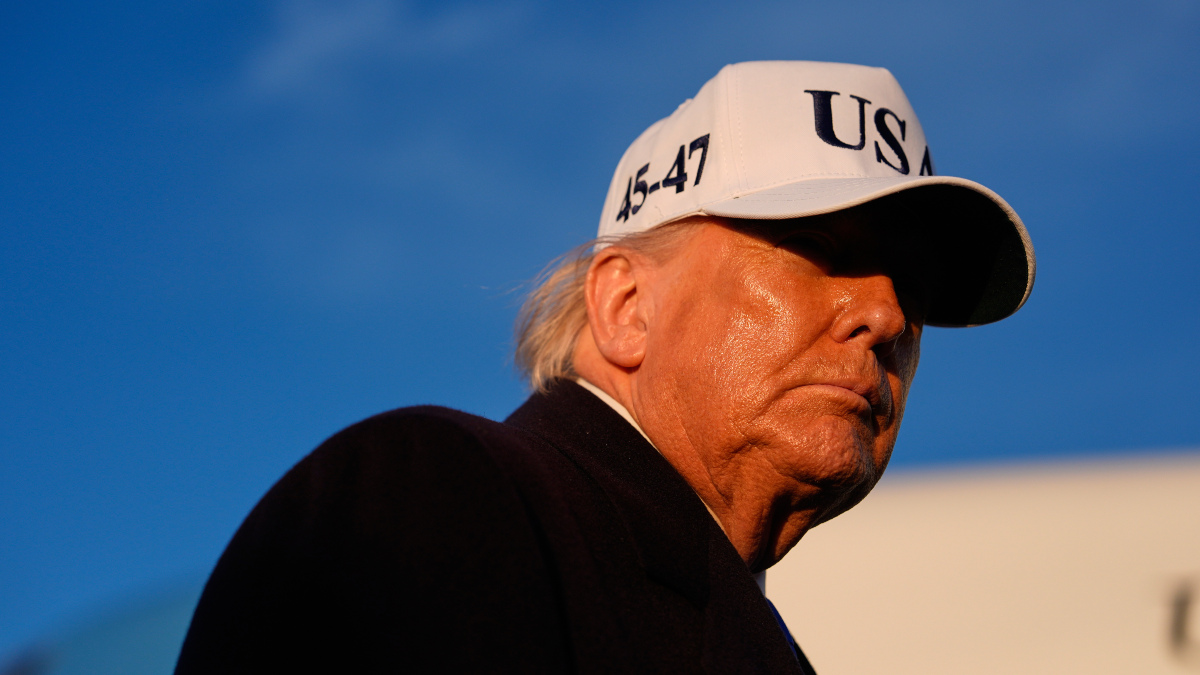
 "Trump has hinted 12 times that Iran war will end. So, why hasn’t it?")
US President Donald Trump keeps declaring that the Iran war has ended. However, Iran refuses to cooperate.
In fact, according to experts, Trump has suggested that the conflict is at an end or has ended on no less than a dozen occasions. Meanwhile, the United States is now in its fifth week of war with Iran, which remains defiant and continues to close off the Strait of Hormuz.
Let’s take a closer look at how Trump keeps saying the war will end, why it hasn’t yet, and what it will take for the war to end.
Trump’s repeated proclamations
According to a piece in Axios, T rump keeps constantly pushing the narrative that the end of the war is at hand and that Iran has been completely destroyed. Trump on Monday took to social media to threaten to “obliterate” Iran’s energy and water infrastructure if no peace deal is made.
“If the Hormuz Strait is not immediately ‘Open for Business’, we will conclude our lovely ‘stay’ in Iran” by attacking those plants," he said.
Trump, at a March 26 cabinet meeting, claimed that Iran was “defeated, they can’t make a comeback." Trump on March 24 claimed that the war had ended and that regime change was imminent in Iran. “We’ve won this war. This war has been won,” he told reporters.
Trump on 23 March also indicated that a peace deal was in the offing, claiming that the US and Iran had “very good and productive conversations”. He warned that if no peace deal was made, then “we’ll just keep bombing our little hearts out.”
Trump on March 13 told _Fox News_ the war would end when “I feel it in my bones.” However, he added he didn’t “think it’s going to be long when it’s over.”
Trump on March 12 said the war is practically over. “They are pretty much at the end of the line. It doesn’t mean we are going to end it immediately — it is only a question of when,” Trump said.
Trump on March 11 told Axios the war with Iran will end “soon” because there is “practically nothing left to target.” He added that it will finish “any time I want it to end.”
Trump, on the same day, told an audience, “You never like to say too early you won. We won. In the first hour it was over.” “We don’t want to leave early, do we? We gotta finish the job, right?” Trump added.
On March 9, Trump, during a speech at the Republican Issues Conference, said that the US had already prevailed. “We’ve already won in many ways, but we haven’t won enough,” Trump said. “We go forward more determined than ever to achieve ultimate victory that will end this long-running danger once and for all.”
Trump the same day proclaimed that the Iran war will be over "very soon" and that Iran is “all gone. We could call it a tremendous success right now.”
Trump on March 2, during a press conference bestowing three US soldiers with the Medal of Honor, said, “We will easily prevail. … Whatever it takes.”
Again on March 2, Trump told _ABC News_, “Nobody else could have done this but me, and you know that.”
Why the war hasn’t ended
This is simple: Because Iran hasn’t been decisively defeated, nor has it agreed to any peace deal. Tehran continues to project strength through its missile capabilities, regional proxies, and, most importantly, its ability to disrupt the Strait of Hormuz, which is a vital artery for global oil.
Trump’s statements, while forceful, lack the backing of a formal ceasefire, surrender, or regime change — any of which would actually end the wars
What’s also prolonging the conflict is the mismatch between rhetoric and strategy. Trump has alternated between declaring victory and threatening further escalation, even warning of strikes on Iran’s infrastructure if demands aren’t met. This inconsistency signals that the US itself has not fully settled on a clear endgame: regime change, deterrence, or a negotiated rollback of Iran’s capabilities.
Trump is likely playing to global markets, keep the price of oil down, and try to convince the American public that all is well in the run-up to the midterms. Without alignment between military action and political objectives, declarations of victory remain premature.
Meanwhile, Iran’s leadership remains intact and defiant, showing no indication of capitulating under pressure. The new leadership in Tehran is far more radical and militaristic than the earlier regime.
What will it take
For the war to genuinely end, one of two things must happen: either a negotiated settlement that addresses core issues such as sanctions, nuclear limits, and maritime security, or a decisive shift on the ground that forces Iran to concede.
However, experts think putting ground forces in Iran, a vast country with a population of 93 million, could turn into a disaster for the United States. They warn that trying to take Kharg Island could be no less than a suicide mission.
The former would likely require reopening the Strait of Hormuz, de-escalation from both sides, and clear, mutually accepted terms. Until then, the conflict remains ongoing and far from the “finished” war Trump has repeatedly described.
With inputs from agencies
FAQs
1) Why does Donald Trump keep saying the Iran war is over?
Trump appears to be projecting confidence to influence global markets and domestic political perception.
2) Why hasn’t the Iran war actually ended?
The war hasn’t ended because Iran has neither surrendered nor agreed to peace terms, and continues to retain strategic leverage, especially through the Strait of Hormuz.
3) What could bring the Iran war to an end?
A negotiated deal addressing sanctions, nuclear issues, and maritime security, or a decisive military shift forcing Iran to concede, would be required to formally end the conflict.
With inputs from agencies


 "Iran War Live Updates: Italy denies US aircraft base access after Spain shuts airspace")
 "Inside Isfahan, the city home to Iran’s nuclear facilities, hit by US bunker busters")
 "Masood Azhar’s brother Tahir Anwar dies in Pakistan under mysterious circumstances, says report")
 "Another embarrassment for Pakistan? Why Islamabad may flop in its role as mediator between Iran and US")
 "Iran War Live Updates: Italy denies US aircraft base access after Spain shuts airspace")
 "Inside Isfahan, the city home to Iran’s nuclear facilities, hit by US bunker busters")
 "Masood Azhar’s brother Tahir Anwar dies in Pakistan under mysterious circumstances, says report")
 "Another embarrassment for Pakistan? Why Islamabad may flop in its role as mediator between Iran and US")