 "Iranian regime, explained: Decoding the Islamic Republic’s power structure as war drags on")
Is the United States getting ready to leave Israel?
US President Donald Trump has indicated that Washington could halt its attacks on Iran in a matter of weeks, even with the lack of a deal with Tehran. Meanwhile, Israel’s Benjamin Netanyahu has vowed to ‘crush Iran’s terror regime’.
This came after Iranian President Masoud Pezeshkian said his country would be interested in ending the war if the United States offered ‘security guarantees’.
But what do we know about the power structure in the Iranian regime?
Let’s take a closer look.
A brief look at the Iranian system
Iran is an Islamic theocracy.As per CFR.org, the doctrine governing Iran was developed by Supreme Leader Ruhollah Khomeini, who took over after the Islamic Revolution in 1979. Known as guardianship of the jurist, Khomeini wanted to make sure religious scholars govern the system and keep it in line with Islamic law. This was done via a constitutional referendum in the aftermath of the 1979 Islamic Revolution.
The Supreme Leader
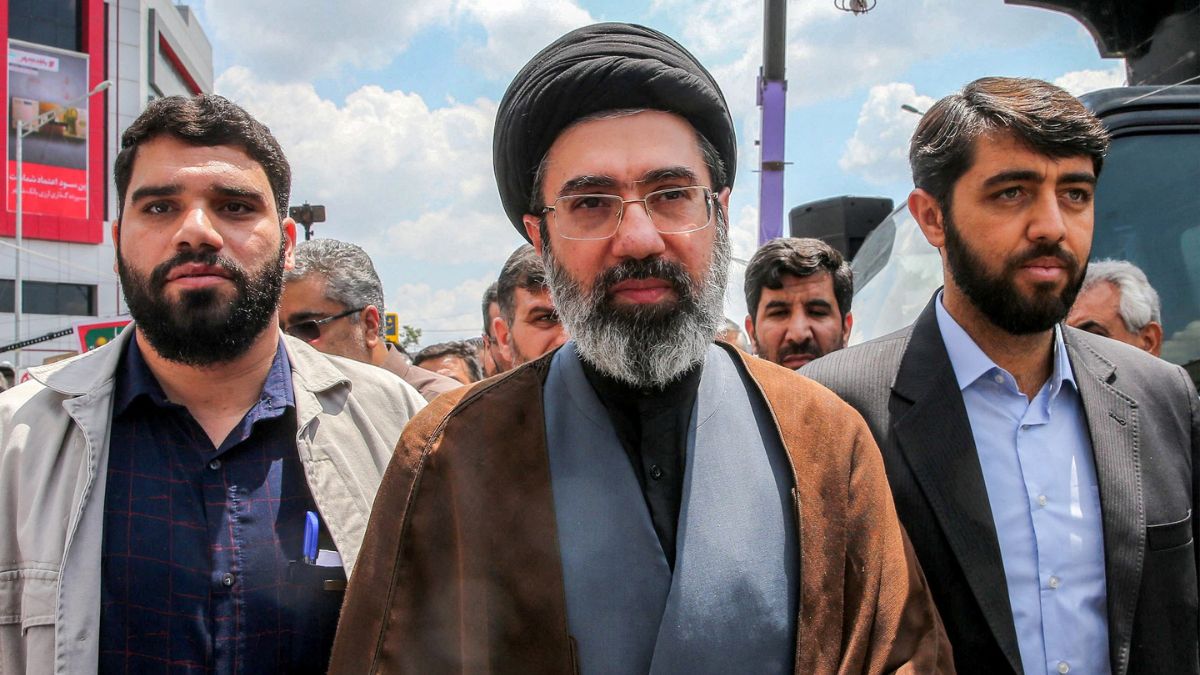
Atop it all sits the country’s Supreme Leader Mojtaba Khamenei, who succeeded his father Ali Khamenei, who himself took over from Khomeini. The Supreme Leader has both ideological and practical control over all aspects of the Iranian state.
Under Iran’s Constitution, the Supreme Leader handles “the general policies of the Islamic Republic of Iran”. This means he is in charge of both Iran’s domestic and foreign policy. The Supreme Leader is also commander-in-chief of Iran’s armed forces and has the sole ability to declare war or peace. He also has power over the country’s intelligence and security apparatus.
The Supreme Leader can also appoint and dismiss members of the judiciary, the state radio and television networks, and the supreme commander of the powerful Islamic Revolutionary Guard Corps (IRGC). The Supreme Leader also appoints half of the twelve members of the Council of Guardians, the body that oversees the activities of Parliament and decides which candidates can contest public office.
The President of Iran
The President of Iran is head of government and the second-highest-ranking official after the Ayatollah. However, the president’s powers have been limited under the Constitution. The president can serve two four-year terms at most. The president executes the laws, governs the country, and carries out diplomacy according to the Supreme Leader’s wishes.
The president nominates members of the cabinet, which must be confirmed by Parliament. They also set the budget, which is passed via the normal legislative process. No woman has ever served as president of Iran.
Supreme National Council
The Supreme National Security Council is tasked with “preserving the Islamic Revolution, territorial integrity, and national sovereignty” under Article 176 of Iran’s Constitution.
It comprises the President of Iran; Speaker of Parliament; the head of the judiciary; the chief of the combined general staff of the armed forces; the ministers of foreign affairs, the interior, and intelligence; and the commanders of the Islamic Revolutionary Guard Corps and the regular military, among others.
It is important to note that the President of Iran only nominally heads the National Security Council. He is tasked with carrying out the orders of the Supreme Leader.
Iran’s Parliament
Unlike India and the US, which have bicameral legislatures – an upper House and a lower House – the Iranian Parliament is a unicameral legislative body.
It comprises 290 members who serve four-year terms. Like other parliaments, the body drafts legislation, ratifies international treaties, and approves the country’s budget. However, unlike India and the US, the body’s powers are nominal. This is because of Iran’s Guardian Council.
Council of Guardians
The Council of Guardians is a powerful oversight body. It analyses all laws passed by Parliament to determine whether they adhere to Sharia law. Half of the members of the Council of Guardians are appointed directly by the Supreme Leader. They have annulled around 40 percent of the laws passed by Iran’s Parliament.
Judiciary
Iran’s judiciary is also controlled by the Supreme Leader, who appoints its chief, who in turn appoints the Supreme Court Chief Justice and the chief public prosecutor.
Iran’s public courts handle both civil and criminal cases. There are also “revolutionary” courts that handle more serious cases such as national security offences, drugs, and acts that undermine the Islamic Republic. These courts’ decisions cannot be appealed.
Iran also has a Special Clerical Court, which works independently of the regular judiciary and answers only to the Supreme Leader. The clerical courts’ decisions too cannot be appealed. It mainly examines crimes committed by clerics.
Assembly of Experts
Iran’s Assembly of Experts comprises 86 “virtuous and learned” clerics. The body, which meets once a year, is elected to eight-year terms by the public. The Council of Guardians is in charge of vetting candidates for presidential, parliamentary, and assembly polls. The Assembly of Experts often rejects any candidates with reformist tendencies.
Since 2017, ex-Iranian president Mahmoud Ahmadinejad has been barred from running for high office. Ahmadinejad had a high-profile disagreement and clashed with Ali Khamenei while in office.
It is the members of the Assembly of Experts who choose an individual from their ranks and elevate him to the office of Supreme Leader. The Assembly of Experts also reconfirms the Supreme Leader from time to time. Members of the assembly do not challenge any of the Supreme Leader’s decisions.
Robin Wright, a foreign correspondent for the Los Angeles Times and the author of The Last Great Revolution: Turmoil and Transformation in Iran (2000), likens them to the College of Cardinals in the Vatican who choose the Pope.
Expediency Council
The Expediency Council is a bridge between Iran’s Parliament and the Guardian Council. It was established by decree by Ayatollah Khomeini in 1988 when there was a clash between the two bodies.
In 1989, the Expediency Council was included in Iran’s Constitution via amendment. Iran’s Supreme Leader chooses the council’s members, all of whom serve five-year terms. The Expediency Council has been given the authority to manage the government. The Expediency Council also advises the Supreme Leader, making it one of the most powerful governing bodies in Iran.
“Reforming the Expediency Council is in line with the people’s demand for change, which they have voiced in various elections in the past five years,” Mohammad Reza Khatami, the then deputy speaker of Parliament and President Mohammad Khatami’s brother, was quoted as saying by The New York Times in March 2002. “It would not only be a step towards national unity but also a response to the president of the United States, who distinguished between elected and non-elected institutions in Iran.”
Ministry of Intelligence and Security
The Ministry of Intelligence and Security (MOIS) is charged with “gathering, procurement, analysis, and classification of necessary information inside and outside the country”. Reporting directly to the Supreme Leader, the MOIS investigates conspiracies that damage the integrity of the Islamic Republic.
Others claim that the MOIS takes the lead in neutralising dissidents within Iran. Michael Eisenstadt, in a March 2001 article in the Middle East Review of International Affairs, writes that the MOIS “plays the lead role in organising and conducting terrorist operations abroad, and it runs operations out of Iranian embassies, consulates, and Islamic centres overseas.”
Iran’s Armed Forces
Iran’s armed forces comprise the powerful Islamic Revolutionary Guard Corps (IRGC) and the Iranian army. Under Iran’s Constitution, the regular army of the Islamic Republic is responsible for safeguarding the country’s independence and territorial integrity. The army is directly controlled by the Supreme Leader and must be committed to Islamic ideology.
Michael Eisenstadt, in a March 2001 article in the Middle East Review of International Affairs, wrote that Iran’s military capabilities are “relatively limited… [Its] operational equipment inventories are relatively small, given the size of the country and the magnitude of its security problems. It would take tens of billions of dollars — which Iran simply does not have — to make it a major conventional military power.”
The IRGC, created by Khomeini in May 1979, is tasked with keeping the revolution and its achievements safe. The IRGC is a separate branch from Iran’s regular military. Tensions have frequently flared up between the two branches since the founding of the Islamic Republic.
According to the Financial Times, the IRGC has a hand in the biggest economic sectors in Iran — from construction to alleged smuggling and telecommunications. The IRGC also handles Iran’s nuclear programme and influences foreign policy via the elite Quds Force and its proxies in Lebanon, Syria, Iraq, and Yemen.
Wilfried Buchta, in the book Who Rules Iran?, noted: “Clearly the IRGC is among the most autonomous power centres in Iran, and it has resisted subordination to any civilian authority, from the presidential executive to the clerical control apparatus embodied in the Supreme Leader’s representatives.”
Though Pezeshkian has hinted at an off-ramp, much of the power remains in the hands of Mojtaba, who has not been seen publicly in weeks. It remains to be seen whether the other powerful forces within Iran, such as the IRGC, will allow the war to be brought to a close without inflicting serious damage on the United States and Israel.
FAQs
1) Who is the most powerful man in Iran?
The Supreme Leader is the most powerful authority in Iran. He controls domestic and foreign policy, the armed forces, judiciary, and key appointments across the state.
2) What role does the President of Iran play?
The president is the head of government and oversees administration and policy execution, but operates under the authority of the Supreme Leader, who has the final say on major decisions.
3) What is the role of the IRGC in Iran?
The Islamic Revolutionary Guard Corps (IRGC) protects the Islamic Republic, influences foreign policy, runs key economic sectors, and operates military and proxy forces across the region.
With inputs from agencies

 "Iran Israel War News Live: Iranian attack hits key site linked to Amazon Web Services in Bahrain")
 "‘Without boots on the ground, Iran’s nuclear programme cannot be destroyed’: Israeli expert to Firstpost")
 "Explained: What’s new as India carries out its first digital census?")
 "Pakistan & Afghan Taliban resume peace talks in China")
 "Iran Israel War News Live: Iranian attack hits key site linked to Amazon Web Services in Bahrain")
 "‘Without boots on the ground, Iran’s nuclear programme cannot be destroyed’: Israeli expert to Firstpost")
 "Explained: What’s new as India carries out its first digital census?")
 "Pakistan & Afghan Taliban resume peace talks in China")