 "‘Without boots on the ground, Iran’s nuclear programme cannot be destroyed’: Israeli expert to Firstpost")
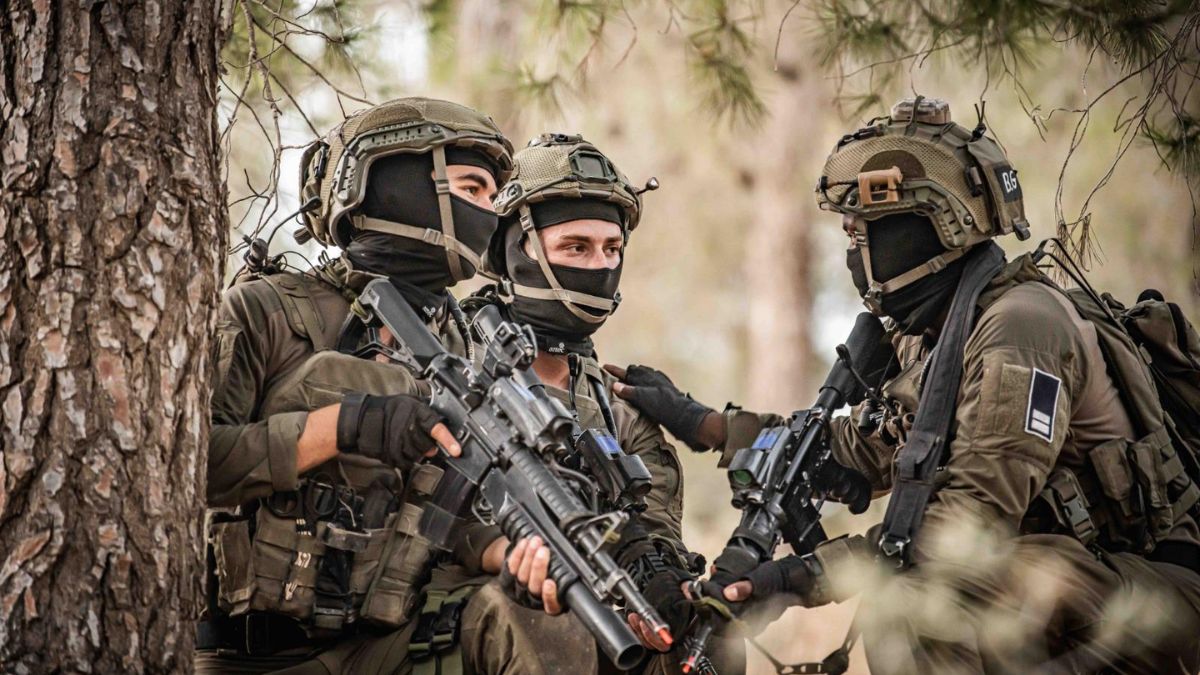
Ground operations inside Iran are unavoidable if Israel is to achieve its primary goal of dismantling the Islamic Republic’s nuclear infrastructure, according to military expert Prof. Daphné Richemond Barak.
Prioritising a ‘zero‑ambiguity’ approach, Israel remains focused on surgical raids against nuclear sites rather than the spectacular seizure of Kharg Island pushed by US President Donald Trump, noted Barak, a specialist in military operations and underground warfare at the Lauder School of Government, Diplomacy and Strategy, Reichman University.
As the United States has moved nearly 10,000 soldiers to West Asia, ground operations against Iran are now seen as imminent. While the seizure or destruction of Kharg Island’s petroleum infrastructure would be the kind of spectacle Trump might relish, it would do little to advance the core objective he and Israeli Prime Minister Benjamin Netanyahu set for the war: dismantling Iran’s nuclear capabilities.
There are, however, signs that Trump may be seeking an exit from the war amid rising economic and political costs that he may not have factored in before launching Operation Epic Fury. A spectacle at Kharg Island —American troops commandeering supertankers or oil and gas facilities going up in flames— could serve as his claim to victory and a pathway to ending the war.
For Israel, such a strike would be entirely pointless.
“At this point, ground operations could be more important for Israel than for the United States. That’s because the United States could live with a margin of error of 25-30 per cent when it comes to the Iranian nuclear programme, but there is no such scope for Israel — certainty is existential for Israel. Without ground operations, Israel could never be certain of destroying Iran’s nuclear capabilities,” Barak told Firstpost.
Quick Reads
View AllFollow our live coverage of the US-Israeli war on Iran here
The International Atomic Energy Agency (IAEA) has assessed that around 450 kilograms of near‑weapons‑grade uranium remains largely undamaged, buried deep underground at Iranian nuclear facilities in Natanz, Fordow, and Isfahan.
Without disposing of the uranium and dismantling the infrastructure, Iran could always decide to proceed with further enrichment. A ceasefire before achieving these objectives would render the war meaningless for Israel.
Trump could exit under pressure, but Israel fights an existential war
It increasingly appears that the United States and Israel are fighting two different wars. Trump’s war appears aimed at seizing oil infrastructure and forcing Iran into a deal, whereas Israel is focused on destroying Iran’s nuclear infrastructure and overthrowing the Islamic Republic.
The administration has revised the war’s objectives: Secretary of State Marco Rubio on Monday listed the destruction of Iran’s air force and navy, the degradation of its missile‑launching capability, and the destruction of its factories as the war’s goals.
Rubio did not mention the nuclear programme or the Strait of Hormuz.
Barak noted that differences in how each side views aspects of the war do not necessarily mean the alliance has fractured.
For example, noted Barak, the nuclear programme could be 100 per cent important for Israel and perhaps 85 per cent for the United States, while regime change might be 100 per cent important for Israel but 85 per cent for the United States.
“It’s only a problem if these differences lead to a split in the alliance. I do not see that currently,” said Barak.
While stressing that the United States and Israel remain allies and that the war is a joint offensive, Barak said external economic pressure could prove decisive in forcing Trump to strike a deal and seek an exit.
Indeed, economic and political costs are mounting for Trump and his allies in the Gulf. Oil and gas prices in the United States have recorded their sharpest surge in decades; crude oil continues to trade well above $100 a barrel, raising stagflation fears globally; Qatar has suffered damage so extensive that repairs could take three to five years, with revenue losses of around $20 billion a year; and Kuwait has lost up to 14 per cent of GDP.
“Israel is willing to fight longer than the United States. The breaking point could only be external economic pressure on the United States that forces it to stop the war. Such pressure is far less likely to affect Israel, which views this as an existential conflict. But I do not believe there will be a split in the alliance. I believe the two sides are aligned on the outcome they want — maybe not 100 per cent but still largely aligned,” Barak told Firstpost.
The impossible mission Israel cannot avoid
Without extracting uranium from Iranian facilities, neither Israel nor the United States can credibly claim victory in the war. That is something neither country —even with B‑2 bombers and bunker‑buster munitions— can achieve from the air.
Last year, the United States pummeled Iranian nuclear sites at Natanz, Fordow, and Isfahan, and Trump declared those facilities “obliterated”. That, however, was not the case, as Firstpost also reported based on satellite imagery analysis.
Iranian nuclear facilities are built deep inside mountains and beneath the earth. The Fordow nuclear facility, in particular, is located inside an Islamic Revolutionary Guards Corps (IRGC) base. Barak, a specialist in subterranean warfare, said the facility is not merely buried beneath hundreds of metres of rock or soil, but protected by concrete and reinforced structures.
At best, last year’s strikes may have collapsed ceilings or destroyed entry and exit points. The uranium, however, would still be there.
“Until uranium is removed from Iran, you cannot destroy Iran’s nuclear programme. That is the bottom line. And that is why a ground operation targeting Iranian nuclear sites is unavoidable for Israel, despite the risks it would carry,” Barak said.
Consider what such an operation would entail: Israeli forces would first need to insert deep behind enemy lines and secure the perimeter of Iranian nuclear facilities; special forces would then have to enter the sites after locating or drilling access points using excavators that would need to be airdropped; they would have to fight through booby‑trapped, pitch‑dark labyrinths to locate uranium stockpiles; and then haul uranium cylinders to the surface.
Commandos would likely be accompanied by technical experts required to handle uranium and determine how nuclear equipment could be transported. As these specialists would most likely not be special forces personnel, commandos would also have to protect them, adding another layer of complexity.
Once on the surface, the uranium would most likely be transported by land convoy to a secure zone, from where it could be flown out of the country.
Barak cautioned that this would not be a quick in‑and‑out raid like the operation that killed al Qaeda chief Osama bin Laden in Pakistan. The mission could take several hours, if not multiple days, and involve hundreds —possibly thousands— of troops on the ground, supported by dozens, if not hundreds, of aircraft.
“One month of an aerial campaign with some troops on the ground —the covert personnel believed to already be inside Iran— would have given them some degree of ground control. They would also have insiders within the regime assisting from the inside. Once the uranium was retrieved, it would need to be transported to a specialised facility. I would not put it on a helicopter. It would likely move by land convoy. Even with all these arrangements, it would still be more dangerous than anything anyone has ever done but it is unavoidable,” Barak said.

 "Iran Israel War News Live: Israel says chief engineer behind Hezbollah’s secret tunnels killed in strike")
 "End of Nato? Why are European allies refusing to back Trump’s Iran war?")
 "New Delhi to host Brics FMs meet in May; Russia's Lavrov among key attendees")
 "Did a Hindu guru inspire Steve Jobs to come up with Apple? The many theories behind tech giant’s name")
 "Iran Israel War News Live: Israel says chief engineer behind Hezbollah’s secret tunnels killed in strike")
 "End of Nato? Why are European allies refusing to back Trump’s Iran war?")
 "New Delhi to host Brics FMs meet in May; Russia's Lavrov among key attendees")
 "Did a Hindu guru inspire Steve Jobs to come up with Apple? The many theories behind tech giant’s name")