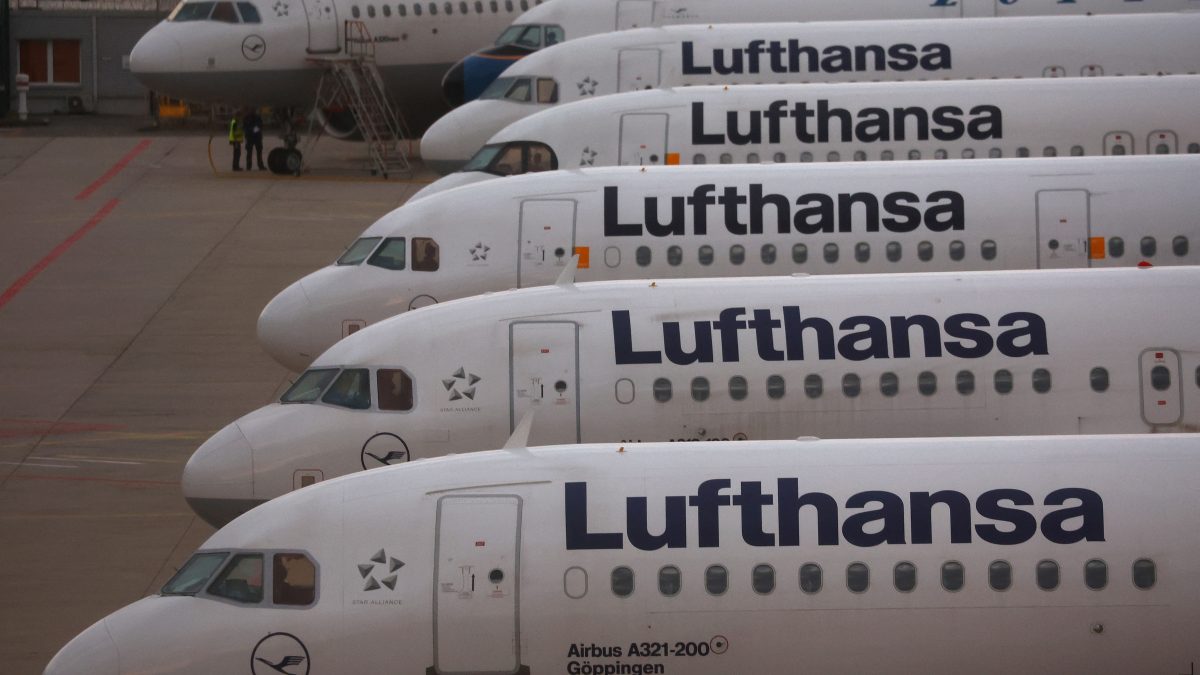
 "Planes of German air carrier Lufthansa are parked as Lufthansa pilots start a strike over a wage dispute. File image/Reuters")
Deutsche Lufthansa AG is preparing contingency measures that could see part of its fleet taken out of service if travel demand weakens due to the ongoing conflict in West Asia.
According to a company spokesperson, Chief Executive Carsten Spohr informed staff on Tuesday that dedicated teams have been tasked with drafting response strategies of varying intensity. In a more severe scenario, the airline could temporarily ground up to 40 aircraft, roughly 5 per cent of its total capacity.
These precautionary steps are being driven not only by rising jet fuel costs but also by concerns over potential supply disruptions. The effective shutdown of the Strait of Hormuz has halted a substantial share of global jet fuel shipments, forcing some Asian refineries to scale back output.
Europe relies heavily on fuel imports from the Persian Gulf, with the region supplying around half of the jet fuel, including kerosene, used across the European Union and the United Kingdom, according to data from Vortexa cited by Bloomberg.
Global air travel hit
Global air travel remains severely disrupted, with many people still unable to fly as planned to destinations after the Iran war forced the closure of major West Asian hubs, including Dubai, Doha and Abu Dhabi.
Air Canada has cancelled all flights to Tel Aviv and Dubai until September 7, while US carrier Delta Airlines has cancelled its New York-Tel Aviv flights and delayed the restart of its Atlanta-Tel Aviv route until September 5.
Meanwhile, Emirates has said it is operating a reduced flight schedule following a partial reopening of regional airspace and Etihad Airways said it is operating a commercial flight schedule between Abu Dhabi and around 80 destinations.
Quick Reads
View AllSingapore Airlines has extended the suspension of its Singapore-Dubai flights until May 31, while adding services on the Singapore-London Gatwick and Singapore-Melbourne routes from late March until October 24 to meet higher demand.
With inputs from agencies