

 "Dalit shahirs of Maharashtra: Nagorao Patankar's quest to reclaim history")
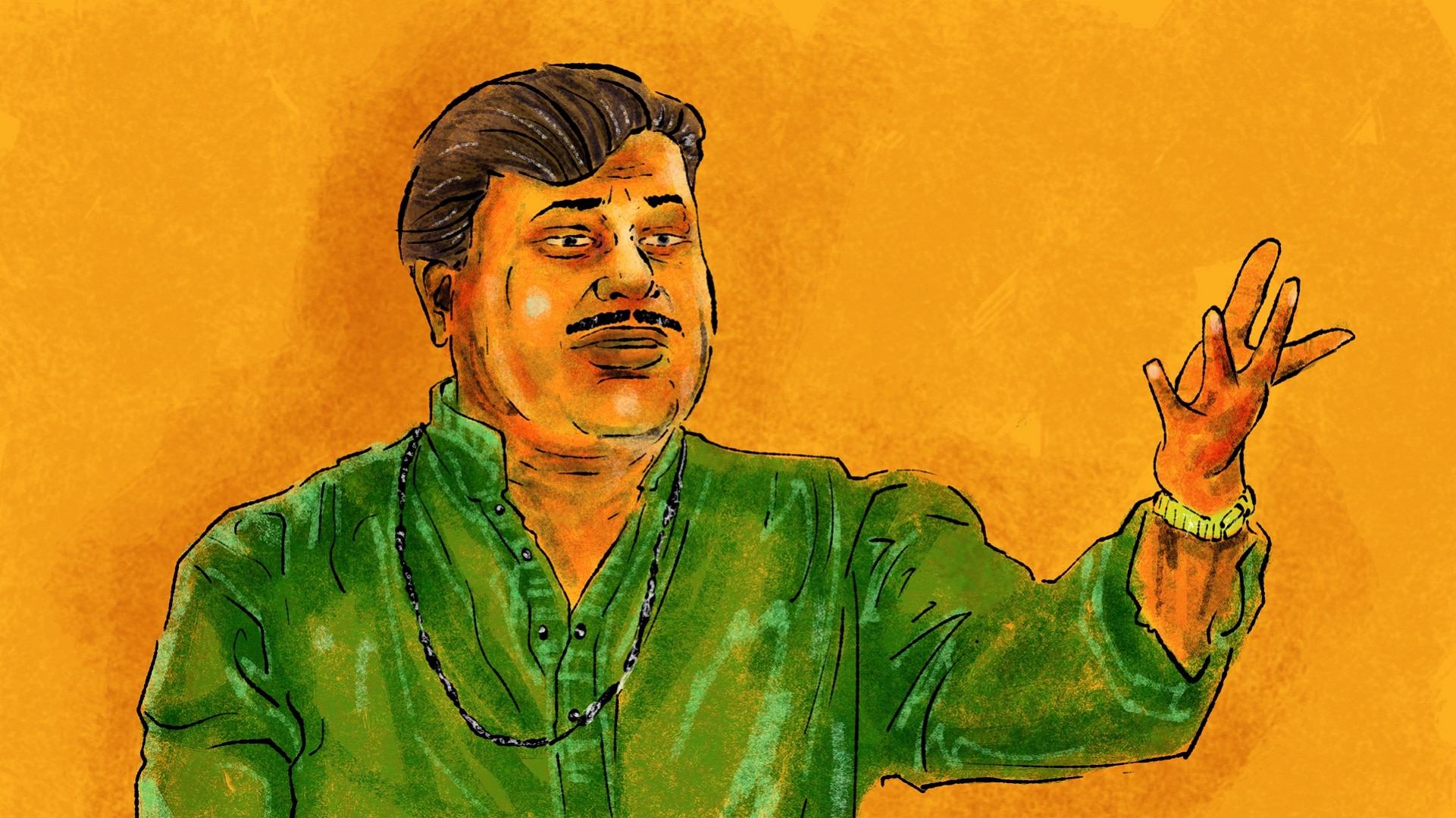
An introduction: Maharashtra’s tradition of ‘shahiri’ is several centuries old. In the last few decades of the 18th century, under the influence of Mahatma Phule’s Satyashodhak Samaj, it was transformed into a musical weapon of the masses, against the caste system. By the 1930s, the ‘Satyashodhaki jalsa’ was in decline, but a powerful new force had emerged in its place: ‘Ambedkari jalsa’. Ambedkari jalsa represented the teachings and philosophy of Dr BR Ambedkar in oral form, accompanied by songs. Over a journey that is close to completing a century, many Ambedkarite shahirs have helped hone shahiri as an anti-caste tool. This series on Maharashtra’s shahirs explores the lives and work of 15 greats. This is part six of the series. — Art by Satwick Gade *** In Noise, his remarkable book on music, Jacques Attali provided new ways to view music – not merely as entertainment, but as an economic and political phenomenon. Attali associated music with the evolution of human beings in relation to society; music (or noise) provides us exhilarating and deeply engrossing ways to look at this relationship. “My intention here is thus not only to theorise about music, but to theorise through music. The result will be unusual and unacceptable conclusions about music and society, the past and the future. That is perhaps why music is so rarely listened to and why — as with every facet of social life for which the rules are breaking down (sexuality, the family, politics) – it is censored, people refuse to draw conclusions from it,” Attali wrote. But what about a society where ‘caste’ demarcates your ability, accessibility and aspiration to listen to music in its profundity? A society in which music – initially restricted to and preserved by certain Dalit castes (producers of musical instruments and performers of it) – was late appropriated by Brahminical classes? In such a society, we need to be brutally honest to perceive music in a new way. We need to see Dalit shahiri, and the shahirs who practiced the form, with eyes wide-open. Then perhaps their art will make us realise the fallacies through which we have viewed society so far (especially in relation to music). If Brahminical music in this country subverted historical narratives, it is Dalit shahiri that has rescued generations from being devoid of history and identity – what Dalit writers significantly and profoundly call ‘asmita’. Born in Badnera in Maharashtra’s Amaravati district, Nagorao Patankar’s formal education ended at Class Four. But this was a time when Dalits with minimal education produced the literature and music that would influence the anti-caste movement and the discourse around it for decades. Patankar and his peers debunked the notion that intelligence and academic rigour were defined by one’s schooling; barely schooled, they educated generations of artists through their work. [imgcenter]
The lyrics of a song that Nagorao Patankar performed in 1935 before BR Ambedkar went: “Dalito Ki Tawarikh/ Mulk Hindostan Se Pucho (The history of Dalits/ Ask the country called Hindostan)”
Advertisement
End of Article

 "US ready to ‘impose costs’ on Russia if war in Ukraine drags on, says Hegseth")
 "US tells Hamas to stop violence against Gaza civilians and disarm 'without delay'")
 "China seizes 60,000 maps mislabelling Taiwan, omitting South China Sea islands")
 "Syria’s Sharaa pledges to honor Russia ties, seeks economic and military support in Kremlin visit")
 "US ready to ‘impose costs’ on Russia if war in Ukraine drags on, says Hegseth")
 "US tells Hamas to stop violence against Gaza civilians and disarm 'without delay'")
 "China seizes 60,000 maps mislabelling Taiwan, omitting South China Sea islands")
 "Syria’s Sharaa pledges to honor Russia ties, seeks economic and military support in Kremlin visit")



