 "From physical tests to quarantine: How Artemis II astronauts have trained intensely for Moon mission")
In a few hours from now, a group of astronauts — three Americans and one Canadian — is slated to fly roughly around 8,000 kilometres past the far side of the Moon, the furthest humans have ever travelled in space — courtesy Nasa’s Artemis II mission.
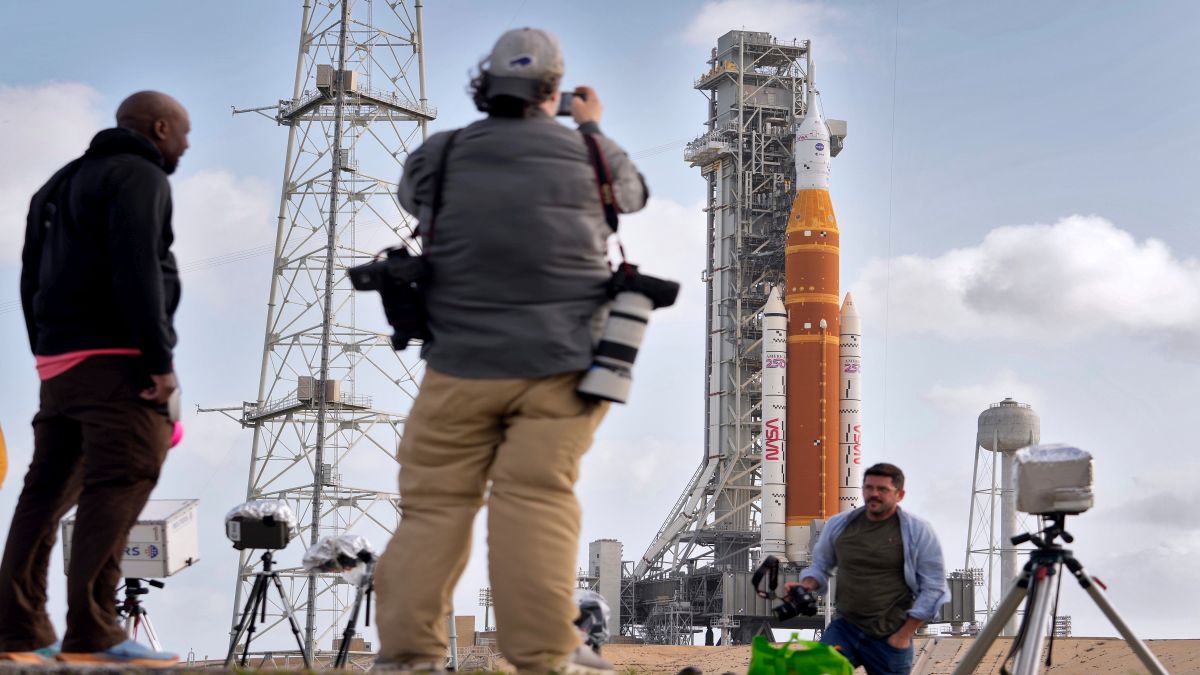
After many setbacks, the Artemis II mission is scheduled for take-off from Florida at 2224 GMT, which will see four astronauts embarking on the first crewed journey to the Moon since 1972, a landmark moment that aims to launch the United States into a new era of space exploration.
The 10-day space voyage will see Americans Reid Wiseman, Victor Glover, and Christina Koch, along with Canadian Jeremy Hansen, hurtle around the Earth’s natural satellite without landing — much like Apollo 8 did in 1968.
While excitement builds for this historic take-off — at least 400,000 people are expected to show up for the launch — the team has been undergoing an intensive training programme, which stretched over nearly three years to prepare them for uncharted territory.
Meet the Artemis II team
Before we delve into the training that the Artemis II astronauts have received, here’s a closer look at who’s who in the team.
The four astronauts selected for the Artemis II Moon mission are: Americans Reid Wiseman, Victor Glover, and Christina Koch, and Canadian colleague Jeremy Hansen. Fifty-year-old Wiseman is the commander of the mission. A native of Baltimore, he joined Nasa in 2009 following a 27-year career in the US navy.
Joining Wiseman will be 49-year-old Glover, another navy veteran, who will serve as pilot of the Orion spacecraft. The native of California and father of four daughters was working as a legislative advisor in the US Senate when Nasa selected him in 2013.
Koch, 47, was also chosen by Nasa in 2013, and she is a seasoned explorer who has worked in extreme environments, including Antarctica. She already holds the record for longest spaceflight by a woman — 328 days — and also participated in the first spacewalk performed entirely by women, alongside her colleague Jessica Meir.
Canada’s Hansen is the last member of the team. The Artemis II mission will be his first journey away from Earth.
Training, training and more training
Following their selection for the Artemis II Moon mission, the astronauts began their preparation for their lunar journey. As Nasa notes, unlike missions to the International Space Station, Artemis II offers no nearby safe harbour and no option to be back on Earth within hours of a problem. This is why training is so important.
The team at Nasa has sought inspiration from the previous Apollo missions to prepare the crew for their 10-day journey.
In addition, the astronauts attended classes in which they were taught about the spacecraft as well as the conditions of space and the post-landing splashdown. During the simulations, members were able to practice controlling Orion’s displays and switches, connecting to mission control and even tidying up and unpacking cargo, reported Bloomberg. The training team would mimic events like cabin leaks or a fire outbreak to ensure the crew knew how to respond.
In addition, the Artemis II crew trained in T-38 jet aircraft at Ellington Field at the Johnson Space Centre in Houston. The T-38 exposed the astronauts to high-workload, dynamic flight conditions that build spatial awareness and adaptability, skills that translate directly to decision-making under pressure in spaceflight.
To understand splashdown, the final stage of the mission, the Artemis II team trained at the space agency’s Neutral Buoyancy Laboratory. They rehearsed how to exit the Orion spacecraft safely in different scenarios, stabilise the spacecraft, and board a raft – skills they will rely on after returning from their mission around the Moon.
Training took them from Germany to Iceland
While most of the training for the Artemis II mission took place at the Johnson Space Centre in Houston, the astronauts travelled to Germany, where a component of Orion, their spacecraft, was manufactured.
The Artemis II team also travelled to Iceland, which has long served as a lunar stand-in for training astronauts since the days of the Apollo missions.
“Apollo astronauts said Iceland was one of the most lunar-like training locations that they went to in their training,” Cindy Evans, Artemis geology training lead at NASA’s Johnson Space Center in Houston, noted. “It has lunar-like planetary processes – in this case, volcanism. It has the landscape; it looks like the Moon. And it has the scale of features astronauts will both be observing and exploring on the Moon.”
Quarantine period for Artemis II
A week before the launch, the Artemis II astronauts were moved into quarantine at Cape Canaveral, Florida. During this time, they kept training but mainly focused on relaxing. They have been running through the last checklists, sitting down with flight directors for final briefings, and completing their last medical exams. They have also spent what time they can with family before heading to the launchpad. It’s important to note that spacefarers are hardly alone while in quarantine. They are able to have visits from friends and family who agree to Nasa’s quarantine guidelines.
According to Dr Raffi Kuyumjian, Canadian Space Agency’s flight surgeon, the quarantine is a must for all space missions. This is done in order to ensure that they are germ-free, as even a mild virus could spread quickly among them.
“We choose to isolate the crew for 14 days before a launch because most infectious diseases take 10 to 14 days to be transferred from one person to another,” said Dr Kuyumjian to Mashable.
And final lift-off!
The countdown for the Artemis II mission is underway, and if all goes as planned, at 6.24 pm (22:24 GMT) on Wednesday, there will be lift-off.
The Artemis II mission is crucial for Nasa. If successful, Artemis II will pave the way for Artemis III, a crewed low Earth orbit mission; then Artemis IV, which aims to land astronauts on the Moon; and future missions that could establish a sustained human presence beyond Earth.
With inputs from agencies


 "Iran Israel War News Live: Trump 'strongly considering' Nato exit after allies fail to support Iran action, says report")
 "‘Without boots on the ground, Iran’s nuclear programme cannot be destroyed’: Israeli expert to Firstpost")
 "Iranian regime, explained: Decoding the Islamic Republic’s power structure as war drags on")
 "Pakistan & Afghan Taliban resume peace talks in China")
 "Iran Israel War News Live: Trump 'strongly considering' Nato exit after allies fail to support Iran action, says report")
 "‘Without boots on the ground, Iran’s nuclear programme cannot be destroyed’: Israeli expert to Firstpost")
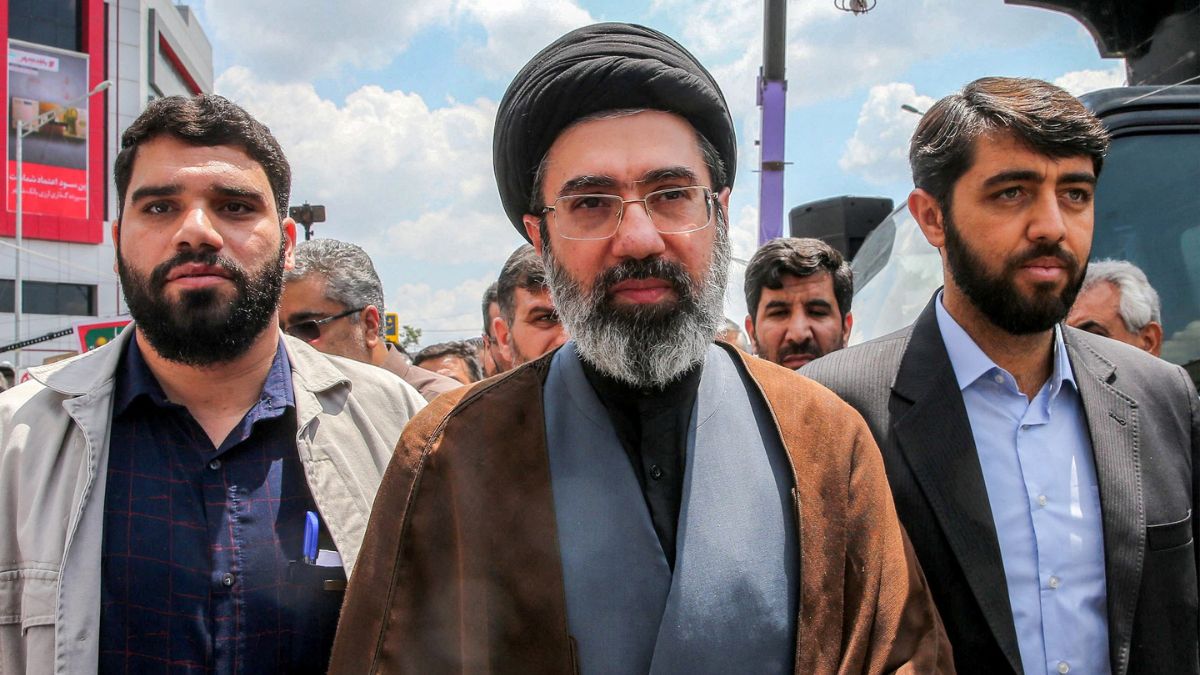 "Iranian regime, explained: Decoding the Islamic Republic’s power structure as war drags on")
 "Pakistan & Afghan Taliban resume peace talks in China")