Firstpost
  • Video Shows
  • World
    Vantage Firstpost America Firstpost Africa First Sports
  • Explainers
    US News
  • Putin in India
  • News
    India Opinion Cricket Tech Entertainment Sports Health Photostories
  • India vs South Africa
Trending Donald Trump Narendra Modi Elon Musk United States Joe Biden

Sections

  • Home
  • Live TV
  • Videos
  • Shows
  • World
  • India
  • Explainers
  • Opinion
  • Sports
  • Cricket
  • Health
  • Tech/Auto
  • Entertainment
  • Web Stories
  • Business
  • Impact Shorts

Shows

  • Vantage
  • Firstpost America
  • Firstpost Africa
  • First Sports
  • Fast and Factual
  • Between The Lines
  • Flashback
  • Live TV

Events

  • Putin in India
  • Bihar Election
  • Raisina Dialogue
  • Independence Day
  • Champions Trophy
  • Delhi Elections 2025
  • Budget 2025
  • Firstpost Defence Summit
Trending:
  • IndiGo crisis
  • Putin India visit
  • India vs SA 3rd ODI
  • Germany conscription
  • Drug boat attacks
  • New Mossad chief
  • Dhurandhar review
fp-logo
The economic history of hate
Whatsapp Facebook Twitter
Trending

Sections

  • Home
  • Live TV
  • Videos
  • Shows
  • World
  • India
  • Explainers
  • Opinion
  • Sports
  • Cricket
  • Health
  • Tech/Auto
  • Entertainment
  • Web Stories
  • Business
  • Impact Shorts

Shows

  • Vantage
  • Firstpost America
  • Firstpost Africa
  • First Sports
  • Fast and Factual
  • Between The Lines
  • Flashback
  • Live TV

Events

  • Putin in India
  • Bihar Election
  • Raisina Dialogue
  • Independence Day
  • Champions Trophy
  • Delhi Elections 2025
  • Budget 2025
  • Firstpost Defence Summit

The economic history of hate

Padmini Parthasarathy • May 2, 2017, 16:31:50 IST
Whatsapp Facebook Twitter

When this bigoted and amoral hate extends to other groups, do we just stand aside? Whose side are we on?

Advertisement
Subscribe Join Us
+ Follow us On Google
Choose
Firstpost on Google
The economic history of hate

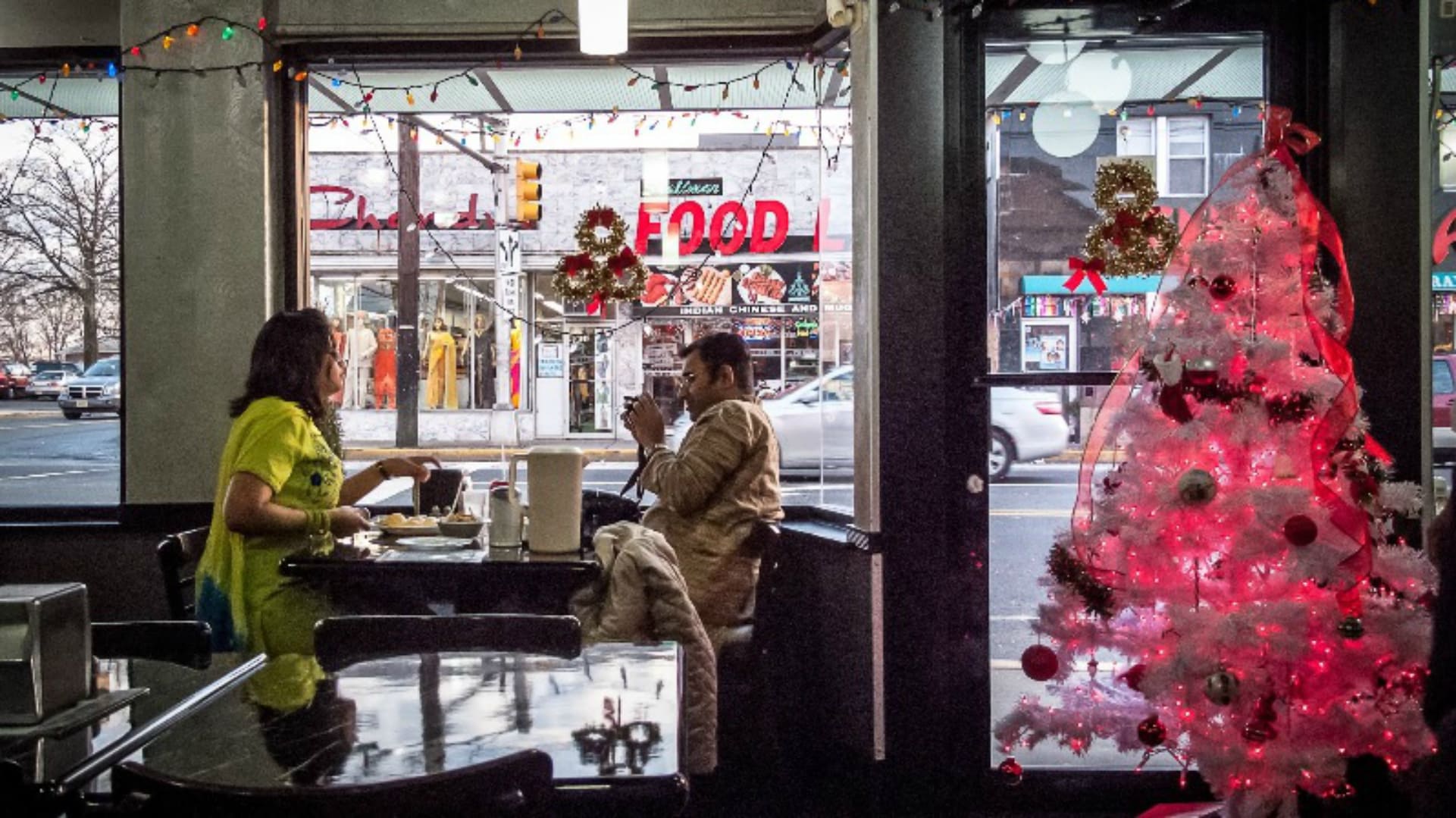
Editor’s Note: The recent spate of racially-motivated attacks against Indians in the US has raised several troubling questions. The principal among these produced by heightened xenophobia; go back to your country. Firstpost set out to interrogate the messy, complex and dislocated experience of being Indian in America; is this my country? The series that resulted, Homeland, is a compendium of interviews, analyses and opinion pieces. In this, the fifth part, read about why attack on Indian Americans is the most recent flow in the long history of ebbs and flows in hate crimes. *** In the fall of 1987, a rash of hate crimes were committed against Indian-Americans in New Jersey. A group of citizens from New Jersey calling themselves “Dotbusters” made it their mission to harass and intimidate Indian immigrants. The Jersey Journal partially published their letter, written in response to an article about the abuse of Indian-Americans. “If I’m walking down the street and I see a Hindu and the setting is right, I will hit him or her. We plan some of our most extreme attacks such as breaking windows, breaking car windows, and crashing family parties. We use phone books and look up the name Patel… They are a weak race physically and mentally,” they wrote. Some of the most brutal beatings ended in the deaths of innocent victims. The new spate of hate crimes against Indian-Americans is only the most recent ebb in a long history of ebbs and flows in hate trends. Wave after wave of hate crimes have occurred when wages are depressed, when people are losing their jobs. ‘‘It’s white people against the Hindus,’’ said Michael Miller, a white 14-year-old, to the New York Times in 1987. Another white 14-year-old child told the Times “I just don’t like them.” There is no “just” in “I just don’t like them.” In fact, there is always an unspoken because. There is a very clear motive behind this collective hatred that convinces groups of people and moves them to act. Hate is a comforting blinder to larger structures designed to keep those who are lacking economic security poor and struggling. Hate is comfortable. It is a steam vent for economic resentment against stagnant wages and job scarcity. Received hatred is an institutional tool of control. Scarcity motivates hatred. The most interesting insights to be drawn are the veiled allusions to job scarcity and the scarcity of hope that one can attain financial security. One source, a truck driver who had been raised in Jersey City, where the Dotheads had originated, claimed that Indian-Americans were eligible for investments from the government to start small businesses. Leads on the story behind the story are scattered like breadcrumbs in the reporting from this era and from others. Pioneering investigative journalist Ida B Wells cut her teeth reporting on black lynching in southern states at the turn of the 20th century. Wells detailed situations where black storeowners were competing with white storeowners for business. When marketplace forces failed, the white businessman would level charges against his black competitor, stoking resentments until they bubbled over and mobs would take so-called justice into their own hands. A common argument used to justify these murders was that white women needed to be protected from lecherous black men. [imgcenter]

P_Centre_2

[/imgcenter] Does this rhetoric sound familiar? In 2016, then-candidate Trump painted Mexican immigrants with the same brush, claiming that they were criminals coming to rape and kill “true” American women. This rhetoric reached a fever pitch. Cold and calculated arguments about financial losses and job scarcity were parceled with this dehumanising language. Mexicans stole “our” jobs. Muslims oppressed women and wanted to impose Sharia law on ‘our’ women. Who benefits from this rhetoric? Who is hiding behind the scapegoat? There are always economic and power motives behind such epidemics. When starving and battered Irish immigrants first came to this land, they found “Irish need not apply” signs in store windows. Jewish immigrants faced anti-Semitic language and discrimination. Sectarian and racial resentments foment when the myth of scarcity is part and parcel with this message of hatred. In 2015, South Asian-American philosopher Falguni A Sheth spoke to the New York Times. Her mother had been harassed by the Dotheads and the police had been notably unhelpful in these situations. “At base, this is what the killing of Michael Brown, and the ensuing encounters between the police and protesters in Ferguson, Mo., have exposed: peace, safety, recognition of one’s humanity, law, order, rights will be doled out — or withheld — only in terms that allow those in authority, those with wealth, to remain comfortable,” said Sheth. We are only 30 years past the point when Indians were afraid to walk around at night. Saris still gather dust in our closets. Bindis are shoved into our make-up bags. We have been forced to assimilate and we are still not safe. Arguments can be made that our brown skin still makes it so that we are not past that point at all. Why are our memories so short? It hasn’t been so long since Indian-Americans were specifically targeted and persecuted. And most importantly, when this bigoted and amoral violence extends to other groups, do we just stand aside? Whose side are we on? Images Courtesy: Getty Images and Smithsonian Asian-Pacific American Centre’s Beyond Bollywood online exhibition Read part one: Go back to your country Read part two: Subdrift: Indian Americans find a sense of community Read part three: Republican Hindu Coalition: A misguided sense of community Read part four: It's not a turban, it's a crown

Tags
America US CriticalPoint Homeland Indian Immigrants Hate crimes Mexican immigrants In Trump's America long reads Homeland Series
  • Home
  • long-reads
  • The economic history of hate
End of Article
Latest News
Find us on YouTube
Subscribe
  • Home
  • long-reads
  • The economic history of hate
End of Article

Top Stories

Ex-Pentagon official says Trump merits a Nobel for 'uniting India–Russia'

Ex-Pentagon official says Trump merits a Nobel for 'uniting India–Russia'

Pressure mounts on ‘reckless’ Hegseth as war-crimes allegations and intel-mishandling claims roil Pentagon

Pressure mounts on ‘reckless’ Hegseth as war-crimes allegations and intel-mishandling claims roil Pentagon

IndiGo flight cancellations LIVE: IndiGo says operations stabilising with 95% network restored; over 850 flights cancelled today

IndiGo flight cancellations LIVE: IndiGo says operations stabilising with 95% network restored; over 850 flights cancelled today

India vs South Africa Highlights 3rd ODI at Visakhapatnam: Jaiswal ton; Kohli, Rohit 50s help IND win series

India vs South Africa Highlights 3rd ODI at Visakhapatnam: Jaiswal ton; Kohli, Rohit 50s help IND win series

Ex-Pentagon official says Trump merits a Nobel for 'uniting India–Russia'

Ex-Pentagon official says Trump merits a Nobel for 'uniting India–Russia'

Pressure mounts on ‘reckless’ Hegseth as war-crimes allegations and intel-mishandling claims roil Pentagon

Pressure mounts on ‘reckless’ Hegseth as war-crimes allegations and intel-mishandling claims roil Pentagon

IndiGo flight cancellations LIVE: IndiGo says operations stabilising with 95% network restored; over 850 flights cancelled today

IndiGo flight cancellations LIVE: IndiGo says operations stabilising with 95% network restored; over 850 flights cancelled today

India vs South Africa Highlights 3rd ODI at Visakhapatnam: Jaiswal ton; Kohli, Rohit 50s help IND win series

India vs South Africa Highlights 3rd ODI at Visakhapatnam: Jaiswal ton; Kohli, Rohit 50s help IND win series

Top Shows

Vantage Firstpost America Firstpost Africa First Sports
Enjoying the news?

Get the latest stories delivered straight to your inbox.

Subscribe
Latest News About Firstpost
Most Searched Categories
  • Web Stories
  • World
  • India
  • Explainers
  • Opinion
  • Sports
  • Cricket
  • Tech/Auto
  • Entertainment
  • Photostories
NETWORK18 SITES
  • News18
  • Money Control
  • CNBC TV18
  • Forbes India
  • Advertise with us
  • Sitemap
Firstpost Logo

is on YouTube

Subscribe Now

Copyright @ 2024. Firstpost - All Rights Reserved

About Us Contact Us Privacy Policy Cookie Policy Terms Of Use
Home Video Quick Reads Shorts Live TV