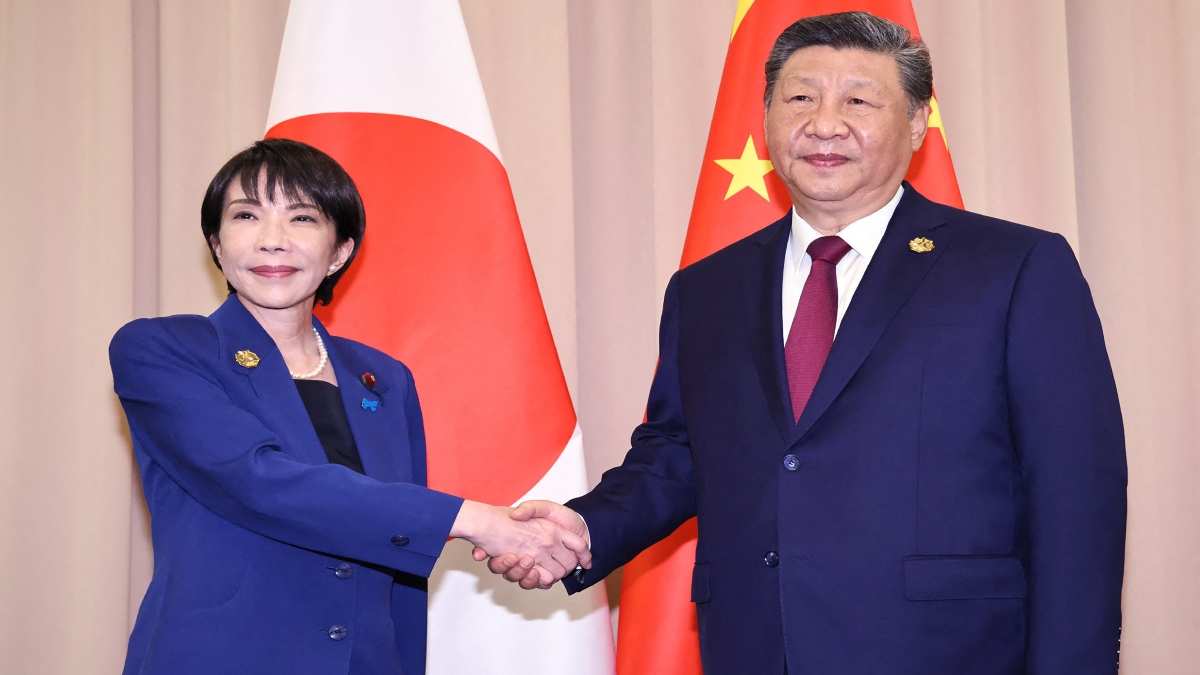
 "Japan's Prime Minister Sanae Takaichi (left) shakes hands with Chinese President Xi Jinping. AFP File")
Japan’s tourism sector is bracing for a rough holiday season amid a diplomatic row with China over a remark Japanese PM Sanae Takaichi made over Taiwan . Tensions between the two countries started brewing after Takaichi outrightly signalled support for Taiwan, a democratic autonomous island under the control of China.
However, the newly elected Japanese premier’s comments have severely affected the country’s tourism sector. Chinese businesses in Japan catering to visiting compatriots have become a significant victim of the travel warning issued by Beijing last month. On November 14, China advised its citizens to refrain from travelling to Japan , a move seen as retaliation for Takaichi’s stance on Taiwan.
According to Nikkei Asia, visitors from China make up the largest group of tourists in Japan. The influx of Chinese tourists in the country, over the years, led to the creation of an industry known as yitiao long (one dragon), where their entire itinerary, including accommodation, transportation, entertainment and food, is handled by Chinese-owned businesses in Japan.
However, the prolonged tensions with China mean that the “dragon” is not taking the major hit of mass cancellation. “My private lodges in Tokyo had been fully booked every day until Nov. 14, but almost all reservations for December have been cancelled and [the Chinese] tourists have been reluctant to pay the cancellation fee,” a Chinese woman running three vacation rental houses told Nikkei Asia on condition of anonymity. “But I cannot say ‘Japan is safe and come visit us,’ nor criticise the Chinese government.”
The tensions affecting air travel as well
Japanese PM Takaichi’s comments on Taiwan in a parliamentary session – saying that a Taiwan emergency could constitute a survival-threatening situation for Japan – have managed to affect airline travel as well.
According to Nikkei Asia, Chinese airlines are reducing flights to Japanese cities and growth in tourist numbers from China for November slowed to a meagre 3 per cent, marking a sharp contrast to the more than double-digit expansion experienced since the start of the year.
Quick Reads
View AllThe effects of these tensions are clearly visible at popular tourist destinations. Rows and rows of authentic Chinese restaurants in Ueno, a district in Tokyo usually frequented by Chinese tourists, were empty on a cold day in mid-December, Nikkei Asia reported. In the midst of this, the Japanese businesses are looking to adapt by catering to tourists from other parts of the world. However, the endeavour is proving difficult for the Chinese businesses.
Takaichi is open for negotiation
Amid low tourist figures, Japan’s prime minister on Wednesday said she remains “open” to talks with China . She maintained that dialogue remains an option even as bilateral frictions deepen. She went on to call China an “important neighbour,” and said her “stance of building constructive and stable relations remains unchanged” since taking office, Kyodo News reported.
“Japan always keeps the door open for dialogue as the two nations have issues to resolve,” she said at a news conference after an extraordinary parliamentary session. “My remarks regarding the survival-threatening situation do not alter the stance held by the past governments,” Takaichi furthered, adding that Japan will explain its position to China and the international community through diplomatic channels.
Meanwhile, on Wednesday, Chinese Foreign Ministry spokesperson Guo Jiakun said on Wednesday that Japan should reflect on its actions rather than seek international backing for its position.
“The Japanese side should do is to listen to these calls and do soul-searching rather than make futile attempts to persuade other countries into believing their groundless explanations,” Guo said, responding to a question about Japan’s National Security Advisor Ichikawa Keiichi reiterating Japan’s stance during talks with officials from the UK, France, Germany and Canada.
“We urge some in Japan to stop spreading false narratives, face up to the history, reflect on and correct the wrongdoings, retract the erroneous remarks, honour the commitments, and act responsibly to offer China and the international community a satisfactory answer,” he added.
With inputs from agencies.