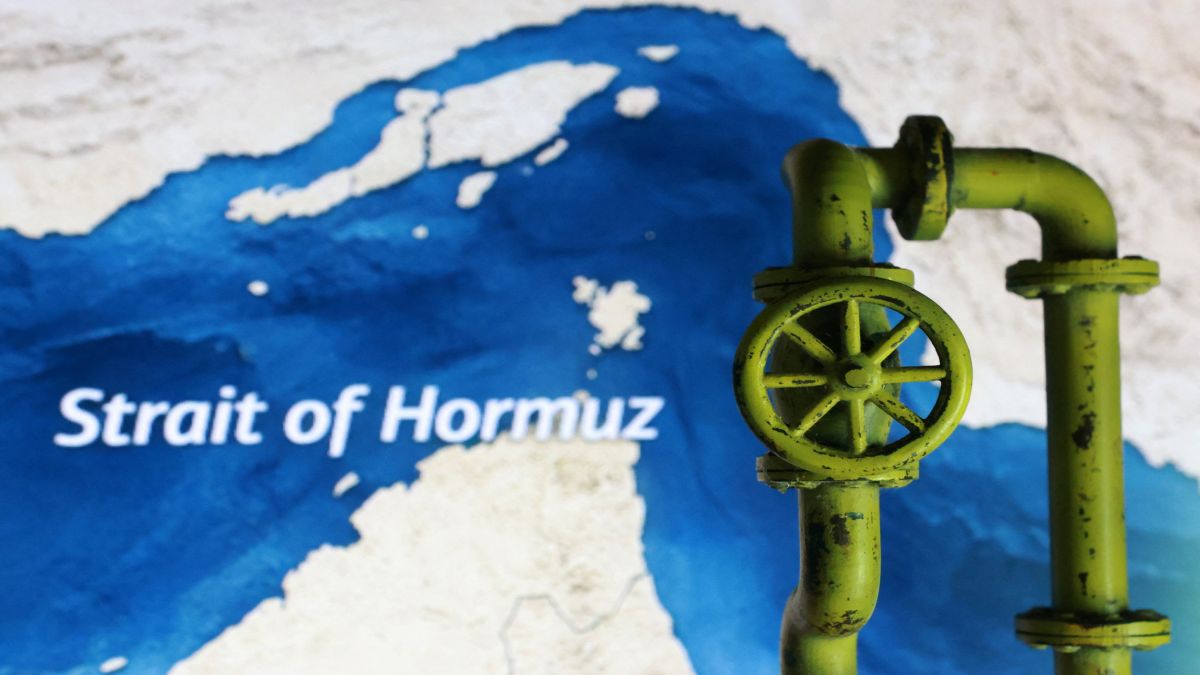
 "'Strait of Hormuz will reopen but not for you': Iran's MP to Trump")
The head of the Iranian Parliament’s National Security Committee, Ebrahim Azizi, has said that the Strait of Hormuz will reopen, but “not for Trump”, as politics over the key shipping route ramps up.
“The Strait of Hormuz will certainly reopen, but not for you; it will be open for those who comply with the new laws of Iran,” Aziz said on X, referring to US President Donald Trump.
Meanwhile, the committee has passed a plan to impose a toll on ships passing through the Strait of Hormuz.
The plan aims to increase Iran’s sovereignty over the strait, including “security arrangements to safeguard the waterway, measures to ensure maritime navigation safety and financial regulations and rial-denominated tolls for vessels passing through and the prohibition of passage for vessels belonging to the United States and Israel,” Iran’s state-run Islamic Republic of Iran Broadcasting (IRIB) said.
Talking about the unprecedented move, Aziz said, “Trump has finally achieved his dream of ‘regime change’—but in the region’s maritime regime!”
Iran’s threats and attacks on shipping in the Strait have effectively halted the movement of around 15 million barrels of crude per day from the Persian Gulf, triggering sharp volatility in global oil markets.
US-Iran negotiations
Iranian Foreign Minister Abbas Araghchi has said that the country has been “exchanging messages” with the US, adding that sometimes those communications come directly from President Donald Trump’s Middle East envoy, Steve Witkoff.
The foreign minister said, “What is currently happening right now is not negotiations, but an exchange of messages, sometimes directly with Steve Witkoff and sometimes through regional intermediaries.”
Quick Reads
View AllHe added that Iran has not yet responded to any of Washington’s proposals to end the war and that it has not submitted any counter-proposals either.
UAE springs into action
The United Arab Emirates (UAE) has reportedly called for a multinational force to break Iran’s chokehold on the Strait of Hormuz, according to the Wall Street Journal.
The UAE’s traditionally neutral stance has shifted after Iran bombarded it more than any other country in the region —even Israel— in retaliation for American and Israeli attacks. After a lull, Iranian missile and drone attacks have picked up in recent days.

 "Iran Israel War News Live: Israel carries out 'wide-scale wave of strikes' on Tehran, military said")
 "End of Nato? Why are European allies refusing to back Trump’s Iran war?")
 "New Delhi to host Brics FMs meet in May; Russia's Lavrov among key attendees")
 "Did a Hindu guru inspire Steve Jobs to come up with Apple? The many theories behind tech giant’s name")
 "Iran Israel War News Live: Israel carries out 'wide-scale wave of strikes' on Tehran, military said")
 "End of Nato? Why are European allies refusing to back Trump’s Iran war?")
 "New Delhi to host Brics FMs meet in May; Russia's Lavrov among key attendees")
 "Did a Hindu guru inspire Steve Jobs to come up with Apple? The many theories behind tech giant’s name")