
Trending:

Chandrayaan 2 Landing highlights: PM Narendra Modi says India stands in solidarity with ISRO scientists

tech2 News Staff September 7, 2019, 09:02:45 IST

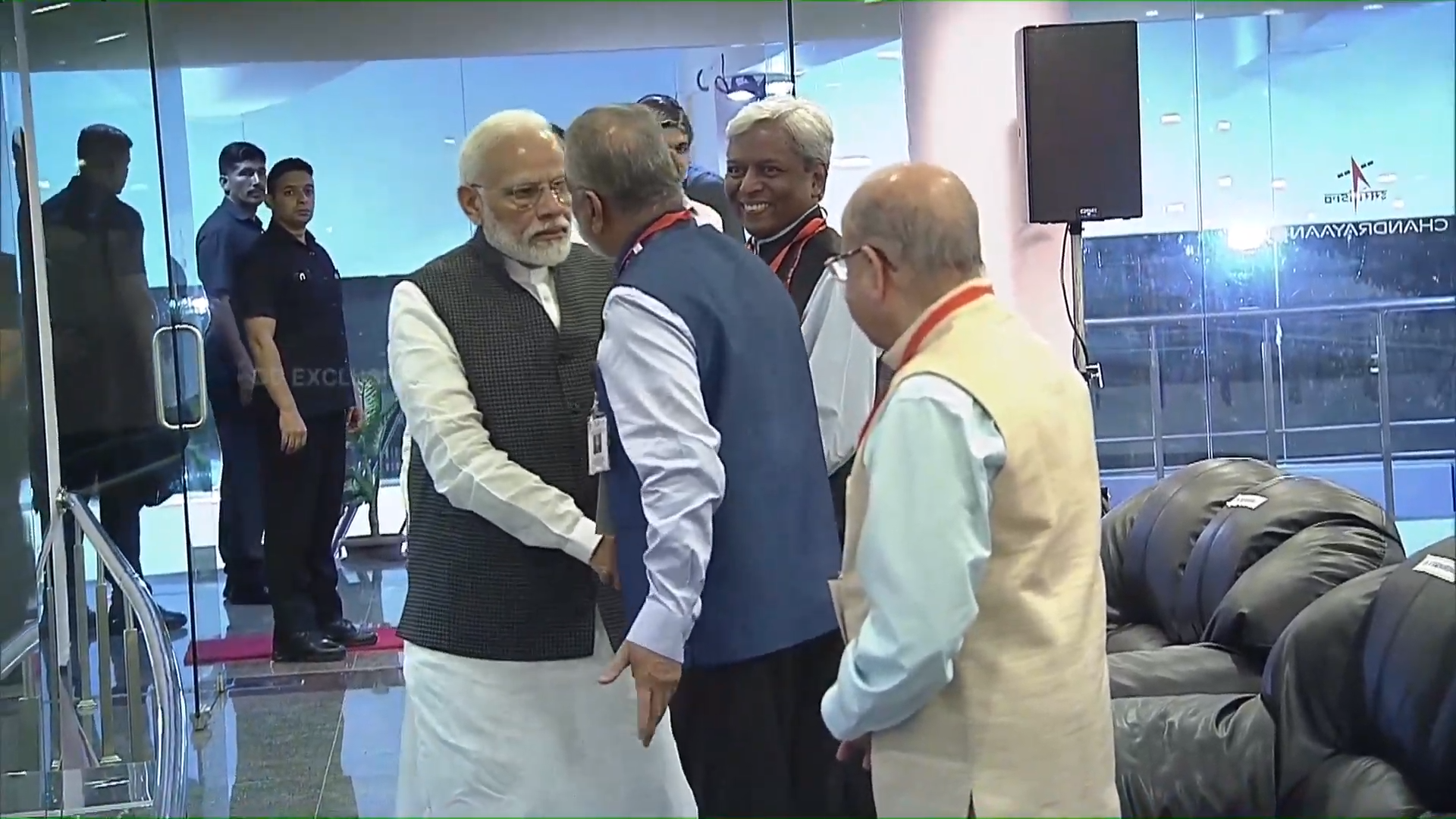
Prime Minister Narendra Modi addressed ISRO scientists at the ISRO Control Centre

Advertisement
Chandrayaan 2 Landing highlights: PM Narendra Modi says India stands in solidarity with ISRO scientists
September 7, 2019, 08:28:37 (IST)

PM Narendra Modi: The learning from today will make us stronger and better

September 7, 2019, 08:18:46 (IST)

PM said that India stands in solidarity with our scientists

September 7, 2019, 08:07:42 (IST)

Here’s where you can watch Prime Minister Narendra Modi’s speech at the ISRO Control Centre

September 7, 2019, 08:06:22 (IST)
Prime Minister Narendra Modi is here at the ISRO Control Centre
September 7, 2019, 08:04:57 (IST)

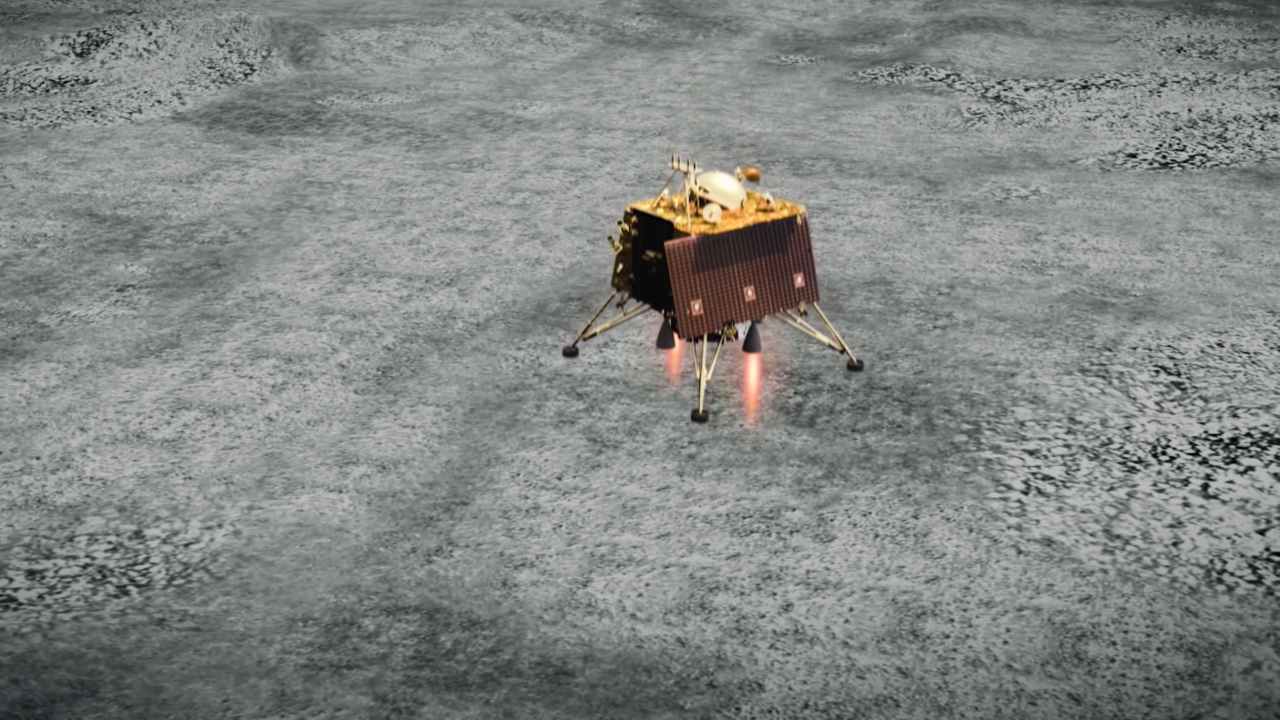
Simulation from the Chandrayaan 2 command centre when the Vikram Lander began experiencing turbulence 

https://www.firstpost.com/wp-content/uploads/2019/09/Turbulence.mp4

September 7, 2019, 04:34:32 (IST)

PM Modi to address the nation at 8 am today

Modi will address the nation from the ISRO Control Centre in Bengaluru at 8 am. 

Advertisement
September 7, 2019, 03:52:12 (IST)

Let’s hope the Vikram lander hasn’t met the same fate the  Israel’s Beresheet mission did last year !
 

That’s all for now, folks! Looks like we’re going to have to wait a little longer to hear more.

September 7, 2019, 03:13:00 (IST)

Here’s another theory about the lander’s status from YouTube star/gamer/programmer/astrophysicist Scott Manley

September 7, 2019, 03:11:45 (IST)

Announcement from ISRO coming in

Unfortunately, it isn’t about the lander. The planned post-landing press conference has been cancelled.

September 7, 2019, 02:31:55 (IST)

Life is full of ups and downs – Modi to scientists

While the lander module does appear to have crashed, Modi urges scientists not to lose hope.

September 7, 2019, 02:30:19 (IST)

An astronomer offers a compelling theory for what could have happened.

September 7, 2019, 02:25:50 (IST)

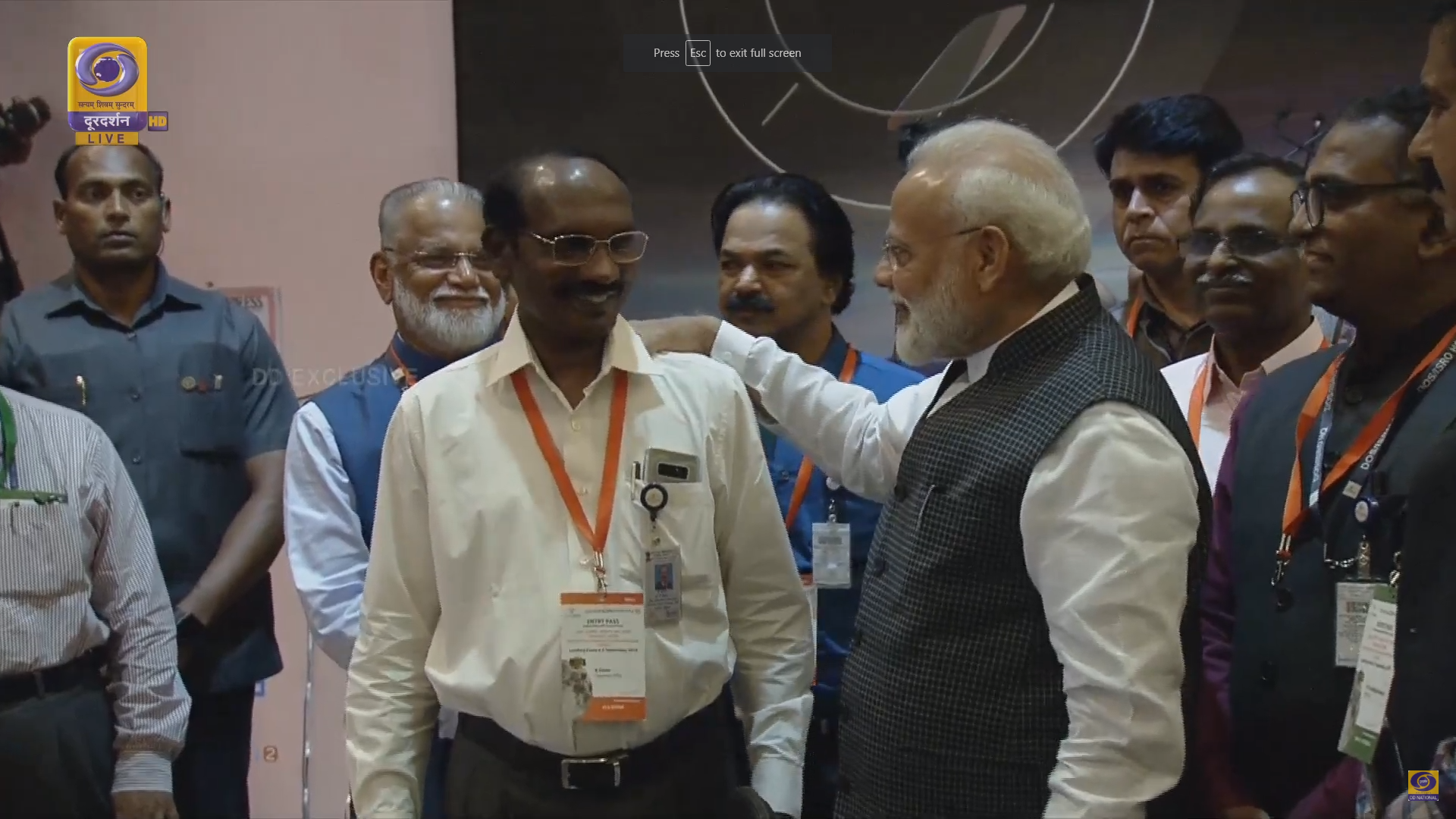
PM Modi give Dr K Sivan the ‘I’ll be proud of you either way’ pat before addressing the anxious crowd. 

Whatever has been accomplished so far is no small feat — it’s an incredible serve to scientists, to the world, says Narendra Modi.

Our (larger) mission will continue whether we get good or bad news, he added.

Advertisement
September 7, 2019, 02:19:49 (IST)

What we know for sure so far

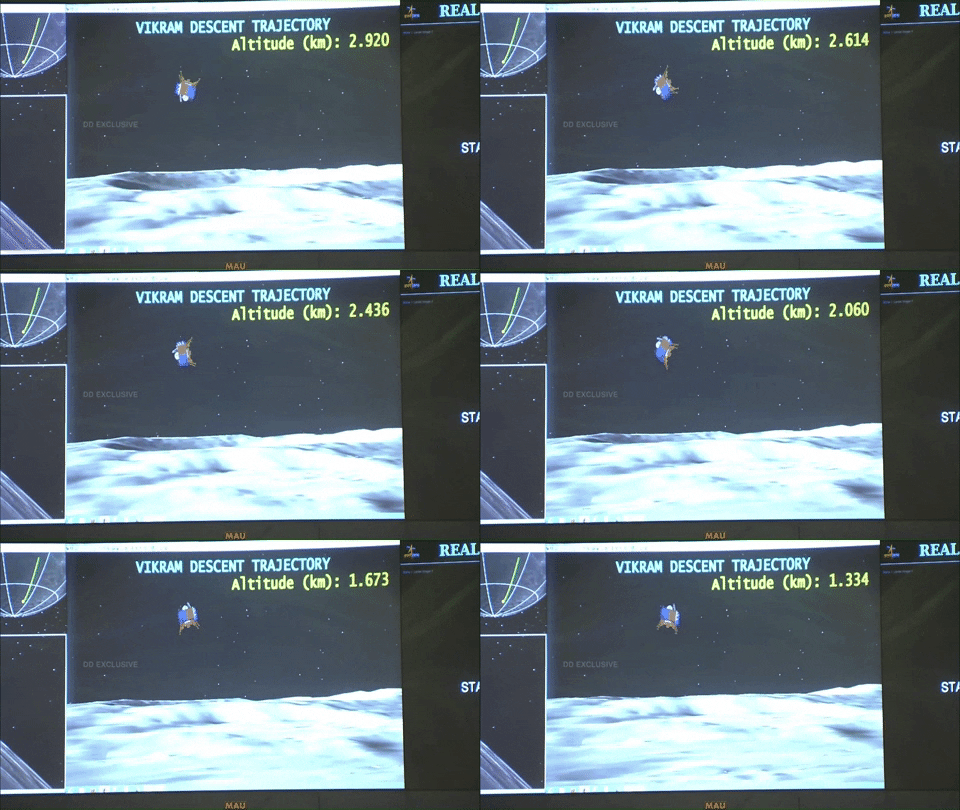
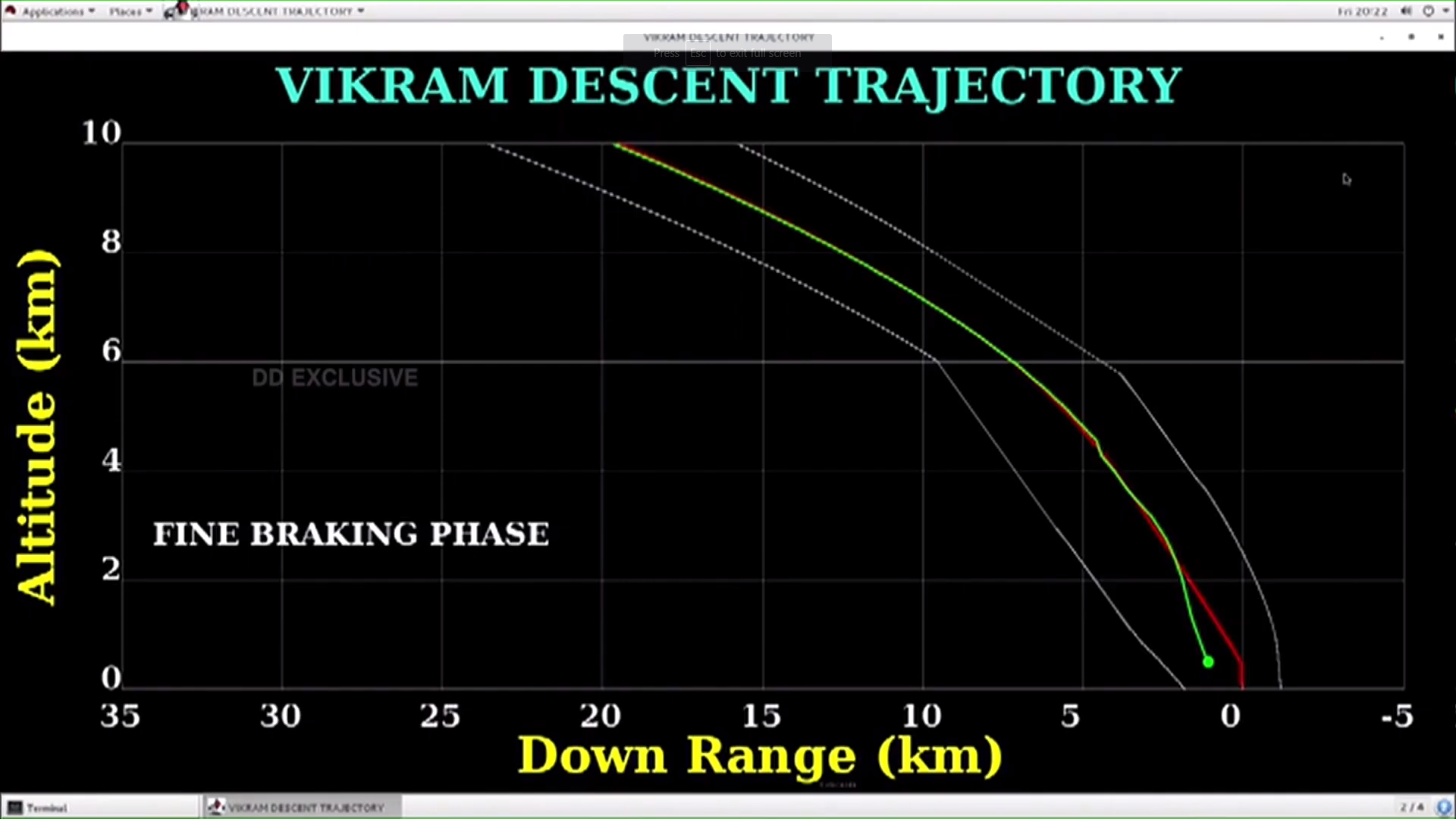
“Vikram lander’s descent was planned and decsent was normal till 2.1 km. After this, communication link between the lander and ground station was lost. ISRO is currently analysing the data,” announced the ISRO chairman. 

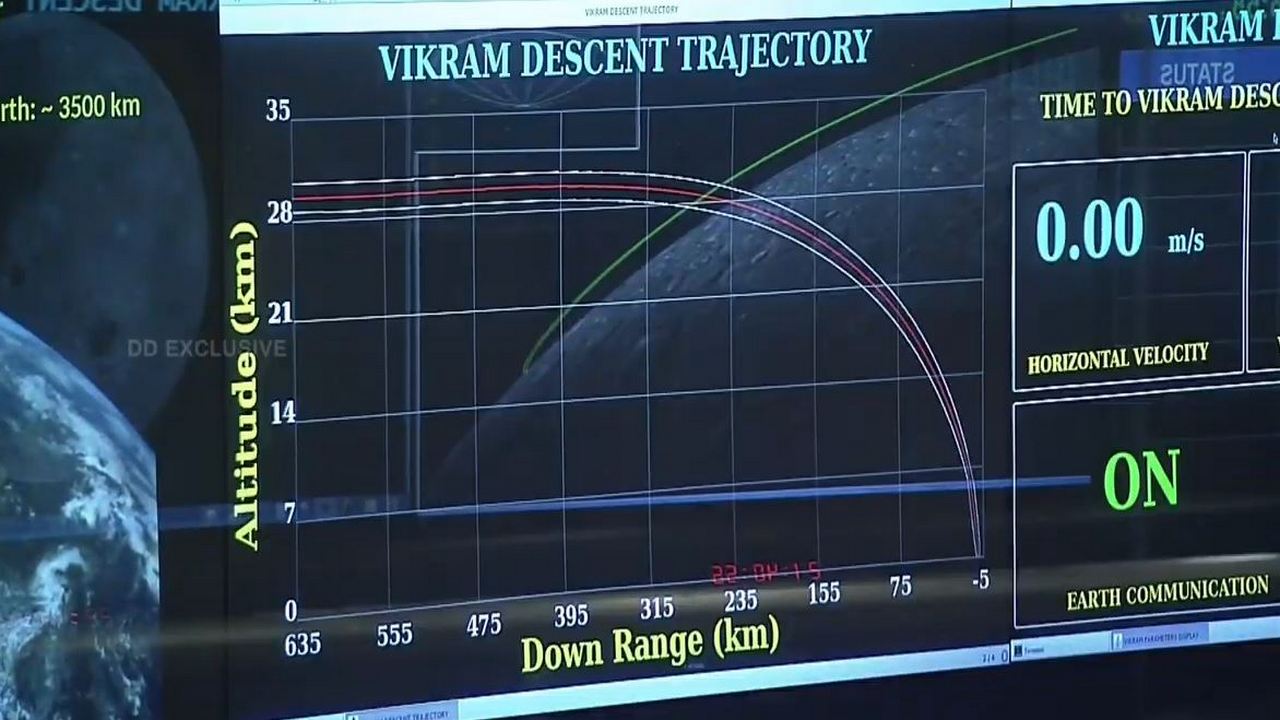
We saw the speed of descent was a little unexpected, as it seemed to speed up as it lost altitude. That’s the deviation we saw on the graph.  

September 7, 2019, 02:08:52 (IST)

Communication between the lander & orbiter has been switched on 

That’ll help keep the orbiter listening for any signal the lander may throw its way. Doesn’t change the fact that ISRO is yet to confirm the status of the landing module.

September 7, 2019, 02:03:48 (IST)

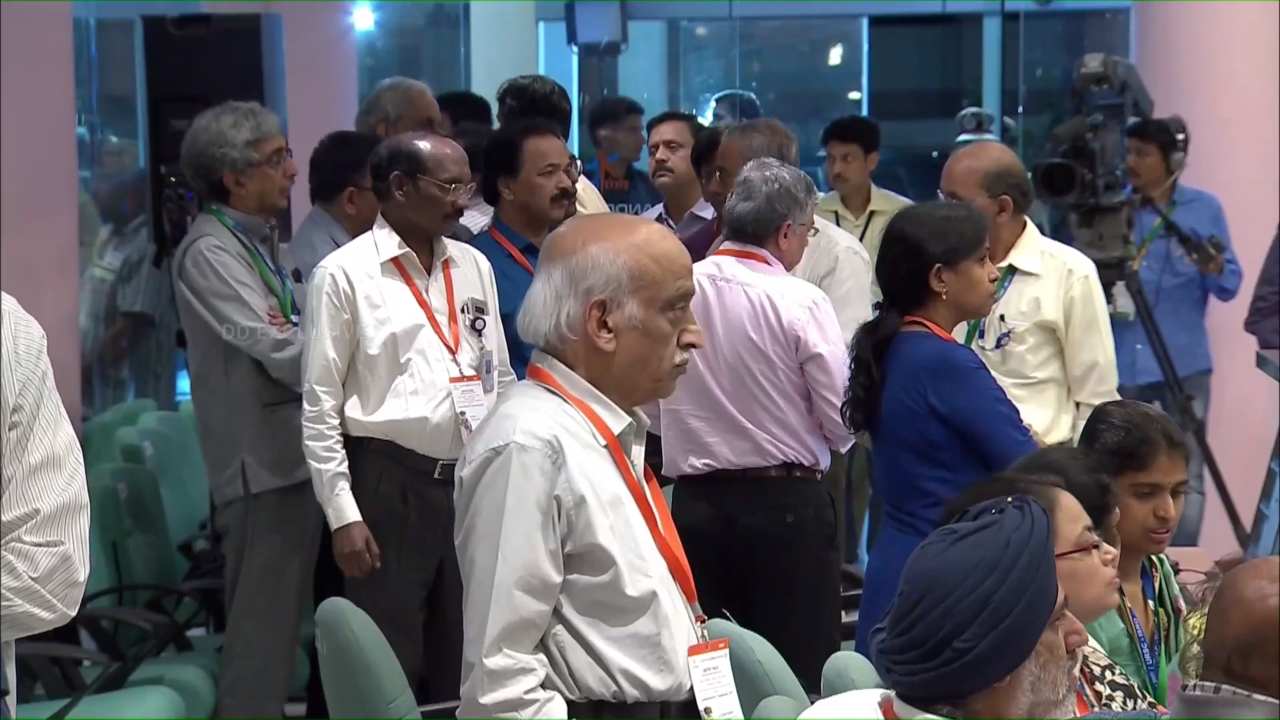
None of the important faces here look happy here.

*deep breath* 

September 7, 2019, 02:01:08 (IST)

The room is getting restless at ISRO’s command centre. 

As the lander reached within a kilometre, communication appears to have stalled and ISRO’s command centre is still waiting to hear from Chandrayaan 2’s mission control.

September 7, 2019, 01:56:33 (IST)

It’s not time to worry yet.

ISRO is waiting for updates from mission control.

September 7, 2019, 01:54:07 (IST)

Vertical descent next

The fine breaking phase has now ended, with less than 5 minutes and 2.7 kilometres to go till touchdown!

Advertisement
September 7, 2019, 01:45:40 (IST)

Lander module slowing down further by the end of the rough breaking phase.

Almost towards the end of the descent, the lander is now moving at speeds less than 60 mps, with the intention of soft-landing on the surface at 0 mps.

September 7, 2019, 01:42:43 (IST)

“Brute” breaking underway

2 minutes and 20 seconds into the descent, the lander is expected to reduce the speed of the spacecraft with brute force, by 480 metres per second.

September 7, 2019, 01:39:54 (IST)

Descent begins!

The descent has now begun! Four of the module’s propulsion engines will be used in this first ‘rough braking’.

September 7, 2019, 01:38:36 (IST)

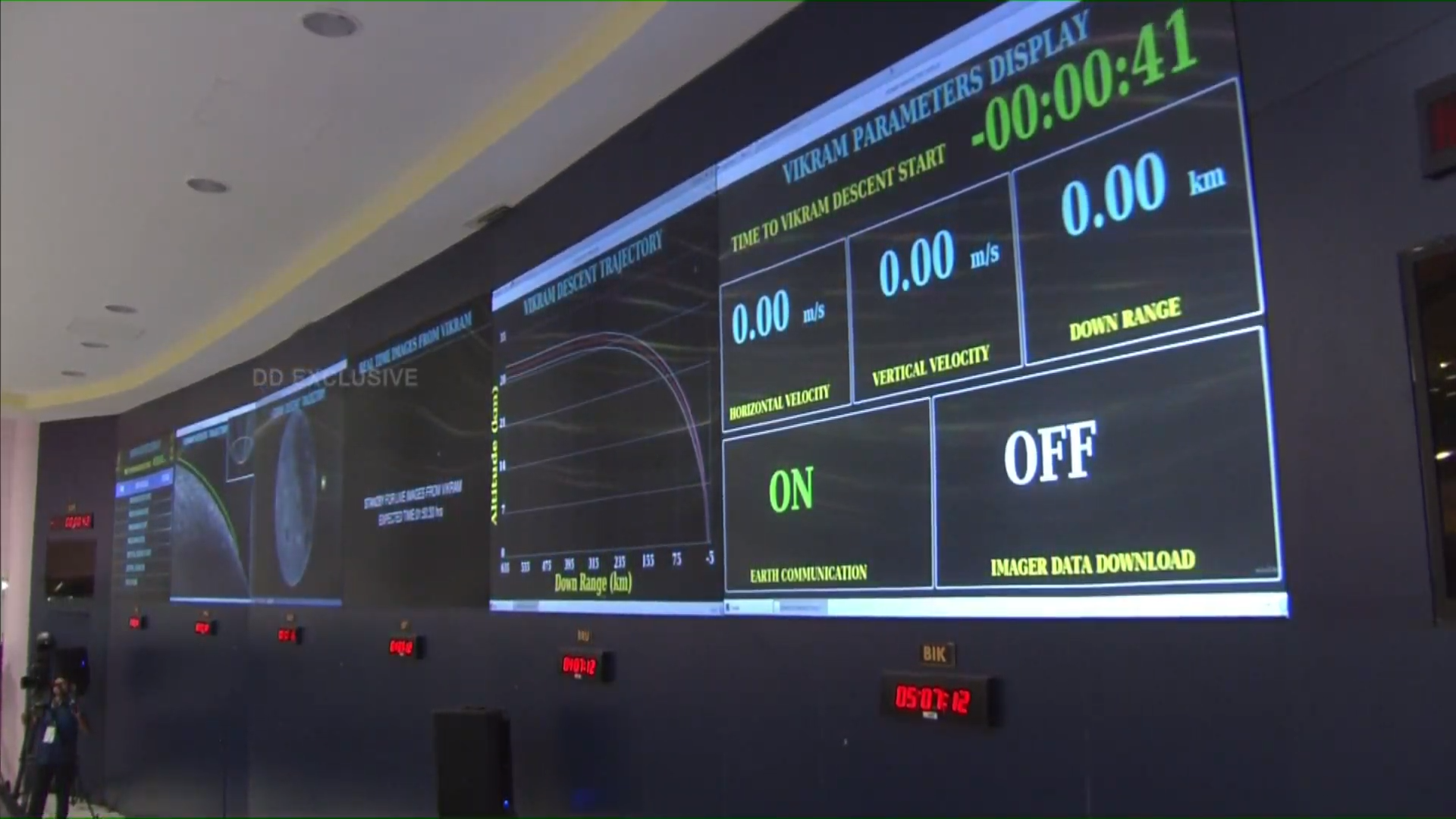
Applause erupts as the timer inches towards 00:00!

September 7, 2019, 01:36:37 (IST)

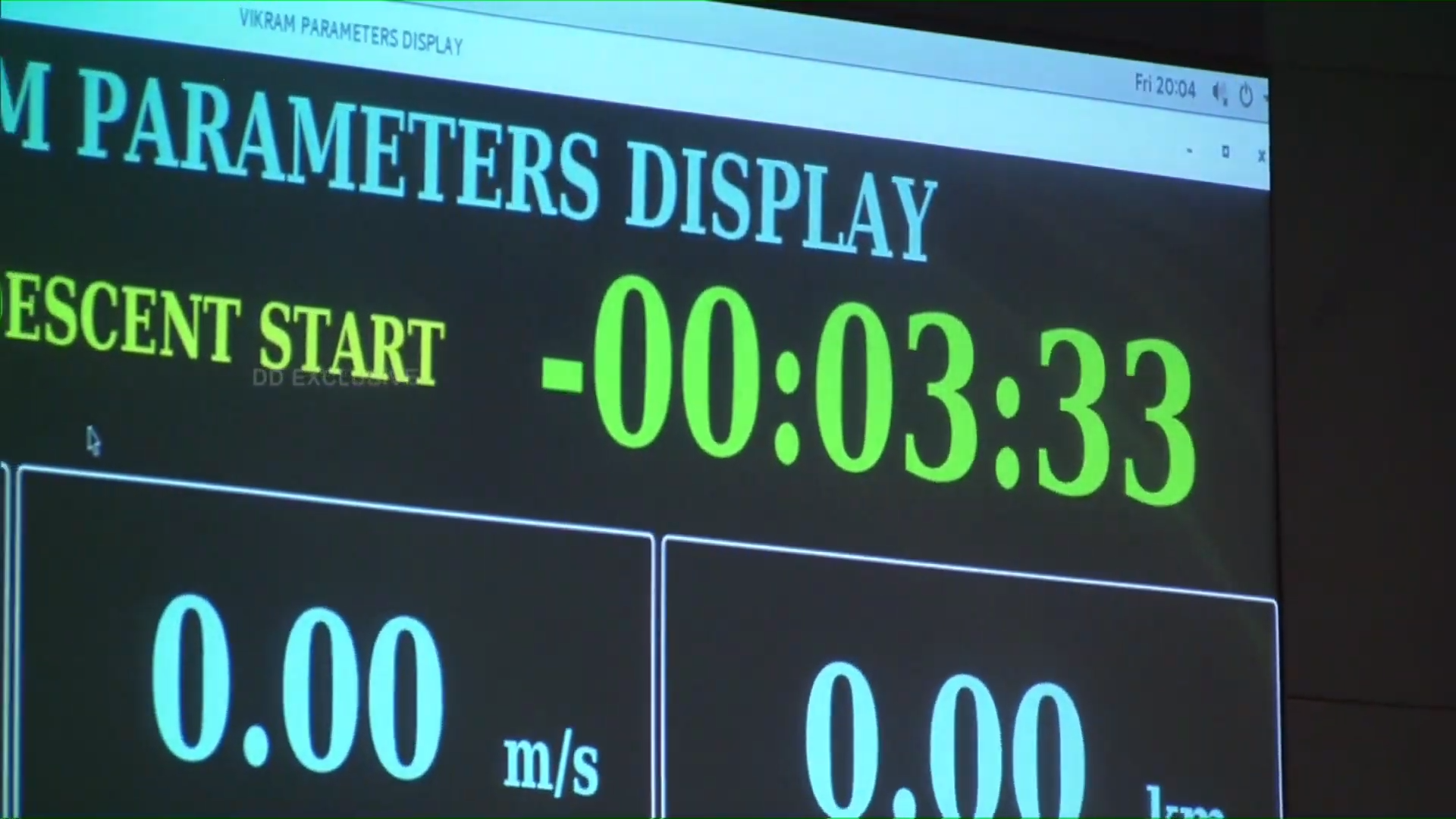
Under 3 minutes to go before first leg of the landing module’s descent.

September 7, 2019, 01:27:06 (IST)

Prime Minister of India in the house! Modi appears to have reached the control room. 

(and just in time too! 10 minutes to descent.)

Advertisement
September 7, 2019, 01:20:37 (IST)

Update on the Chandrayaan 2 orbiter

The orbiter, which weighed 2,370 kg at the time of launch, gets 70% of its mass from fuel. It carried ~1,680 kgs of fuel for the road, and to make in-orbit adjustments over its year-long mission. 

September 7, 2019, 01:17:29 (IST)

Scenes from the control centre

Here are some images from the heart of ISRO’s control centre in Bengaluru

September 7, 2019, 01:16:12 (IST)

As Chandrayaan 2 mission engineers run final checks and monitor the lander, viewing gallery is filling up!

September 7, 2019, 01:07:05 (IST)
ISRO’s livestream is now a-go!
September 7, 2019, 01:06:49 (IST)

What has been the most significant Moon mission for NASA?

NASA astronaut Jerry Linenger: Apollo 11 landing with Neil Armstrong, Buzz Aldrin and Michael Collins was fantastic! The Apollo 12 mission was good as well. But I think the most significant Moon mission for the US was Apollo 13. We didn’t make it to the Moon then. On the way, we had an issue in the tank, part of the spacecraft that got blown out.

But then we saw human ingenuity take over and keeping calm and working the problem in real time, getting all the astronauts back to Earth safely. It was probably NASA’s greatest moment, as things didn’t go according to plan but we were still able to get humans back to Earth.

September 7, 2019, 00:57:25 (IST)

We’re digging this Chandrayaan 2-inspired Tintin cover! 

Advertisement
September 7, 2019, 00:52:41 (IST)

GSLV-MkIII has a lot to do with making the Chandrayaan 2 & Gaganyaan missions a reality 

ISRO developed the GSLV MkIII with limited resources, limited cooperation from the world at large, strife from within, and a budget (of INR 160 Crores) that many space agencies would laugh at. This is nothing short of enviable. Here’s how ISRO’s heaviest rocket compares to some of the best in the world .

September 7, 2019, 00:23:38 (IST)

On the 15 mins of Terror: How scary is this, really? (2/2)

NASA astronaut Jerry Linenger: In this case of the Moon, there is no atmosphere. So, the Rover and Lander (modules) have to decelerate from a speed which roughly 25-30 times that of the fastest aircraft on land. If you are on the rover, you won’t hear anything as there is vacuum of space there.

So it’s a kind of freaky wow kind of thing, to bring the lander down from that speed. It is well thought out and it’s very autonomous.

September 7, 2019, 00:21:17 (IST)

On the 15 mins of Terror: How scary is this, really? (1/2)

NASA astronaut Jerry Linenger: It’s the critical part! I am reminded of my own coming back from the orbit, when we were going at Mach 25, which is 25 times the speed of sound. When you are entering the Earth’s atmosphere when the friction is high, so that’s our 45 minutes of terror. We have to hit the runway at the Kennedy Space Centre in Florida, at a speed of 225 knots! But you have the atmosphere and friction to slow you down.

September 7, 2019, 00:16:35 (IST)

From a bullock cart to the moon: A (very) brief history of ISRO

All India Radio has put together a short clip that talks about ISRO’s journey from its inception several decades ago.

September 7, 2019, 00:12:57 (IST)

When we look down on Earth, we realise that we are all oneNASA astronaut Jerry Linenger

Speaking about how space missions are unifying and aspirational, “I was with two Russian cosmonauts for five months. When we look down on Earth, we realise that we are all one. We have the same aspiration. We have the same humanness in us and we just want to move the mankind forward.” 

September 6, 2019, 23:57:02 (IST)

NASA astronaut and space analyst Jerry Linenger weighs in on what the landing means for the world!

“I just want everyone to know that the whole world is following this and it is not just Indians. This is the first time any country is going to the South Pole of the Moon!” says Linenger on Nat Geo’s live stream. “India is leading this and as a representative of the US, we are nervous and we are hoping for success. This increases the knowledge base of the Moon”

Advertisement
September 6, 2019, 23:50:48 (IST)

ISRO confirms that the broadcast will start at 1.15 am

Don’t forget to tune in, folks!

September 6, 2019, 23:43:26 (IST)

Jeff Bezos sends his best!

“Rooting for team India. Good luck, India! #Chandrayaan2,” he tweeted.

September 6, 2019, 23:10:32 (IST)

What can we expect from the Chandrayaan 2 over the next 24 hrs?

Tech2 Science reporter Kavya Narayanan gives you all the dope on what to expect tonight, including what Dr K Sivan means by ‘15 minutes of terror’

September 6, 2019, 22:51:54 (IST)

Important timestamps to note for tonight’s Vikram Lander touchdown

01.38 am: Start of landing module’s rough braking and descent

01.48 am: Start of landing module’s fine braking and descent

01.50 am: Start of local navigation around the landing site

01.52 am: First image of the Moon’s surface to be beamed back to Earth

01.53 am: Vikram touchdown

03.53 am: Pragyan ramp deployment

04.23 am: Pragyan rover powers ON!

05.03 am: Solar panels on Pragyan rover are deployed

05.19 am: Pragyan Rover rolls on down to the moon’s surface

05.29 am: Pragyan Rover touchdown!

05.45 am: Photograph of the Vikram lander by Pragyan

Chandrayaan 2  landing date and time, news, latest updates: K Sivan confirms that lander was operating normally till about 2.1 km from the moon’s surface. Communication with the landing module has since been lost. Data from Vikram’s descent is being analysed by the Chandrayaan 2 mission control team at ISRO for clues to the lander’s location, and its health.

Prime Minister Narendra Modi tweeted that he was at the ISRO centre in Bengaluru, joined by 60 children from all over the country that took part in ISRO’s space quiz from August. They won the opportunity to witness the soft-landing of the Vikram Lander on the moon along with the PM of India. Modi has also been tracking Chandrayaan’s progress over the past month and wanted everyone to witness this historic moment in Indian history.

This was India’s second mission to the moon, but its first attempt at soft-land on the moon. The lander Vikram was expected to make its final descent by 1.55 am on 7 September. ISRO’s chairperson K Sivan had described this as the most “terrifying” 15 minutes of the entire mission .

[caption id=“attachment_7200881” align=“alignnone” width=“1280”]Chandrayaan 2 composite orbiting the moon before the lander’s separation. Image: ISRO Chandrayaan 2 composite orbiting the moon before the lander’s separation. Image: ISRO[/caption]
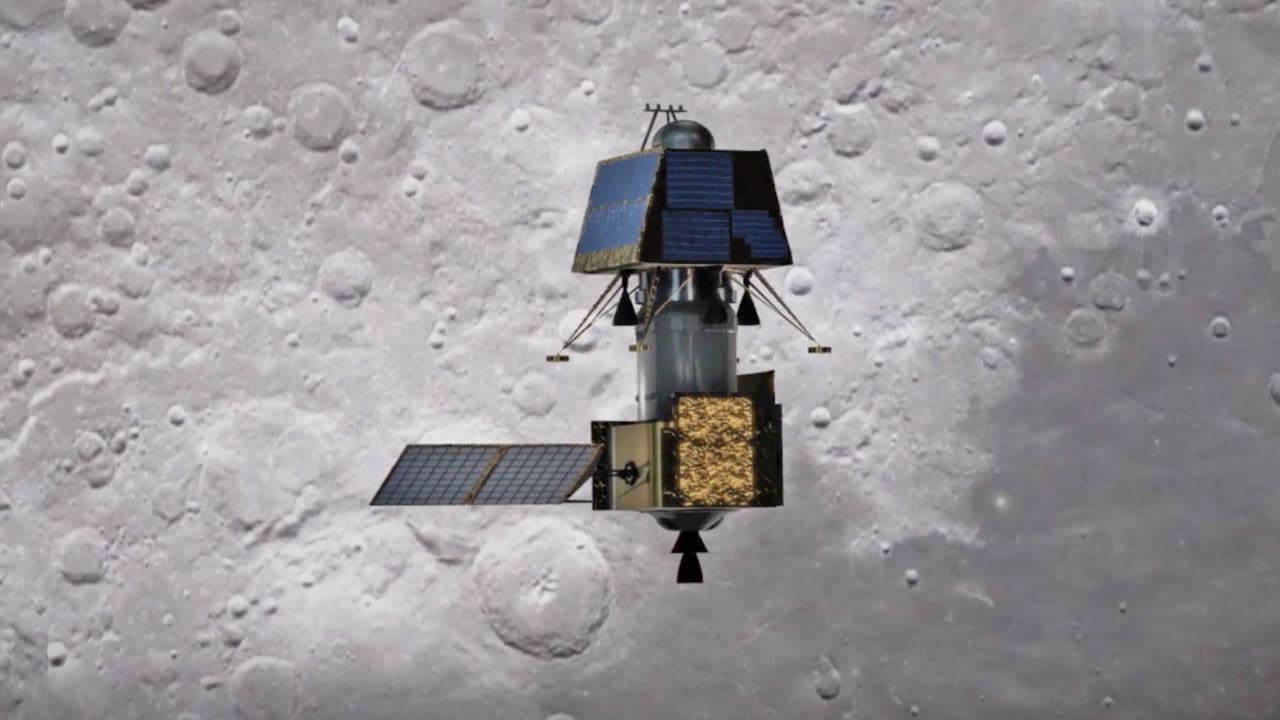
The (surprising) underdog in these final hours, the mission’s orbiter, is still healthy, ISRO confirmed. With a mission life of one year, the orbiter will orbit the moon and map the surface.

Some experts think the landing module didn’t survive the landing, and might have crash-landed. But there’s still no official word from ISRO about the lander’s status .

Pragyan rover

Pragyan, which means ‘wisdom’ in Sanskrit is the rover and the third component of the Chandrayaan 2 mission. The robotic vehicle that will have traversed the lunar surface on six wheels if the lander survived, was painted in the colours of the tiranga. It was expected to travel at speeds slower than a snail – one centimetre per second, with its maximum range being half a kilometre. The rover was equipped with two instruments to test the mineral and chemical compositions of the surface of the Moon along with the soil and rocks. Chandrayaan 1 confirmed the presence of water on the Moon’s surface. The rover will have studied the presence of water on the permanently shadowed parts of the Moon.

End of Liveblog
Home Video Shorts Live TV