

 "How Abraham pact with Somaliland is Netanyahu’s new masterstroke")
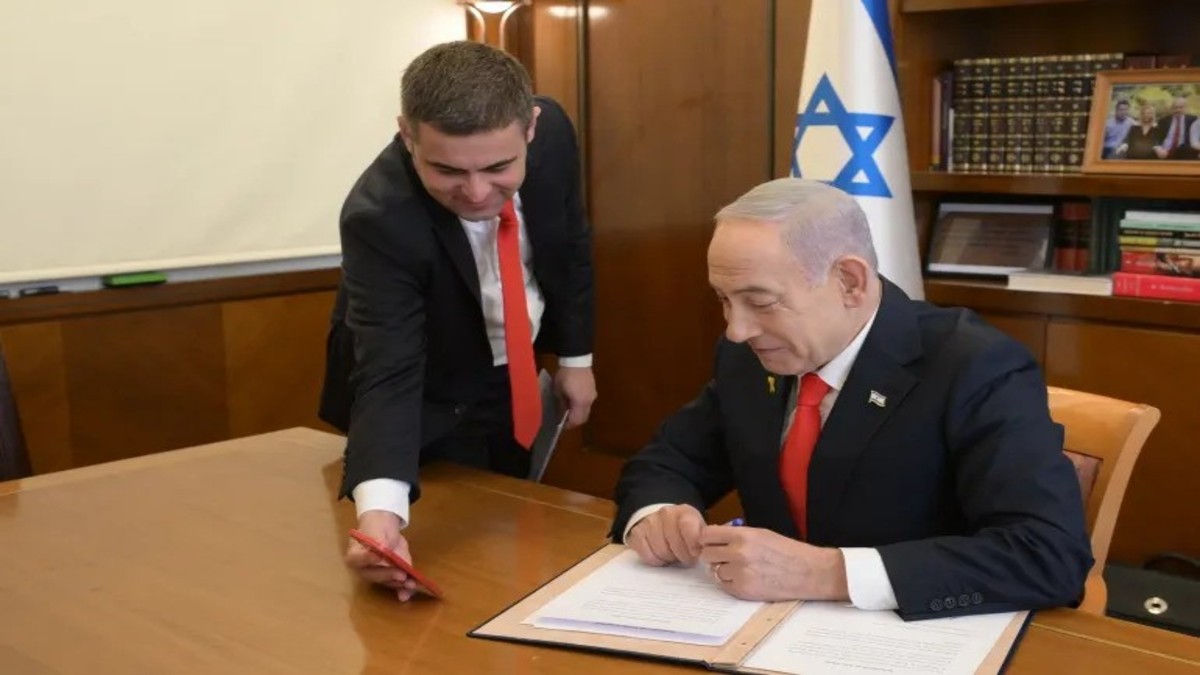
Israeli Prime Minister Benjamin Netanyahu does not miss any strategic opportunity, be it domestically or internationally. His recognition of breakaway Somaliland is one such declaration. An agreement was signed between Foreign Minister Gideon Sa’ar and the President of Somaliland, making Israel the first country to recognise the independence of Somaliland, which broke away from Somalia in the 1990s.
Bibi, while congratulating Somaliland President Abdirahman Mohamed Abdilahi for his commitment to peace, security and stability extended an invite for him to visit Israel. Both sides reiterated their commitment to work together. Prime Minister Netanyahu claimed that the declaration was in keeping with the spirit of the Abraham Accords. President Abdillahi expressed his desire to join them, with Somaliland expected to become the sixth country after the UAE, Bahrain, Sudan, Morocco and Kazakhstan to join the accords. This step is in concert with US President Donald Trump’s approach.
Somaliland declared independence from Somalia in 1991 and has pushed for international recognition for decades, with President Abdirahman Mohamed Abdullahi making it a top priority since taking office last year.
As expected, there was furor in Africa and the Arab world. The African Union, Djibouti, Egypt, Turkey and Saudi Arabia condemned the move of Israel to recognise the Northwest region of Somalia as an independent nation, underscoring that the sovereignty of Somalia must be respected.
Somalia called the decision a “deliberate attack” on its sovereignty that would undermine regional peace. The African Union (AU) rejected the move and warned that it risked “setting a dangerous precedent with far-reaching implications for peace and stability across the continent” and that Somaliland remains an integral part of Somalia.
Turkey and Israel have been at loggerheads in Syria, Gaza, Lebanon, Iran, West Asia in general and elsewhere, including Africa. No wonder the Turkish Foreign Ministry decried the move as expansionist. “This initiative by Israel, which aligns with its expansionist policy… constitutes overt interference in Somalia’s domestic affairs.” Turkey and Somalia have a strategic partnership, especially in the hydrocarbons sector. Turkey’s Africa Opening Strategy identifies Somalia as a priority country due to its strategic maritime location and untapped energy resources.
Quick Reads
View AllSomali territory is estimated to contain 6 billion cubic metres of proven natural gas reserves and as much as 30 billion barrels of offshore hydrocarbon potential. Turkey also has its largest military base in Somalia in Africa since 2017. Hence, these developments usher in a new area of contestation between the two rivals.
But Somaliland and Israel have been working on it for a long time, and more so since the onset of the Israel-Gaza war that brought in all the proxies of Iran into play against Israel. Houthis in Yemen, to a great extent, have been able to cause disruptions at will and have even directly attacked the Israeli airports and other logistics while making the Israeli Red Sea port of Eilat nearly bankrupt due to their missile reach. Hence, the collaboration with Somaliland will allow a military base on the strategically important ports of Berbera and Bosaso, opposite Yemen, as well as in the Horn of Africa, ceding Tel Aviv a unique strategic advantage.
Through the war with Gaza and to expel the Gazans, Israeli leadership has toyed with the idea of finding alternate locations to transfer them. Somaliland has been one of them. However, the Somalis had predicated this arrangement on the condition of the country being recognised as independent and sovereign. One should not be surprised if the US becomes the next one to recognise Somaliland, even though President Trump responded in the negative in response to a media query.
In any case, the Abraham Accords and their expansion remain Trump’s pet project, and any addition to them would please him beyond words. As such, strategic ports in the Indian Ocean, even if those of Israel will in reality be the US’ for the outreach. This arrangement will ipso facto change the maritime regional dynamic.
Besides, Tel Aviv and Abu Dhabi may also find closer alignment in the Horn of Africa, especially as both are allegedly working closely at the Socotra port in Yemen. The US, in any case, has a robust military base and presence in Djibouti. The UAE had agreed to set up a military base in Somaliland in 2017 itself at Berbera. Reports indicate that the facility has since been completed with advanced infrastructure, including a modern military port, a deep-water dock and an airstrip with hangars and support facilities. In June, Abu Dhabi finalised an agreement to build a railway line linking the Somaliland port to Ethiopia. Hence, Israel may be able to harness the support and cooperation of its Abraham Accords partners.
For both Israel and Somaliland, it is a diplomatic breakthrough and indeed an achievement, even though it will be some time before any other country follows suit. Bibi rightly claimed to his ‘Somalilandian’ counterpart, “Our friendship is seminal and historic. So, I’m very, very happy, and I’m very proud of this day.” How quickly and effectively the bilateral collaboration moves into the real strategic orbit will define the level of acceptance or pushback from the regional actors.
(The author is the former Indian Ambassador to Jordan, Libya and Malta and is currently a Distinguished Fellow with Vivekananda International Foundation. Views expressed in the above piece are personal and solely those of the author. They do not necessarily reflect Firstpost’s views.)

 "Iran's President Pezeshkian says country is in 'full-fledged' war with US, Israel & Europe")
 "Putin warns of military action if Russia-Ukraine war doesn't resolve by diplomatic means")
 "Zelenskyy heads to Florida for peace talks with Trump as Russia unleashes massive drone attack on Kyiv")
 "This Week in Explainers: What does Tarique Rahman’s return mean for Bangladesh-India ties?")
 "Iran's President Pezeshkian says country is in 'full-fledged' war with US, Israel & Europe")
 "Putin warns of military action if Russia-Ukraine war doesn't resolve by diplomatic means")
 "Zelenskyy heads to Florida for peace talks with Trump as Russia unleashes massive drone attack on Kyiv")
 "This Week in Explainers: What does Tarique Rahman’s return mean for Bangladesh-India ties?")



