

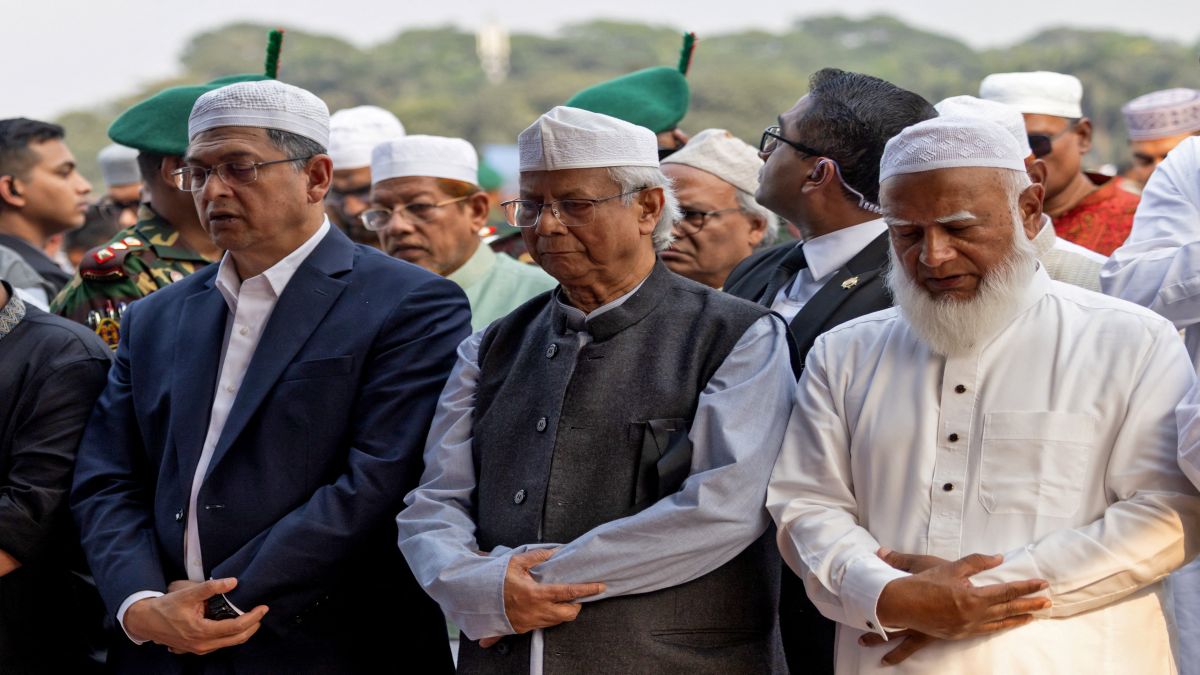
 "How persecution of Hindus in Bangladesh serves Yunus regime’s electoral calculus")
The persecution of Hindus in Bangladesh signals the rot of radicalism that runs so deep in Bangladesh. Communal bigotry and anti-India jibes conflate to exacerbate the socio-political atmosphere beyond repair. The rhetoric of change and student-led revolution was a mere cosmetic cause. They were well-orchestrated moves to position Bangladesh as a chronic irritant and antithesis to India’s peaceful rise as a recognisable leader of the Global South.
Religion was weaponised to impose geopolitical pressure on India from its immediate neighbourhood. The lynching of Dipu Chandra Das, a Hindu garment worker, on December 18, 2025, in Mymensingh, discloses the debilitating conditions of the Hindus in Bangladesh. Blasphemy was weaponised to legitimise the gruesome killing of this Hindu youth. The underlying rationale was to deliver a political message of religious solidarity and anti-India mobilisation. This combination works for the radicals and the interim government to determine the scope and character of the forthcoming election in February 2025.
The usual crocodile tears from the interim government were intended to clean its image and send signals of its non-involvement. The paradox is so obvious that it does not require any deep reading to uncover the interim government’s intentions and political game. The stage is well set to harp on Islamism, radicalism, Hindu persecution and anti-India sloganeering to peddle the frenzy of religious nationalism to alter the character of the coming election.
The same tactics were used to overthrow the Hasina government. It is repeated now to impact the February election. Religion, therefore, is made into an electoral issue, rather than the economy and other relevant and fundamental issues. Religious nationalism is used to overshadow other issues.
The interim government has made the conditions in Bangladesh miserable for over a year since its forceful occupation of power through undemocratic means. Jamaat-e-Islami and its affiliates, the National Citizen Party (NCP) and radical student wings, repetitively stoke religious nationalism as a springboard to political relevance and possible electoral success. They have nothing to go to people to ask for votes except for their religion.
Electoral Parody
The official schedule for the election in Bangladesh was declared on December 11, 2025. The date of the nationwide polling in Bangladesh has been finalised to be held on February 12, 2026. The date of the election was declared a year and a half after Prime Minister Sheikh Hasina was ousted from Bangladesh in August 2024. This is going to be the 13th general election in the history of Bangladesh’s electoral journey since its independence from West Pakistan’s horror and hegemony. A simultaneous referendum has also been declared to be held on February 12, 2026, called ‘July Charter’, to undertake constitutional and state reforms.
Quick Reads
View AllBangladeshi expatriates can vote through postal ballots. This is a new addition. Its efficacy is yet to be seen. However, a cloud of uncertainty looms large on the political horizon of Bangladesh. The groundswell of discontent, disenchantment and fatigue is visually evident. The election is a hogwash. It is a fixed match. What is to be seen is a mere orchestration of what has already been planned. The electoral drama has yet to unfold.
An electoral fiasco is waiting to be revealed. More chaos and disruption are queued to unfold in both pre- and post-election scenarios. The parody of the election is perceptible from the lynching of the Hindu youth. The case of this lynching is reported, but many more cases of daily assault and regular aggression remain unreported, as the sources of information are handcuffed under the unwritten rule of restricted reportage.
Political Mudslinging
Jamaat-e-Islami and its affiliates completely dominate the current political ecosystem. The National Citizen Party (NCP), in other words, the Jatiya Nagorik Party, has spiralled from the July fiasco. Its purpose was to oust Sheikh Hasina from Bangladesh. After its purpose was delivered, its political objectives are also over. The sloganeering around the creation of a ‘second republic’ through justice, anti-corruption, transparency, and constitutional reform was mere melodrama, designed to secure limelight, attention, and relevance.
All verbosity is over. NCP holds no gravitas in the electoral process and no connection with the grassroots. The so-called rebels are alleged to have participated in extortion and other illegal and objectionable activities. Some protesters have reportedly become wealthy overnight through illicit means. Ideology, fanaticism and religion have intermingled to paralyse the body politic of Bangladesh. Paralysis is so deep. Recovery is impossible.
Chief Adviser Muhammad Yunus will oversee the electoral process. The man has turned out to be a recipe for disaster in every conceivable sense. To expect him to ensure a fair election is an oxymoron. It suggests that the election will be a murky affair. The consistent aggression against the Hindus explains the law and order stasis.
Yunus has already taken undue advantage of the office while releasing dreaded prisoners, making provocative statements on the vivisection of India’s northeast, carrying out foreign relations, assuming the role of a ruler and reconnecting with Pakistan, Bangladesh’s arch enemy.
Radicalism, Islamism, anti-India vitriolic, sickening indulgence in the cartography of greater Bangladesh, economic meltdown and renewal of relationship with Pakistan snowball Bangladesh’s problem into an irreparable reality. The precarity of the minorities, especially of the Hindus and their womenfolk, is inconceivably dire. The Hindu minorities are depicted as the mirror image of India. This equivalence exacerbates their everyday life. The thinning minority thins further to become a nonentity, politically invisible and electorally imperceptible.
The election in Bangladesh is expected to happen between the Bangladesh Nationalist Party (BNP) and Jamaat-e-Islami. They have formed a coalition government in the past. The latter was a junior partner. BNP’s camaraderie with the Islamists in the past illustrates its hand-in-glove political approach. BNP will not be any better. It cannot restrict the Islamists from exercising restraint. They will find a safe political ecosystem to continue their acts of aggression and radicalism.
Minorities will not see the political reversal any better under the BNP. Begum Khaleda Zia is the current head of BNP. Her health condition is not fit for electoral engagement. Her son, Tarique Rahman, is the acting chairman and lives in London. Anticipation was made of his return to steer the political journey of the BNP in a Jamaat-led political environment. His return to Bangladesh to lead the party is constantly deferred. It is reported that his security is the main reason for the deferral of his visit to Bangladesh.
The caretaker government has banned the Awami League. Its non-involvement in the electoral process raises a question mark on the travesty of democracy in Bangladesh. The result is predictable. It is going to be the BNP and Jamaat coalition. This time, the latter will occupy the front seat.
If BNP withdraws and fails to stitch a coalition, Jamaat will rule unopposed, consigning the country to irreparable anarchy. It will repeat the accusations the Awami League faced during the 2019 election. It was reported that the Awami League satirically fought against itself in the 2019 election in the absence of an opposition.
This time, Jamaat-e-Islami will fight against Jamaat-e-Islami. There will be no opposition to contest in the election. The result will be the Jamaat-e-Islami ruling Bangladesh. Its unfinished project of radicalisation of Bangladesh will be rolled out. The journey of reversal will take place from Bangladesh to East Pakistan.
Yunus will ensure the endgame of Bangladesh. He may become the irreplaceable President of Bangladesh, cleansing all his misdeeds under the protection of a constitutional office. This may sound reductionist. Reports of violence in the aftermath of the announcement of election dates circulate on social media. The lynching of the Hindus and spreading fear psychosis run unabated. The days ahead are not going to be smooth.
Whatever Sheikh Hasina’s flaws and foibles may be, she was the architect of a new Bangladesh. Perfection in politics is an undesirable category. She recovered Bangladesh from anarchy to economic stability. She made Bangladesh a visible player in the international arena. All ran down the drain with the July fiasco, which led to the anarchy and ouster of Hasina.
The promise of a new republic has turned out to be a republic of lies, paralysis, lawlessness and complete collapse. Jamaat-e-Islami will repeat Hasina’s hubris on an unimaginable scale, outsmarting her in its activity and amplification of disorder. The days ahead for Bangladesh are going to be rough, and the multitude of uncertainties will soon take centre stage.
People will soon be disenchanted by the promise of difference. Jamaat-e-Islami has reportedly included its people in the government offices, universities and judiciary, taking advantage of the political paralysis and its unelected interference in every sphere of public activity through the power-hungry octogenarian. They will extend support to Jamaat-e-Islami to secure political relevance in Bangladesh. The rot will soon spread incurably to every sphere of activity.
(Jajati K Pattnaik is a Professor at the Centre for West Asian Studies, School of International Studies, Jawaharlal Nehru University, New Delhi. Chandan K Panda is an Assistant Professor at Rajiv Gandhi University (a Central University), Itanagar. Views expressed are personal and solely those of the authors. They do not necessarily reflect Firstpost’s views.)

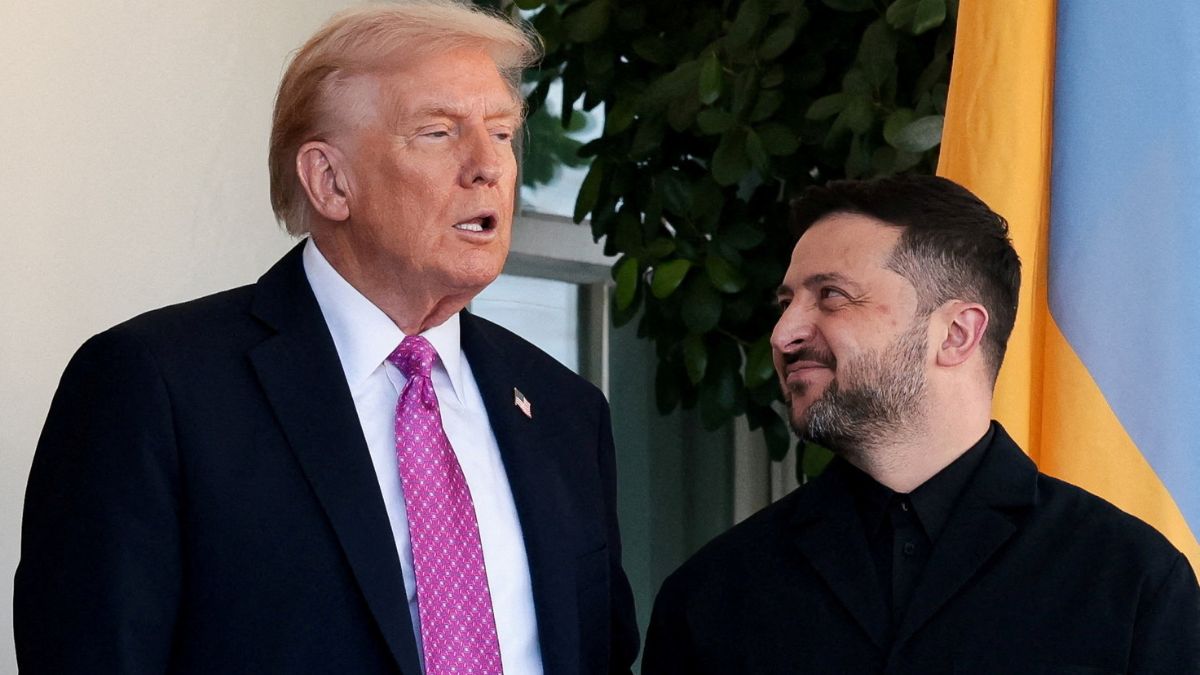 "Zelenskyy to meet Trump in US on Sunday: Is an end to Russia-Ukraine war close?")
 "Why Pakistan’s mass exodus of skilled professionals puts Asim Munir’s ‘brain gain’ claim under scrutiny")
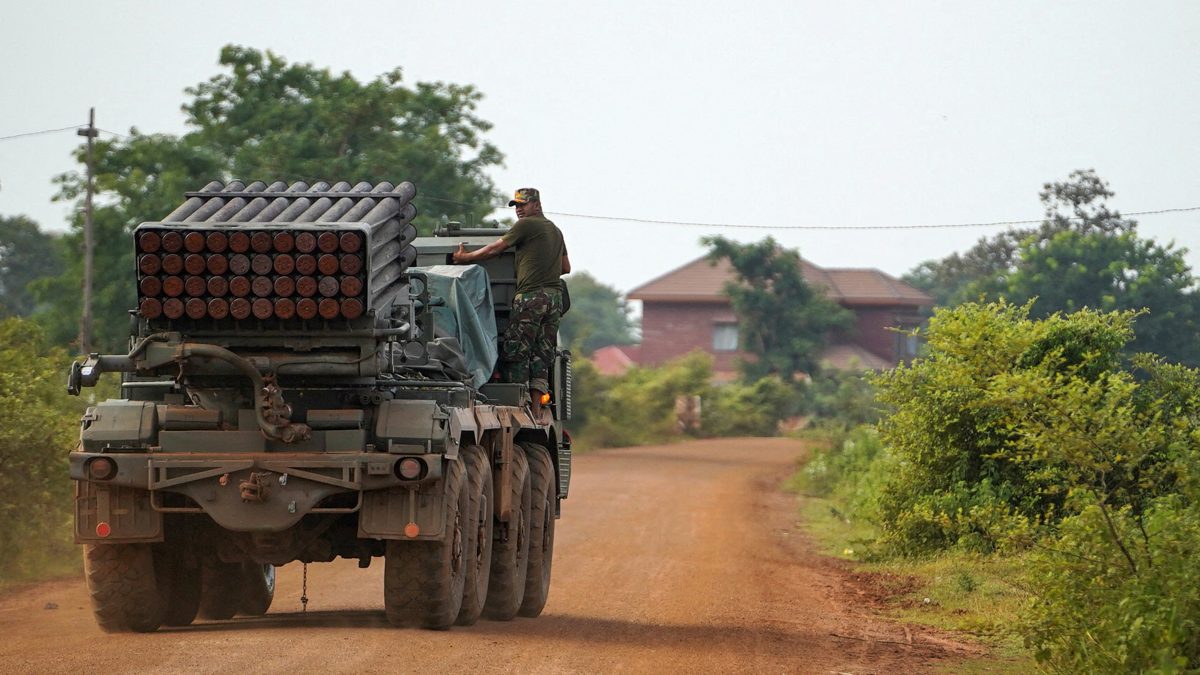 "Thailand, Cambodia agree to an 'immediate ceasefire', halting fierce border clashes")
 "Bangladesh: BNP's Tarique Rahman pays tribute at Hadi’s grave amid tight security")
 "Zelenskyy to meet Trump in US on Sunday: Is an end to Russia-Ukraine war close?")
 "Why Pakistan’s mass exodus of skilled professionals puts Asim Munir’s ‘brain gain’ claim under scrutiny")
 "Thailand, Cambodia agree to an 'immediate ceasefire', halting fierce border clashes")
 "Bangladesh: BNP's Tarique Rahman pays tribute at Hadi’s grave amid tight security")



