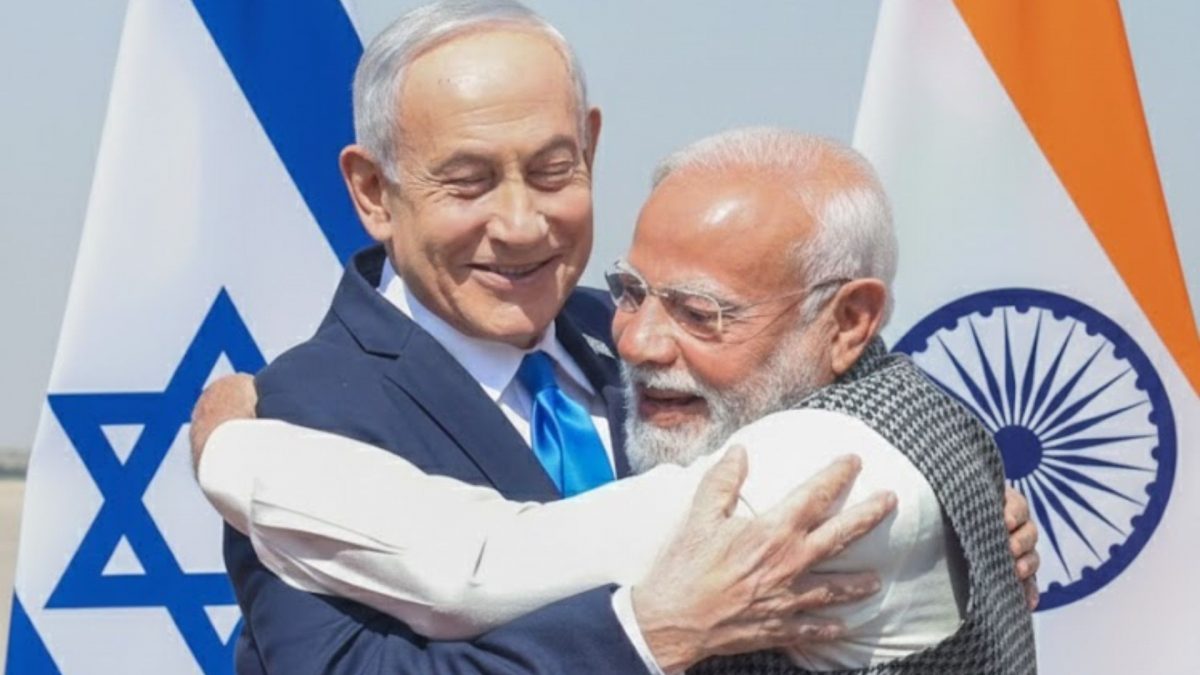
 "Calibrated engagement: PM Modi’s Israel visit signals India’s nuanced West Asia doctrine in motion")
Prime Minister Narendra Modi’s visit to Israel comes at a time when West Asia is unsettled, alignments are fluid and strategic certainties are scarce. For India, this engagement is not simply bilateral diplomacy; it is a carefully calibrated exercise in maintaining equilibrium across one of the world’s most politically charged regions.
Over the past decade, PM Modi’s rapport with Israeli Prime Minister Benjamin Netanyahu has become emblematic of a transformed India-Israel partnership. What was once discreet is now open, strategic and confident. Defence cooperation, high technology, intelligence sharing, agricultural innovation and water management have elevated Israel into a key pillar of India’s security and modernisation matrix.
Yet India’s West Asia policy has never been about choosing sides. It has been about managing equations in India’s national interest.
Israel: Technology, Security and Strategic Depth
Since establishing full diplomatic relations in 1992, India’s engagement with Israel has steadily deepened. Today, Israel is among India’s most significant defence partners, supplying advanced surveillance systems, drones, missile technologies and border management solutions. Beyond procurement, the relationship increasingly emphasises joint research, co-development and technological adaptation to Indian conditions.
Israel’s experience in counterterrorism, rapid mobilisation and the integration of artificial intelligence into battlefield management aligns closely with India’s evolving security doctrine. As warfare becomes multi-domain and technology-driven, India values Israel not merely as a supplier but as a knowledge partner.
For India, strengthening this pillar reinforces its self-reliance ambitions while ensuring operational preparedness.
The Gulf Imperative: Diaspora, Energy and Economics
Even as ties with Israel flourish, India’s foundational interests in the Gulf remain paramount. Nearly nine million Indians live and work across the Gulf region. Remittances exceeding $50 billion annually underpin household incomes and foreign exchange reserves. Energy flows from Saudi Arabia, the United Arab Emirates (UAE) and others remain critical to India’s economic stability.
Over the last decade, India has significantly elevated its engagement with the Gulf nations. Relations with the UAE have expanded into infrastructure, fintech, logistics and investment partnerships. Strategic cooperation with Saudi Arabia now encompasses counterterrorism, maritime security and long-term energy coordination.
India therefore has to tread carefully. Any perception of imbalance in its West Asia posture could reverberate across diaspora welfare, trade flows and energy security. Relations between several Arab states and Israel have, over the years, also significantly improved. India is fully mindful of that.
Quick Reads
View AllOld Friendships Matter: Egypt and Jordan
India’s diplomacy in West Asia also rests on longstanding relationships that predate contemporary geopolitical realignments. Its ties with Egypt and Jordan reflect decades of political engagement, development cooperation and shared positions in multilateral forums.
These relationships may not dominate headlines, but they contribute to India’s credibility as a consistent and independent actor. Preserving such ties reinforces India’s image as a country that values continuity even as it builds new strategic partnerships. In a region where memory shapes diplomacy, historical goodwill remains an asset.
Iran, Connectivity and Strategic Access
No balancing act in West Asia is complete without factoring in Iran. While Israel views Iran primarily through a security lens — particularly concerning its nuclear ambitions — India’s engagement with Tehran is driven by connectivity and continental access.
The development of the Chabahar Port offers India a gateway to Afghanistan and Central Asia, bypassing Pakistan. It connects to the International North-South Transport Corridor, enhancing trade routes towards Russia and Europe.
India’s approach has been one of compartmentalisation: deepening strategic cooperation with Israel while maintaining pragmatic ties with Iran. This dual engagement reflects India’s strategic autonomy.
IMEC: Connectivity as the New Geopolitics
A critical dimension of PM Modi’s current engagement with Israel is the future of the India-Middle East-Europe Economic Corridor (IMEC).
IMEC envisions linking Indian ports to the Gulf by sea, connecting onward by rail through Saudi Arabia and Jordan, and eventually reaching European markets via Israel’s Mediterranean access. It is as much a geopolitical statement as an economic initiative. For India, it promises supply chain resilience, diversified trade routes and deeper integration with West Asia’s economic transformation.
However, regional instability — particularly the Gaza conflict — has slowed momentum. Infrastructure requires predictability. Political volatility raises risk calculations. India is keen to ensure that IMEC regains traction, not merely for commerce but for strategic positioning.
Israel’s role in the corridor’s western leg makes stability there indispensable. Reviving IMEC would anchor India more firmly in the region’s future economic architecture.
Flexible Groupings: The I2U2 Dimension
Another evolving layer in this architecture is the I2U2 Group, comprising India, Israel, the UAE and the United States. Unlike traditional alliances, this is a functional platform focused on food security, renewable energy, infrastructure and technology.
The grouping illustrates a broader trend: West Asia is experimenting with flexible, project-based coalitions centred on economics and development rather than rigid military blocs. For India, participation enhances its regional profile without compromising independence.
Such platforms allow India to work simultaneously with Israel and key Gulf partners within a framework that includes Washington but does not bind New Delhi into formal alignments.
Gaza, Two-State Realities and Diplomatic Contradictions
The Gaza conflict presents the most sensitive dimension of India’s balancing act. The United States has yet to articulate a clear end state for Gaza. Israel prioritises security and deterrence. Arab states weigh domestic opinion against strategic calculations.
India’s long-standing support for a two-state solution remains intact. At the same time, it unequivocally condemns terrorism and recognises Israel’s right to defend itself. These positions are not mutually exclusive, though they often generate diplomatic friction.
India is not part of emerging peace frameworks but remains observant and cautious. Domestic sensitivities, regional partnerships and global expectations all intersect here.
Contradictions exist — but diplomacy thrives on managing contradictions, not eliminating them.
A Decade of Calibration, A Decade Ahead
Over the past twelve years, PM Modi has built working relationships across divides — engaging Israel, strengthening Gulf partnerships, maintaining access to Iran and preserving traditional friendships with Egypt and Jordan. Few leaders have invested so consistently in West Asia’s diverse capitals.
The central challenge now is continuity amid turbulence. India must tiptoe through shifting configurations without forfeiting strategic gains. Nothing should be lost; more should be gained.
If the last decade was about establishing presence and trust, the next must focus on institutionalising gains — through connectivity projects like IMEC, technology partnerships with Israel, economic integration with the Gulf and sustained dialogue across fault lines.
In a fractured West Asia, India’s strength lies in achieving equilibrium. PM Modi’s Israel visit underscores that the objective is steady, interest-driven engagement.
Replicating the achievements of the past twelve years will require the same clarity of purpose: partnerships anchored in realism, flexibility in the face of contradictions and unwavering attention to India’s national interests.
West Asia will remain complex. But complexity, handled with patience and prudence, can be an opportunity rather than a liability.
(The writer is the former Commander of India’s Srinagar-based Chinar Corps. Currently he is the Chancellor of the Central University of Kashmir and a member of the National Disaster Management Authority. Views expressed in the above piece are personal and solely those of the author. They do not necessarily reflect Firstpost’s views.)

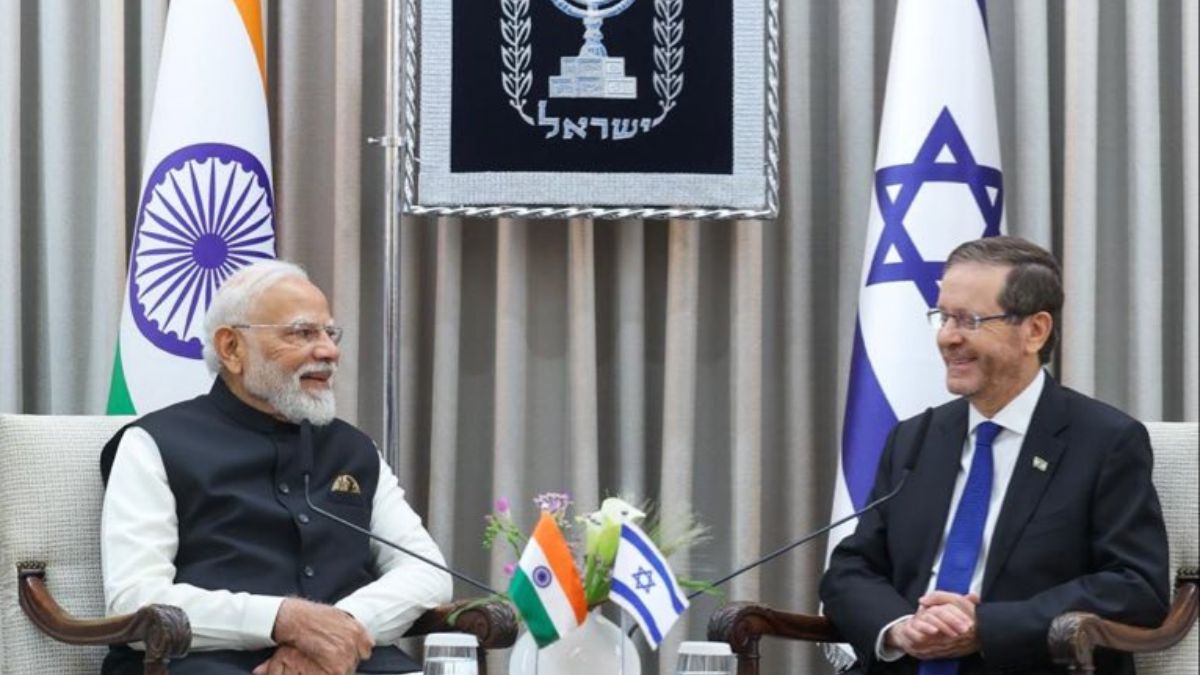 "PM Modi Israel Visit Live Updates: 'India is essential to the future of the Middle East', says Herzog during bilateral meeting with PM Modi")
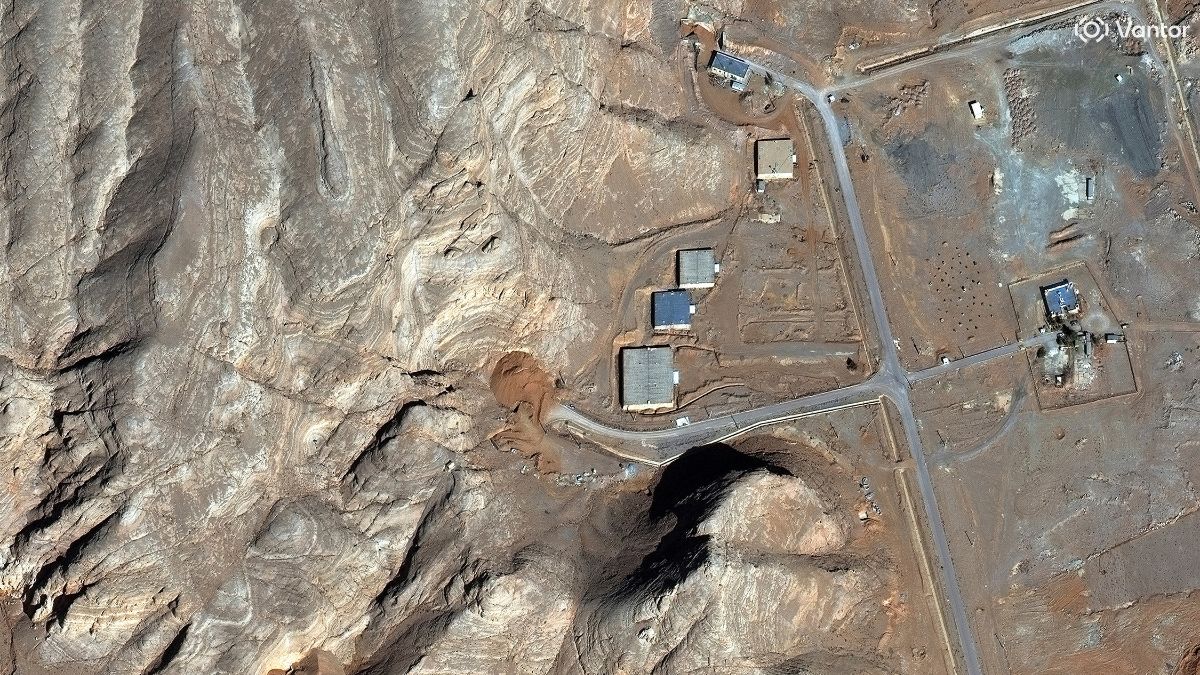 "Has Iran rebuilt its nuclear programme as US claims?")
 "Trump vowed to end Ukraine war in 24 hours, but he still can’t — Putin’s maximalist goals to blame?")
 "Can King Charles save Veeraswamy, UK’s oldest Indian restaurant?")
 "PM Modi Israel Visit Live Updates: 'India is essential to the future of the Middle East', says Herzog during bilateral meeting with PM Modi")
 "Has Iran rebuilt its nuclear programme as US claims?")
 "Trump vowed to end Ukraine war in 24 hours, but he still can’t — Putin’s maximalist goals to blame?")
 "Can King Charles save Veeraswamy, UK’s oldest Indian restaurant?")