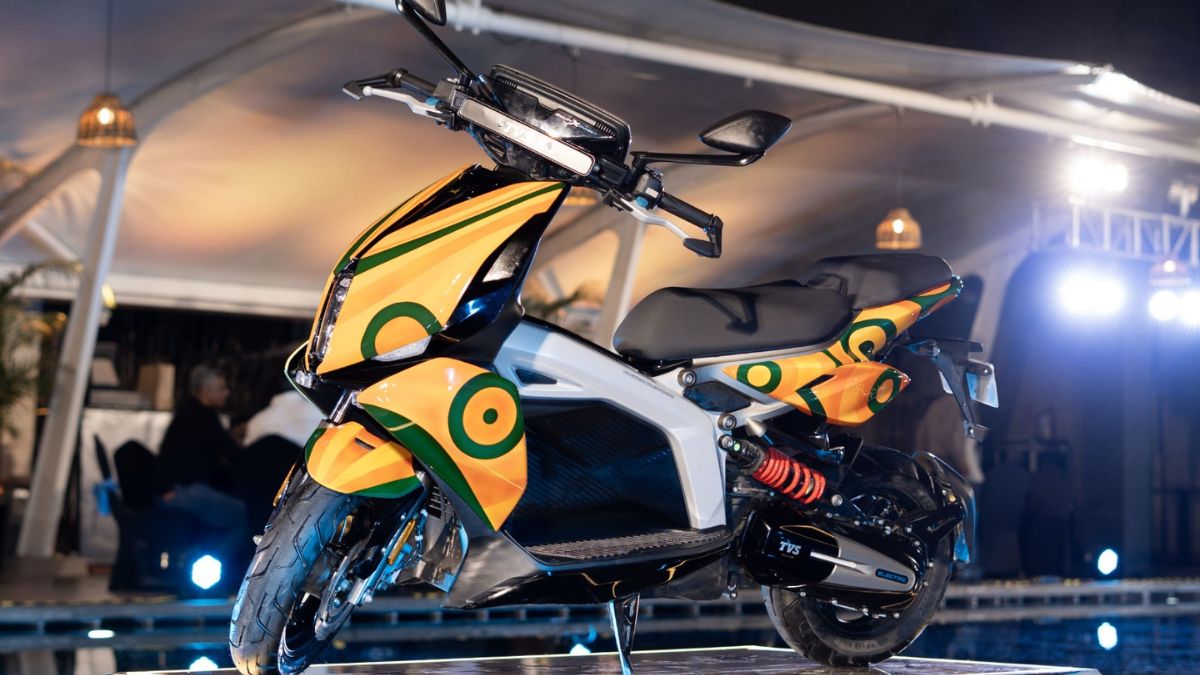
 "Can mobility products become collectible items, similar to art?")
Automobiles aren’t just machines anymore - they’re becoming statements.
As design, culture and storytelling start to shape mobility, the line between automobiles and art is quickly fading. That shift was on display at the recent TVS X Collectors’ Soirée, where vehicles were presented as more than just engineering feats.
So, what does this shift mean for how we build, experience and even collect vehicles? Firstpost spoke with Mr. Gaurav Gupta, President - India 2W Business, TWS Motor Company, who shared his insights into the ideas driving this change.
1. Automobiles and art have traditionally existed in very different spaces - how do you see these two worlds coming together?
The convergence of automobiles and art feels like a natural evolution.
“Mobility today is no longer viewed purely through a functional lens; it is increasingly being seen as part of a broader ecosystem of design, culture and craftsmanship,” says Gupta.
He further adds that “vehicles are beginning to reflect not just engineering capability, but also narrative, identity and artistic expression, allowing them to exist within cultural and creative spaces.”
2. What does it take for a mobility product to move from being functional to becoming collectable?
Sharing with us, Gupta says that a mobility product becomes collectable when it goes beyond performance and specifications to embody story, rarity and cultural relevance.
“Elements such as design inspiration, craftsmanship and context play a key role. When a product draws from heritage, art or unique narratives and interprets them through a contemporary lens, it transforms into something more than a machine - it becomes a piece of cultural expression,” he explains.
3. Who is the collector of tomorrow - an automobile enthusiast, an art lover, or a new hybrid of both?
According to Gupta, the collector of tomorrow is likely to be a blend of both.
“There is a growing audience that values engineering and performance, but also deeply appreciates design, storytelling and cultural meaning. For them, ownership is not just about utility or status - it is about engaging with an object that reflects a broader narrative or personal identity,” he states.
Quick Reads
View All4. Do you see designers and artists playing as important a role as engineers in the future of mobility?
“Absolutely! The future of mobility lies at the intersection of technology, design and culture,” notes Gupta.
To him, while engineering will always be fundamental, designers and artists are becoming equally important in shaping how products are experienced and perceived.
“Their involvement brings in new perspectives on form, materials and storytelling, turning vehicles into more holistic and emotionally resonant creations,” adds the TVS President.
5. Do you think vehicles in the future will be remembered more for their performance - or for the stories and emotions they represent?
“Performance will always be essential, but what will increasingly distinguish vehicles is the story they carry and the emotions they evoke,” mentions Gupta.
According to him, as mobility evolves, products are being seen not just as functional tools, but as expressions of identity, aspiration and cultural value.
The emotional and narrative dimension is likely to play a much larger role in how they are remembered.


 "Iran Israel War Live News: Iran shifts universities to online classes as Israeli strikes intensify")
 "F-15E, A-10 Thunderbolt, Black Hawk: The US jets and choppers hit by Iran")
 "Seventh India-flagged LPG tanker crosses Strait of Hormuz")
 "Who is Rini Sampath? Tamil Nadu-born becomes first South Asian to run for mayor in Washington DC")
 "Iran Israel War Live News: Iran shifts universities to online classes as Israeli strikes intensify")
 "F-15E, A-10 Thunderbolt, Black Hawk: The US jets and choppers hit by Iran")
 "Seventh India-flagged LPG tanker crosses Strait of Hormuz")
 "Who is Rini Sampath? Tamil Nadu-born becomes first South Asian to run for mayor in Washington DC")