 "Is the 'NRI dream' fading? The promise of elsewhere is losing its certainty")
For decades, the idea of leaving India carried a quiet certainty. It was not always framed as a choice, but as a progression: study hard, secure a degree, and, if possible, leave. To go abroad was to move forward.
That aspiration scaled into something measurable. India today has the world’s largest diaspora, with more than 18 million people living outside the country, according to United Nations estimates. In 2022 alone, over 750,000 Indian students went abroad, nearly doubling pre-pandemic numbers.
A pathway under strain
The desire to leave still holds the same. The conditions under which that desire is pursued have changed.
In the United Kingdom, new rules restricting dependents for international students have narrowed possibilities for those hoping to build longer-term lives. Canada, once seen as one of the more accessible destinations, has moved to cap student permits amid mounting housing pressures. In the United States, the H-1B visa system continues to function through a lottery, with applications far exceeding available slots, more than 700,000 for roughly 85,000 places in recent cycles.
The effect is cumulative. What once appeared as a relatively linear route from education to employment to settlement now feels contingent at every stage. Entry is uncertain, stay is uncertain, and even belonging, for some, feels provisional.
The economics of elsewhere
If policy has complicated the pathway, economics has altered the promise. Across cities like London, Toronto and New York, the cost of living has surged. Rent, in particular, has become a defining pressure, with migrants often bearing the sharpest edge of housing shortages across OECD economies. For many young Indians, especially those early in their careers, higher salaries no longer translate into higher savings. The arithmetic has shifted. Earning more does not necessarily mean keeping more.
At the same time, India is no longer the place it once was in the migration imagination. As one of the world’s fastest-growing major economies, it offers expanding opportunities in technology, consulting and entrepreneurship. For some, the gap between “here” and “there” has narrowed, not entirely, but enough to complicate the decision to leave.
A narrative, unfolding in public
If earlier generations relied on word of mouth, on cousins, neighbours, distant relatives, this one encounters migration through a constant stream of images and accounts.
On social media, Indian students and professionals abroad document the granular realities of life outside: the visa anxieties, the job searches, the loneliness that sits beneath curated images of success. These accounts are not negating the opportunities that migration still offers, but they make visible what was once privately absorbed. The narrative is about maintenance, beyond just arrival.
Quick Reads
View AllThe possibility of return
Alongside this, the idea of return has begun to lose some of its stigma.
There are more visible accounts of professionals moving back to cities like Bengaluru, Hyderabad or Gurugram as a recalibration. Some cite family, others the pull of India’s growing economy, still others a desire for familiarity over distance.
These are not mass reversals, but they are enough to shift perception. Leaving is no longer irreversible, and staying is no longer a compromise.
A question, rather than a conclusion
The NRI dream has not disappeared. Student numbers remain high. The desire to leave, to explore, to seek opportunity elsewhere, persists.
It is something subtler that is changing.
For a generation navigating tighter borders, volatile economies and a more self-assured India, going abroad no longer carries the same unquestioned promise. It is weighed more carefully, held more lightly. What was once a default aspiration is becoming, slowly, a question.


 "Iran Israel War Live News: At least 1 dead in Tehran after Israeli strikes hit residential area")
 "One of two US crew members rescued after F-15E jet shot down over Iran, race to hunt second ongoing")
 "Seventh India-flagged LPG tanker crosses Strait of Hormuz")
 "This Week in Explainers: How India won the war against 'Red Terror'")
 "Iran Israel War Live News: At least 1 dead in Tehran after Israeli strikes hit residential area")
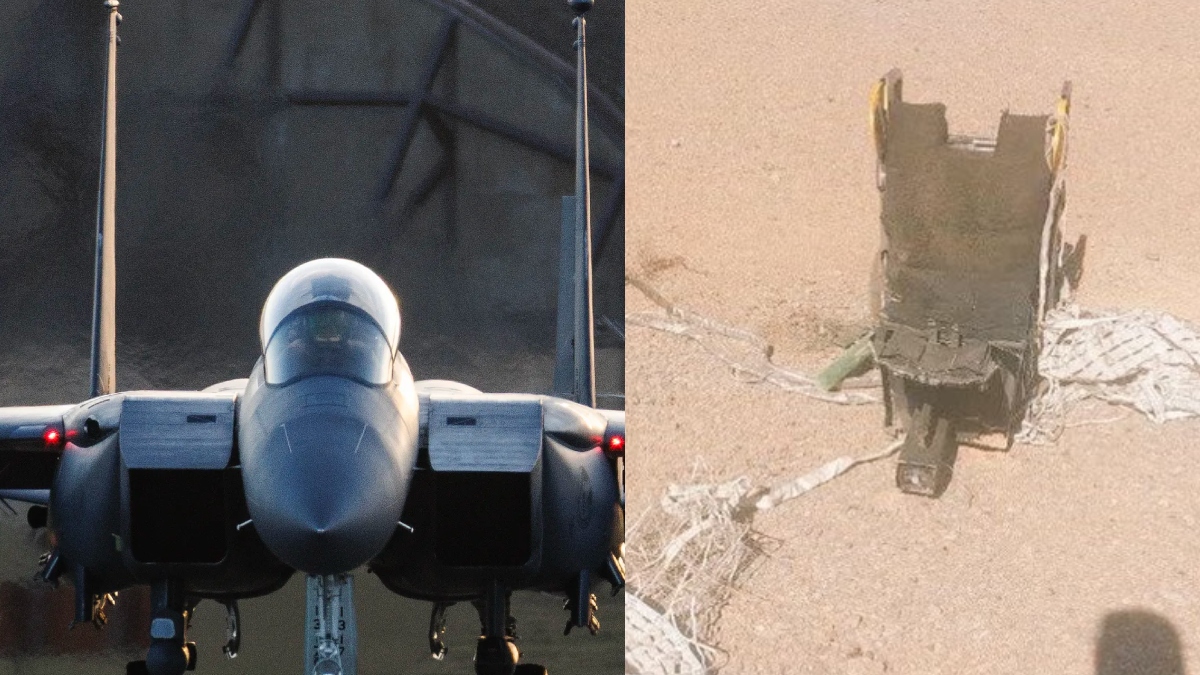 "One of two US crew members rescued after F-15E jet shot down over Iran, race to hunt second ongoing")
 "Seventh India-flagged LPG tanker crosses Strait of Hormuz")
 "This Week in Explainers: How India won the war against 'Red Terror'")