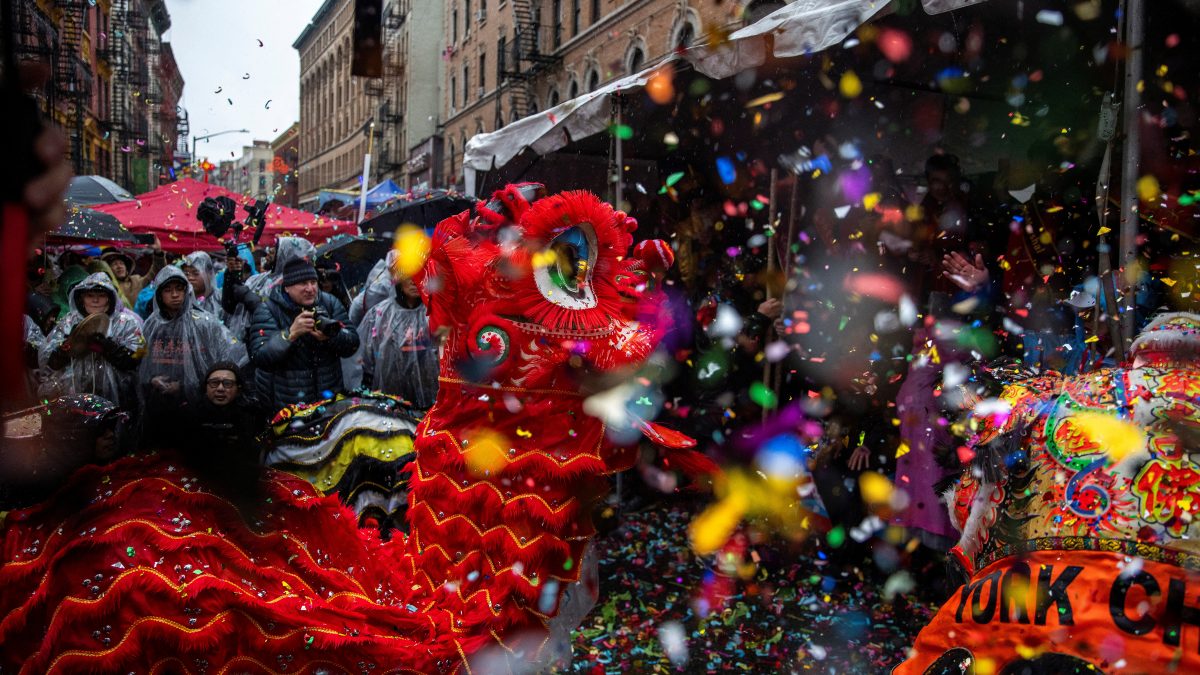
 "“At a very Chinese time of my life”: Why the internet can’t stop obsessing over Chinese culture")
From Chinamaxxing memes to donning the viral Adidas “Chinese jacket” that now has its knockoffs hanging in shops in South Delhi, the internet is embracing Chinese culture like no other. What began as a niche absurdist in-joke has evolved into a full-blown aesthetic, complete with fashion codes, and lifestyle rewrites.
The current wave builds on a meme that has quietly gained traction over the past few months: people declaring they are “at a very Chinese time in my life.” The phrase circulated first as a joke among Chinese Americans and then spread more widely, often set to the 1983 song “Yi Jian Mei” by Fei Yu-ching.
The line is a parody of the final scene from Fight Club, where the unnamed protagonist tells Marla Singer, “You met me at a very strange time in my life.” The internet’s remix replaces “strange” with “Chinese,” transforming existential angst into something deliberately absurd. And that absurdity is precisely the point. The joke works because “being Chinese” in this context is not about ethnicity. It is a flexible symbol.
The trend has even been branded: Chinamaxxing. The name borrows from internet self-improvement slang and repackages cultural signifiers as hacks. Fashion has followed close behind. Mandarin collars, jade pendants, silk textures, red-and-gold palettes and sportswear inspired by Chinese silhouettes are circulating widely. The Adidas jacket that went viral online now has multiple replicas in local markets. Lunar New Year posts from influencers outside the culture appear with carefully curated captions and lantern emojis. The aesthetic travels faster than the context.
Quick Reads
View AllExperts have pointed out that, as Chinese cultural exports, from designer collaborations to viral collectables like Labubus, win over global audiences, these memes may signal China’s growing soft power. But soft power alone does not explain the fervour.
For some American creators, the meme operates as a subtle, ironic expression of disillusionment with politics at home. In a moment marked by political fatigue, economic anxiety and cultural stagnation, “being Chinese” functions as contrast. It symbolises discipline, order, collectivism and tradition, whether or not those projections are accurate. It is less about China itself and more about what users feel is missing in their own environments.
This is where the trend becomes more complicated.
In Eating the Other, bell hooks argued that within consumer culture, difference becomes spice. Otherness is consumed to revitalise the mainstream. Ethnicity becomes a commodity that refreshes the dominant culture without challenging its power structures. That analysis feels strikingly relevant in an era where social media continuously packages cultural exchange into aesthetic, shareable formats. They offer a contrast to what many perceive as an exhausted, hyper-individualistic mainstream. When mainstream culture begins to feel overly familiar, even “basic,” it seeks renewal elsewhere.
The problem begins when culture is reduced to a checklist of habits. Drinking hot water, celebrating Lunar New Year, wearing the right jacket, without engaging with history, diaspora experiences or present-day realities, these gestures turn into performance. A complex society gets flattened into content. And perhaps most tellingly, the same markers that once attracted ridicule or xenophobia become desirable once they are detached from the people who live with them.
This contradiction cannot be ignored. Anti-Asian violence surged globally in recent years. Chinese communities and broader Asian diasporas faced hostility, suspicion and racialised blame, especially during the pandemic. Yet within a short span, Chinese-coded routines are aspirational.
Majority groups have the luxury of picking and choosing. They can wear the jackets, follow the routines and post the Lunar New Year captions without carrying the discrimination that often comes with that identity. They can participate in the culture symbolically, while the deeper power structures remain untouched. This is exactly what bell hooks warned about: enjoying difference without challenging dominance.
None of this means cultural exchange is wrong. Cultures have always borrowed from one another. Food travels, fashion evolves, and ideas move across borders. The real question is intent and depth. Is this engagement grounded in understanding, or is it simply another form of self-optimisation? When identity becomes a productivity hack or a content phase, appreciation can easily slip into appropriation.
“You met me at a very Chinese time in my life” may be absurd, ironic or intentionally meaningless. It may be meme logic. It may be protest. It may be aspiration. It may be all of the above.
The speed at which this trend has proliferated says something bigger. In an internet culture constantly chasing novelty and bored with the familiar, otherness becomes a resource. The internet does not just borrow culture; it repackages it into something usable.
And in doing so, it reminds us that trends rarely tell us only about the culture being consumed. They tell us just as much about the culture doing the consuming.
From films to music to internet trends, Preetika covers cultural moments that feel bigger than themselves, and the context that makes them matter.