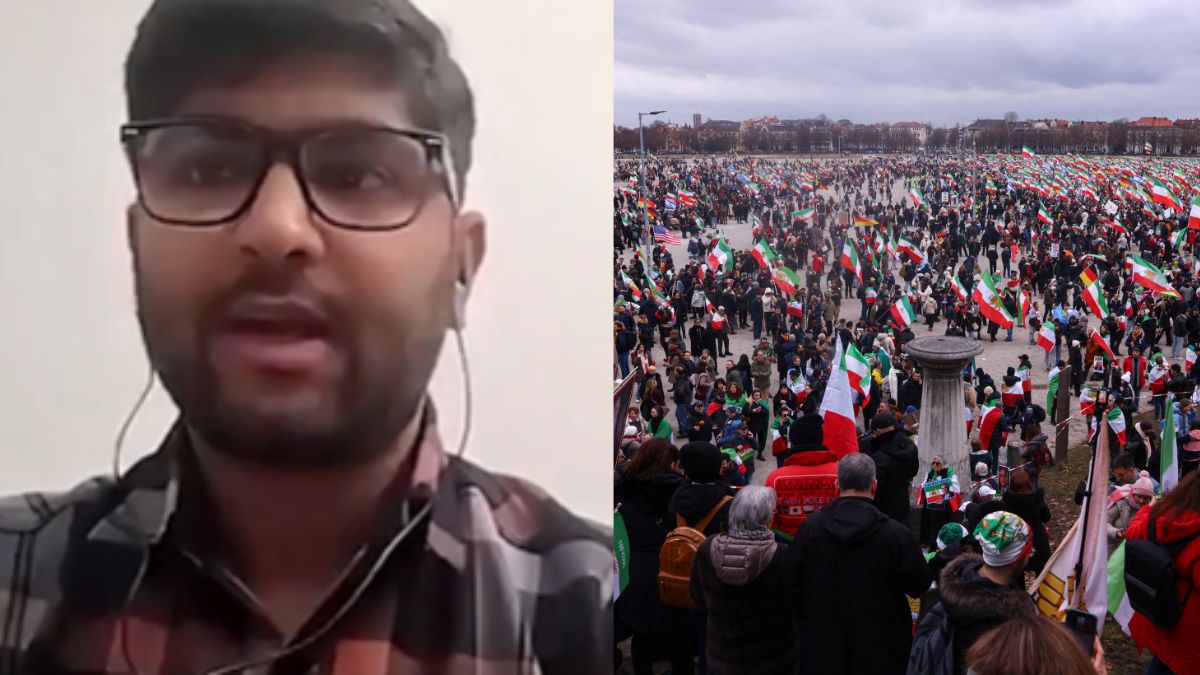
 "‘Want to come back home, but can’t’: Why Indian medical students are reluctant to leave Iran")
It’s a matter of life or exam for Indian medical students in Iran amid the escalating standoff between Washington and Tehran. After the Centre’s advisory asking Indian nationals, including students, to leave Iran amid the possibility of a US strike, for many students, departure is not an easy option.
These students, a large number from Jammu and Kashmir, enrolled in medical programmes at various universities in Iran, argue that although leaving the country may be the safer choice, missing key exams scheduled for early March could delay their graduation and potentially threaten the professional recognition of their degrees. According to them, universities have not deferred the exams.
They have now appealed to Prime Minister Narendra Modi for intervention after the advisory, which clashed with university examinations scheduled for next month.
We take a closer look.
Why are Indian students in Iran hesitant to leave?
Indian students studying in Iran find themselves torn between returning home for safety and facing academic disruptions. At the centre of their concerns is the examinations scheduled for March 5.
The basic sciences (Olum-e-Paye) exam and the pre-internship test, both compulsory government assessments in Iran’s medical education system, are scheduled for early next month, according to media reports.
Now, the outcomes of these exams decide whether students can advance from pre-clinical studies to clinical training and hospital postings.
Since these exams are held only twice a year, missing them could result in a loss of up to six months of academic progress, causing a significant delay in completing their five-and-a-half-year medical degree.
While speaking to news agency ANI, Bilal Bhat, an Indian medical student in Iran, said, “We have our exams on 5th March and 28th March. According to the advisory from the Indian embassy in Tehran, we are told to leave the country immediately, but we cannot, as this is the most important exam. There are concerns, and the situation is a bit tense here because everyone is thinking about the war… We want to leave the country, but we have exams… For us, it is not possible to leave…”
#WATCH | Tehran, Iran: On the situation in Iran, Indian student Bilal Bhat says, "We have our exams on 5th March and 28th March. According to the advisory of the Indian embassy in Tehran, they have told us to leave the country immediately, but we cannot, as this is the most… pic.twitter.com/bp2WbPwjW8
— ANI (@ANI) February 24, 2026
Another medical student, Faizan Nabi, who left Iran and returned to India a few days ago, expressed apprehensions about safety in Iran. However, he remained deeply worried about his academic future.
Nabi told Times of India (TOI), “I returned a few days ago because of the fear and uncertainty around the escalating situation. But right now, semester exams are underway at universities. Plus, there are the Olum-e-Paye — the comprehensive basic sciences exam — and the pre-internship exam. These are nationwide, central assessments. Missing them means losing six months of study.”
Another Indian student in Iran, Musaid, told ANI that the situation may escalate in the coming days and that they are constantly monitoring the developments.
“Internally, the situation is fine in Iran, but externally, the situation is very bad. They say there will be a war and that many things will go wrong in the coming days. But we have some exams scheduled, and we request that the Indian Embassy talk to our university and the Ministry of Iran to postpone them,” he said.
#WATCH | Tehran, Iran: On the situation in Iran, an Indian student, Musaid, says, "Internally the situation is fine in Iran, but externally the situation is very bad. They are saying that there will be a war and many things will go wrong in the coming days. But we have some exams… pic.twitter.com/KgXwCg2q6q
— ANI (@ANI) February 24, 2026
Md Azeem, enrolled at Iran University of Medical Sciences, voiced similar concerns. “Our exams are scheduled for March. If we leave, our careers will be destroyed. It is an appeal to the govt to contact the universities and assure us that exams will be postponed so that we are able to leave the country,” reported TOI.
Why are students seeking PM’s intervention?
Following the advisory, some students have appealed to PM Narendra Modi to intervene. They are requesting the Indian government to engage with Iranian authorities to consider either “postponing” the exams or offering alternative arrangements. According to them, this would allow students to leave temporarily without academic penalties.
The Jammu and Kashmir unit of the All India Medical Students Association (AIMSA) has written to the PM, seeking his intervention in this matter.
AIMSA urges Hon’ble @narendramodi to ensure safe return of Indian medical students in Iran and postpone all exams @MEAIndia @ANI @PTI_News @ians_india @AdityaRajKaul @sidhant @lomas_jha @vishu_reports @Ashoke_Raj @Zehra_Shafi @kntnewsagency @KNO_NEWS pic.twitter.com/CWIXkBUAZ3
— Dr Mohammad Momin Khan (@DrMohammadMomin) February 23, 2026
The statement read, “…AIMSA humbly request the government of India to direct the Indian High Commission/Embassy in Iran to urgently coordinate with Iranian universities and authorities to postpone all scheduled examinations for Indian students.”
“Facilitate safe evacuations and repatriation of Indian students at the earliest. Ensure that no student suffers academic loss due to circumstances beyond their control,” it added.
Speaking to ANI, Mohammad Momin Khan, president of AIMSA’s Jammu and Kashmir unit, expressed concern following a recent travel advisory from the Indian High Commission in Tehran, which has urged citizens to return home.
“The Indian High Commission in Tehran issued an advisory, in which they have asked their citizens to return. However, we have received information from students that their exams are scheduled for March 5. Some students have already arrived in India, so it is not possible for them to return. The current situation is very tense, and their parents are also very worried. We’ve even written a letter to the Prime Minister, regarding this,” he told the news agency.
#WATCH | Tehran, Iran: On the situation in Iran, Mohammad Momin Khan, President of J&K All India Medical Students Association (AIMSA) says, "The Indian High Commission in Tehran issued an advisory, in which they have asked their citizens to return. However, we have received… pic.twitter.com/s4e5ow344O
— ANI (@ANI) February 24, 2026
How many Indian students are in Iran? Why do they go?
As per a Moneycontrol analysis of data from the Lok Sabha and Rajya Sabha, roughly 2,000 Indian students chose Iran for higher education in 2024. Estimates suggest that roughly 1,000 to 1,500 Indian students are currently in Iran for medical education.
MEA’s data in 2022 estimated that about 2,050 Indian students were enrolled in Iran, mostly for medical studies, at Tehran University of Medical Sciences, Shahid Beheshti University and Islamic Azad University. Many of these were from Kashmir.
A significant number of Kashmiris pursue medical education in Tehran, while others study Islamic theology in the holy cities of Qom and Mashhad, the Indian Express reported.
However, recent reports suggest that several of them have returned to India as the threat of US military action looms large.
What’s the current situation in Iran?
The situation appears to be tense, as protests have once again gripped the nation. On Tuesday (February 24), the Iranian authorities deployed plainclothes police and armed security personnel across several Iranian universities to quell a fourth consecutive day of student protests against Supreme Leader Ayatollah Ali Khamenei.
Clashes were reported on several campuses, including Tehran’s University of Science and Technology, with videos shared on social media appearing to show confrontations between students and the Basij militia, a state-supported paramilitary group, according to the Guardian.
Nearly 80 per cent of universities in Iran are currently holding classes online, a move critics say is intended to limit large gatherings and suppress dissent following a severe crackdown on protests earlier this year.
Videos from Tehran’s University of Art showed students chanting slogans, “We fight, we die, we take back Iran” and “Political prisoners must be freed,” while openly criticising the country’s leadership, the media outlet report noted.
This wave of unrest once again highlights ongoing tensions between the government and segments of Iran’s youth.
January saw unprecedented protests across the country, which the regime tried to quell. More than 36,500 Iranians were killed by security forces during the January 8-9 crackdown on nationwide protests, according to documents reviewed by Iran International’s Editorial Board.
Is an attack on Iran imminent?
Speculation of an imminent US military operation against Iran reached a fever pitch this week.
In his State of the Union speech on Tuesday, Donald Trump said that he prefers a diplomatic solution to the crisis with Iran, but at the same time laid out a case for a potential war against the Islamic Republic. His remarks come amid an American military buildup in West Asia.
Last week, the US President asserted that he is weighing a limited strike, issuing a stark warning of 10-15 days for Iran to reach a deal. The speech increased the likelihood that the meeting between US envoys Jared Kushner and Steve Witkoff and Iranian Foreign Minister Abbas Araghchi planned in Geneva for Thursday could be the last chance to reach a diplomatic breakthrough and prevent war, according to an Axios report.
Tehran, on the other side, has indicated an openness to engage in dialogue, while stressing that Iran would not bow to military pressure and any attack would be met “ferociously”.
With inputs from agencies

 "Four years later, how close is Russia to achieving its goals in Ukraine?")
 "What is Trump’s Dalilah Law that targets Indian-origin truck drivers?")
 "After Kerala gets nod for Keralam, will Bengal be renamed Bangla?")
 "Mexico passes 40-hour workweek bill championed by President Sheinbaum")
 "Four years later, how close is Russia to achieving its goals in Ukraine?")
 "What is Trump’s Dalilah Law that targets Indian-origin truck drivers?")
 "After Kerala gets nod for Keralam, will Bengal be renamed Bangla?")
 "Mexico passes 40-hour workweek bill championed by President Sheinbaum")