 "Jammu and Kashmir govt should be prepared for floods as the huge winter snowfall begins to melt")
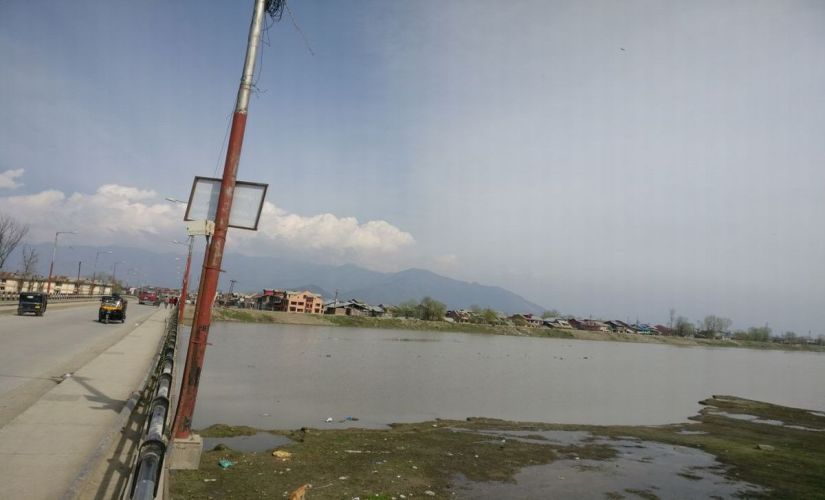
The flood channel that skirts Srinagar city looks like a river in some parts. It has filled with greyish water during the few days of sunshine this week.
The channel, which is meant to carry excess water into the Jhelum away from the city, branches off from the river just as it reaches the city and reconnects with it much further downstream.
No wonder it looks so full. The Jhelum too is filling up. Houseboat operators say they have had to tighten the mooring of their boats thrice in a day.
This does not augur well.
The mountains around the Kashmir Valley are laden with snow, after the heavy snowfall this past winter. Severe cold and several rainy days kept the snow from melting until last weekend. Now, it appears to have begun to melt.
The rivulets and gullies that bring the snowmelt down will begin to fill. All that water flows into the Jhelum.
Traditionally, two sorts of patterns have caused floods in Kashmir. One is excessive rain during the monsoon season. That is what happened in 2014, causing a devastating flood in the first week of September that year. The second is swift snowmelt.
Bright sunshine for several days could cause swift snowmelt. Already, just three days of mild sunshine this week have caused the river and the flood channel to swell.
Dredging fiasco
After the devastation of the 2014 floods, the government belatedly woke to the need to dredge the river and the flood channel. These had filled with silt over many years.
Dredging contracts were negotiated through the summer of 2015, and finally awarded to a private company in autumn that year. For some reason, only some stretches were designated for dredging. Even on those, work has been painfully slow.
Governor NN Vohra had realised the urgency of the matter when the state was under Governor’s Rule a year ago. After inspecting the dredging operations, he ordered officials to keep regular tabs on the progress of the work. However, Governor’s Rule soon ended, and the coalition government appears to have been preoccupied with unrest and militancy.
The company naturally cites the terrible unrest of the second half of 2016 as the reason for tardy work. The fact is that local labour is scarce, and most migrant labourers returned to their homes soon after the unrest began.
The urgency of the matter has apparently dawned again in recent weeks. The chief minister is said to have taken up the issue with the Prime Minister’s Office a couple of months ago. Instructions have been issued to cancel the contract and hand the work to public sector companies instead.
That is all to the good. The fact remains, however, that barely 10 percent of the required dredging has been done after 2014 — when the floods must have brought huge additional silt. If swift snowmelt leads to a gush of water in the streams and gullies across the Valley, the silt could cause a nightmare.
Evacuation plans
The least the government can do now is make arrangements for efficient evacuation and rescue, just in case a flood does recur. The ground could be prepared for camps in places like Harwan and the Tulip Garden, which have large spaces on high ground, with perennial drinking water supply.
In 2014, the government had prepared nothing — not even boats. The administration was so oblivious to the threat that the chief minister inaugurated an astro turf field in Srinagar when parts of south Kashmir had already been flooded. A few hours later, the astro turf too was under water. The administration collapsed for the next few days.
One hopes that history will not repeat itself within three years.

 "Sachin's Kashmir sojourn unveils tourist surge, highlights stark contrast with Pakistan")
 "Yami Gautam's political drama 'Article 370' banned in all the gulf countries; here's why")
 "'The real hero...': Sachin Tendulkar meets para cricketer Amir Hussain Lone during Kashmir trip")
 "FirstUp: PM in Jammu, UNSC vote on Gaza ceasefire & more")