 "‘Make in India’ Rafales: MoD begins review of Rs 2 lakh crore fighter jet proposal")
 "Nari Shakti sets sail: 10 women officers from 3 forces on historic voyage around the world")
100 days of Narendra Modi 2.0 Updates:In an apparent glitch by the Mumbai Metropolitan Region Development Authority (MMRDA), Shiv Sena MP Rahul Shewale’s name did not appear in the invitation card for Prime Minister Narendra Modi’s programme in Mumbai on Saturday, before the mistake was rectified. According to sources, the Mumbai South Central MP had complained to Chief Minister Devendra Fadnavis and officials of the MMRDA about his name being missing from the list of invitees. Sources said after the MMRDA apologised and reprinted the invitation card with a correction late on Friday night, Shewale on Saturday attended the prime minister’s function to lay foundation stone for three metro lines. Prime Minister Narendra Modi Saturday launched an indigenously-built metro coach to be used by the upcoming Mumbai metro network. The coach, the first in the list of 500 to be delivered to the Mumbai Metro Rail Corporation, has been built by Bharat Earth Movers (BEML) at its Bengaluru facility in flat 75 days. Accompanied by state Maharashtra chief minister Devendra Fadnavis, Modi launched the coach. The venue of Prime Minister Narendra Modi’s public event in Mumbai on Saturday was shifted to the Jio World Centre’s mega convention centre from the MMRDA Grounds due to possibility of rain, officials said. The Jio World Centre, built by richest Indian Mukesh Ambani, is located in close vicinity of the MMRDA Grounds in the Bandra Kurla Complex (BKC) business district. Narendra Modi government marked its 100th day in office today after being sworn in on 30 May 2019. In honour of this occasion, BJP leadership will present a 100-day report card on the most notable decisions taken by the Central government. A day ahead of the National Democratic Alliance (NDA) marking its 100 days in office since it’s landslide re-election in May, the Narendra Modi-led government is expected to launch a series of projects to mark this milestone on Saturday. The tenure of the Modi 2.0 in its first 100 days has been quite eventful with the most productive Parliament session so far, which saw a total of 38 bills being introduced out of which, 28 passed with a majority. With the passing of triple talaq bill, Motor Vehicles (Amendment) Bill 2019, dilution of Right to Information Act, amendments to the POCSO Act (Protection of Children from Sexual Offences Act), etc. the government has been on its toes during the Parliament session this year. While it has been successful in passing all these bills, there has been little done in to achieve the country’s goal of a five trillion dollar economy by 2024-25. Recently, the two major developments of this government was the announcement of the final list of the National Register of Citizens (NRC) on 31 August in Assam, which left out around 19 lakh people stateless, and the revocation of Article 370, that removed the special status of Jammu and Kashmir and broke it into two union territories, these bold decisions have thrown people off guard. Now let’s take a quick look of all the major things the NDA government has done in its second term done so far. National Register of Citizens (NRC) The final and conclusive draft of the long-awaited and contentious National Register of Citizens (NRC) , which set out to identify bonafide Indian citizens in Assam through a Supreme Court-monitored process, was published on Saturday amid tight security arrangements. The office of the NRC state coordinator in Guwahati released a statement confirming that out of the 3,30,27,661 applicants, a total of 3,11,21,004 have been included in the citizenship registry, which leaves out over 19 lakh people from the final list. Those who have been rejected by the tribunals and have exhausted all other legal avenues can be declared foreigners and – in theory – be placed in one of six detention centres with a view to possible deportation, although Bangladesh is yet to signal its cooperation. Ten new such camps have been announced. One with space for 3,000 is being constructed in Goalpara, west of Assam’s capital Guwahati. The camps currently hold 1,135 people, according to the state government, and have been operating for years. This much-awaited list has created political upheaval and backlash against the BJP government for leaving out 19 lakh people from the list. The BJP the NRC to identify and sift immigrants who were said to have illegally entered Assam for decades and necessitated the signing of the Assam Accord in 1985, which according to the Supreme Court, was to be the cornerstone of this list, but it fell through. Abrogation of Article 370 On 5 August, the Centre abolished Article 370 that gives special status to Jammu and Kashmir and moved a separate bill to bifurcate the state into two separate union territories of Jammu and Kashmir, and Ladakh. The government has since then imposed a clampdown in the region, shutting down internet services, landlines and all form of communications in the Valley, which is currently still in place. Union Home Minister Amit Shah announced the move amid protest by Opposition lawmakers in both Houses of Parliament over the move. The government was accused of not consulting stakeholders while making its decision. This sudden decision of the government has while brought the Kashmir issue into international limelight once again, it also witnessed both Pakistan and India working their way through to promote their version of the Kashmir policy, both at home and globally. In the meanwhile, it’s the Kashmiris who are facing the brunt of an abrupt decision that has restricted movement of people as well as on modes of communication including mobile and internet services. The decision was finally implemented on 31 August with the bifurcation of the state into two UTs — Jammu and Kashmir with an Assembly and Ladakh without one. Motor Vehicles Amendment Act The Motor Vehicles Amendment Act , 2019, which contains 63 provisions that deal with penalties, licenses, registration and the National Transport Policy, will be implemented from 1 September 2019 . These are provisions which require no further amendments in the Central Motor Vehicles Rules of 1989. The new law will enhance the penalty for unauthorised use of vehicles without licence to Rs 5,000 from Rs 1,000. Besides, the penalty for driving without a license will go up from Rs 500 to Rs 5,000. The Act will also increase the penalty for drunken driving to imprisonment up to 6 months and/or fine up to Rs 10,000 for the first offence, and imprisonment up to 2 years and/or fine of Rs 15,000 for the second offence. It enables state governments to designate any person or agency as the enforcement agency to detect and impose a penalty on overloaded vehicles. The legislation, introduced by Minister of Road Transport and Highways Nitin Gadkari, was passed by the Rajya Sabha on 31 July and was passed in the Lok Sabha on 23 July. Reportedly, the government’s objective is to improve road safety through the stringent penalties in the new legislation. Unlawful Activities (Prevention) Amendment Bill The Lok Sabha passed an amendment to the Unlawful Activities (Prevention) Act (UAPA), 1967 , which defines terrorist acts and specifies officers who can investigate cases under it. The proposed legislation provided fodder for political acrimony, and was passed in the Lower House despite strong objections by several Opposition leaders. The UAPA Bill aims to amend the Unlawful Activities (Prevention) Act, 1967 (UAP Act). This Act is a detailed central legislation that seeks to provide rules and procedures to deal with terrorist and other unlawful activities that affect the territorial integrity and sovereignty of India. Under the earlier law, only organisations could be designated as terrorist outfits and not individuals On 4 September, the government declared four Pakistan-based individuals , including Mumbai terror attack mastermind Hafiz Saeed, as terrorists under the amended UAPA act. Other individuals who have been designated as terrorist are Jaish-e-Mohammed (JeM) chief Masood Azhar, Lashkar-e-Taiba chief Zaki-ur-Rehman Lakhvi and underworld don Dawood Ibrahim. Bank mergers The Central government on 30 August, amalgamated 10 public sector banks (PSBs) into four entities , bringing down their total number to 12 from 27, a move aimed at making state-owned lenders global sized banks. Big banks enhanced capacity to increase credit, Finance Minister Nirmala Sitharaman stated before the announcement of the new bank mergers. In place of fragmented lending capacity with 27 PSBs in 2017, now there will be only 12 state-run banks post-consolidation, Sitharaman said and these banks will be provided adequate capital. Canara Bank to be merged with Syndicate Bank to create 4th largest public sector bank with Rs 15.20 lakh crore business. Union Bank, Andhra Bank, Corporation Bank to merge to become India’s 5th largest public sector bank with Rs 14.59 lakh crores business: While Orient Bank of Commerce and United Bank of India will be merged with Punjab National Bank, Bank of India, Central and the Indian Bank will be merged with Allahabad Bank. Oriental Bank and United Bank will be merged with Punjab National Bank thus becoming the second-largest bank after the merger. Economic slowdown The gross domestic product (GDP) data released by the National Statistical Office (NSO) last month showed that the gross domestic product numbers for April-June quarter, which showed India’s GDP expanded 5 percent in the quarter through June - the slowest pace in six and half years, with a disappointing 5.8 percent in the January-March quarter as a drop in domestic and global consumer demand hit manufacturers and service providers. Attributing the slowdown in GDP growth to domestic and global factors, Chief Economic Adviser KV Subramanian said the government is taking various steps to boost economic expansion. “The slowdown in growth is due to endogenous and exogenous factors,” Subramanian said while commenting on the data. Triple talaq bill The triple talaq bill, officially known as the Muslim Women (Protection of Rights on Marriage) Bill, was passed in the Rajya Sabha in a significant win for the NDA government, which first introduced the bill in the Lok Sabha in December 2017. The triple talaq bill , which will replace the ordinance and follows a 2017 Supreme Court verdict declaring the practise as unconstitutional, makes the declaration of talaq-e-biddat or pronouncing ’talaq’ three times in spoken, written or through SMS or WhatsApp or any other electronic chat in one sitting illegal. Talaq-e-biddat is the practice of pronouncing the word ’talaq’ three times by a Muslim man, which results in an “instant and irrevocable” divorce. The most significant feature of the triple talaq bill, which was vehemently objected by the Opposition including the Congress and AIMIM, is the jail sentence of three years stipulated against the accused. However, Opposition parties opposed the bill, saying that in its current form, the proposed law could be misused to harass Muslims and wanted it to be reviewed by a parliamentary committee. Dilution of Right to Information Act The Lok Sabha passed the Right to Information (Amendment) Bill, 2019 , that seeks to give the central government the power to set the tenure and salaries of the Chief Information Commissioner (CIC) and Information Commissioners (ICs) at both the central and state levels. The government claimes that the bill aims at institutionalisation, streamlining and ease of delivery of RTI Act, to strengthen the overall RTI structure and described it as enabling legislation for administration purposes. But this bill was heavily criticised by not only the Opposition but also activists that claimed it diluted the Right to Information Act by saying it will weaken transparency panels in the country. The Opposition alleged that the act undermines the law and make the transparency panel a “toothless tiger” like the National Human Rights Commission. Congress leader Rahul Gandhi alleged that the Modi government is ‘diluting’ the RTI Act to ‘help the corrupt steal from India’, while Sonia Gandhi had alleged that the Modi government is ‘hell-bent on completely subverting’ the RTI Act. Anjali Bhardwaj of Satark Nagrik, an RTI activist, slammed the NDA government at the Centre for “undermining the independence of information commissions”. “The recent amendments introduced to the RTI Act, are a testimony to the NDA government’s determination to undermine independent bodies and fundamentally weaken any system or structure that can uncover the truth,” Bhardwaj said. “The amendments introduced by brute legislative force are regressive and are aimed squarely at undermining the independence of information commissions, thereby diluting India’s strongest and most widely used framework for transparency,” she added. Crackdown on corruption Since the Narendra Modi-led BJP government has come into power, it has renewed its whip on the crackdown of corruption, specially targeting members of Opposition. Backing their support to senior Congress leader and former finance minister in connection to the INX Media Case, Congress had critised the BJP for ‘vendetta politics’ and targeting Opposition leaders. “Modi’s Govt is using the ED, CBI & sections of a spineless media to character assassinate Mr Chidambaram. I strongly condemn this disgraceful misuse of power,” Rahul Gandhi tweeted. Surjewala tweeted, “India witnesses worst kind of virulent vendetta by Modi government as the BJP runs a police state. Judge reserves judgement for seven months and delivers it 72 hours before retirement, CBI/ED are sent to raid as a respected former FM is hounded. The Banana Republic?” Another Congress spokesperson RPN Singh echoed him, saying even when there are cases going on against leaders of other parties, the investigations are stopped the moment they join the BJP. There have been cases where on-going investigations have been stopped against leaders, the moment they join the saffron party. Like in the case of two BJP leaders — Himanta Biswa Sarma and Mukul Roy — both questioned in the multi-crore Saradha Ponzi scam, both the leaders have joined the BJP when the heat of the Saradha scam probe was increasingly becoming too hot to handle. Similarly, both of them were quite close to their chief ministers in their earlier parties and acted as the go-to man in all circumstances be it polls or other crises. International affairs Narendra Modi had a hectic 100 days in terms of international travel. He’s visited nine countries just in the span on 100 days: Maldives, Sri Lanka, Kyrgyzstan, Japan, Bhutan, UAE, Bahrain, France and most recently Russia Modi has moved forward with a robust foreign policy. During his visit to the Maldives , the country honoured him with its highest award. Showing his commitment towards the “neighbourhood first” approach to foreign policy, Modi became the first world leader to travel to Sri Lanka following the horrific Easter terror attacks. Also, India’s emergency ambulance service is now available throughout the nine provinces of the island country. In Kyrgyzstan, Modi announced a $200 million line of credit. He also attended the G20 summit in Japan , where he put forward a five-point approach to address common challenges facing the world, including protectionism and unilateralism in global financial organisations like the WTO. In Bhutan, Modi launched the RuPay Card in Bhutan by making a purchase at Simtokha Dzong, built in 1629 by Shabdrung Namgyal, which functions as a monastic and administrative centre and is one of the oldest dzongs in Bhutan. The two nations also signed 10 MoUs across several sectors to infuse new energy in their ties. In Bahrain , the prime minister was conferred ‘The King Hamad Order of the Renaissance’ during his meeting with the King of Bahrain. In United Arab Emirates , Modi received the highest civilian honour during his visit to the oil-rich Gulf nation, reinforcing ties between the countries even as he pursues stripping statehood from the disputed region of Kashmir. The G7 summit in France’s Biarritz , Modi attended sessions on digital transformation and climate change to name a few. He also met the Senegalese President Macky Sall on the sidelines of the G7 summit, apart from holding separate meetings with his British counterpart Boris Johnson, UN Secretary-General Antonio Guterres and US President Donald Trump among others. He also became the first Indian premier to visit the Far East Russia , where he extended a credit line of one billion dollars for the development of the region. Modi attended the fifth Eastern Economic Forum as a chief guest and then held the 20th India-Russia Annual Summit along with Russian president Vladimir Putin. With inputs from agencies
100 days of Narendra Modi 2.0 Updates: Shiv Sena MP's name missing from list of invitees in PM's Mumbai event; MMRDA apologizes for glitch
100 days of Narendra Modi 2.0 Updates: In an apparent glitch by the Mumbai Metropolitan Region Development Authority (MMRDA), Shiv Sena MP Rahul Shewale’s name did not appear in the invitation card for Prime Minister Narendra Modi’s programme in Mumbai on Saturday, before the mistake was rectified.
)
Modi to visit Aurangabad after Mumbai
After Mumbai, Modi will visit Aurangabad, to address a state-level Mahila Saksham Melava (Empowered Women’s Meet) of Self Help Groups, being organised by Maharashtra State Rural Livelihood Mission (UMED).
The prime minister will also inaugurate AURIC Business and Administrative Building and Dedicate DMIC AURIC City to the nation.
Modi inaugurates Bandongri Metro Station in Kandivali East
During his Mumbai’s visit, Modi also inaugurated Bandongri Metro Station in Kandivali East. The prime minister also inaugurated a state-of-the-art metro coach, the first metro coach under the Make in India initiative.
Three newly-launched metro corridor will add 42 km to Mumbai’s metro network
The three metro corridors launched by Narendra Modi on Saturday will together add more than 42 km to the metro network of Mumbai.
They are – 9.2 km long Gaimukh to Shivaji Chowk (Mira Road) Metro-10 corridor, 12.7 km long Wadala to Chhatrapati Shivaji Maharaj Terminus Metro-11 corridor and 20.7 km long Kalyan to Taloja Metro-12 corridor.
Strongly oppose felling of trees in Aarey forest: Lata Mangeshkar
While Narendra Modi to set to lay foundation for the 32-storey Metro Bhavan at the Aarey Colony, one of the two large green belts of Mumbai amid mounting criticism from environmentalists, legendary singer Lata Mangeshkar has critiqued MMRCL’s move to cut over 2,500 trees for the Metro car shed.
The Times of India quoted the singer as saying, “I strongly oppose this terrible decision. Mumbai wants to breathe fresh air and needs every single tree in the city. Wanton cutting of the Aarey forest would mean disrupting Nature’s balance.”
This Ganesh Chaturthi, Modi calls plastic-free celebrations
Prime Minister Narendra Modi urged Mumbaikars to avoid plastic materials, that aggravate water pollution during immersion of Ganpati idols.
“We must resolve to avoid materials like plastic that give way to water pollution during Ganpati visarjan,” said Modi adding that post celebrations, people of Mumbai must adhere to make the Mithi river and other water bodies plastic-free.
Metro project in Mumbai to become source of employment for many: Modi
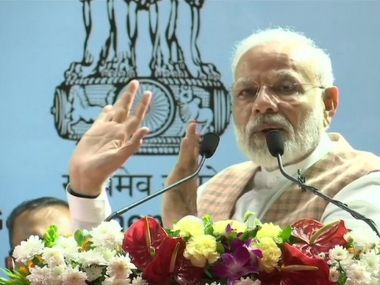
Inaugurating the metro network in Mumbai, Prime Minister Narendra Modi said the project will not only benefit the commuters, but also provide job opportunities to many.
“The Mumbai metro project will not only help to easing out commute for passengers but will also be a source of employment for a number of people as coaches of the new metro train will be made in India,” Modi said.
Shiv Sena MP’s name missing from list of invitees in Modi’s programme in Mumbai; MMRDA apologizes
In an apparent glitch by the Mumbai Metropolitan Region Development Authority (MMRDA), Shiv Sena MP Rahul Shewale’s name did not appear in the invitation card for Prime Minister Narendra Modi’s programme in Mumbai on Saturday, before the mistake was rectified.
According to sources, the Mumbai South Central MP had complained to Chief Minister Devendra Fadnavis and officials of the MMRDA about his name being missing from the list of invitees.
Sources said after the MMRDA apologised and reprinted the invitation card with a correction late on Friday night, Shewale on Saturday attended the prime minister’s function to lay foundation stone for three metro lines.
Modi launches BEM-built coach for Mumbai’s metro network
Prime Minister Narendra Modi Saturday launched an indigenously-built metro coach to be used by the upcoming Mumbai metro network.
The coach, the first in the list of 500 to be delivered to the Mumbai Metro Rail Corporation, has been built by Bharat Earth Movers (BEML) at its Bengaluru facility in flat 75 days.
Accompanied by state Maharashtra chief minister Devendra Fadnavis, Modi launched the coach.
It can be noted that the financial capital is catching up with the national Capital after decades in modern public transport and is pumping in over Rs 1.2 lakh crore to build 14 metro corridors stretching 337-km over the next decade.
Modi lauds ISRO scientists during infra projects launch in Mumbai
Appreciating the resolve of ISRO scientists, Narendra Modi said he was inspired to see their courage. “How to work towards your aim irrespective of big challenges is what I learnt from them. They will not stop striving till they reach the target,” Modi said.
Modi inaugurates state of the art metro coach in Mumbai
After coming to Mumbai, Narendra Modi inaugurated state of the art metro coach, the first metro coach manufactured under ‘Make in India’.
Complete breakdown of governance under Modi govt 2.0, says Congress
The Congress alleged on Wednesday that there was a “complete breakdown of governance” in the Modi government’s second term, while claiming that there was an economic slowdown, an “undeclared emergency” in Kashmir and a tense situation in Assam, where over 19 lakh people were rendered “stateless”. Congress spokesperson Manish Tewari alleged that in order to cover up this complete breakdown of governance, a continued “persecution” of opposition leaders was being carried out and the arrest of party leader D K Shivakumar was the latest in a series of “political vendetta”
BJP to release report card on first 100 days in office
Narendra Modi government marked its 100th day in office today after being sworn in on 30 May 2019. In honour of this occasion, BJP leadership will present a 100-day report card on the most notable decisions taken by the Central government. The focal points of the report are expected to matters such as the abrogation of Article 370, passing of the triple talaq bill, buying of Apache helicopters from the US to approving pensions for farmers and shopkeepers.
Modi 2.0 passes 28 bills in Parliament in first 100 days of NDA govt
The tenure of the Modi 2.0 in its first 100 days has been quite eventful with the most productive Parliament session so far, which saw a total of 38 bills being introduced out of which, 28 passed with a majority.
With the passing of triple talaq bill, Motor Vehicles (Amendment) Bill 2019, dilution of Right to Information Act, amendments to the POCSO Act (Protection of Children from Sexual Offences Act), etc. the government has been on its toes during the Parliament session this year.
Modi to lay foundation stones for three metro corridors in Mumbai, perform ‘bhoomipujan’ for Aarey project
Ahead of the forthcoming Maharashtra Assembly election, Prime Minister Narendra Modi will lay foundation stones for three more metro corridors in the megapolis worth over Rs 19,000 crore on Saturday.
During the visit, Modi will also perform bhoomipujan for the controversial Metro Bhavan at the Aarey Colony , a major green lung of the city.
Narendra Modi to launch series of projects as NDA govt completes 100 days in office
A day ahead of the National Democratic Alliance (NDA) marking its 100 days in office since it’s landslide re-election in May, the Narendra Modi-led government is expected to launch a series of projects to mark this milestone on Saturday.
Narendra Modi to address nation today after Moon lander ‘Vikram’ loses contact
In the backdrop of Chandrayaan-2’s lander ‘Vikram’ losing contact with ground stations in the wee hours of Saturday, Prime Minister Narendra Modi in an early morning tweet announced he would interacting with the space scientists at the ISRO Centre in Bengaluru.
Prior to Modi’s tweet, the ISRO had said that he will be addressing the nation from ISRO Control Centre at 8 am today (7 September).