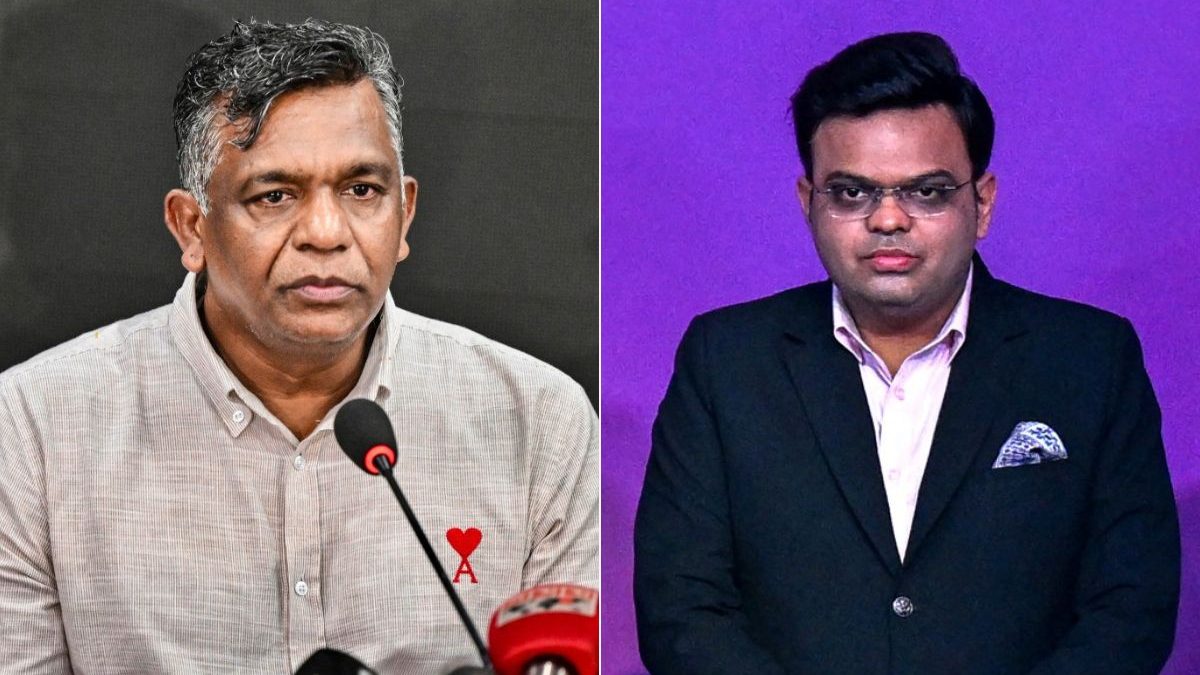
 "Explained: Why BCB may get banned by ICC after refusing to travel to India for the T20 World Cup 2026")
Bangladesh Cricket Board (BCB) is facing serious trouble with the International Cricket Council (ICC) after refusing to send its team to India for the T20 World Cup 2026. The issue could now lead to Bangladesh facing a possible ban from world cricket.
Earlier this week, the ICC officially rejected Bangladesh’s request to move all their T20 World Cup matches out of India. The ICC also made it clear that there will be no change to the schedule that was announced in November.
“The decision was reached after considering all security assessments conducted, including independent reviews, all of which indicated there was no threat to Bangladesh players, media persons, officials and fans at any tournament venues in the country,” the ICC said in a statement.
The decision was taken during an ICC Board meeting attended by ICC CEO Sanjog Gupta and representatives from all Full Member nations. During the meeting, the ICC Board voted 14-2 in favour of replacing Bangladesh at the T20 World Cup if they refuse to travel to India. Only BCB president Aminul Islam Bulbul and Pakistan Cricket Board chairman Mohsin Naqvi reportedly voted against the proposal.
According to a Cricbuzz report, the replacement process is almost complete, with Scotland set to officially replace Bangladesh at the tournament. Scotland will take Bangladesh’s place in Group C and inherit their fixtures, with three matches scheduled in Kolkata and one at Mumbai’s Wankhede Stadium.
Quick Reads
View AllHowever, Bangladesh’s problems may not end with just missing the T20 World Cup.
Government interference could invite ICC ban
Media reports suggest that the BCB is now at risk of being banned by the ICC due to government interference. ICC rules clearly state that member boards must manage their affairs independently and ensure there is no government involvement in cricket administration.
Bangladesh’s sports adviser Asif Nazrul openly confirmed that the decision not to play in India was taken by the government. “Let me tell you clearly. It is the government’s decision not to play in India due to security concerns,” Nazrul said in Dhaka after the ICC’s annoncement.
This statement is crucial because it openly confirms government interference in BCB, which is a direct violation of ICC guidelines.
Past examples: Sri Lanka and Zimbabwe
There is recent precedent for ICC action in such cases. In November 2023, Sri Lanka Cricket (SLC) was suspended by the ICC due to heavy government interference following Sri Lanka’s poor performance at the ODI World Cup.
Although termed a “suspension,” it was more of a warning to prevent further interference. Zimbabwe Cricket was also suspended in 2019 for similar reasons. These cases show that the ICC does not hesitate to act when governments interfere in cricket boards’ functioning.
Why wasn’t India treated the same way?
Many have questioned why India was not banned when BCCI vice-president Rajeev Shukla said India would only travel to Pakistan after government approval ahead of the 2025 Champions Trophy.
The difference lies in how the situation was handled. India’s refusal to travel to Pakistan was addressed before the tournament schedule was announced. The ICC, BCCI and PCB agreed on a hybrid model, with India playing all matches in Dubai. Similar arrangements were also made for Pakistan during tournaments hosted by India.
In contrast, Bangladesh raised its objections after the T20 World Cup schedule was finalised. The ICC had already conducted independent security assessments, which rated the risk in India as “low to moderate” and found no direct threats to the Bangladeshi team.
BCB accuses ICC of double standards
BCB president Aminul Islam Bulbul has accused the ICC of applying double standards. He pointed out that India was allowed to play all its Champions Trophy matches at a neutral venue, while Bangladesh’s request to play in Sri Lanka was rejected.
“We are ready to play the World Cup in Sri Lanka. We don’t want to play in India,” Aminul told local reporters, adding that Sri Lanka is part of a hybrid model for other teams as well.
However, the ICC has maintained that Bangladesh’s case is different because security assessments do not support their concerns. The ICC also believes that Bangladesh’s stance is influenced by political tensions, especially after India removed Mustafizur Rahman from IPL 2026.
“Over the past several weeks, the ICC has engaged with the BCB in sustained and constructive dialogue, with the clear objective of enabling Bangladesh’s participation in the tournament. During this period, the ICC has shared detailed inputs, including independent security assessments, comprehensive venue-level security plans and formal assurances from the host authorities, all of which consistently concluded that there is no credible or verifiable threat to the safety or security of the Bangladesh team in India,” the ICC said.
“Despite these efforts, the BCB maintained its position, repeatedly linking its participation in the tournament to a single, isolated and unrelated development concerning one of its player’s involvement in a domestic league. This linkage has no bearing on the tournament’s security framework or the conditions governing participation in the ICC Men’s T20 World Cup.
“The ICC’s venue and scheduling decisions are guided by objective threat assessments, host guarantees, and the tournament’s agreed terms of participation, which apply uniformly to all 20 competing nations. In the absence of any independent security findings that materially compromise the safety of the Bangladesh team, the ICC is unable to relocate fixtures. Doing so would carry significant logistical and scheduling consequences for other teams and fans worldwide, and would also create far-reaching precedent-related challenges that risk undermining the neutrality, fairness, and integrity of ICC governance.
Why ICC is unlikely to bend
The ICC may be wary of setting a dangerous precedent. If it allows last-minute venue changes based on political disagreements, other countries may start making similar demands in the future. This could severely damage the credibility and planning of global tournaments.
As things stand, Bangladesh cricket team is currently at risk of losing their place in the T20 World Cup 2026 and could even face action from the ICC.

 "‘Path to take them off now’: Trump aide hints at rolling back 25% India tariffs after 'Russian oil purchases collapse'")
 "China places top general under investigation in Xi’s sweeping military purge")
 "Exclusive | What it takes for the President’s Bodyguard to ace the parade every Republic Day")
 "Major airlines suspend Middle East flights as tensions rise after Trump’s ‘armada’ warning")
 "‘Path to take them off now’: Trump aide hints at rolling back 25% India tariffs after 'Russian oil purchases collapse'")
 "China places top general under investigation in Xi’s sweeping military purge")
 "Exclusive | What it takes for the President’s Bodyguard to ace the parade every Republic Day")
 "Major airlines suspend Middle East flights as tensions rise after Trump’s ‘armada’ warning")