 "Iran war: How much has fuel cost risen in Pakistan? How does it compare with India?")
As the war wages on in West Asia, Pakistan has adopted austerity measures — work from home rules, shutting down of schools, and mandating that government officials forego salaries for two months.
Why?
The economically-weakened country is struggling to stay afloat as the Iran war has caused major disruption in the oil and gas supply, already pushing up prices of fuel as well as cooking gas in the Asian country.
What is the cost of petrol, diesel and cooking gas in Pakistan?
>> Last Friday (March 6), the Pakistan government announced a Rs 55 per litre hike in the price of petrol and high-speed diesel. As a result, the cost of petrol has risen to Rs 321. 17 per litre, while high-speed diesel will now cost Rs 335.86 per litre.
>> This is a 17 per cent increase from the previous price; petrol was earlier priced at Rs 266.17 per litre. This marks one of the steepest increases in recent years.
>> As of Saturday, the price of a 14.2 kilogramme Liquefied Petroleum Gas (LPG) cylinder in Pakistan was around Rs 1,046.
>> Weighing in on the available stock of fuel in the country, Pakistan’s Petroleum Minister Ali Pervez Malik said that the country currently has enough fuel stock to last for 28 days and that three oil tankers carrying additional supplies are expected to arrive soon.
How do Pakistan’s prices compare to other countries?
>> Pakistan has recorded the highest increase in petrol prices among 14 countries across Asia, Europe, and North America following the surge in global oil prices triggered by the ongoing war involving the United States and Israel against Iran.
>> Raising the price of fuel, Deputy PM Ishaq Dar stressed that Islamabad had “little choice” but to pass on the impact of international oil price spikes to consumers.
>> According to comparative data shared by Khurram Shehzad, adviser to the federal finance minister, Pakistan witnessed a petrol price hike of more than 21 per cent. The data shows that petrol in Pakistan was priced at $0.95 per litre before the start of the war. However, following the rise in global oil prices, the federal government increased the price by $0.20 per litre, pushing it to $1.15 per litre.
>> Other regional countries, too, have seen a rise in petrol prices. Nepal saw petrol prices rise slightly by $0.03 per litre, from $1.40 to $1.43 per litre. In Bangladesh, prices increased by $0.04 per litre to $1.18 per litre from $1.14 per litre, while in Sri Lanka the increase was marginal at $0.01 per litre, raising the price to $1.23 per litre from $1.22 per litre.
>> In India, petrol and diesel prices haven’t been significantly affected yet. As of March 11, petrol in India ranges from Rs 94 to Rs 105 — in Delhi, it’s Rs 94.77, whereas in Mumbai, it is costing Rs 103.5, and in Kolkata, it is Rs 105.45.
>> What is the impact of the fuel price in Pakistan?
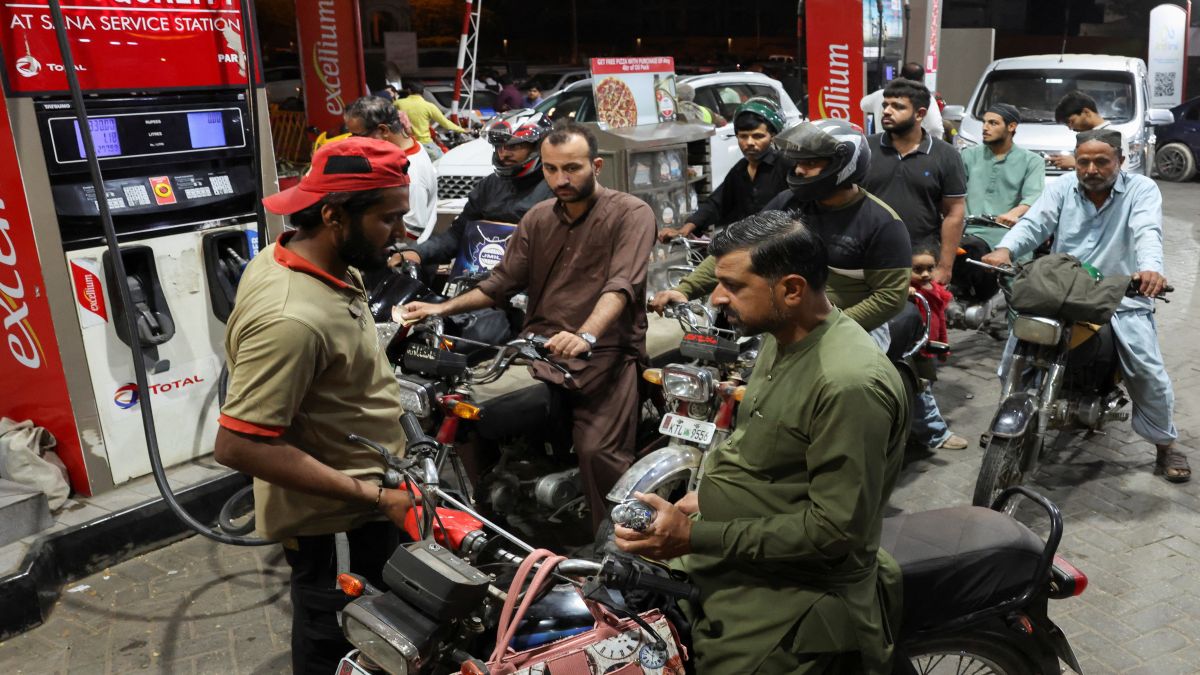
>> The hike in fuel prices caused immediate panic in Pakistan, with hundreds of people forming long queues at petrol pumps. In Karachi, Lahore, and Islamabad, consumers rushed to fill their tanks.
>> Prime Minister Shehbaz Sharif warned against hoarding, saying the country has adequate reserves but must use them carefully amid uncertainty over how long the West Asia crisis will continue.
>> The rise in fuel prices has also led to air travel becoming more expensive in Pakistan. The hike has pushed both domestic and international fares to new highs, adding financial pressure on passengers.
>> Domestic ticket prices have risen by PKR 2,800 to PKR 5,000, reports Times Now. Previously, the same tickets cost between PKR 10,000 and PKR 15,000, but as of today, the fares are as high as PKR 17,000–PKR 20,000.
>> As prices of fuel rise, there’s also concern that it could lead to a rise in transportation, food, and electricity costs. Economists worry that a country already reeling from high inflation would struggle in such an environment.
>> There’s also a worry that Pakistan could see its monthly oil import bill jump to $600 million amid the Iran war.
>> What fuel-saving measures has Pakistan adopted?
>> With enough fuel to last 28 days, Pakistan has introduced several austerity measures, with Prime Minister Shehbaz Sharif saying, “The entire region is currently in a state of war.”
>> In order to conserve fuel, the government has ordered a four-day workweek for government employees. Moreover, 50 per cent of government staff have been ordered to work from home on a rotating basis. The authorities have also urged private companies to follow the same rules for their employees.
>> Federal and provincial Cabinet members will forego their salaries and allowances for the next two months, while salaries of the members of federal and provincial legislatures will see a 25 per cent cut during the period. Ministers, parliamentarians and officials can make a foreign trip only for essential purposes and in economy class.
>> Schools have been shut down, and college classes have moved online.
>> People have been asked to restrict social gatherings, with weddings and parties capped at 200 guests and limited to one main dish.
How have Pakistanis reacted to the news?
>> After the Pakistani PM announced fuel-conservation measures on Monday (March 9), netizens have gone into overdrive, with some mocking them. One user in a scathing remark said, “Imagine a beggar nation can’t survive one week into a war happening outside the country. Now imagine a war in their own country.”
>> Another user mocked Sharif’s decision to shut down schools, writing on X, “Two weeks of vacation to solve an oil crisis? Someone tell the PM that turning off the school lights won’t refill the tanks.”
>> Another said, “Sab to bandh kar diya, chacha (Uncle, has shut down everything).”
It clearly seems that Pakistan has been put in a tough spot owing to the Iran war. Will the country once again put out its begging bowl for help, or will it be able to survive the crisis on its own?
With inputs from agencies

 "US-Israel Iran War Live Updates: China restricts fuel exports in March to protect domestic supply")
 "Is Iran using China’s highly accurate BeiDou navigation system?")
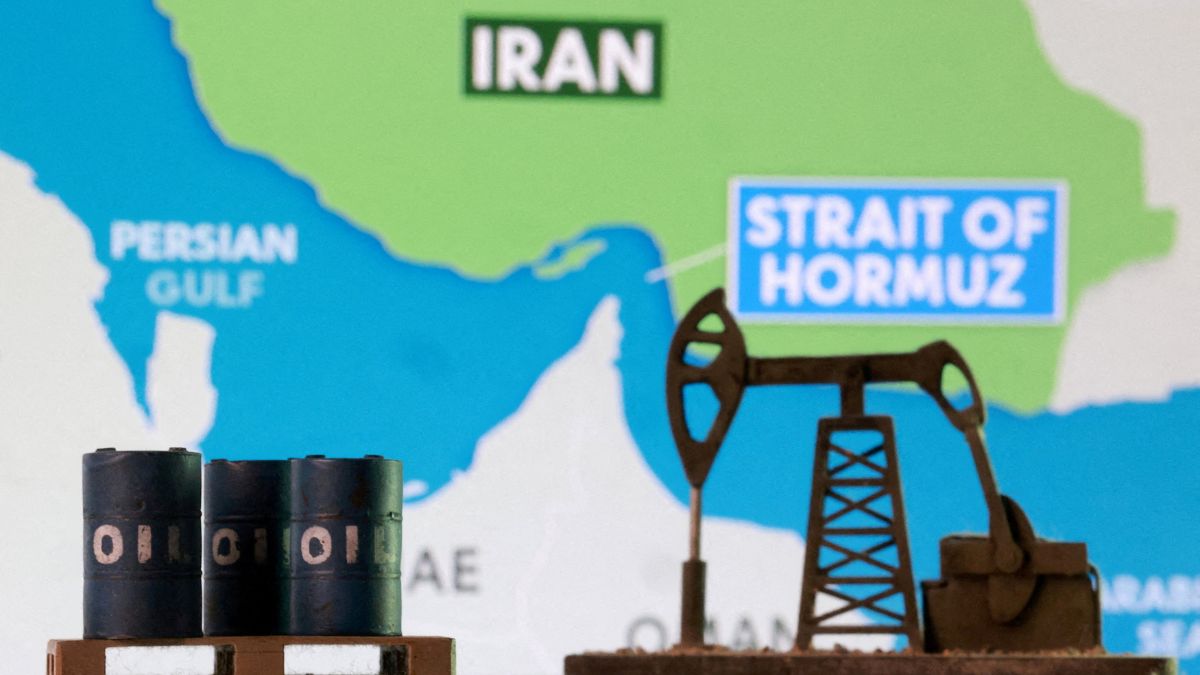 "Iran war: How much do petrol, diesel and gas cost worldwide now?")
 "How severely is Iran's new Supreme Leader Mojtaba Khamenei injured?")
 "US-Israel Iran War Live Updates: China restricts fuel exports in March to protect domestic supply")
 "Is Iran using China’s highly accurate BeiDou navigation system?")
 "Iran war: How much do petrol, diesel and gas cost worldwide now?")
 "How severely is Iran's new Supreme Leader Mojtaba Khamenei injured?")