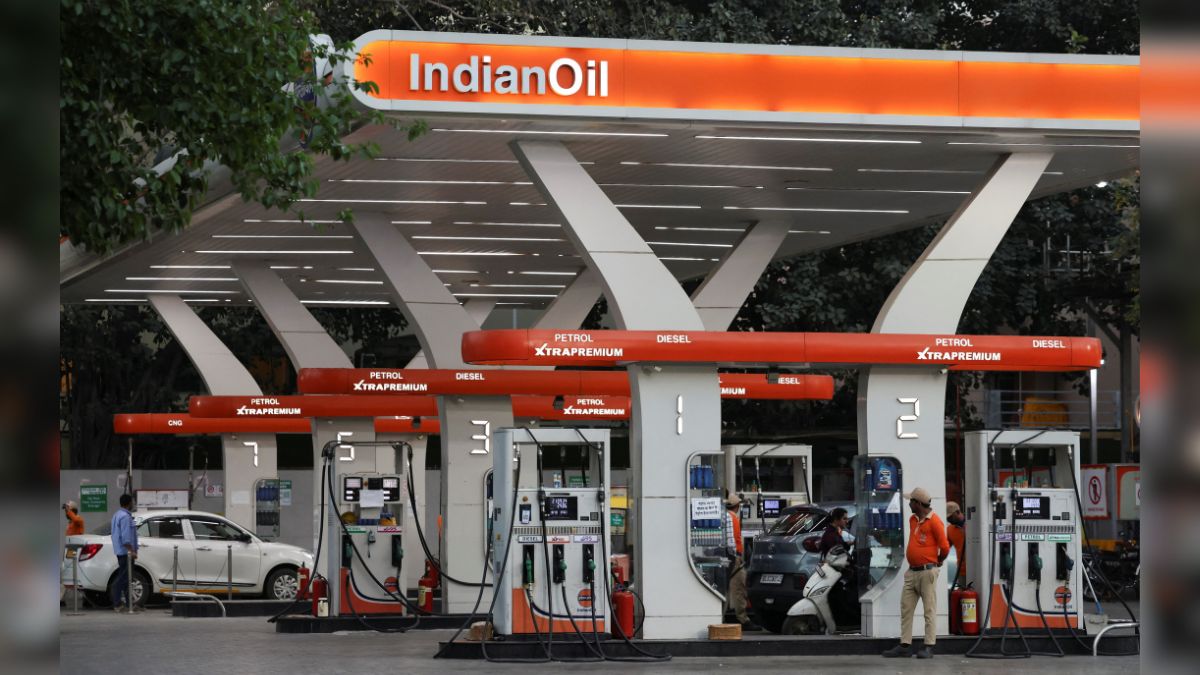
 "Explained: Where does India get its oil and gas from?")
India’s dependence on imported oil and gas has long shaped its energy strategy, but amid the ongoing conflict in West Asia, shipping routes and energy production in the Persian Gulf region have been disrupted.
For India — one of the world’s largest energy consumers — such disruptions carry immediate implications for domestic supply chains and economic stability.
The latest crisis has already begun to affect supplies of liquefied petroleum gas (LPG), an essential fuel used widely across India in households and commercial establishments.
The strain comes as fighting in West Asia has forced shipping companies to reassess routes and energy producers to halt or slow operations. Gulf producers such as Qatar and Saudi Arabia have seen production and shipments affected, tightening global supply.
Despite these pressures, the Indian government has attempted to reassure the public that domestic consumers will continue to receive adequate fuel supplies.
“We have taken steps to ensure that 100% supply of CNG & PNG to domestic consumers is ensured and other industries continue to get 70-80% of their supplies, despite the war situation,” Union Minister for Petroleum and Natural Gas Hardeep Singh Puri, wrote on X on Tuesday.
“We are committed to ensure uninterrupted supply of affordable energy to our domestic consumers. There is no shortage for domestic consumers and no reason to panic,” he added.
Why does India depend so heavily on imported oil and gas?
India’s rapid economic growth, expanding industrial base, and rising living standards have led to a steady increase in energy consumption. Domestic production, however, has not kept pace with demand, forcing the country to rely heavily on imports.
As of early 2026, India imports approximately 88 per cent of the crude oil it consumes. In the case of natural gas, around half of the country’s requirements are met through overseas purchases.
This makes India one of the world’s most significant buyers in global energy markets. The country is currently the fourth-largest importer of liquefied natural gas (LNG) and the second-largest importer of LPG.
Both fuels play different roles in the energy system. LNG is primarily used for industrial applications such as fertiliser manufacturing, electricity generation, and city gas distribution networks.
LPG, on the other hand, is widely used as a cooking fuel and is delivered through cylinders across urban and rural India.
The country’s reliance on imported fuel means that geopolitical tensions, shipping disruptions, and price volatility in global markets can have direct economic consequences. Analysts note that every $10 increase in international crude prices typically expands India’s current account deficit by roughly $9 billion.
Which countries supply crude oil to India?
India purchases crude oil from more than 40 countries around the world, reflecting a deliberate strategy to diversify supply sources and reduce dependence on any single region.
Russia currently occupies the position of India’s largest crude supplier. As of February 2026, Russian exports to India amount to about 1.04 million barrels per day. Much of this consists of Urals crude, classified as medium sour oil.
Russian crude gained prominence in India’s import basket after Western sanctions reshaped global energy trade flows. Despite price caps introduced by the Group of Seven countries, India has continued purchasing these shipments, often benefiting from negotiated discounts.
However, by this month, those discounts had narrowed to roughly $4-$5 per barrel due to rising global demand.
Saudi Arabia remains the second-largest supplier of crude oil to India, shipping about 1.01 million barrels per day.
Iraq follows closely behind as another major supplier, delivering around 0.98 million barrels per day. Iraqi crude is particularly well suited to India’s refining infrastructure because many public-sector refineries are configured to process its medium and heavy grades.
The United Arab Emirates also holds a key place in India’s import portfolio. Roughly 0.55 million barrels per day of crude oil arrive from the UAE, much of it under strengthened economic cooperation agreements between the two countries.
Beyond West Asia, India has expanded its crude purchases from the United States. Imports of American light sweet crude, particularly the West Texas Intermediate (WTI) grade, have grown to about 0.22 million barrels per day.
Additional suppliers help further diversify the supply network as Kuwait contributes medium-grade crude.
While Nigeria provides Bonny Light — a grade valued for producing high-quality transport fuels such as diesel and aviation turbine fuel.
Mexico exports the Maya grade, a heavier crude often used for producing bitumen and heavy fuel oils.
Emerging producers such as Brazil and Guyana have also begun supplying India with light to medium grades of oil.
Angola and other West African nations also contribute to the diversification strategy, particularly as India seeks to reduce its reliance on West Asian energy shipments during periods of instability.
Where does India source its natural gas and LPG?
Natural gas imports into India fall into two main categories: LNG and LPG. Though both are hydrocarbon fuels, they serve different functions in the economy and are transported in different ways.
Qatar has historically been India’s dominant supplier of LNG. The Gulf state accounts for roughly half of India’s LNG imports under long-term contracts.
However, the current crisis in the Persian Gulf has disrupted these flows. Qatar halted production after Iranian strikes targeted Gulf countries in retaliation for military action by the United States and Israel.
Apart from Qatar, India sources LNG from several other countries. The United States has become an increasingly important partner, with Indian companies signing long-term agreements that guarantee shipments under “take-or-pay” arrangements.
Australia supplies LNG to India’s eastern coastal terminals, including Ennore and Dhamra, providing an alternative route that bypasses the Strait of Hormuz.
Other suppliers include the United Arab Emirates, Oman, Nigeria, and Angola, which occasionally supply cargoes through the spot market depending on global demand conditions.
In contrast, LPG imports are heavily concentrated in the Gulf region. Saudi Arabia, the United Arab Emirates, and Qatar together account for more than 90 per cent of India’s imported LPG supplies.
This dependence has prompted India to explore alternative arrangements. In 2026, public-sector oil companies such as Indian Oil Corporation, Bharat Petroleum Corporation Limited, and Hindustan Petroleum Corporation Limited signed a deal to import 2.2 million tonnes of LPG annually from the United States’ Gulf Coast.
There have also been reports that India will be looking to import gas from Norway and the United States to counter shortages.
Domestically, where does India produce its oil & gas?
While India is heavily dependent on imports, it maintains a robust, though ageing, domestic production infrastructure that provides approximately 12-15 per cent of its crude oil and nearly 50 per cent of its natural gas.
The backbone of India’s domestic energy is the Mumbai High (formerly Bombay High) field, located in the Arabian Sea. Operated by the state-run ONGC, it remains the country’s most prolific asset, contributing the lion’s share of offshore oil and gas.
On the opposite coast, the Krishna-Godavari (KG) Basin in the Bay of Bengal has become the “new frontier” for natural gas.
Significant production comes from the Reliance-BP “MJ” and “R-Cluster” fields, alongside ONGC’s KG-DWN-98/2 block, which saw a major ramp-up in oil production in late 2024 and throughout 2025, providing a critical domestic cushion against global price volatility.
On land, the Barmer Basin in Rajasthan is the most significant contributor, specifically the Mangala, Bhagyam, and Aishwarya (MBA) fields operated by Cairn Oil & Gas (Vedanta). These fields alone account for nearly 25 per cent of India’s total domestic crude oil production.
In the northeast, Assam remains a vital hub, home to the oldest operating refinery in the world at Digboi. Fields in the Upper Assam shelf, such as Naharkatiya and Moran, continue to produce steady volumes of both oil and gas.
Additionally, Gujarat’s Cambay Basin remains a consistent onshore producer, supported by hundreds of smaller “marginal” fields that have been auctioned to private players to maximise extraction.
Beyond traditional wells, India is increasingly tapping into Coal Bed Methane (CBM), which is natural gas extracted from coal seams. The primary domestic sources for CBM are located in Jharkhand (Bokaro), Madhya Pradesh (Sohagpur), and West Bengal (Raniganj).
To boost domestic output, the government has launched “Mission Anveshan,” which as of now is focusing on previously "No-Go" offshore zones and the Mahanadi Basin.
This month, new high-resolution seismic reimaging projects have commenced in the Mahanadi offshore region to identify new “thermogenic” gas plays that could potentially decrease import reliance by the end of the decade.
What types of crude oil does India import?
India does not rely on a single type of crude oil. Instead, it purchases different grades depending on refining requirements, availability, and price. Crude oil grades are typically categorised using two characteristics: density and sulphur content.
Light sweet crude has relatively low density and contains minimal sulphur. Because it requires less processing to produce fuels such as petrol and diesel, it is considered easier to refine. Examples include Brent crude from the North Sea and WTI from the United States.
Medium sour crude has moderate density but contains higher sulphur levels. This requires additional processing in refineries equipped with advanced desulphurisation units. Russian Urals crude and several Middle Eastern grades fall into this category.
Heavy sour crude is denser and contains even higher levels of sulphur. Although it is more difficult to refine, it is generally cheaper than lighter grades. These types of crude are often used to produce heavy fuels and bitumen for road construction.
India’s refining sector is among the most technologically advanced in the world, enabling it to process a wide variety of crude types.
Facilities such as those operated by Reliance Industries in Jamnagar and Hindustan Petroleum in Visakhapatnam are capable of converting high-sulphur crude into cleaner fuels that meet stringent emission standards.
This ability allows India to purchase cheaper grades of oil and still produce high-quality fuels compliant with Euro-VI environmental standards.
What is the difference between LNG and LPG?
Although both are forms of natural gas used as fuels, LNG and LPG differ in chemical composition, transportation methods, and usage.
LNG primarily consists of methane. To transport it efficiently, the gas is cooled to approximately minus 162 degrees Celsius, turning it into a liquid. This process reduces its volume dramatically, allowing large quantities to be carried in specialised cryogenic tankers.
Once LNG arrives at import terminals, it is converted back into gas and distributed through pipelines. The fuel is widely used by fertiliser plants, electricity generators, and city gas networks supplying piped natural gas (PNG) to homes and compressed natural gas (CNG) for vehicles.
LPG, by contrast, is a mixture of propane and butane. Instead of being cooled to extremely low temperatures, it is stored as a liquid under moderate pressure.
The portability of LPG cylinders makes the fuel suitable for widespread distribution, particularly in rural areas where pipeline infrastructure may be limited.
It is commonly used for cooking fuel and is central to government initiatives aimed at expanding access to clean energy in households.
Which shipping routes bring energy to India?
The most important route is the Strait of Hormuz, a narrow waterway between Iran and Oman that serves as a gateway for energy exports from the Persian Gulf. Around 20 per cent of the world’s petroleum and natural gas shipments pass through this channel.
For India, the importance of the strait is even greater. Roughly half of the country’s crude oil imports and more than 60 per cent of its LNG and LPG shipments normally travel through this route.
The current crisis has highlighted the risks associated with such dependence. With Iranian forces exerting control over the waterway, disruptions have already affected one-third of India’s natural gas imports.
Other maritime routes are also critical. The Red Sea and the Suez Canal connect India with suppliers in Europe and North Africa and serve as important pathways for Indian exports of refined petroleum products.
Security concerns in the Bab-el-Mandeb region near the Red Sea have periodically raised insurance costs and shipping risks.
When these routes become unsafe or congested, tankers are sometimes redirected around the Cape of Good Hope at the southern tip of Africa. Although this avoids conflict zones, it significantly increases transit time.
A journey that typically takes four days from Gulf ports can extend to about 25 days when ships travel around Africa. The longer route adds between 10 and 15 days to shipping time and raises both freight charges and insurance premiums.
India is also exploring alternative transport corridors with Russia, including routes connecting the Russian Far East to India’s eastern coastline.
How does India protect itself from supply disruptions?
To mitigate the risks associated with its heavy dependence on imports, India maintains a multi-layered energy security strategy. One key component is the strategic petroleum reserve system.
Underground storage facilities located in Visakhapatnam, Mangaluru, and Padur hold crude oil reserves that can be released in emergencies. These reserves account for about 9.5 days of national consumption.
In addition to the strategic reserves, oil public sector undertakings maintain commercial stocks equivalent to approximately 65 days of consumption.
Combined, these stocks provide a buffer of roughly 74 days in case of a major disruption in global supply.
The government has also expanded storage infrastructure for LPG. In September 2025, the commissioning of an underground cavern in Mangalore increased India’s LPG storage capacity to around 140,000 tonnes.
The conflict in West Asia has already led to supply constraints in global LPG markets, prompting India New Delhi to direct oil refineries to increase LPG production and prioritise domestic consumption.
“The ministry has prioritised domestic LPG supply to households and introduced 25 day inter- booking period to avoid hoarding/black marketing. Non domestic supplies from imported LPG is being prioritised to essential non domestic sectors such as Hospitals and Educational institutions,” the Ministry of Petroleum and Natural Gas said in a statement.
“For LPG supply to other non-domestic sectors, a committee of three EDs of OMCs have been constituted to review the representations for LPG supply to restaurants/hotels/other industries,” it added.
Also Watch:
With inputs from agencies


 "US-Israel Iran War Live Updates: Blasts heard across Doha as Iran’s Gulf strikes enter 12th day; Qatar intercepts new missile attack")
 "Ayatollah Khamenei reportedly opposed son Mojtaba’s rise as Iran’s Supreme Leader")
 "What happens if 600-kg Nasa satellite crashes into Earth")
 "Erika Kirk appointed as key board member of US Air Force Academy, succeeds her husband")
 "US-Israel Iran War Live Updates: Blasts heard across Doha as Iran’s Gulf strikes enter 12th day; Qatar intercepts new missile attack")
 "Ayatollah Khamenei reportedly opposed son Mojtaba’s rise as Iran’s Supreme Leader")
 "What happens if 600-kg Nasa satellite crashes into Earth")
 "Erika Kirk appointed as key board member of US Air Force Academy, succeeds her husband")