 "How Chinese students are using smart glasses to cheat in exams")
Smart glasses — marketed as productivity-enhancing devices — are increasingly being used by students in China to bypass academic safeguards and gain unfair advantages in examinations.
As adoption accelerates, driven by government incentives and aggressive innovation by domestic tech firms, educators and researchers are racing to catch up.
How are smart glasses becoming popular in China?
Smart glasses have seen a surge in popularity in China, reflecting broader global trends in wearable technology.
These devices are designed to perform a wide array of functions, including capturing photos and videos, offering real-time navigation, translating foreign languages, and even acting as teleprompters for presentations.
Powered by large language models, they are capable of interpreting visual input and generating near-instant responses.
The Chinese government has played a significant role in accelerating adoption. In a push to stimulate domestic consumption, authorities have included smart glasses in a national subsidy programme, reported tech publication Rest of World.
Consumers are eligible for discounts covering up to 15 per cent of the retail price, capped at 500 yuan. This policy has made the devices more accessible, particularly to younger users curious about emerging technologies.
Domestic companies have also entered the market aggressively. Firms such as Xiaomi, Alibaba, and electric vehicle manufacturer Li Auto have rolled out their own versions of AI-integrated eyewear.
These products come with features that range from calorie tracking and immersive entertainment experiences to augmented reality overlays that enhance everyday tasks.
Globally, smart glasses have become a multibillion-dollar industry. Devices typically retail between $270 and more than $1,000, depending on features and brand positioning.
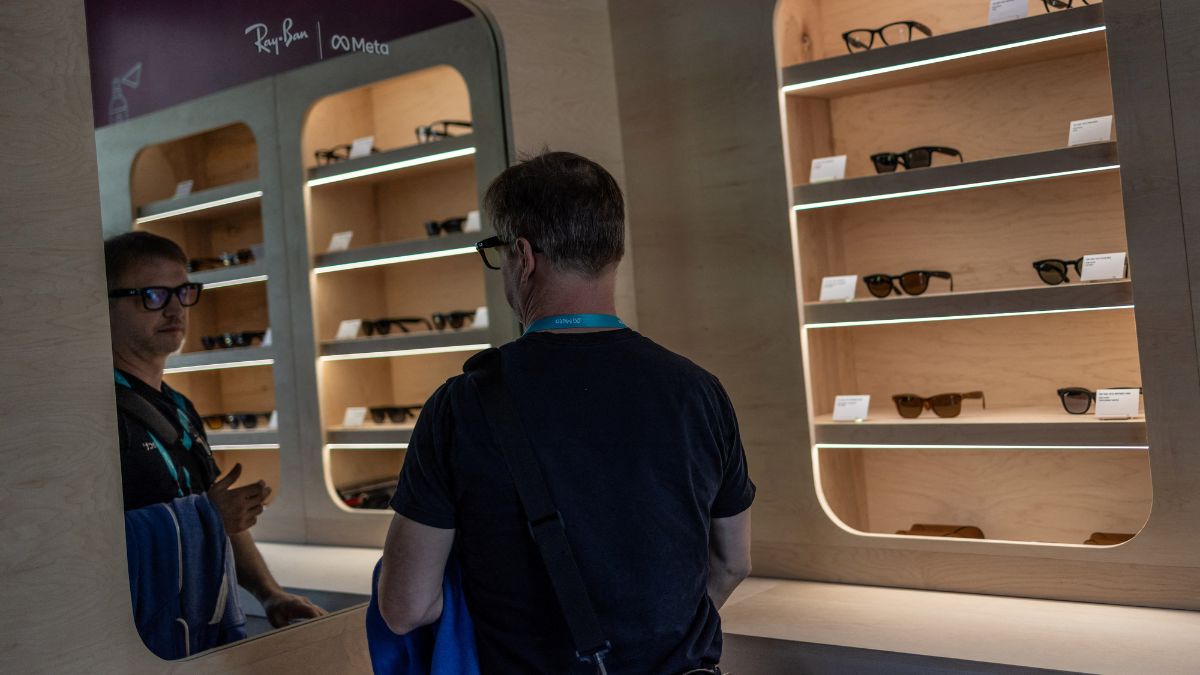
International players such as Meta, in collaboration with EssilorLuxottica, have introduced models under the Ray-Ban and Oakley brands, enabling users to listen to music, capture images, and interact with digital assistants.
However, certain advanced versions with built-in displays remain limited to specific markets, such as the United States.
According to data from consultancy IDC, China accounted for 2.5 million smart glasses shipments in 2025, representing 16.7 per cent of the global total of 14.8 million units. While this indicates strong growth, it also highlights that China remains a developing segment within the broader global market.
Despite this growth, several challenges persist. Early adopters have reported issues related to hardware limitations, including overheating during extended use, short battery life requiring frequent recharging, and discomfort due to weight.
Some models weigh up to 50 grammes — roughly double that of conventional eyewear — making prolonged usage less practical.
How are students using AI glasses to cheat in exams?
Students are increasingly using smart glasses to cheat during examinations, leveraging their built-in cameras and AI capabilities to access answers in real time.
Vivian, a university student in Hebei province, provided insight to Rest of World into how the technology is being used. She explained that her Rokid smart glasses can scan exam questions and instantly display answers on the lens through an integrated screen.
“Any subject that I may fail at,” she said, requesting the use of a pseudonym so she could speak freely.
The process is both simple and discreet. The glasses capture an image of a question, which is then processed by an AI system capable of generating accurate responses. These answers appear directly within the user’s field of vision, eliminating the need for any visible external device.
Control mechanisms only enhance the covert nature of the technology. Many smart glasses can be operated using a small remote designed to resemble a ring, allowing users to interact with the device without drawing attention.
The applications extend beyond individual use. Vivian noted that some of her classmates have borrowed or rented her glasses for use during exams, turning the device into a shared resource among students seeking an advantage.
This misuse is not limited to isolated cases. Reports indicate that demand for such devices is growing among students, particularly for subjects like English and mathematics, where quick access to answers can significantly influence performance.
Is there a rental market fuelling exam cheating?
The high retail cost of smart glasses has given rise to a parallel rental economy, making the technology accessible to a broader audience, including students who may not be able to afford outright purchases.
On Xianyu, a major secondhand marketplace in China, numerous sellers offer smart glasses for short-term use.
Rental prices typically range from 40 to 80 yuan per day, depending on the model and features. This affordability has lowered the barrier to entry, enabling students to use the devices specifically during exam periods.
Ke Changsi, a businessman based in Shenzhen, has emerged as a key player in this space. He reported renting out Rokid and Quark smart glasses to more than 1,000 individuals over a four-month period.
His clientele includes not only students but also professionals who use the devices for tasks such as translation and presentations, reported Rest of World.
Ke has actively marketed the exam-related capabilities of these devices. On his Xiaohongshu page, he has highlighted how the glasses can assist with answering English and math questions, further driving demand among students.
The rental model has also been embraced informally at the peer level. Vivian’s experience of lending her glasses to classmates illustrates how the technology is circulating within student networks, sometimes evolving into small-scale entrepreneurial ventures.
Why are schools struggling to detect these devices?
Despite formal restrictions, enforcement remains uneven. Major examinations in China, including the national college entrance exam and civil service tests, explicitly prohibit the use of smart glasses.
However, these bans are not always effectively implemented in everyday academic settings.
One of the primary challenges lies in the design of the devices. Smart glasses resemble traditional eyewear, making them difficult to distinguish during routine inspections. Unlike smartphones or other conspicuous gadgets, they do not require users to look away or engage in noticeable movements.
Students have reported that many teachers are unfamiliar with the technology and therefore unable to identify its presence during exams. This lack of awareness creates an environment where misuse can occur with minimal risk of detection.
The issue is compounded by the discreet control mechanisms and the absence of obvious indicators when the device is in use. While some models include LED lights to signal camera activity, these can be easily overlooked or deliberately concealed.
As a result, smart glasses are increasingly being used in settings where oversight is limited, highlighting a gap between policy and practice.
How do AI glasses in exams perform?
The capabilities of AI-powered smart glasses have been demonstrated in controlled experiments. Researchers at the Hong Kong University of Science and Technology conducted a study in which they integrated a large language model into a pair of Rokid glasses.
A student wearing the device during a series of exams achieved a score of 92.5, placing them among the top five performers in a class of more than 100 students.
Zili Meng, an assistant professor involved in related research, indicated to Rest of World that efforts are underway to develop detection systems that can help educators identify the use of such devices.
At the same time, he pointed out the need for a standardised development framework that would enable broader innovation while maintaining accountability.
Researchers are also exploring applications beyond academics. For instance, one prototype developed by Meng and his colleagues provides users with cues about subtle or implied messages during conversations, demonstrating the technology’s potential in social and professional contexts.
Are privacy and security concerns adding to the controversy?
The ability to record video and capture images discreetly raises the risk of unauthorised surveillance and misuse of personal information.
Investigations have revealed that footage captured by some devices is reviewed by remote workers, leading to concerns about how sensitive data is handled. In certain cases, reviewers encountered highly personal scenes, including individuals in private settings or moments involving financial information.
Workers involved in reviewing such content warned that leaks could lead to “enormous scandals,” highlighting the potential consequences of inadequate safeguards.
Complicating the issue is the availability of accessories designed to bypass built-in privacy features. Online sellers offer stickers that can cover LED indicators, allowing users to record without detection.
With inputs from agencies


 "Iran Israel War News Live: UK to host virtual summit of 30 countries on reopening Strait of Hormuz")
 "‘Costs going over the roof': Nepal’s only billionaire Binod Chaudhary warns of West Asia shock")
 "What happens if Donald Trump pulls the US out of Nato")
 "Who is Smita Ghosh, Indian-origin lawyer taking on Trump in birthright citizenship battle?")
 "Iran Israel War News Live: UK to host virtual summit of 30 countries on reopening Strait of Hormuz")
 "‘Costs going over the roof': Nepal’s only billionaire Binod Chaudhary warns of West Asia shock")
 "What happens if Donald Trump pulls the US out of Nato")
 "Who is Smita Ghosh, Indian-origin lawyer taking on Trump in birthright citizenship battle?")