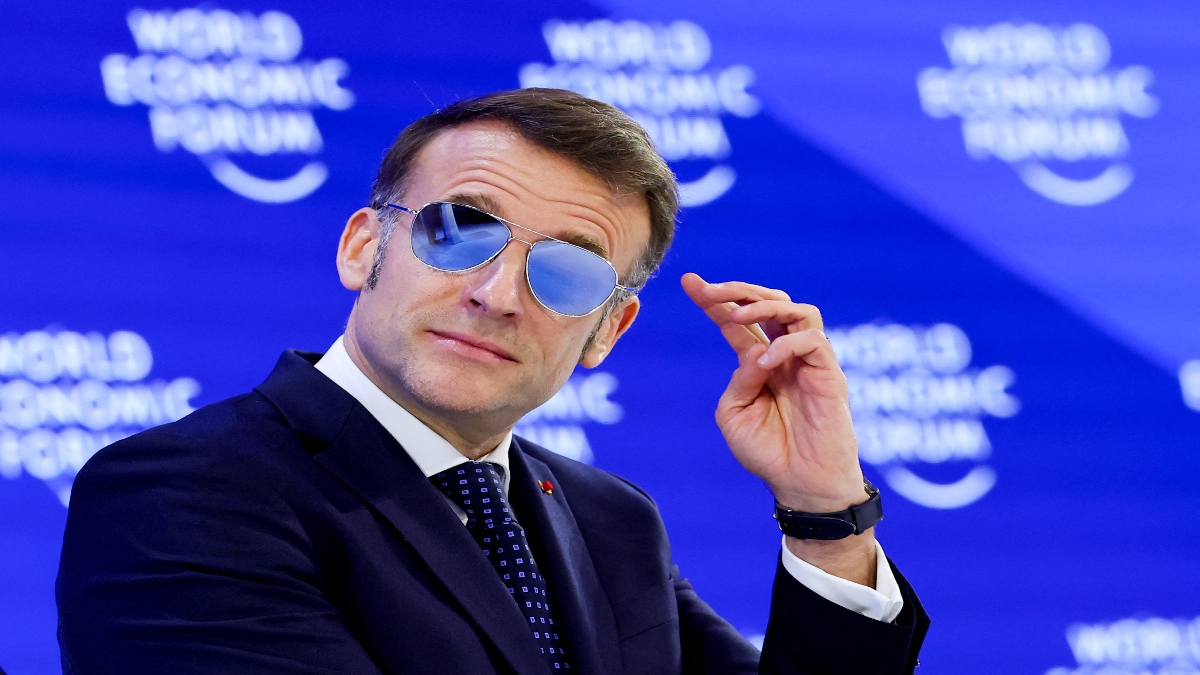
 "Macron-Takaichi rare-earths deal eyes to curtail China's dominance in critical sectors")
Japan and France have unveiled a sweeping partnership on rare earths and critical minerals, signalling a coordinated push by advanced economies to reduce their dependence on China in strategically vital supply chains.
During a three-day visit to Tokyo by French President Emmanuel Macron, Japanese Prime Minister Sanae Takaichi hosted high-level talks that culminated in a roadmap for cooperation on critical minerals, defence and space technologies. The centrepiece of the agreement is a joint investment by Japan’s Iwatani and the state-backed Japan Organisation for Metals and Energy Security (JOGMEC) in a rare-earths refining project in southern France.
The facility—seen as a cornerstone of Europe’s nascent rare-earths processing ecosystem—is expected to begin operations later this year. Once operational, it is projected to supply a meaningful share of Japan’s demand for heavy rare earth elements such as dysprosium and terbium, which are essential for electric vehicle motors, offshore wind turbines and advanced electronics.
French Finance Minister Roland Lescure framed the initiative as a direct response to China’s overwhelming grip on global supply chains. “We cannot rely solely on specific countries, especially China,” he said, underlining the urgency of diversifying sourcing channels.
China tensions sharpen urgency
The deal comes against the backdrop of escalating trade and geopolitical tensions. In February, China imposed restrictions on dual-use exports to 20 Japanese entities, alleging links to Tokyo’s military establishment. The move jolted Japanese policymakers and industry players, reinforcing concerns about supply chain vulnerabilities.
China currently dominates the mining, processing and export of rare earth elements—materials critical to clean energy technologies, semiconductors and defence systems. While Japan has reduced its dependence on Chinese supplies to roughly 60 per cent from about 90 per cent following a 2010 diplomatic dispute, it remains significantly exposed.
The latest Franco-Japanese initiative is part of a broader strategy by Tokyo to build resilient supply chains through partnerships with like-minded nations, including the United States, Australia and India. Investments in recycling technologies and overseas mining projects have also been stepped up in recent years.
Quick Reads
View AllDefence and space cooperation
The Tokyo summit extended well beyond resource security. Both leaders agreed to deepen defence collaboration in the Indo-Pacific, reflecting converging concerns over regional stability and China’s growing strategic assertiveness.
In a parallel development, companies from the two countries are set to collaborate on 12 joint space projects, spanning satellite launches and space debris removal—an area of increasing commercial and security importance.
Takaichi emphasised the broader geopolitical significance of the partnership, stating that cooperation among like-minded democracies had “never been more important for the peace and prosperity of our nations and the region.”


 "Iran Israel War News Live: Iran dismisses Trump’s speech as ‘insane’, claims strong control over Hormuz")
 "‘If Pakistan attempts any misadventure, India’s response will be unprecedented and decisive’: Rajnath")
 "Why is Iran targeting Gulf data centres? What does this mean for modern warfare?")
 "Floccinaucinihilipilification: The 29-letter tongue twister Delhi court used to dismiss Sitharaman defamation case")
 "Iran Israel War News Live: Iran dismisses Trump’s speech as ‘insane’, claims strong control over Hormuz")
 "‘If Pakistan attempts any misadventure, India’s response will be unprecedented and decisive’: Rajnath")
 "Why is Iran targeting Gulf data centres? What does this mean for modern warfare?")
 "Floccinaucinihilipilification: The 29-letter tongue twister Delhi court used to dismiss Sitharaman defamation case")