 "Why US strategic calculations are turning to Venezuela’s gold, coltan and nickel")
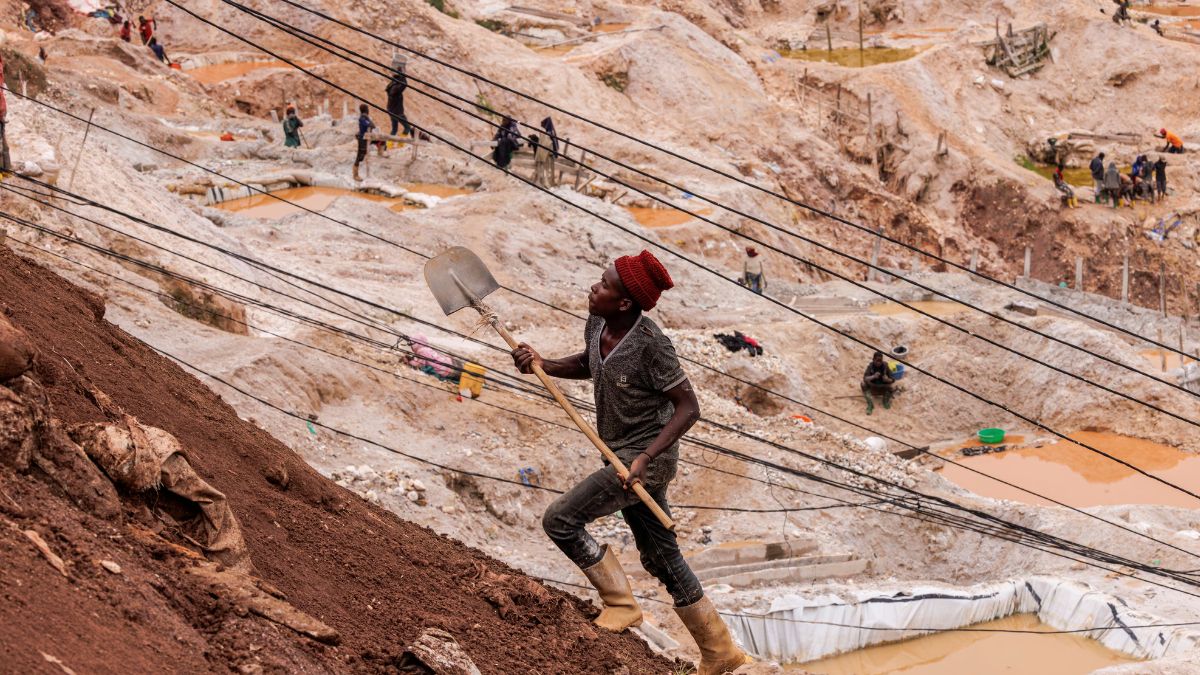
Venezuela is globally known for holding the world’s largest proven oil reserves, accounting for about 17% of global crude reserves. But oil is not the only part of the country’s vast natural endowment. Rich deposits of gold, nickel, bauxite, and coltan give Venezuela enormous mineral potential, one that has increasingly drawn the attention of the United States and other global powers.
Official estimates suggest Venezuela holds more than 8,000 tonnes of gold resources, placing it among the most resource-rich nations in the world. Yet decades of mismanagement, corruption, and weak institutions have left much of this wealth underutilised.
According to Reuters, Venezuela repeatedly drew down its gold reserves during the peak years of its economic crisis to secure loans, settle external debts, and inject foreign currency into the economy. Despite its resource base, gold output remains modest. Data from the World Gold Council shows that by December 2024, Venezuela’s official gold production stood at 30.6 tonnes, a relatively small figure by global standards.
Long-term trends paint an even starker picture. CEIC data indicates that gold production has fallen sharply in recent years. Since 1990, Venezuela has averaged just 11.6 tonnes of gold production annually, with a historical peak of 22.3 tonnes in 1997, far below what its geological potential would suggest.
At the centre of Venezuela’s mineral ambitions lies the Orinoco Mining Arc, a vast zone declared by the government in 2016 and spanning more than 110,800 square kilometres in the country’s south. Authorities claim the region holds over 8,000 tonnes of gold, along with diamonds and other strategic minerals. If independently verified, these figures would place Venezuela among the most resource-rich countries globally.
The Orinoco Arc is also believed to host coltan, a critical mineral used in electronics and aerospace industries, as well as cassiterite, the primary ore of tin. In addition, Venezuela has identified nickel reserves of about 407,885 tonnes, with potential deposits of cobalt and other battery metals, though commercial-scale production remains limited.
Quick Reads
View AllHowever, the mineral push is fraught with risks. Environmental scientists and indigenous groups have raised concerns over ecological damage and illegal mining, while nationalisation of the gold sector has driven much activity into informal and opaque networks.
Once the richest country in Latin America, Venezuela now stands at a crossroads. Its vast resource base could underpin economic recovery or further entrench an extraction-driven model that deepens instability. Whether mineral wealth becomes a solution or a liability remains an open question.


 "US-Venezuela Tensions Live Updates: Calls for release of political prisoners grow after Maduro’s ouster")
 "Was Maduro 'kidnapped' or 'captured' by the US? Depends, and it matters")
 "Bangladesh weighs JF-17 purchase as Pakistan pitches China-partnered fighter jet")
 "ISL 2025-26 start date announced by Sports Minister Mansukh Mandaviya with all 14 clubs in action")
 "US-Venezuela Tensions Live Updates: Calls for release of political prisoners grow after Maduro’s ouster")
 "Was Maduro 'kidnapped' or 'captured' by the US? Depends, and it matters")
 "Bangladesh weighs JF-17 purchase as Pakistan pitches China-partnered fighter jet")
 "ISL 2025-26 start date announced by Sports Minister Mansukh Mandaviya with all 14 clubs in action")