

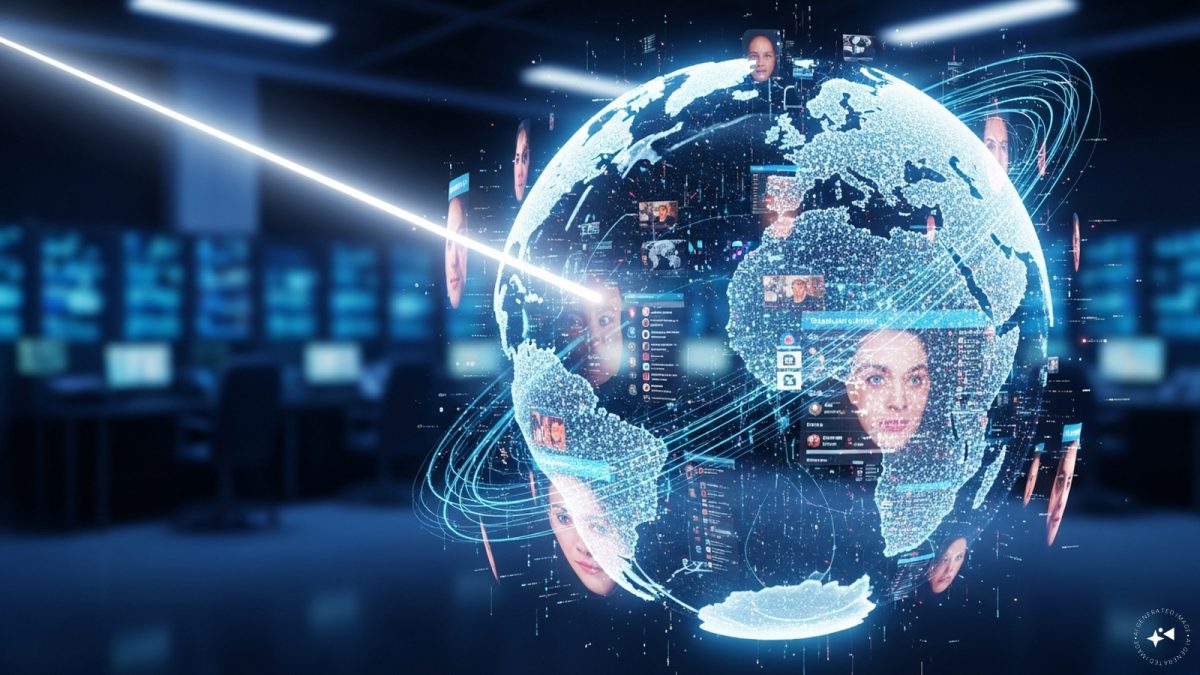
 "The year truth went to war: How deepfakes and AI hijacked the global narrative in 2025")
For the global news industry, 2025 was a year of living dangerously. While technology promised a new frontier of storytelling, it instead delivered a “disinformation winter” that tested the bedrock of democratic institutions.
The year 2025 saw a record number of “synthetic influence operations”, coordinated campaigns using AI-generated avatars and “cloned” media brands to hijack public discourse. It was the year disinformation became a service and truth became a luxury.
The battle for the narrative has moved beyond the printing press to the algorithm. UNESCO’s 2025 World Trends Report highlights a 10 per cent decline in global freedom of expression, exacerbated by “hashtag hijacking” and bot networks that silence authentic voices.
As traditional media outlets struggle with declining referral traffic from social giants, they are being forced into a high-stakes media battle against “alternative ecosystems” of influencers and podcasters who often prioritise engagement over evidence.
In this environment, the press is no longer just reporting the news; it is fighting for its right to exist in an era of digital deception.
AI-generated political chaos goes mainstream
Artificial intelligence was no longer a novelty in political interference in 2025. Hyper-realistic deepfake videos, cloned voices and fabricated documents surfaced across continents, blurring the line between truth and fiction. In several countries, manipulated videos of political leaders appeared to show inflammatory speeches, false confessions or policy reversals, circulating widely before corrections could catch up.
Multiple reports cited instances where synthetic media briefly influenced market sentiment, triggered protests or forced authorities into emergency clarifications. Unlike earlier misinformation waves driven by trolls or bots, this year’s campaigns were often sophisticated, multilingual and tailored for specific voter blocs.
Experts warned that the “plausibility gap” had collapsed even informed audiences struggled to distinguish authentic material from fabricated content in real time.
Elections under pressure from misinformation
With dozens of national and regional elections held worldwide in 2025, misinformation became a central challenge to democratic processes. From Latin America to South Asia and parts of Europe, election authorities reported coordinated efforts to suppress turnout, discredit candidates or undermine trust in voting systems.
False narratives about rigged ballots, hacked voting machines and foreign conspiracies spread rapidly on encrypted messaging platforms and short-video apps. In some cases, fabricated exit polls or AI-generated endorsements circulated on polling days themselves, prompting emergency takedowns.
Quick Reads
View AllElection commissions increasingly turned to real-time fact-checking partnerships with media organisations and tech platforms but officials admitted the response remained reactive rather than preventative.
The race to counter deepfakes
As manipulation grew, so did counter-measures. Governments rolled out digital watermarking standards, while major tech companies deployed AI-based detection tools designed to flag synthetic media. Several countries updated election laws to criminalise malicious deepfakes, particularly those targeting candidates or public officials.
Media organisations also adapted, investing heavily in verification desks and forensic analysis. Newsrooms reported that confirming basic audio-visual authenticity now required technical scrutiny once reserved for intelligence agencies.
Still, analysts warned that detection tools lag behind generative models and that public trust, once damaged is hard to restore even after falsehoods are exposed.
Propaganda as a weapon of war
Beyond elections, information warfare remained central to global conflicts. In the Russia-Ukraine war, both sides accused each other of deploying AI-enhanced propaganda from falsified battlefield footage to manipulated casualty figures. The aim, analysts said, was not just persuasion but exhaustion, flooding audiences with so much conflicting information that certainty itself eroded.
In West Asia, competing narratives around military strikes, humanitarian access and ceasefire violations flooded social media. News agencies documented how unverifiable videos often went viral before independent confirmation, shaping public opinion long before facts could be established.
China, Pakistan and narrative battles after Operation Sindoor
A recent US Congress-mandated report added a new dimension to 2025’s information wars. The report assessed that China had intensified propaganda operations after Pakistan suffered setbacks during India’s Operation Sindoor, amplifying narratives critical of India’s military capabilities.
According to the assessment, coordinated online campaigns sought to question the performance of Rafale fighter jets while promoting Chinese-made aircraft as superior alternatives. Analysts viewed the effort as part of a broader strategy to influence defence perceptions and export markets, using Pakistan-aligned narratives as a conduit.
The findings highlighted how modern disinformation is increasingly tied to strategic competition, defence diplomacy and arms sales not just politics.
A fragile information orders
As 2025 draws to a close, policymakers agree on one thing: disinformation is no longer an episodic threat but a permanent feature of the global order. While tools to detect and counter falsehoods have improved, the speed, scale and sophistication of AI-driven manipulation continue to test democracies, media and public trust. The battle for truth, it seems, is entering a long and uncertain phase.

 "Zelenskyy to meet Trump in US on Sunday: Is an end to Russia-Ukraine war close?")
 "Why Pakistan’s mass exodus of skilled professionals puts Asim Munir’s ‘brain gain’ claim under scrutiny")
 "Thailand, Cambodia agree to an 'immediate ceasefire', halting fierce border clashes")
 "Doctor explains: Why winter raises the risk of dry eye, blepharitis and UV damage")
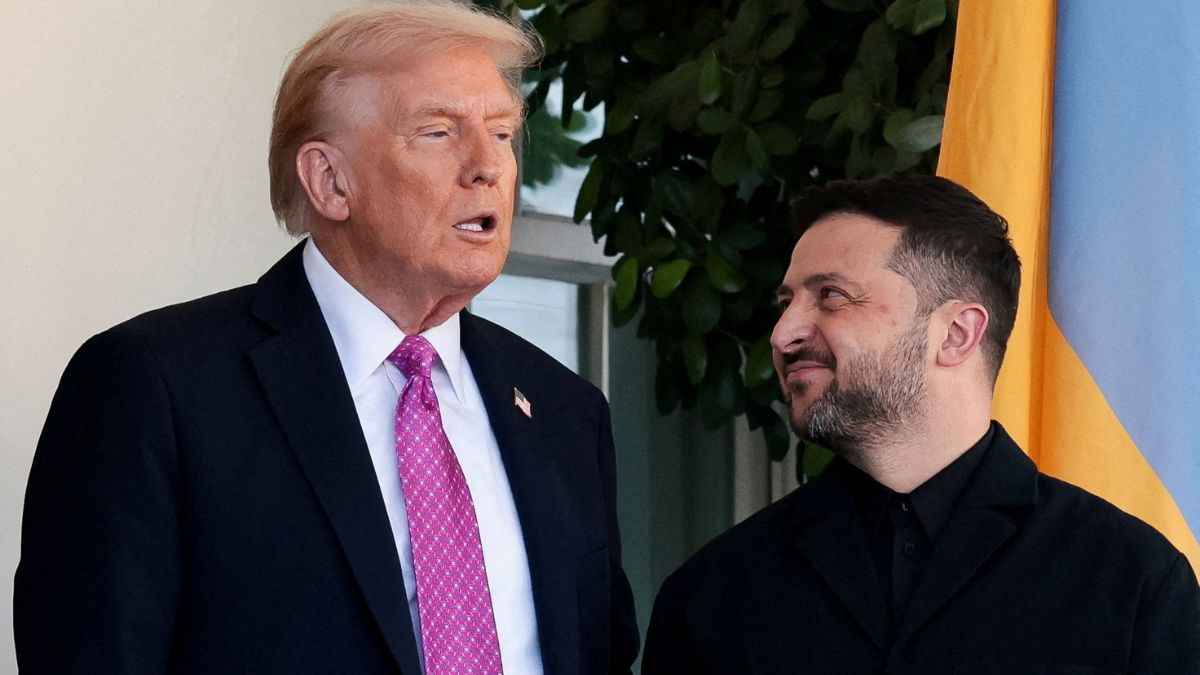 "Zelenskyy to meet Trump in US on Sunday: Is an end to Russia-Ukraine war close?")
 "Why Pakistan’s mass exodus of skilled professionals puts Asim Munir’s ‘brain gain’ claim under scrutiny")
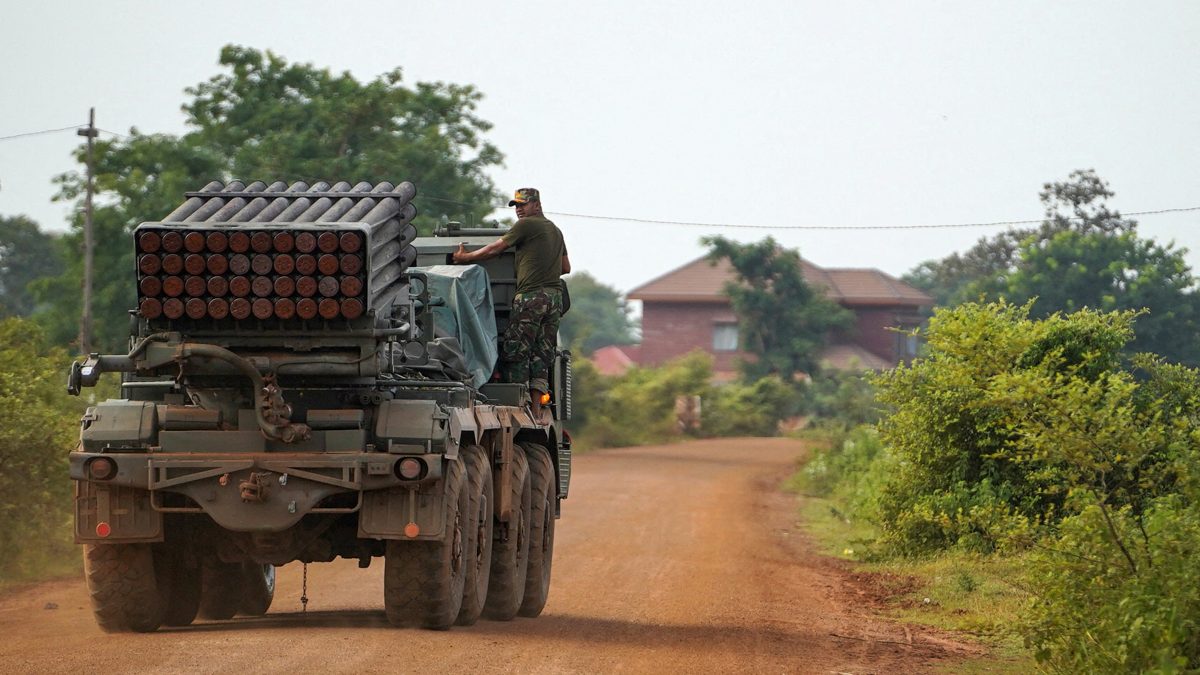 "Thailand, Cambodia agree to an 'immediate ceasefire', halting fierce border clashes")
 "Doctor explains: Why winter raises the risk of dry eye, blepharitis and UV damage")



