 "The mastermind of New Zealand’s biggest drug haul is the nephew of Indira Gandhi’s assassin, reveal authorities")
New Zealand media on March 29, 2026, publicly named Baltej Singh as the alleged kingpin behind the country’s largest-ever methamphetamine seizure. Singh is the nephew of Satwant Singh, one of the assassins of former Indian Prime Minister Indira Gandhi in 1984.
Stuff.co.nz, a leading New Zealand news outlet, published an investigative report tracing the family’s trajectory from Punjab’s militant past to alleged involvement in transnational drug trafficking.
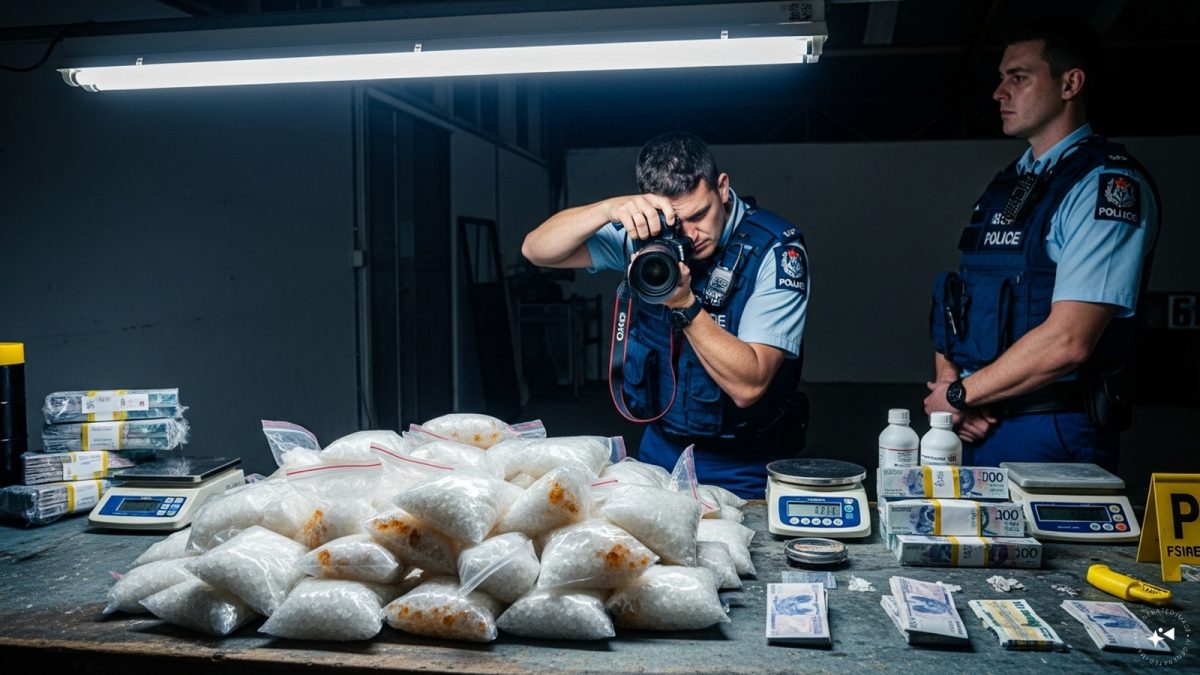
The case, valued at NZ$180 million (Rs 180 crore), involved 100kg of meth hidden inside rice cookers shipped from the UK and later uncovered during a raid on a property in Whangārei in January 2026. The disclosure of Singh’s identity follows a High Court ruling that lifted long-standing name suppression, citing public safety concerns and the risk of ongoing criminal networks.
From name suppression to global exposure
New Zealand media have identified Baltej Singh as the mastermind behind a ₹180-crore (NZ$36 million) drug operation after he withdrew his bid for permanent name suppression.
Singh had earlier secured legal protection preventing local media from naming him, citing risks to his family’s safety. However, courts eventually ruled that the principle of open justice outweighed those concerns—especially since his identity had already circulated internationally.
Legal experts said that name suppression orders in New Zealand apply only domestically and lose effectiveness once identities are widely reported abroad. In Singh’s case, Indian and international outlets had already identified him following his arrest in 2023, effectively eroding the purpose of continued anonymity.
His withdrawal of the appeal marked the end of a prolonged legal battle, allowing local media to formally name him for the first time in connection with what authorities describe as the country’s largest methamphetamine seizure.
Inside New Zealand’s biggest meth importation case
Investigators say Singh orchestrated a highly sophisticated drug smuggling network, importing over 700 kilograms of methamphetamine—much of it in liquid form—concealed within everyday consumer goods.
Shipments were disguised as beverages, including kombucha, coconut water, and thousands of beer cans, allowing the drugs to evade detection across multiple international routes.
The operation came to light after the death of a 21-year-old man in 2023, who unknowingly consumed meth-laced liquid from one such container. This triggered a large-scale investigation that led authorities to a storage facility in Auckland, where the bulk of the drugs was seized.
Quick Reads
View AllSingh was arrested at Auckland Airport while attempting to leave for Dubai and was later sentenced to 22 years in prison. A co-accused, who distributed the contaminated product, was convicted of manslaughter and received a similar sentence.
Authorities described the operation as complex and international in scope, with links spanning multiple countries and involving large-scale logistics and concealment techniques.