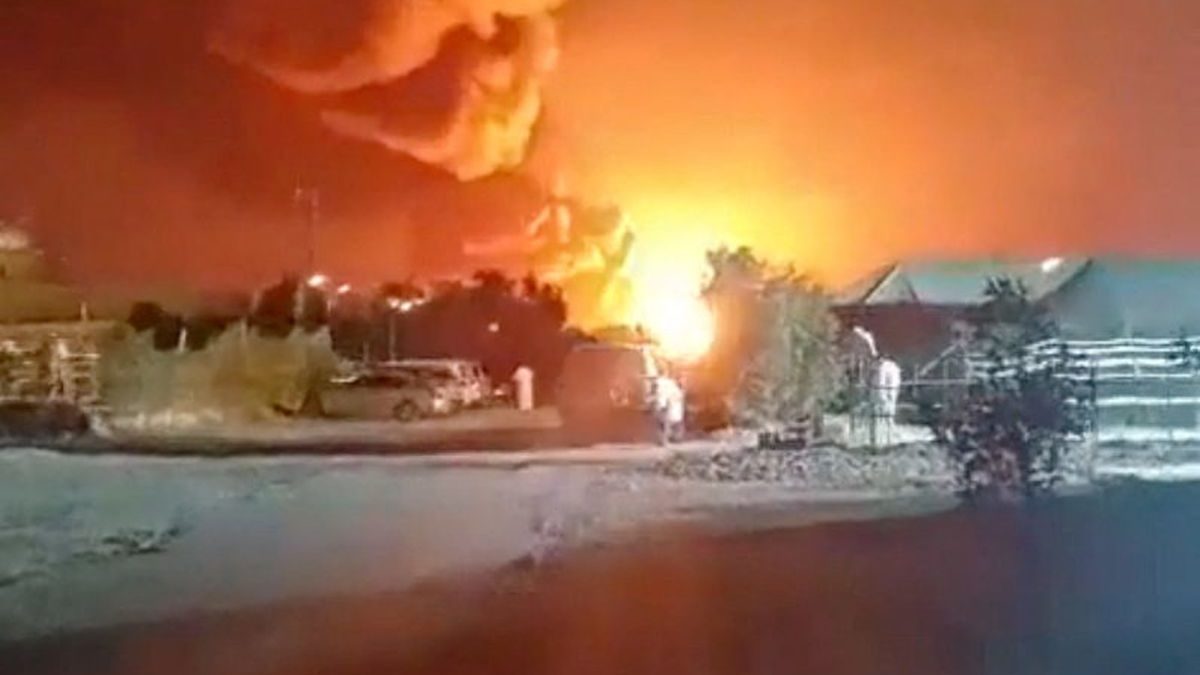
 "Smoke rises from an explosion in the direction of Ali Al Salem Air Base amid the US-Israeli conflict with Iran in Al Jahra, Kuwait. (Photo: Reuters)")
Kuwait on Monday said that an Indian worker has been killed in an Iranian attack on a power station and water distillation facility.
“A service building at one of the power and water distillation plants was damaged in a brutal Iranian attack, resulting in the death of a worker of Indian nationality,” the Kuwaiti energy ministry said in a statement.
The statement did not name the deceased Indian worker. The Indian embassy or the external affairs ministry have not yet commented on the incident.
Follow our live coverage of the US-Israeli war on Iran here
Previously, at least seven Indian nationals have been killed in Iranian attacks in Oman, Saudi Arabia, and ships transiting the region’s waterways. Several Indian workers in the region have also been injured.
The attack occurred as the West Asia war has continued to escalate in recent days as the United States has pushed more troops into the region and Iran has expanded the scope of its attacks. For the region that lacks large groundwater reserves, desalination plants are a must and an attack on these installations is bound to be seen as a bigger escalation than strikes on oil and gas infrastructure.
Separately, Kuwaiti Defence Ministry Spokesman Colonel Saud Al-Atwan on Sunday said the country tackled 14 missiles and 12 drones in the past 24 hours.
Some of those missiles and drones targeted a Kuwaiti military base and left 10 personnel injured. It also caused material damage to the site.
Separately, the Kuwaiti state media said that a private logistics company was also targeted during the attack but only material damage was reported in the strike.
Since Iran began striking across the region in retaliation to American and Israeli strikes on February 28, Kuwait has been hit by a total of 307 ballistic missiles, two cruise missiles, and 616 drones, according to official data.
Previously, Kuwaiti Foreign Minister Sheikh Jarrah Jaber Al-Ahmad Al-Sabah on Sunday accused Iran of pursuing “not merely a passing escalation, but a systematic pattern of regional destabilisation”.
“This pattern is based on employing chaos and terrorism as tools of influence, which necessitates a firm international position and deterrent measures to ensure the protection of international peace and security,” the foreign minister said.
Kuwait has taken been among the largest sufferers in Iranian strikes in the ongoing war. Estimates say that Kuwait has lost up to 14 per cent of its GDP in Iranian strikes on energy and other critical infrastructure.