 "DNA twist in Shroud of Turin debate: Study points to possible roots in ancient India")
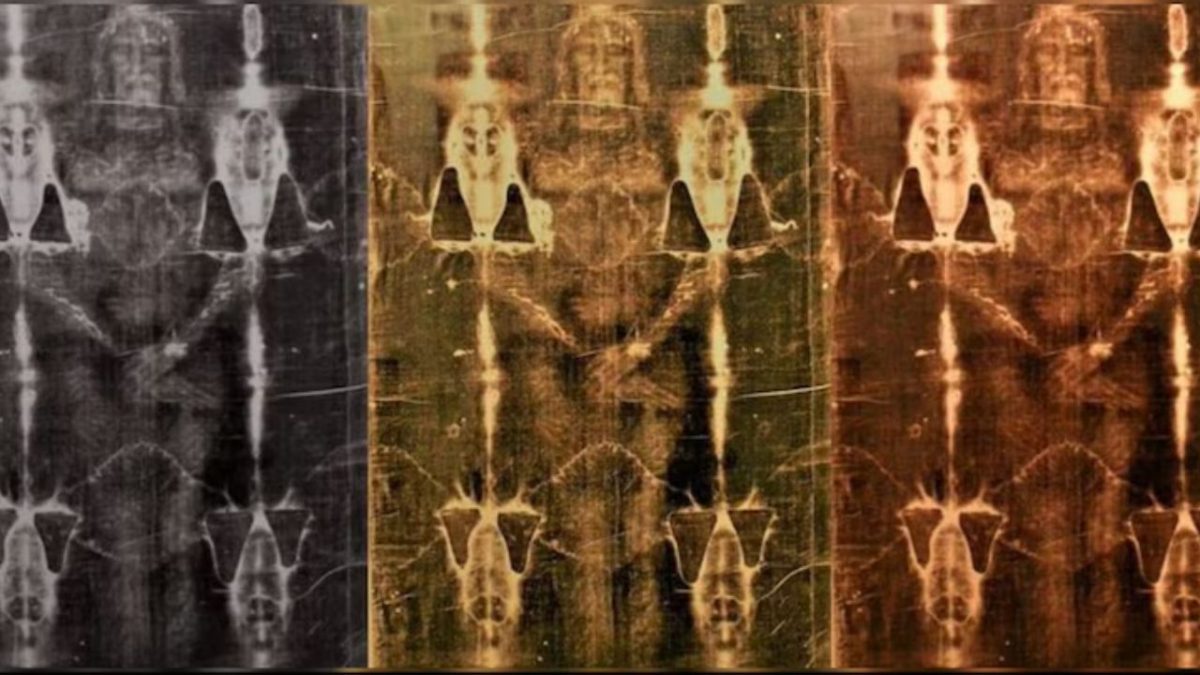
The Shroud of Turin remains one of the most enigmatic artefacts in human history, serving as a focal point for both deep religious devotion and rigorous scientific inquiry. Measuring approximately 4.4 metres in length and 1.1 metres in width, this linen cloth bears the faint image of a man and is revered by many as the literal burial shroud of Jesus Christ.
While its origins have been debated for centuries, a groundbreaking genetic study has introduced a fascinating new dimension to the narrative. Recent DNA analysis conducted by researchers in Italy suggests that this famous relic may have significant historical links to the Indian subcontinent, potentially tracing the very fabric of the cloth back to the ancient Indus Valley.
Genetic signatures from the east
A dedicated research team from the University of Padova recently revisited material originally collected from the shroud in 1978 to conduct a sophisticated DNA profile. Their findings were startling, revealing that nearly 40% of the human genetic material present on the linen belongs to Indian lineages. This discovery reinforces a theory first proposed by Gianni Barcaccia in 2015, suggesting that the yarn used to weave the shroud could have been manufactured in India.
The study confirms that the cloth has acted as a biological repository over the centuries, as the researchers noted that the shroud has preserved a huge diversity of medieval and modern DNA. According to the team, “Our findings highlight its preservation conditions and environmental interactions, offering valuable perspectives into the identified genetic variants, which originated from multiple biological sources.”
A biological tapestry of global interactions
The analysis did not stop at human DNA. The scientists uncovered a vast array of genetic traces from the animal kingdom, including evidence of domestic cats, dogs, and farm animals. Even wild creatures like deer and rabbits left their mark, alongside various fish species such as the grey mullet and Atlantic cod.
Quick Reads
View AllThis biological melting pot suggests the shroud was exposed to a multitude of environments across the Mediterranean and beyond. However, this diversity makes pinpointing a single source difficult. The researchers explained that “The Shroud came into contact with multiple individuals, thereby challenging the possibility of identifying the original DNA of the Shroud.”
Historical pathways and trade routes
There are several compelling theories to explain how Indian DNA became embedded in a relic housed in Turin. One possibility is that the Roman Empire, which maintained extensive trade networks, imported high quality linen or yarn directly from the Indus Valley. Alternatively, the cloth could have been handled by travellers or merchants of Indian descent during its long journey through history.
The researchers concluded that “The DNA traces found on the Shroud of Turin suggest the potentially extensive exposure of the cloth in the Mediterranean region and the possibility that the yarn was produced in India.” Since its first recorded appearance in France in 1354, the shroud has been the subject of relentless scrutiny, and these latest findings only add to the rich, multicultural mystery surrounding its true heritage.


 "Iran Israel War News Live: Israel kills Hezbollah’s Southern Front commander Hajj Yusuf Ismail Hashem")
 "Nuclear raids vs Kharg spectacle: As Trump eyes to exit war, US and Israel stand divided on Iran goal")
 "What's the real endgame? How Trump’s Iran war goals keep changing")
 "Watch: Iranian Prez Pezeshkian, FM Araghchi make rare public appearance, mingle with crowds amid killings of key officials")
 "Iran Israel War News Live: Israel kills Hezbollah’s Southern Front commander Hajj Yusuf Ismail Hashem")
 "Nuclear raids vs Kharg spectacle: As Trump eyes to exit war, US and Israel stand divided on Iran goal")
 "What's the real endgame? How Trump’s Iran war goals keep changing")
 "Watch: Iranian Prez Pezeshkian, FM Araghchi make rare public appearance, mingle with crowds amid killings of key officials")