 "90% rise in Al Qaeda, Islamic State attacks as terror spikes in West Africa: US think tank")
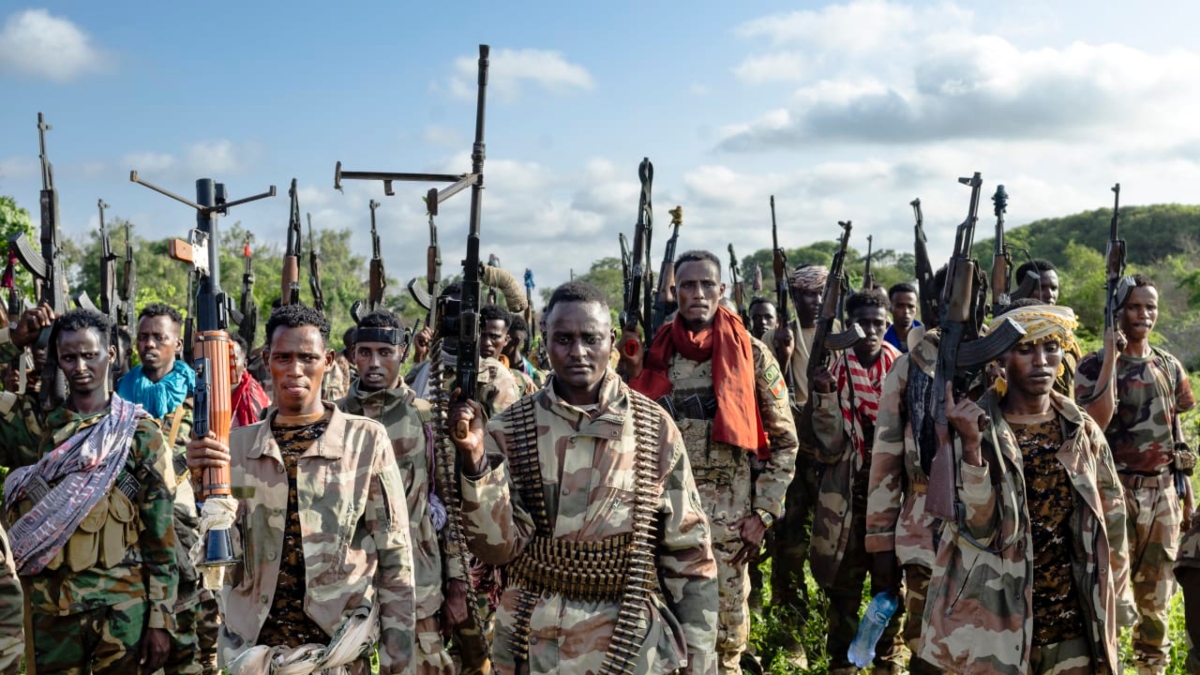
Terrorists linked to Al Qaeda and the Islamic State are ramping up their attacks on the borderlands between three West African nations: Niger, Benin and Nigeria. The revelation was made in a report by the Armed Conflict Location & Event Data (ACLED) project, which was published on Thursday.
The report argued that the terror groups operating in these nations are turning transit corridors into active conflict zones. It noted that violent incidents involving Islamist groups in the tri‑border area rose to 90 per cent between 2024 and 2025.
Meanwhile, the death toll doubled to over 1,000 as attacks intensified in the region. The findings underscore the accelerating spread of jihadist groups in West Africa, where governments and foreign militaries have struggled to contain their advancement in the region for decades.
The report stated that fighters aligned with al Qaeda and Islamic State have deepened their presence in Benin’s Alibori and Borgou departments, Niger’s Dosso region, and Nigeria’s Sokoto, Kebbi, Niger and Kwara states. “Their operations now reflect continued spread, growing lethality, and rising risks to civilians,” it added.
Nigeria faces the worst
Nigeria has battling with Islamist insurgents for over 15 years: Mainly Boko Haram and Islamic State West Africa Province (ISWAP)in the northeast. However, Al-Qaeda‑ and Islamic State‑affiliated cells have become more active in the northwest, where there is a weak state presence.
It is pertinent to note that West Africa hosts a patchwork of jihadist factions, many operating under the umbrellas of al Qaeda‑linked Jama’at Nusrat al‑Islam wal‑Muslimin (JNIM) or Islamic State in the Sahel Province (ISSP).
The expansion of these groups has fueled political instability across the region. Militaries in Mali, Burkina Faso and Niger have seized power since 2020, citing the failure of elected governments to stem the violence. In light of this, the United States carried out air strikes in northwestern Nigeria in December and has begun deploying a small number of troops to train Nigerian forces confronting terrorists.
Quick Reads
View AllIn its report, ACLED said that jihadist groups have stepped up communication about their activities in the tri‑border zone, which could signal competition between rival factions. Such “outbidding,” the report said, is likely to drive further escalation.


 "PM Modi Israel Visit Live: PM Modi says India-Israel united against terrorism")
 "Anthropic faces blacklisting by Pentagon. Why is the AI firm battling with Trump administration?")
 "Trump vowed to end Ukraine war in 24 hours, but he still can’t — Putin’s maximalist goals to blame?")
 "Samsung Galaxy S26 Ultra’s Privacy display is not a gimmick, here is why")
 "PM Modi Israel Visit Live: PM Modi says India-Israel united against terrorism")
 "Anthropic faces blacklisting by Pentagon. Why is the AI firm battling with Trump administration?")
 "Trump vowed to end Ukraine war in 24 hours, but he still can’t — Putin’s maximalist goals to blame?")
 "Samsung Galaxy S26 Ultra’s Privacy display is not a gimmick, here is why")