 "Google to launch Whoop-like screenless Fitbit band")
Alphabet-owned Google is preparing to expand its wearables portfolio with a new screenless fitness band under its Fitbit brand, signalling a push into a fast-growing category dominated by subscription-first players.
The rumour has it that the device is designed to compete directly with rivals such as Whoop and Oura Health, both of which have gained traction with minimalist, display-free trackers focused on health insights rather than on-device interaction.
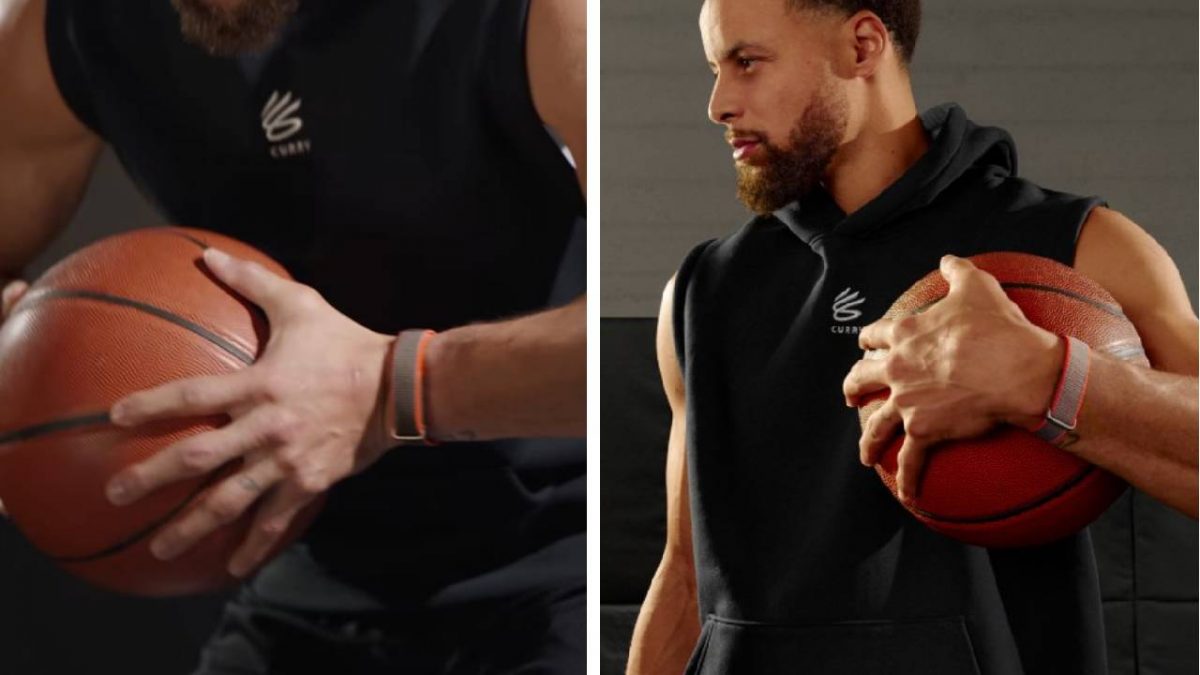
Taking to an Instagram, Basketball player Stephen Curry posted a sponsored video of the upcoming Google’s FitBit Band.
Google’s new wearable
The upcoming device is said to feature a simple design, described as a grey fabric band with an orange inner lining, closely resembling existing screenless fitness trackers on the market. Unlike smartwatches, the band will not include a display, instead relying on companion apps for insights and feedback.
While Google will reportedly charge upfront for the hardware, additional features are expected to be locked behind a subscription, aligning with industry trends. This hybrid model differs slightly from Whoop’s approach, which is entirely subscription-based and includes the hardware at no additional cost.
The band will integrate closely with an upgraded Fitbit app, which is being redesigned to include an AI-powered personal health coach. The feature, currently in preview, offers users insights into areas such as mental wellbeing, cycle tracking, nutrition and hydration, signalling a broader shift towards holistic health monitoring.
Interest in the device has already been teased publicly by Stephen Curry, who shared a video hinting at a new wearable without revealing details. Google later confirmed that Curry has been collaborating with its team, adding that more information will be announced soon. In the clip, Curry described the product as enabling a “new relationship with your health”.
Quick Reads
View AllLaunch timeline
The new Fitbit band is expected to launch later this year, although an exact date has not been confirmed. Its arrival would further strengthen Google’s position in the wearables market, where it already offers products such as Pixel smartwatches and traditional Fitbit trackers.
The timing is notable, coming shortly after Whoop secured $575 million in fresh funding, pushing its valuation past $10 billion and underscoring strong investor interest in the segment. The company is also reportedly exploring a public listing within the next two years.
Meanwhile, competitors like Apple continue to focus on feature-rich devices with displays, such as the Apple Watch, highlighting a divergence in wearable strategies between screen-based and screenless ecosystems.
With its new device, Google appears to be betting that a growing number of users are willing to trade screens for deeper insights, particularly when paired with AI-driven health guidance.


 "Iran Israel War News Live: Israel carries out 'wide-scale wave of strikes' on Tehran, military said")
 "End of Nato? Why are European allies refusing to back Trump’s Iran war?")
 "New Delhi to host Brics FMs meet in May; Russia's Lavrov among key attendees")
 "Iran confirms ‘direct’ messages with Trump aide Steve Witkoff, but says no negotiations underway")
 "Iran Israel War News Live: Israel carries out 'wide-scale wave of strikes' on Tehran, military said")
 "End of Nato? Why are European allies refusing to back Trump’s Iran war?")
 "New Delhi to host Brics FMs meet in May; Russia's Lavrov among key attendees")
 "Iran confirms ‘direct’ messages with Trump aide Steve Witkoff, but says no negotiations underway")