

 "Breakthroughs and trends: The science and tech innovations that defined 2025")
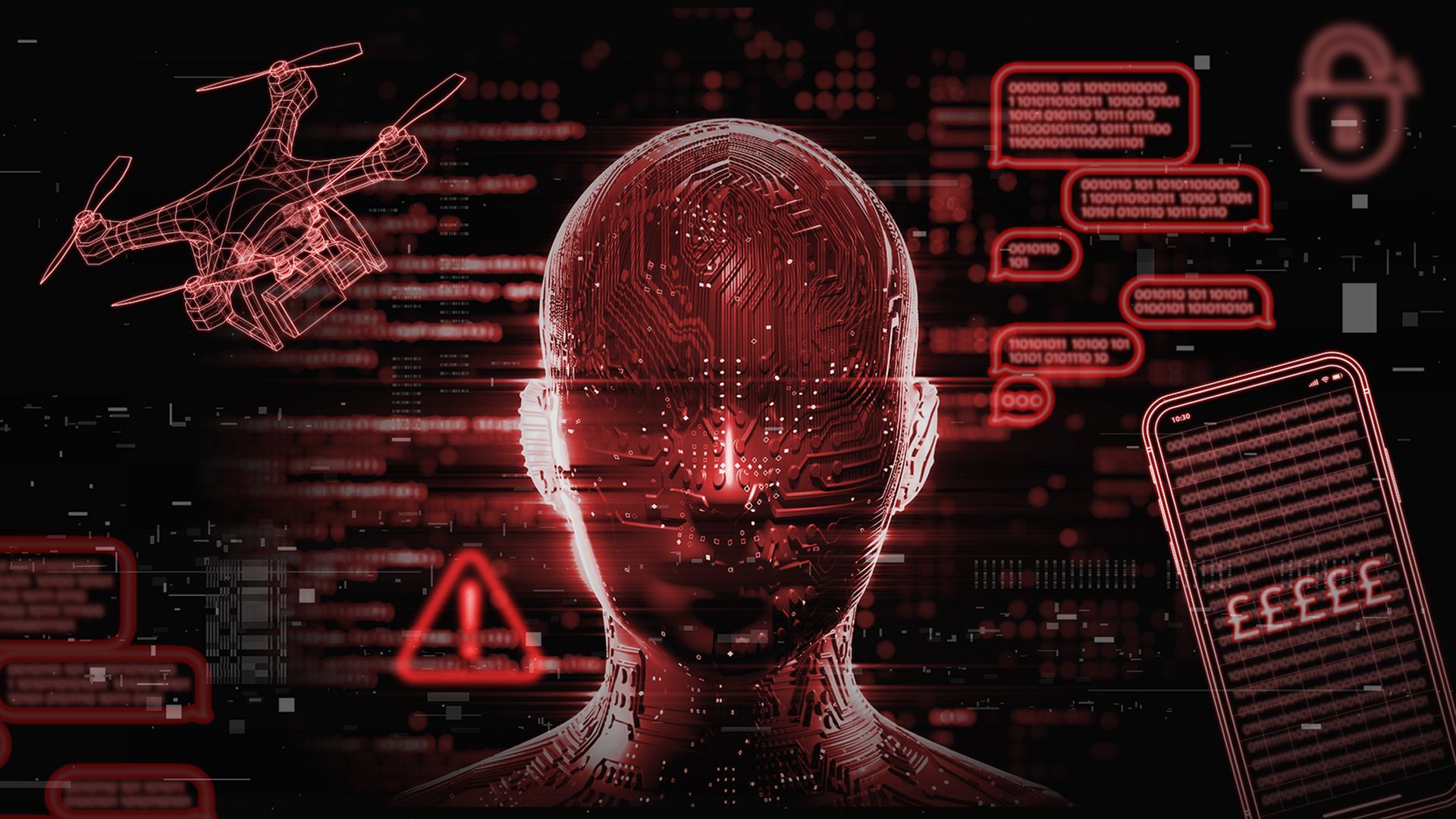
Advancements in technology and science reached new heights in 2025, with some innovations so groundbreaking that they have set the curve for years to come. While artificial intelligence still dominated the industry, there were a couple of breakthroughs that defined the year.
Here are the top five tech feats of 2025:
More AI models
As AI continues to be at the centre of major technological development, more firms are coming up with their own models, essentially expanding the market that is in full demand.
The year 2025 began with the revolutionary launch of DeepSeek, the Chinese AI model that turned around the US stock market, by introducing exceptional performance in mathematical and logical reasoning tasks.
The company’s R2 version was marketed as being 97.3 per cent cheaper than OpenAI’s GPT-4o model. The model completely relies on Huawei’s Ascend 910B GPU cluster, signalling a total independence from American-made AI chips.
Elon Musk gave a boost to his xAI model by launching Grok 2 and later Grok 4. These are search-native models designed for real-time analysis of current information, integrated closely with the X platform.
Meanwhile, Meta continued its open-source initiative with LLaMA 4. This is a highly efficient and memory-optimised model designed for research, on-device applications, and edge deployment.
The age of Generative AI
This year, Generative AI caused a stir among users. From turning images into Ghibli art to Donald Trump creating AI-generated videos of imaginary scenarios, Generative AI became a trend this year.
In 2025, new architectures introduced deeper long-term memory, improved logical reasoning, and multimodal understanding, allowing AI to interpret video, audio, sketches, documents, and real-world environments seamlessly.
Quick Reads
View AllInstead of just producing outputs, generative AI can now plan, analyse, troubleshoot, and collaborate like a digital expert across domains such as medicine, law, design, finance, engineering, and education.
Spatial computing is the new reality
Reality has gone digital, too. While the concepts of virtual reality (VR) and extended reality (XR) are not new, they just got better in 2025. Hardware-software integration and AI enhancements are only some of the ways the technology saw a boost this year.
Apple released visionOS 2.6 in June, introducing spatial widgets that anchor in users’ environments, generative AI-powered spatial scenes for immersive photo viewing, and enhanced Personas with realistic expressivity via volumetric rendering.
Shared spatial experiences now allow multiple Vision Pro users in the same room to collaborate on 3D movies, games, or designs, with remote FaceTime integration. New APIs support enterprise tools like protected content viewing and team device sharing, alongside PlayStation VR2 controller compatibility for gaming.
Go for a drive, without actually driving
The year really showed how self-driving cars can turn everyone into a “passenger princess”. Robotaxi and self-driving technology accelerated in 2025, with commercial deployments expanding in urban areas.
Integration of 5G, edge computing, real-time mapping, and AI improved navigation in complex environments, with Nvidia releasing Alpamayo-R1, an open vision language model for autonomous driving research. Remote monitoring systems allowed human oversight via direct control, path selection, or high-level commands, bridging to full autonomy. Sensor suites including LiDAR, radar, cameras, and HD mapping, enhanced object detection and decision-making.
The market expanded to accommodate players other than Elon Musk's Tesla. For example, Waymo expanded testing with safety monitors to Philadelphia and began manual data collection in Baltimore, St. Louis, and Pittsburgh, and Uber partnered with Avride for robotaxi service in Dallas, starting with human safety operators.
However, there have been some concerns over self-driving after some test drives resulted in accidents.
Synthetic bio
Synthetic biology advanced rapidly in 2025, driven by AI convergence, CRISPR refinements, and scalable applications in healthcare, agriculture, and sustainability.
Gene and cell therapy led with 35 phase 3 and 289 phase 2 trials by late 2024, advancing CAR-T cancer treatments and personalised cures for rare diseases like sickle cell via rAAV delivery. Gene editing via CRISPR-Cas9 enabled precise multi-site DNA modifications, including HIV excision from cells.
In the policy front, the International Union for Conservation of Nature (IUCN), adopted the first global synthetic biology policy in October, addressing nature impacts. OECD highlighted AI-synbio convergence for economic resilience, recommending anticipatory governance, biosafety, and equitable access via skills training and financing reforms.

 "‘Bangladesh’s Yunus govt failed to control ‘mobocracy’’: BNP leader on attack on Indian mission")
 "Tarique Rahman to return to Bangladesh after 17 years: Can Khaleda Zia’s son influence February elections?")
 "US Congressmen raise alarm over anti-Hindu violence in Bangladesh")
 "‘Time to Kash out’: Why Kash Patel’s choice of new wheels has sparked a row")
 "‘Bangladesh’s Yunus govt failed to control ‘mobocracy’’: BNP leader on attack on Indian mission")
 "Tarique Rahman to return to Bangladesh after 17 years: Can Khaleda Zia’s son influence February elections?")
 "US Congressmen raise alarm over anti-Hindu violence in Bangladesh")
 "‘Time to Kash out’: Why Kash Patel’s choice of new wheels has sparked a row")



