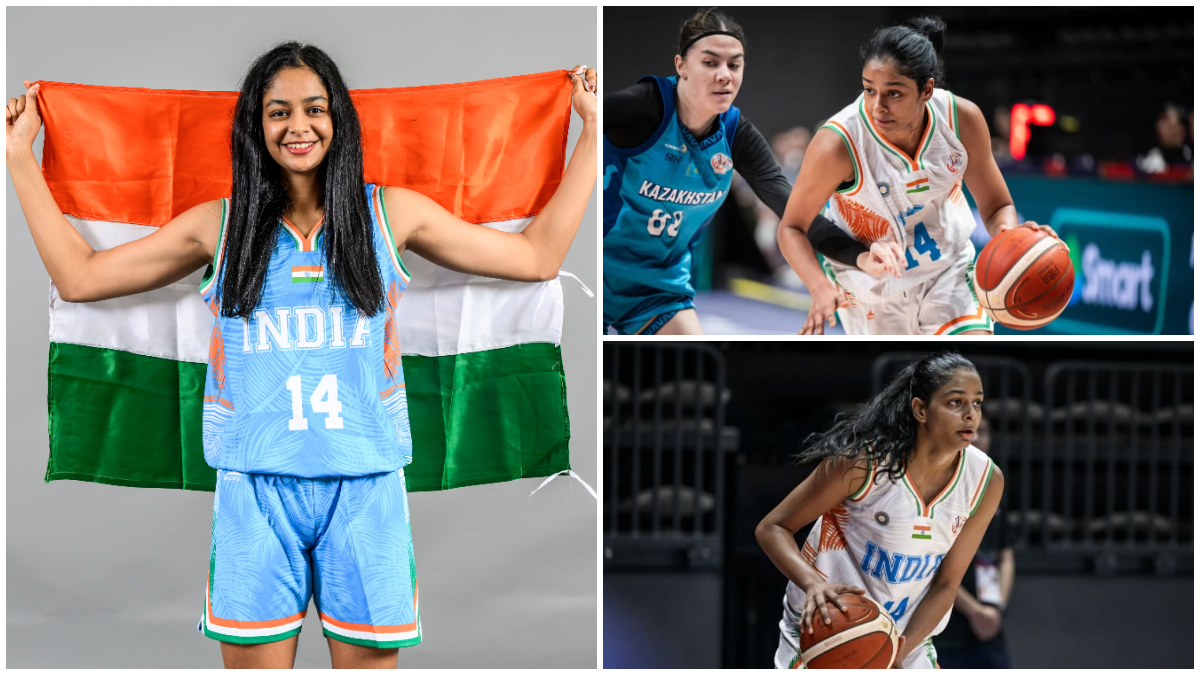
 "‘I am really excited about the next two years to see where Indian basketball is going to go’: Indian basketball ace Sanjana Ramesh")
When was the last time you tracked Indian basketball – either the men’s or the women’s game? If you are not really being able to remember don’t blame yourself. The sport definitely lacks visibility in the country. But that might change drastically once the professional Indian Basketball League makes its debut this year. And that is something every basketball player in the country is eagerly waiting to witness. In the words of Sanjana Ramesh, “I am really excited about the next two years to see where Indian basketball is going to go.”
Sanjana, a poised, extremely articulate young woman who in her own words “got into the sport by accident”, is one of India’s ace basketball players. The 24-year-old who was part of the Indian team which won the 2025 South Asian Basketball Association (SABA) Championship in New Delhi last year knows what Indian basketball needs – both in terms of on-court prowess and off-court support – to become a force to be reckoned with.
In 2018 Sanjana received a full scholarship to go to Northern Arizona University in the US, becoming just the second India-born female basketball player to receive an NCAA Division I scholarship. She played college basketball for the University team, the Lumberjacks and also won the Golden Eagle Scholar-Athlete Award in 2020 for being one of Northern Arizona University’s stellar all-rounders, excelling in both academics and sport. She soaked in everything she saw and experienced first-hand in college basketball in the USA and brought that experience back to India, where she is using that knowledge to improve both her own as well as her team’s game. Last year Sanjana captained the Indian national team at the FIBA Women’s Asia Cup Division B in China and led her country to an 85–68 win against Kazakhstan in the Group A opener.
Overall, in 2025, Sanjana is most excited about the launch of the Indian Basketball League, which is one of the most talked about things in Indian basketball circles currently. The IBL will be India’s premier professional franchise league, supported by a new High-Performance Centre and played in both the 5x5 and 3x3 formats. India is tagged as one of the key markets for the 3x3 format of basketball and all the stakeholders of Indian basketball will be drawing up strategies to strengthen India’s 3x3 game, considering it’s a format that features in both the Olympics and the Asian Games. LA 2028 and the upcoming Asian Games in Japan, later this year, will both feature this format of the sport.
Games
View AllThe 6-foot-tall Sanjana who typically plays as a small forward, is also a key player and captain of the Karnataka State team. She also led the Karnataka junior state team to a junior national gold medal and has also represented India at the Asian Games.
In an exclusive free-wheeling interview with Firstpost, Sanjana talks about all the big facets of Indian basketball, including the changing landscape of Indian basketball, the Indian women’s team’s standing in Asia vis-à-vis other Asian teams, the importance of leagues and how they have helped Asian countries like Indonesia, Mongolia and China, the upcoming Asian Games, her own basketball journey and how it began, advice for Indian youngsters who are aiming to play collegiate NCAA basketball in the US and much more.
This is part one of the interview.
Firstpost: Let’s go all the way back to the beginning – what was it that drew you to basketball? I read somewhere that you wanted to play football, but your school didn’t have a football team, and that’s how basketball happened. Is that accurate? How did the journey begin?
Sanjana Ramesh: I actually got into the sport by accident. I wanted to play (either) football or badminton. Basketball I had played only once before I tried out for my middle school team – that was the only trial available. And I am a very sporty person – I just try (out) every sport that is available. I went in, tried to do a lay-up and the coach said – “yes, you are selected”. That’s how I actually got into the sport, which is crazy. He (her middle school coach) saw something in me and took me in the team. But I worked really hard and as I played more and more, I fell in love with the sport. So, that basically how I got into the sport.
FP: And the basketball journey post school – did that just happen organically – where you went with the flow and one thing led to another or did you plan things and say, ‘this is what I really want to focus on?’
SR: Initially it was quite organic. There aren’t a lot of career options in basketball. We (India) are a cricket-dominated country. So, I didn’t know if I was going to pursue this as a career. I just wanted to play and be really good at it. So, till I was about 16, I was doing everything organically. After school I thought that maybe I could go to the US and play (NCAA) Division I, because there was this girl who was the first to play in Division I (Kavita Akula was the first India-born female basketball player who received a full scholarship from a Division 1 University in the US. She joined Grand Canyon University in 2017) and there was this huge article on her in the newspaper. And I thought – “that’s pretty cool, I (also) want to try”.
But again, I never really thought that I could do it. It was just manifestation, in the early stages. Then the NBA Academy came in (an NBA Academy officially opened in India in May 2017 in Greater Noida), BWB (Basketball without borders) came in (first in 2008 and then returned in 2018 at the NBA Academy in Greater Noida). Participating in those camps gave me a vision board of how I could actually make it (to the NCAA Division I in the US). The coaches there also helped me a lot with advice on what I should do academically. So, that’s when the switch went on that, “Ok, this is a career option and I can actually go to the next level and play in the US (Sanjana joined Northern Arizona University in 2018). So, I guess a mix of both (things happening organically and as part of a plan) is what I would say.
FP: I wanted to talk to you about your NCAA experience as well which started in 2018. I have talked to various athletes who played sport as part of the NCAA programme in America and I was curious to know what you learnt there in terms of collegiate basketball. Because both the level of competition and the physicality of the sport is quite high in the NCAA Championships, right? What was your experience like when you went to Northern Arizona and played for the Lumberjacks – what did you observe and learn and how much of it have you tried to inculcate into your game here in India?
SR: Like you said, it’s a completely different sport. It’s a lot more physical, a lot more competitive and the standard is just really high, athletically. I am tall, I am 6 feet tall. So, my height and my athleticism played a big role in my game. But in the US, everyone is kind of tall, everyone is kind of fast, everyone jumps, everyone lifts strong. So, I realised that it’s not just the physical aspect that plays a big role, but (also) how they view the game.
In the US they play a lot of system-based basketball (structured basketball leagues etc that call for high tempo style of play focussing on possession and quick shots). In India we do a lot of freelance (basketball), and we allow good shooters and skilled players (to play in leagues, like the Indian National Basketball League, that are open to all for participation and not just for registered clubs and associations). But put that into a system and your game can completely change.
So, when I went to the US, I learnt a lot about offensive systems, defensive systems, how they think about every small detail, every small detail. And if you mess it up, you are punished. I really focused on not making a lot of mistakes, focused on what the coaches wanted. It was a lot more detail and system oriented than I had anticipated. And that’s what I am trying to bring to India as well.
FP: You studied Information Systems in the US. So, you got a basketball scholarship to go to Northern Arizona?
SR: Yes. I got a full scholarship, so everything was covered.
FP: So, what would your advice be for budding Indian basketball players who want to hone their skills better by taking the NCAA or overall American college route?
SR: It’s not an easy path. I had to work really hard to get to that spot. But even after you reach that spot, to maintain it you have to be really consistent, not just on the court but off the court also. So, something that I want to tell young athletes who are coming up is focus on things off the court as well. Your sleep, your nutrition, your academics as well, which is important. If you have that covered you can get to higher colleges and that environment will really help you build your basketball career, because that’s the best place to be. So, that’s my message.
FP: You were in fact a Golden Eagle Scholar-Athlete for 2020-21 which is of course a brilliant achievement. When I researched it showed me that one needs a minimum 3.0 GPA and be a stellar athlete and contribute heavily towards making NAU Athletics stronger. Fair to say that you made sure you focused on the academic side of things as well, because individually and culturally that is important for you?
SR: Yes, absolutely. Also, there is this stereotype when Indians go over to the US that they are really smart. So, when they (people in the US) look at you that way, you also want to be smart. So, when I went there (to the US) there was a lot of encouragement, a lot of support. People just assumed that I would know a lot of things and I did maybe have a bit of an advantage because of just how competitive our academic system here in India is.
So, I wanted to make sure that I was good on both fronts (basketball and academics). Having a proper education is very important. In India we tend to substitute one for the other – most athletes do that. But at one point when your (athletic) career is done, which it eventually will, your academics and your speaking skills we really help you write the next chapter.
FP: Whenever I talk to an athlete who is playing at a certain level, irrespective of their sport, I also like to pick their brain in terms of what their advice would be for budding athletes in their sport – those who think that they might have what it takes, but aren’t entirely sure – like the kids who are part of school basketball teams who are good at that level, have the makings of the physicality needed, have the height etc, but don’t really have any direction. As someone who has played eight years plus of competitive basketball - if you were to put on your mentor’s hat – what would your advice be for kids like these?
SR: Basketball will really take you to so many places. I have travelled to so many countries and met wonderful some people along the way, so it’s a very unique career. But if you become really successful, which I think a lot of people in India can if they really put their time and effort into it, it can give be a really fun experience. Money is important, but this generation is also getting into many more creative careers.
So, to young athletes I would say have goals for yourself and if you meet that goal go for the next goal. That is something I did instinctively. I always thought I want to play for my state (Karnataka) first and when I did that I thought, ‘Ok, now I want to try and play for my country. And I might want to be the captain of it as well’. And I actually managed to do both. And then I thought, ‘Ok, maybe I should try and play in the US’. So, just have that goal and think about it and sometimes manifestation will take you to that spot. You just have to make sure that you think about your next goal and try to put in the effort. If you love the sport you are going to get there.
FP: That’s good, uncomplicated advice. Now you made your senior India debut at the 2018 William Jones Cup in Chinese Taipei. Before that you had captained the India U-16 team. What have been your observations vis-a-vis the level of senior women’s basketball in Asia from the experiences that you have had playing in Asian tournaments, including the FIBA Asia Cup last year, because it also had teams like Australia and New Zealand – because the governing bodies for basketball in Asia and Oceania merged their premier championships in 2017. Australia won their third title and New Zealand finished fourth. So, what have been your observations about where Indian women’s basketball stands vis-à-vis rest of Asia?
SR: From 2018 to now, we did better, rank-wise, in 2018, because the competition in the other countries has gone way up. A lot of countries who have invested in the sport, they have got foreign coaches. A lot countries have also started their leagues. Indonesia, for example, wasn’t doing that well in 2018, but they have now beaten the USA in 3x3, they finish in the top two in the B division etc. That’s because they have their own in-country league. Indonesia has that, Mongolia has that, China has that.
So, that is something India is lacking in – we haven’t started our league yet. But there’s hope, because this year IBL (Indian Basketball League) is going to start and that’s going to change basketball in India. They have got foreign coaches, strength and conditioning coaches. They have not only got coaches from the US, but they have also got NBA (Global) Academy Director Marty Clarke, who has overseen NBA players. So, they have invested a lot of time and money in it (IBL). So, that will change a lot of things for us in the next few years. We have a lot of talent, we have a lot of hard-working athletes, but just that right push wasn’t there, until now and we maybe we didn’t perform as well as we wanted to in FIBA Asia (Cup), but we showed that we can. We just don’t have that system in place, but we are going to have that now. So, I am really excited about the next two years to see where Indian basketball is going to go.
FP: To pick up from where you left off, you have been playing basketball from a very young age and have therefore been part of the system in the country for a long time. How much would you say has the landscape of Indian basketball changed in say, the last decade? Like you said, we now have the Indian Basketball League which is set to debut and bring in franchise basketball in both the 3-on-3 and 5-on-5 formats. But overall – for the better or worse, how much has Indian basketball changed in the time you have been part of the system?
SR: I think it has changed in terms of development of grassroot players. Earlier we would have many more senior players who were about 30-33 (years old). Our average team age could be around 27, but now our average team age is 22, so they are really focussing on younger athletes, because that’s the future. So, they are focussing a lot more on the grassroot level players, the u-16, u-18 players, so that a strong foundation can be built and when they come into the senior category, they are already well-equipped, instead of focussing only on the senior players, who might get to play maybe for only another three years or so.
Another thing (that has changed) is the physicality of the sport. It used to be very skill-based performances from the earlier generation. They were really great shooters, really great ball-handlers. But now the game is a lot more physical. You take a lot of contact, defence is very physical. And that is something we are adapting to as well.

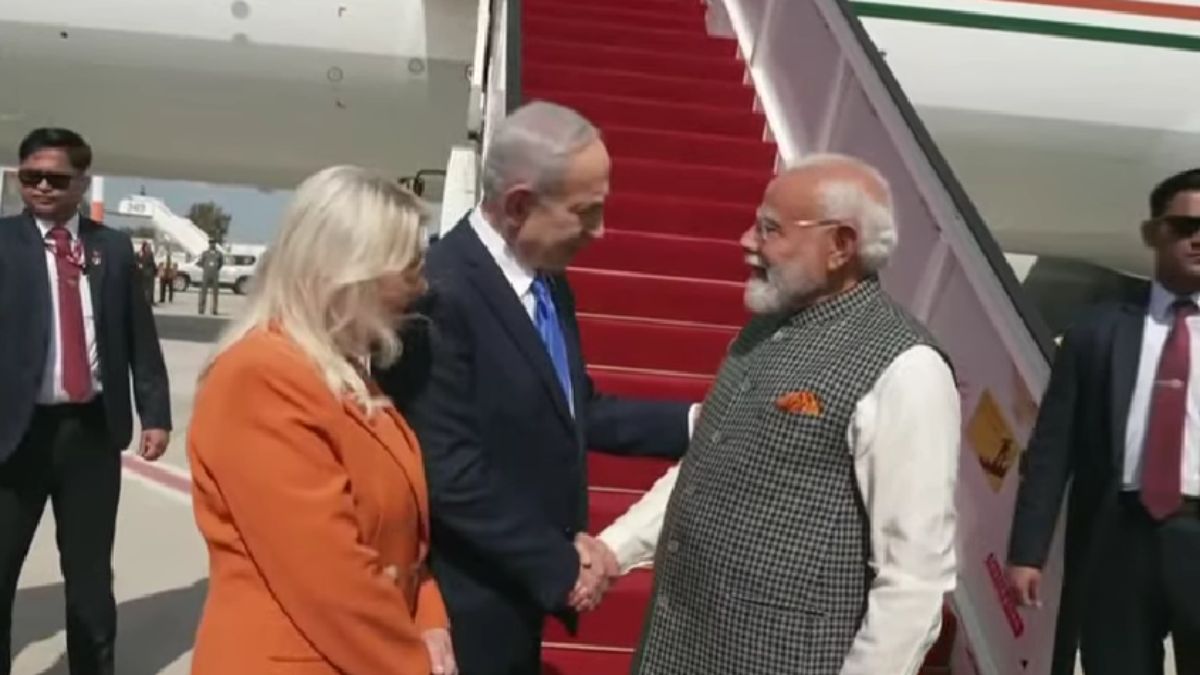 "PM Modi Israel Visit Live Updates: Israeli Prime Minister Netanyahu welcomes PM Modi at the airport")
 "UK’s new travel rules explained: Will Indian travellers be affected?")
 "How a Rs 590-crore fraud unfolded at IDFC FIRST Bank")
 "Why Hormuz, not Fordow, is the real centre of gravity in the Iran crisis")
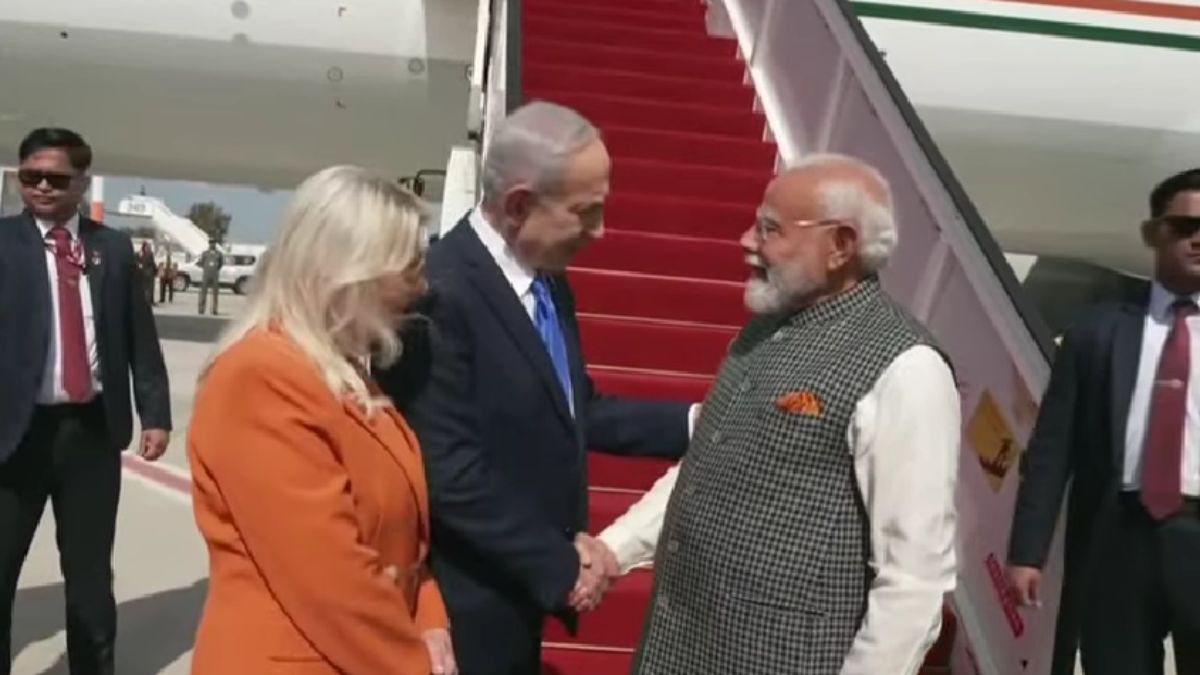 "PM Modi Israel Visit Live Updates: Israeli Prime Minister Netanyahu welcomes PM Modi at the airport")
 "UK’s new travel rules explained: Will Indian travellers be affected?")
 "How a Rs 590-crore fraud unfolded at IDFC FIRST Bank")
 "Why Hormuz, not Fordow, is the real centre of gravity in the Iran crisis")