

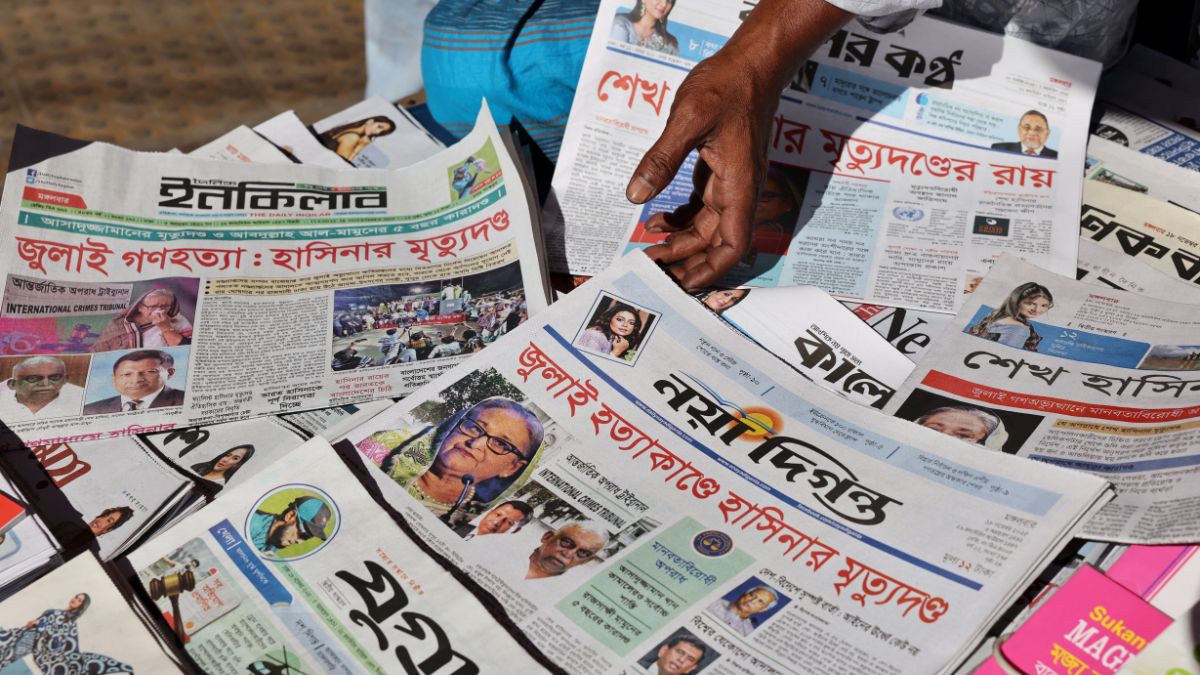
 "Sheikh Hasina’s death sentence: An ‘imperfect trial’ is dangerous rhetoric, not justice")
The recent op-ed by Faisal Mamud, the Press Minister of the Bangladesh High Commission in New Delhi, India, has drawn an oversimplified conclusion: the conviction and death sentence awarded to ex-Prime Minister of Bangladesh Sheikh Hasina are justified simply because the killings during late July and early August 2024 took place while she was in office. Any legal, procedural, or constitutional defects in the proceedings, though admittedly present, are irrelevant in this matter.
To suggest, as Mahmud does, that “no legal system facing mass atrocity operates in pristine laboratory conditions”, and therefore, whatever “imperfections” may have occurred in the trial process could be absolved in light of the stakes, is a dangerous rhetoric of justice.
‘Mass atrocity’ is not a socially elastic phrase to be invoked when convenient; in a trial context, it is a legal classification that the state must prove beyond a reasonable doubt, in accordance with the law. In simple terms, the standard of ‘beyond a reasonable doubt’ requires that every possible reason for doubt must be eliminated.
The state has the duty to hold the right individuals accountable through a fair and impartial judicial proceeding, rather than simply penalising easy targets. Justice should always prioritise truth over convenience. Anything short of that may serve a political narrative, but it does not withstand the test of justice and the rule of law.
Quick Reads
View AllMahmud’s breezy dismissal of procedural safeguards as no more than “shortcomings” has serious corrosive undertones. Constitutional democracies do not rest satisfied with an “imperfect” trial, particularly when the process works to the accused’s detriment. Such flaws taint the fairness of the hearing and can potentially invalidate a trial (Human Rights Committee, General Comment No 32).
Unfortunately, the interim administration has acted as if any procedure, no matter how legally and constitutionally defective, can be justified if it produces the desired outcome. When the standard becomes “justice by any means”, terms like “farce” and “sham” accurately describe a process that surrenders the rule of law and procedural standards to immediate political needs.
Aside from procedural violations that may have clouded the ICT proceedings, two substantive issues overshadow the trial’s outcome. The first is whether the acts committed in July-August 2024 are prosecutable under the International Crimes Tribunal Act, 1973 (ICTA), and more seriously, whether the tribunal itself is constitutionally valid.
Regarding the former issue, Mahmud contends that the charges brought against Hasina fall within the ICTA’s expanded, non-time-bound scope. However, the more relevant issue is whether the charge meets the legal threshold for Crimes Against Humanity (CAH) as set out in the ICTA and established judicial principles. Previously, the tribunal applied the ICTA provisions to prosecute the local auxiliary forces who collaborated with the Pakistani military in 1971 to commit mass atrocities in Bangladesh.
It should be acknowledged that serious crimes did indeed occur during July-August 2024. Nonetheless, the debate pivots on whether these crimes meet the legal threshold for CAH. It appears from the records that the state made some effort, albeit insufficient, to de-escalate tensions and differentiate between students and violent rioters. An independent judicial commission was also established following the first death on July 15, 2024.
Although these efforts failed to minimise casualties, the moot point is whether these acts were part of a deliberate, coordinated policy of attack or a reactive response to political violence. Further, the international tribunals unanimously agree that the background and context constitute a “constitutive” element for CAH. A spontaneous disorder or reactive political violence does not amount to CAH, as established in the Akayesu, Kordić & Čerkez and the International Criminal Court’s Kenya decisions.
The reliance on the UN Fact-Finding Report is problematic, as the report concluded that it had a “reasonable belief” that CAH may have occurred during July-August 2025. But the report also recommended a thorough, neutral investigation that never took place.
The command-responsibility charge also invites doubt. The doctrine requires a clear chain of command and proper knowledge. There are conflicting reports of a collapse in the chain of command, suggesting a lack of “effective” and “direct” control. Reports include attacks on KPIs and police stations, as well as the murder and hanging of police officers. On several occasions, individuals admitted their wrongdoing.
Despite conflicting reports, the interim administration acknowledged that at least 44 law enforcement officials were killed. It is important to consider that the government also issued an order of impunity for those involved in offences during July-August 2024. It gives rise to a contested landscape of facts and attribution, including competing accounts of authority and responsibility. Whether the tribunal met a high evidentiary standard to connect all these incidents to Sheikh Hasina remains questionable.
It cannot be ascertained from the record whether these rival narratives were seriously interrogated and confirmed or debunked. This issue becomes more significant with a defence attorney appearing as a state-designated attorney, allegedly without the approval of Sheikh Hasina. Naturally, the defence lawyer’s performance in challenging the prosecution’s narrative and the tribunal’s overall commitment to evidentiary rigour remain highly controversial, further tainting the authenticity of the trial proceedings.
On the issue of the tribunal’s unconstitutionality, Mahmud’s dismissal overlooks a basic legal point: if a court is unlawful ab initio, its judgements carry no legal effect (Quod nullum est, nullum producit effectum). While Mahmud wants to believe this is a matter of minor defects, in a constitutional democracy, the unconstitutionality of the law, or any court’s decision challenging it, undermines the legitimacy of the proceedings that follow.
Invoking “social context” cannot cure constitutional defects or compensate for a process that fails the legality test. The tribunal, reconstituted under executive ordinances issued by an unelected body when no Parliament existed to validate them, raises serious concerns about the legality of the amended ICTA and the risk of retroactive expansion of criminal jurisdiction.
Mahmud views structural objections as mere inconveniences. However, the tribunal’s composition, featuring probationary and politically affiliated judges, undermined the accused person’s constitutionally guaranteed right to a fair and independent tribunal. His convenient trust in media ‘verification’ of wiretap evidence incorrectly interprets norms of evidence. Media verification cannot substitute for forensic authentication, chain-of-custody proof, or expert analysis required to link a crime to specific members or leaders beyond a reasonable doubt.
The international organisation’s objection to the standard regarding a trial in absentia is not misplaced. A trial in absentia requires heightened safeguards. Yet, Sheikh Hasina alleged that she was denied proper notice and had the right to appoint her own counsel. Mahmud’s assertion that her fleeing amounts to a waiver of her rights fails because the Constitution enshrines equal rights and due process for all its citizens, irrespective of location.
Mahmud’s suggestion that Human Rights Watch (HRW)’s silence implies Hasina’s guilt overlooks the very basics of criminal justice, which is the presumption of innocence. It is not an international organisation’s duty to take a position with respect to parties involved in a criminal proceeding. It is for the prosecution, not third parties, to make a case for guilt via an independent and properly constituted process. HRW’s complaints about the process at issue raise a suspicion that accountability has not been pursued through a fair and transparent judicial process.
Finally, a national tragedy needs no corners cut, contrary to Mahmud’s suggestion. Serious crimes that took place during July–August 2024 are not in dispute. What is in question is the state’s overly politically motivated and biased stance, as well as the method used to seek accountability, which lacks constitutional legitimacy and the support of international covenants to which Bangladesh is a party.
In the criminal justice system, procedures are not just technicalities; they are the guarantor of truth. If a proceeding boasts “imperfection” and “injustice”, it cannot and will not produce legitimate verdicts, especially in cases of this gravity.
Justice for the victims of July-August 2024 requires as much restraint as resolve. It requires an impartial court, a thorough investigation, and trials that will meet the highest standards of justice. Accountability is not achieved by prosecuting the politically convenient. It is achieved by uncovering the truth through a legally and procedurally impeccable process—one that withstands scrutiny today and in the future.
( Sangita F Gazi is a Lecturer at the Wharton School, University of Pennsylvania and a Transatlantic Technology Law Fellow at Stanford Law School. Previously, Sangita was an Assistant Legal Advisor at the US Department of Justice-OPDAT at the US Embassy in Dhaka. Views expressed in the above piece are personal and solely those of the author. They do not necessarily reflect Firstpost’s views.)

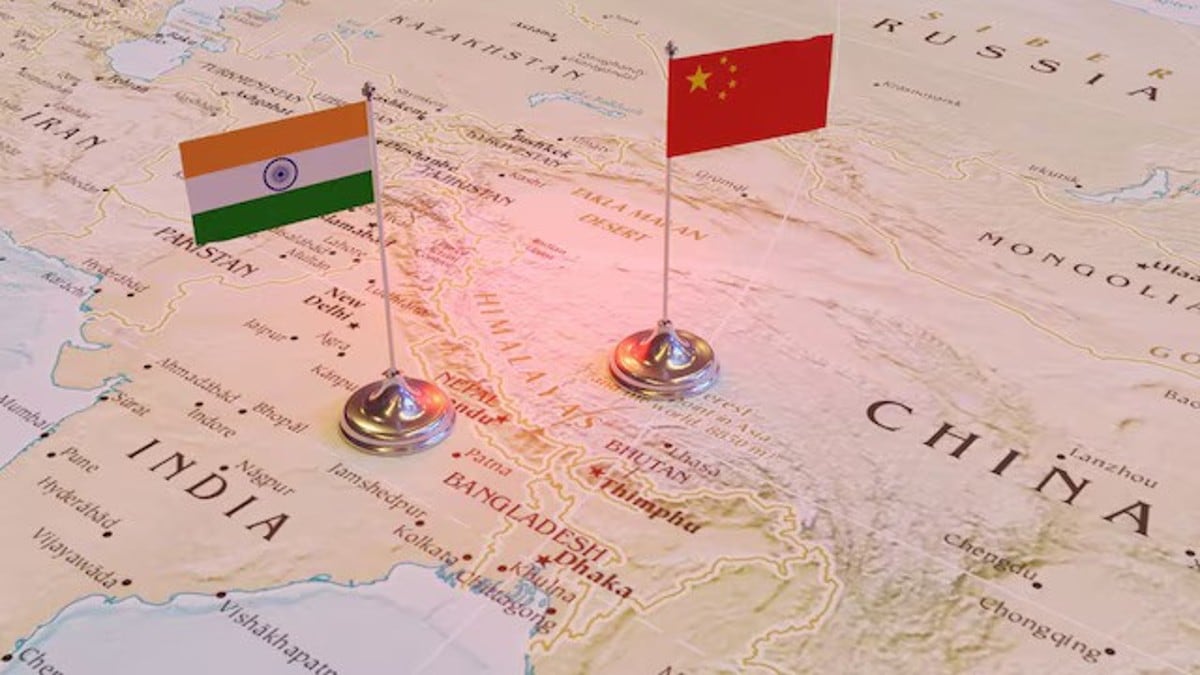
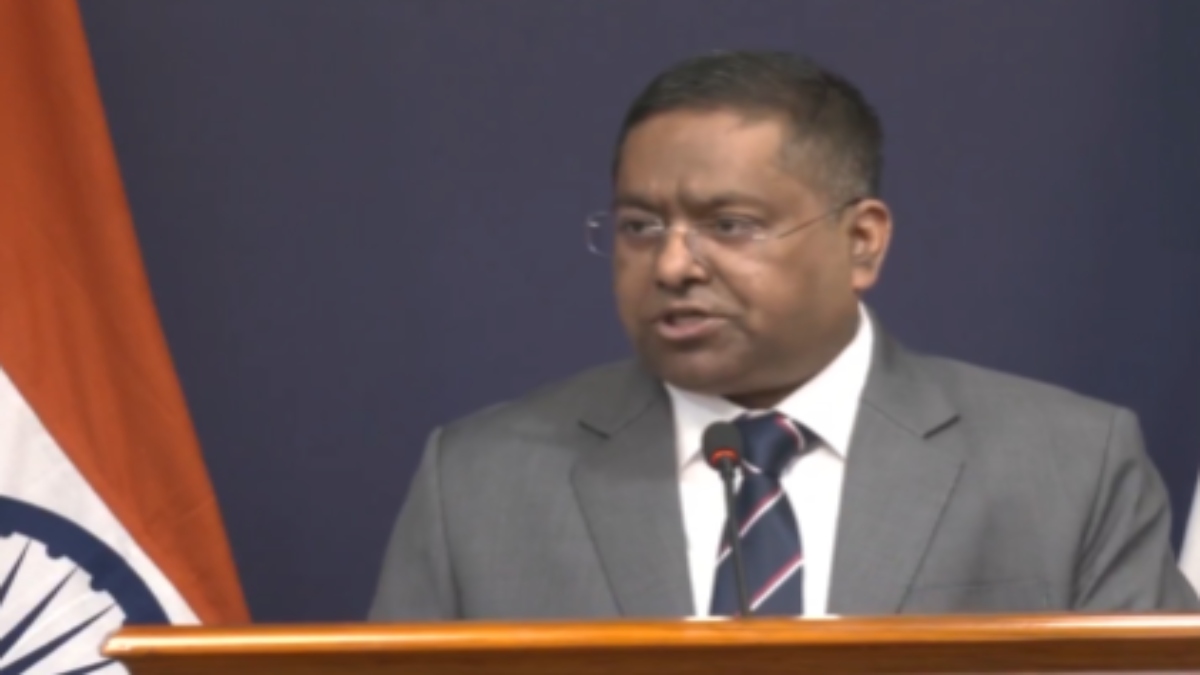 "'Matter of great concern, worrisome': India condemns lynching of 2 Hindu youth in Bangladesh")
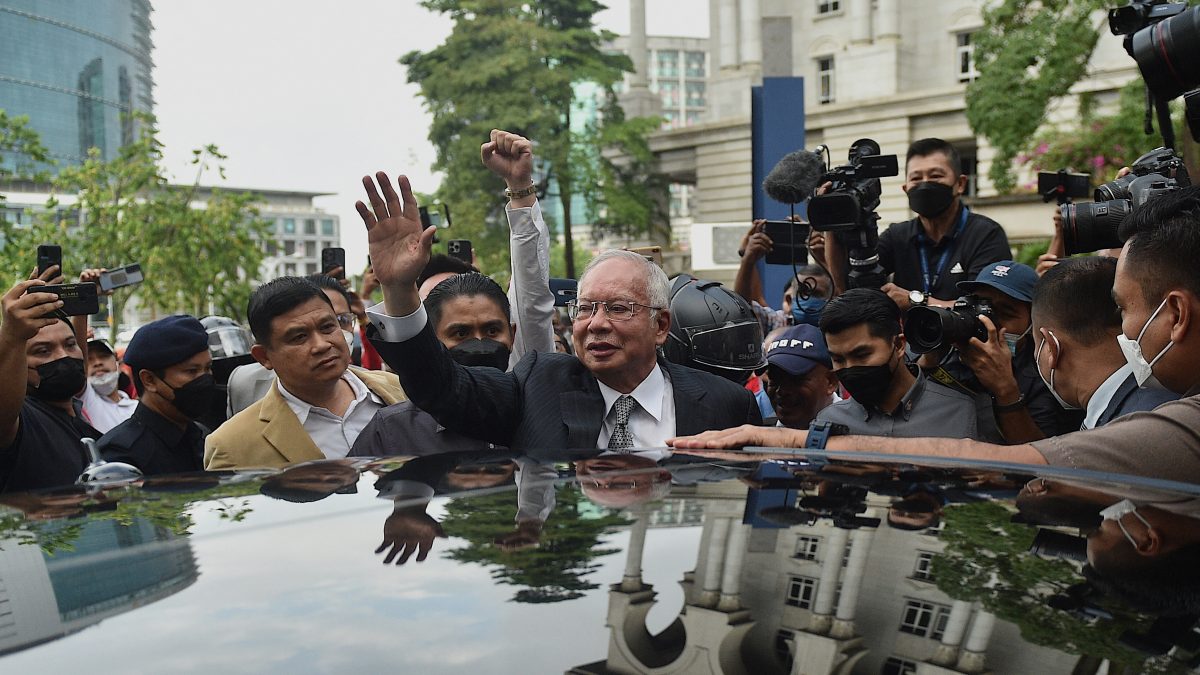 "Malaysia’s ex-PM Najib Razak convicted of abuse of power in second 1MDB trial")
 "‘Junta with nuclear weapons’: What Putin told George W Bush about Pakistan in declassified documents")
 "2025 Review: First-time and long-awaited winners bring joy to fans worldwide")
 "'Matter of great concern, worrisome': India condemns lynching of 2 Hindu youth in Bangladesh")
 "Malaysia’s ex-PM Najib Razak convicted of abuse of power in second 1MDB trial")
 "‘Junta with nuclear weapons’: What Putin told George W Bush about Pakistan in declassified documents")
 "2025 Review: First-time and long-awaited winners bring joy to fans worldwide")



