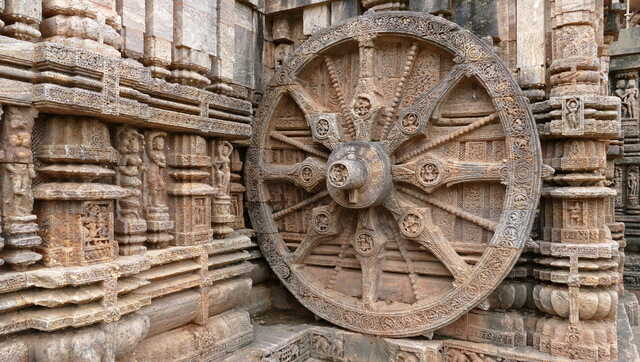
 "Re-building and ‘re-dressing’: How humanities and social sciences can help heal Indian civilisation")
Sometime between 1928 and 1930, at a particularly critical moment of our history when the political atmosphere of India was astir with frequent calls for “Poorna Swaraj” (Total Independence) from the British Raj, issued by our notable leaders and the masses alike, Acharya Krishna Chandra Bhattacharya (India’s best-known academic philosopher of the colonial period, and fondly remembered by his initials as KCB) gave a discourse at a meeting of the students of the Hooghly College, an institution located in the present-day West Bengal. At that time, KCB was principal of this college; and the discourse that he gave at this meeting of students came to be known as “Swaraj in Ideas”, published posthumously in the form of an essay, not too long and eminently free of jargons. In this discourse, KCB offered a passionate but thoroughly rational argument in favour of cultural and intellectual emancipation preceding a society’s political emancipation, or, at least, coinciding with it.
Unfortunately, even after 75 years of India’s Independence, one can scarcely assert with a fair degree of certitude that our country has achieved complete autonomy in her cultural and intellectual spheres. Not altogether unexpectedly, the lack of autonomy in cultural and intellectual matters has festered into a serious impairment of the morale of this country’s political leadership through successive generations and across parties/ideologies; it has significantly compromised the Indian State’s ability to exercise its sovereign authority to manage affairs concerning India’s national interests both within as well as outside her international borders. The external influences upon India’s political/intellectual/cultural decision-making faculties are far too numerous and too invasive even at this present moment of her career as a free nation, when the country should have held its own in the matters of the world.
Despite the seemingly insurmountable challenges at home and abroad, a majority of the Indian people, and an overwhelmingly large number of Indian villages and towns have managed to retain their unique civilisational character down the centuries — a character that is most apparent in the Hindu-Jain-Buddhist ways of life and attitudes towards the world. And yet this phenomenal vitality of the ancient Indian civilisation, this unprecedented and remarkable story of its survival and even expansion, in at least certain cultural and religious forms among certain peoples that are geographically far-removed from its seat, has failed to find a spontaneous political expression that would be a force to reckon with at home and in the world; it is yet to give a constitutional voice to the collective mandate of a billion-plus Indian people who daily live and swear by their millennia-old ancestral Indian values; it is yet to feed into the confidence of the relatively much younger republic of India.
What could be the possible reason for such an apparently paradoxical and undesirable outcome? One of the reasons — and KCB had forewarned us of this as well — is certainly the near-total absence, in the Indian academia, of a critical engagement with Western knowledge systems from an authentic and academically rigorous Indian epistemic standpoint. What the master philosopher of the early 20th century India had expected his intellectual successors living, thinking, and writing in a post-independence India to accomplish, is a comprehensive assimilation, a cultural translation of complementary foreign ideas and ideals into the ideas, values and ideals of our own contemporary national life, informed by and built on the stronger edifice of our time-tested national character and our extraordinarily rich repository of past experiences.
Quick Reads
View AllKCB was crystal clear in expressing his conviction that neither blind imitation nor operation in silos will help fulfil the true destiny of our country. He was equally wary of acquiring half-baked, prejudicial views of things, including those emanating from foreign shores. He vehemently opposed uncritical rejection of foreign ideas and ideals without first attaining a well-rounded understanding of them through a complete immersion in the knowledge systems and cultures wherein those ideas and ideals were originally born and nurtured.
Of late, some of us in this country, who operate in the realm of ideas, have repeatedly exhorted that it is difficult, if not impossible, to achieve this “Swaraj in Ideas”, this self-determination in our intellectual culture as well as our cultural intellect, without seeking an honest, critical, and immersive engagement with especially those branches of Western knowledge systems that have studied and shaped the culture of the world in a myriad of ways over the last three centuries. These are the humanities and social sciences disciplines, as they are understood, practised and have evolved in the West over these past few centuries. The intellectuals of present-day India — the teachers, professors, writers, thinkers and artists of this country — must actively seek this engagement with the thought-capital of the West; they must carry out a thorough intellectual reconnaissance of the areas of knowledge covered by these disciplines, and that too from an essentially Indian perspective.
It is important to understand, at this juncture, what is meant by an ‘Indian perspective’. For all meaningful purposes concerning the matter at hand, namely, Indian self-determination or Swaraj in cultural and intellectual spheres, the phrase ‘Indian perspective’ would imply that unique outlook on things and ideas, which arises out of the conscious first-hand experience of day-to-day lived realities of the Indian people. It is a perspective which is formed by the realities of India’s past, the exigencies of India’s present, and the aspirations of India’s future.
These characteristically Indian realities, exigencies, and aspirations are therefore given their peculiar shape by a strong bond of connection between India’s present conditions on one hand, and on the other her own exceptionally prolific oral as well as textual histories, her home-grown ideas, concepts and philosophical frameworks, her native religions and their fascinatingly diverse traditions — and all of it tempered by her hardships, which mainly entail a thousand-plus years’ experience of invasion, plunder, cultural-geographical dismemberment and colonialism.
The political and cultural subjection of India to the European colonial powers in modern times — as well as to the imperialist cultures from Central and Western Asia that invaded and intermittently occupied parts of the country in pre-modern times — is historically very well documented. The recurrent economic, religious and demographic plunder of multiple Indian provinces by all these foreign nations spans different historical eras across thirteen centuries. This multi-dimensional plunder of India involves a fundamentally tragic saga of a genocide of Hindus, Sikhs, Buddhists, and Jains (sometimes collectively categorised as the “Indic people”).
This genocide, despite having a magnitude that has no parallel in recorded history from anywhere in the world, is documented only in bits and pieces in a scattered manner, and remains largely unacknowledged in the worldwide academic discourses on India even in this day and age, when several ‘historical misdeeds’ committed by imperialist powers towards other nations and peoples of the world are being openly acknowledged in the mainstream academia and media, with attempts and promises of reparations to victim nations/races in some of those cases.
The genocide of the Indic people is not an inadvertent consequence of economic exploits by foreign plunderers and political expansionists, either. It has deeper cultural and religious roots, an aspect that has been brought out in the works of scholars and writers like Meenakshi Jain, Arun Shourie, Harsh Narain, SL Bhyrappa, and Sita Ram Goel. The xenophobic attitudes, borne by various foreign players in our nation’s history towards the Indic people and their native culture, and perpetuated over the course of thirteen long centuries that are soaked in the blood of these Indic people, have caused some serious physical and psychological trauma to the Indian nation and its psyche.
This trauma needs urgent addressing, it needs a healing touch, a redressal; and this addressing of our nation’s trauma, this effective (re)dressing of our historical wounds can, once again, be well done through the wisdom, sensitivity, thoughtfulness, finesse and skill acquired from sustained immersive-assimilative exercises involving the humanities and social sciences disciplines, by generations of intellectuals who are rooted in the above-mentioned sense of an Indian perspective.
Herein lies the significance of doing humanities and social sciences in India, in an essentially and ultimately Indian way: to re-build (where necessary) and reinforce (where it already exists in some form) the all-important Indian perspective, in order to address India’s present and future needs. This is also needed to prevent this Indian perspective from becoming an elusive, unintelligible or arcane thing, and to keep it ever-relevant for the Indian people as well as for others who may be interested in owning it — to maintain its dynamic vitality; and through this living-breathing-relevant-energetic Indian perspective redress our civilisation’s deep wounds, so that those may be prevented from festering into further human calamities.
The author is Director of Centre for Civilisational Studies and Assistant Professor at the Rashtram School of Public Leadership, Rishihood University. Views expressed are personal.
Read all the Latest News, Trending News, Cricket News, Bollywood News,
India News and Entertainment News here. Follow us on
Facebook,
Twitter and
Instagram.

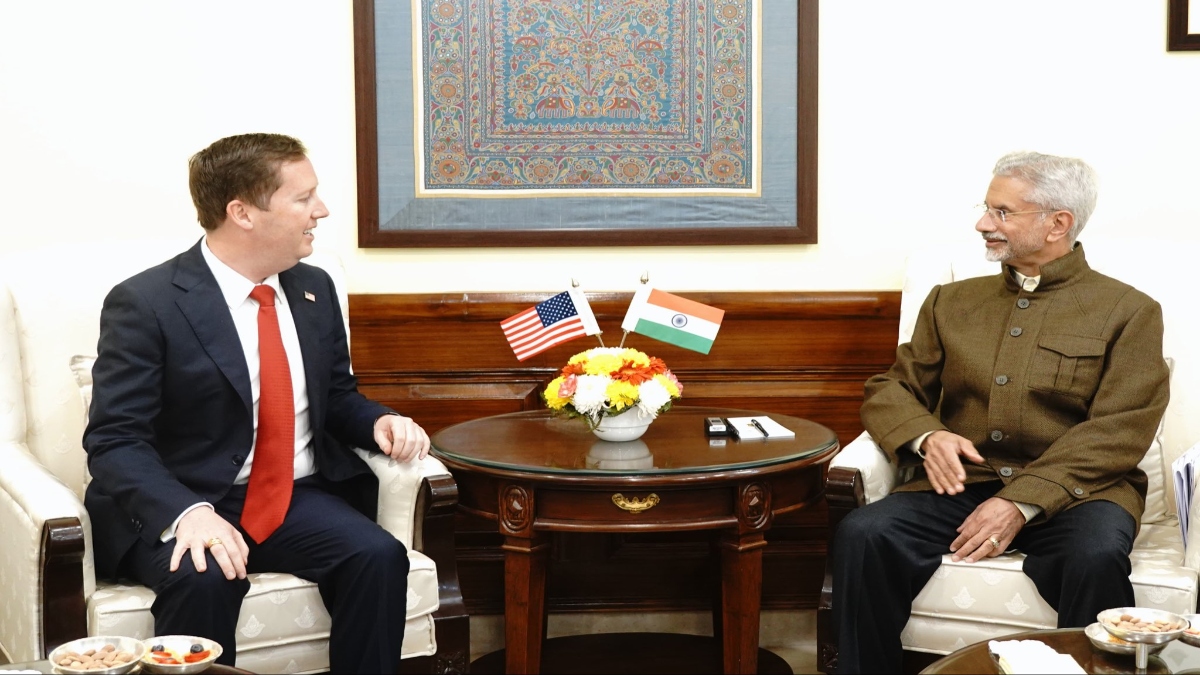 "Jaishankar meets Sergio Gor ahead of US visit, says discussed 'many dimensions of our partnership'")
 "As Trump shakes up Nato, Europe aims to go self-sufficient in weapon production")
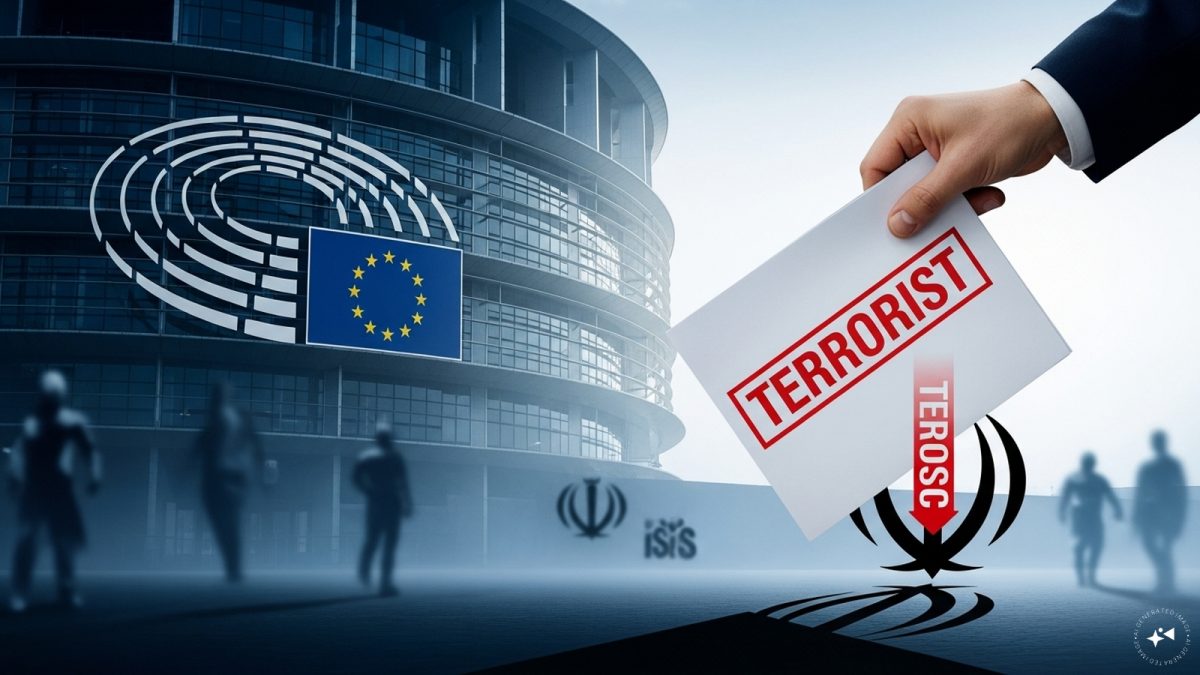 "EU to list Iran’s Revolutionary Guards as terrorist group alongside al-Qaeda and Hamas")
 "With new security pact, India and EU eye win-win defence ties as US, China rival in arms race")
 "Jaishankar meets Sergio Gor ahead of US visit, says discussed 'many dimensions of our partnership'")
 "As Trump shakes up Nato, Europe aims to go self-sufficient in weapon production")
 "EU to list Iran’s Revolutionary Guards as terrorist group alongside al-Qaeda and Hamas")
 "With new security pact, India and EU eye win-win defence ties as US, China rival in arms race")