

 "With new security pact, India and EU eye win-win defence ties as US, China rival in arms race")
As the India-European Union Free Trade Agreement (FTA) makes wave in geopolitical circles for becoming the “ mother of all deals”, the defence and security tie-up between the two sides passed on a little under the radar.
India and the European Union (EU) on Tuesday signed the Security and Defence Partnership (SDP) that is nearly as ambitious — if not more. It aims to create a mutually beneficial defence production ecosystem and open the European defence market to Indian exporters in the near future, according to people aware of the matter and analysts.
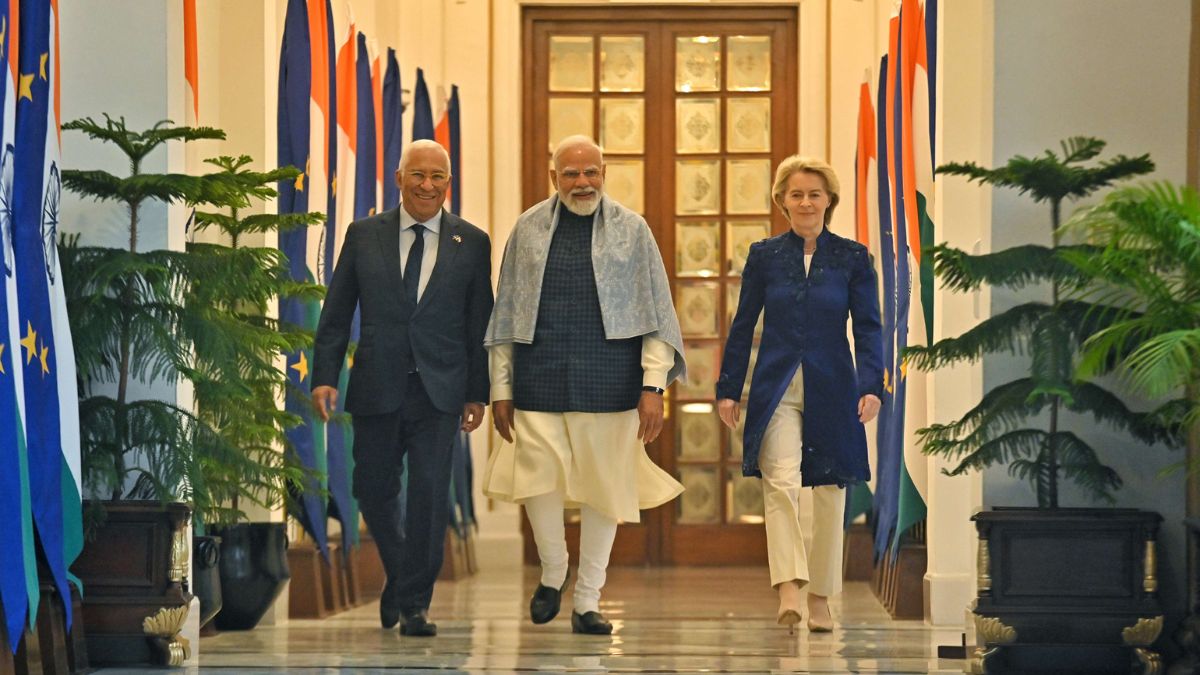
In her statement beside Prime Minister Narendra Modi, EU chief Ursula von der Leyen said the SDP will deepen cooperation on maritime security, cyber and hybrid threats, space security, and counterterrorism.
But it is the aspirational aspect of the SDP that gives it real significance. Modi said the pact will allow Indian defence companies to “gain new opportunities to work together on co‑development and co‑production”.
Firstpost has learnt that European powers are looking to establish manufacturing hubs in India in a win‑win arrangement in the coming years, and the SDP is set to be the stepping stone —and a confidence‑building measure— towards that goal.
ALSO READ — ‘Mother of all deals’: India-EU partnership emerges as geopolitical stabiliser in fractured world
This is what PM Modi hinted at when he spoke of “new opportunities to work together on co‑development and co‑production” beside von der Leyen at the conclusion of the India‑EU Summit, a person aware of the thinking behind the engagement told Firstpost.
Quick Reads
View AllSeparately, Defence Minister Rajnath Singh explicitly stated that India has its eyes on the EU’s €800 billion ‘ReArm’ programme — particularly its €150 billion Security Action for Europe (Safe) component.
Over the decades, India has developed close defence relationships with European countries such as France and Germany, but the EU’s transformation in the wake of Russia’s full‑scale invasion of Ukraine has changed India’s outlook and nudged it to aim for larger deals at the EU level, not just at the country‑to‑country level, according to Swasti Rao, associate professor at the Jindal School of International Affairs (JSIA), OP Jindal Global University.
“As the EU embarks on its military transformation, it has launched a €150 billion Safe initiative for member states to jointly procure ammunition, artillery, air‑defence systems, drones, and other equipment. This represents a massive market for Indian industry to tap into once India reaches a Safe participation agreement with the EU — the SDP alone does not grant access to Safe as it serves more as a gateway. Once India joins Safe, it would be fully integrated into Europe’s military transformation,” said Rao.
India & EU move closer amid global churn
India and the EU have moved closer on trade, security cooperation, and defence partnerships at a time when the world is in a churn not seen since World War II.
The Russian war on Ukraine has had its side effect on the longstanding India‑Russia defence relationship when India is in the middle of its modernisation drive against the backdrop of growing two-front challenge from Pakistan and China. Russia’s entrenchment in Ukraine has meant that supplies have slowed and deliverables —from air‑defence systems such as the S‑400 to ships and submarines— are delayed.
The Russian shadow war on Europe has forced the EU to transform from an economic bloc into a security and military player. Amid Russian aggression, US President Donald Trump has opened a second front: threatening an invasion of Greenland, weakening the EU by supporting far‑right anti-EU parties, and empowering Russia by effectively quitting the theatre and undermining Nato.
In the Indo‑Pacific, Trump has plunged the longstanding relationship with India to its lowest point in the post‑Cold War era and marginalised the Quad, which had emerged as the fulcrum of the free world’s effort to counter Chinese aggression in recent years. He has also elevated China as a peer in the ‘G‑2’ arrangement and enabled Beijing to challenge the United States as the global hegemon.
Such a churn — driven by Trump as the world’s disruptor‑in‑chief— has brought India and the EU closer on all fronts even as trade talks predate Trump’s second term.
“India and the EU had many differences, but most of them were bridged over the past year only because of the urgency that President Trump’s disruption brought. He rattled everyone with his unpredictability. India particularly misread him. And that’s what made the India‑EU FTA possible,” said Rao, a consulting editor at The Print and a professor of geopolitics at JSIA.
The moonshot India‑EU defence partnership — and Europe’s rearmament
As both India and the EU grapple with Trump’s trade and political coercion, they have put in motion a plan that —if all goes well— will lead to a self‑sustaining, mutually beneficial defence ecosystem.
The India‑EU SDP that EU foreign and security minister Kaja Kallas and External Affairs Minister S Jaishankar signed was merely the stepping stone.
Firstpost has learnt that European powers are looking to establish a second line of defence production in India to secure supplies as Russian hybrid warfare has threatened defence manufacturing units in Europe.
European leaders believe that Russian sabotage would be unlikely in India and that this second line of production would safeguard supplies for the EU’s ReArm‑driven transformation, Firstpost has learnt.
At the same time, such a partnership would provide India with investments and the technical know‑how of sophisticated arms manufacturing, supporting the Make-in-India initiative and wider indigenisation efforts in the defence sector, a person familiar with the thinking behind the partnership told Firstpost.
While India has longstanding defence relationships with European partners like France —which have led to joint manufacturing in India and increased sourcing from Indian suppliers— India now plans to pursue defence deals at the EU level rather than through just individual countries, the person said.
As the next logical step, as hinted by PM Modi and Singh, India will seek a safe participation agreement to unlock the €150 billion market for Indian suppliers.
India would then look to leverage existing partnerships with European companies —such as aircraft manufacturing with Dassault and Airbus, submarine manufacturing with TKMS and Naval Group, and tie‑ups for air‑defence systems with the likes of Thales along with military vehicles from BAE Systems— to not only produce for India but also for Europe’s own rearmament.
Instead of simple deals where one side orders and another supplies, the Modi government has made the ‘ co‑development model’ central to its ambitions in defence manufacturing — and heavy manufacturing more broadly.
While the specifics of envisioned projects with the EU are not public, and the process is in its infancy at the moment, a likely structure under the co‑development model —mentioned by PM Modi after the India‑EU Summit— could see costs and profits shared in a win‑win arrangement, according to Ram Singh, a professor of international trade at the Indian Institute of Foreign Trade (IIFT).
“For any procurement, EU member states buying equipment through the EU could make part of the payment in cash and invest the rest in a joint venture in India,” Singh explained, “This would help establish a second line of defence manufacturing to support European plants that are under strain from the conflict with Russia.”
“In the initial phase, production is expected to focus on cartridges, artillery shells, and other mass‑produced defence items with limited to no transfer of technology. From this simpler outsourcing model, the partnership could gradually advance to more sophisticated manufacturing over time," Singh said.

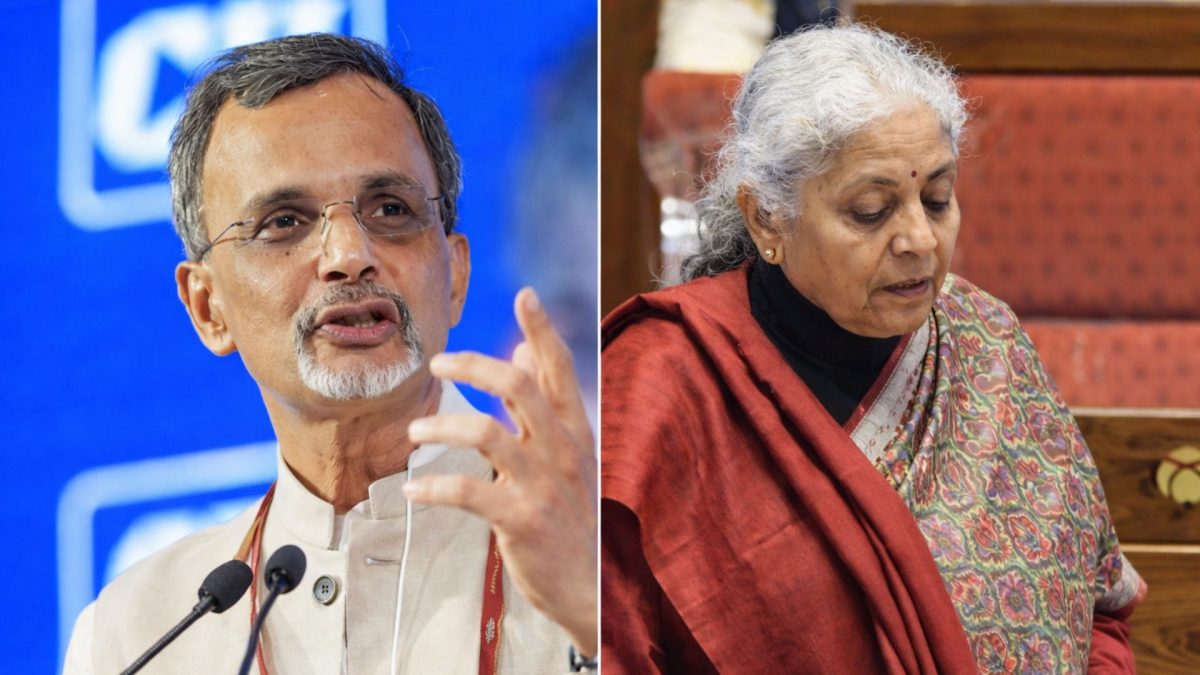 "Economic Survey 2026 Live Updates: ‘Trade no longer reciprocal, markets no longer neutral’")
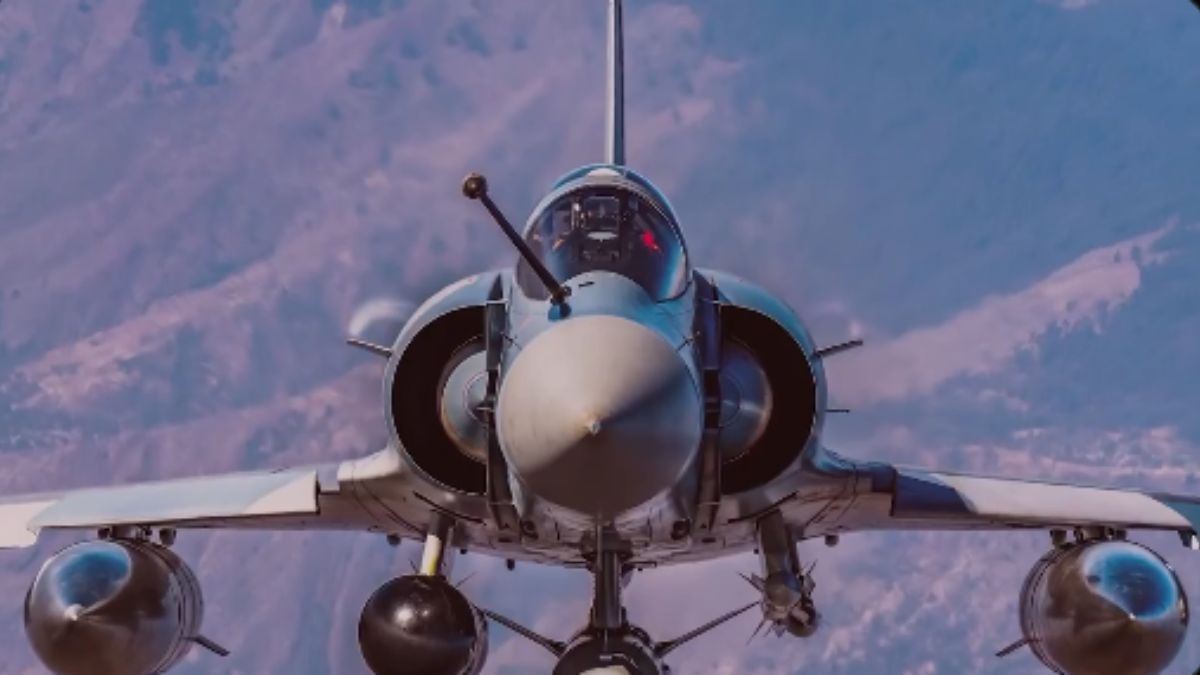 "Did the IAF bomb Pakistan’s Kirana Hills during Op Sindoor? A video suggests…")
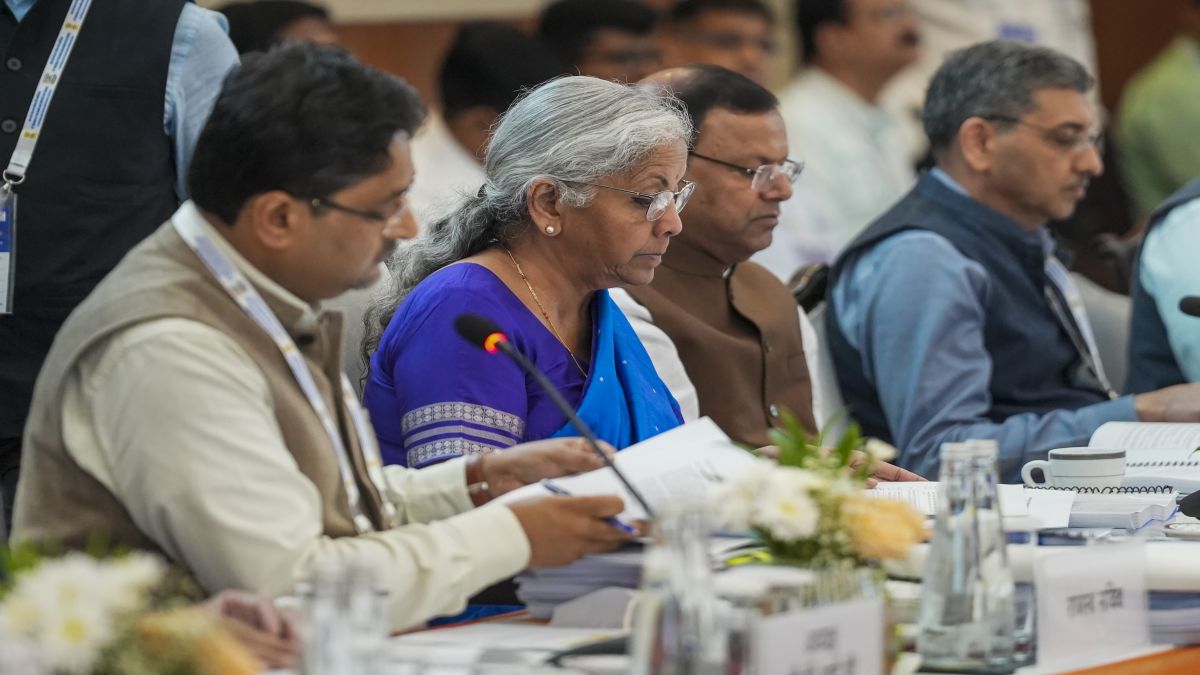
 "Robust growth, record demand and low inflation: Key takeaways from Economic Survey 2026")
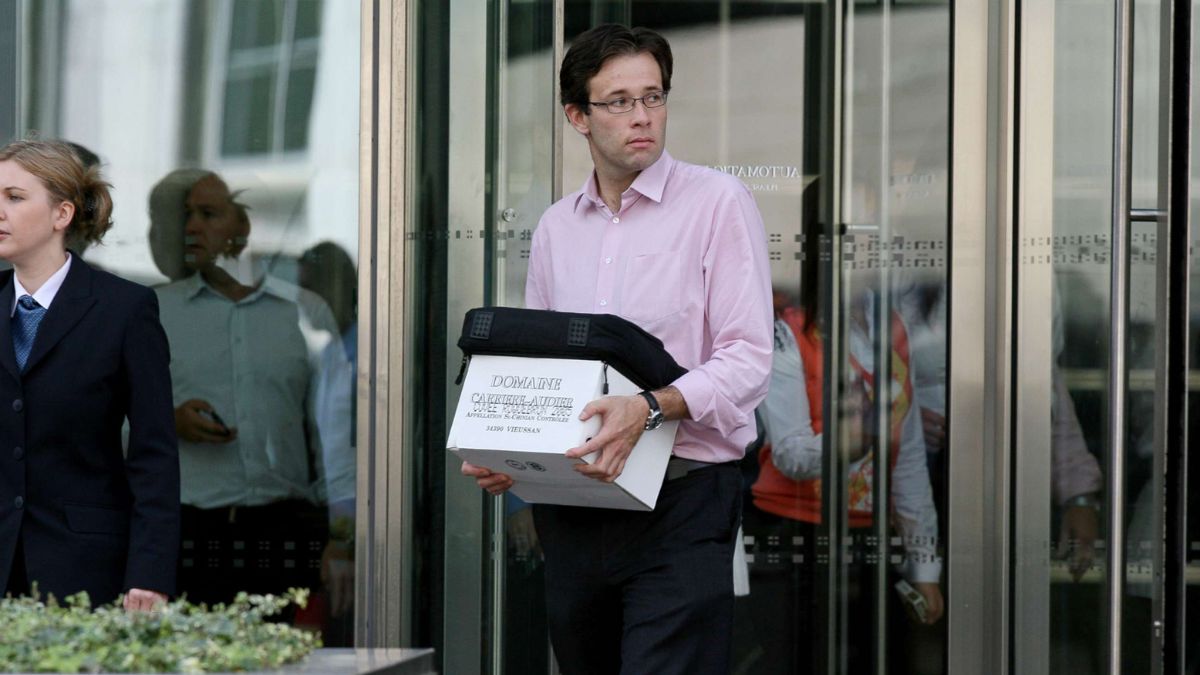
 "10-20% chance of 2008-like global financial crisis in 2026: Economic Survey")
 "Economic Survey 2026 Live Updates: ‘Trade no longer reciprocal, markets no longer neutral’")
 "Did the IAF bomb Pakistan’s Kirana Hills during Op Sindoor? A video suggests…")
 "Robust growth, record demand and low inflation: Key takeaways from Economic Survey 2026")
 "10-20% chance of 2008-like global financial crisis in 2026: Economic Survey")



