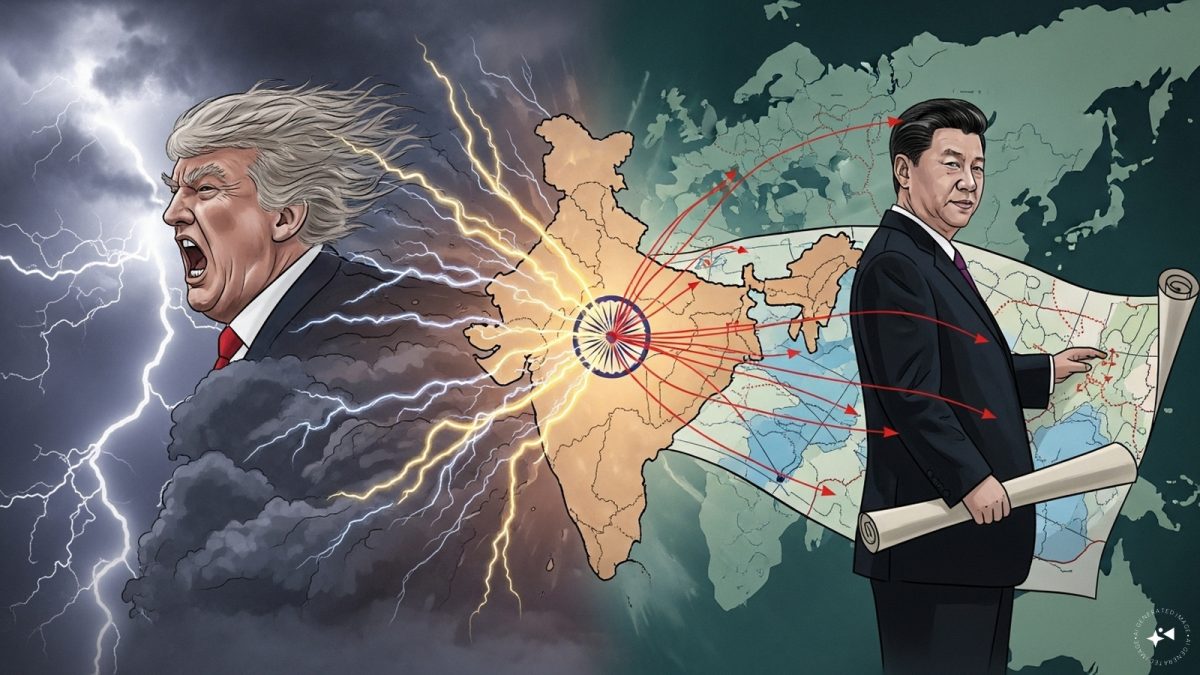
 "How India faces a strategic squeeze amid Trumpian disruption and China’s silent advance")
For decades, protocol, politeness, and process defined US diplomacy. Indians and others might have disagreed with American positions, but they understood the debates and could predict policy. Media emphasises divergence, but the differences between Presidents Jimmy Carter and Ronald Reagan or Bill Clinton and George Bush were more about style and tactics rather than substance and goals.
US President Donald Trump upended the continuity. Rather than draw inspiration from the French prelate and statesman Cardinal Richelieu (1585–1642), who created the first formal foreign ministry, or the French diplomatic theorist François de Callières (1645–1717), who wrote about the art of negotiation, Trump appears to draw diplomatic inspiration more from Genghis Khan.
Ego and ultimatums predominate; facts fall by the wayside, and institutions and alliances built over decades lie in tatters. Trump has inflicted the worst crisis on the North Atlantic Treaty Organisation since the 1956 Suez Crisis, with traditional US allies like Denmark and Spain considering Trump’s America as great a threat as Vladimir Putin’s Russia. India has not been immune. Every US president since George W Bush has sought to strengthen ties between Washington and New Delhi. Each, regardless of political party, advanced relations.
Then, in the wake of the Pahalgam massacre, Trump shredded everything. His tariffs simply added insult to injury, especially given the hypocrisy: Trump has created sanctions exceptions for US-Russia trade on critical minerals and goods important to US industry and security. His claims of bringing a ceasefire and his whitewash of Pakistani terror were unforgiveable, especially as terrorists involved in the 2008 Mumbai attacks killed not only Indians but also Americans and roam free in Pakistan.
In a global battle for influence, Chinese President Xi Jinping is content to allow Trump’s antics to drive anti-Americanism. Rather than play hardball or leverage Chinese debt into concessions as he has in Pakistan, Sri Lanka, Djibouti, Laos, and Zambia, Xi has instead gone on a charm offensive. Temporarily at least, China has paused its most aggressive encroachments on Mongolia, the Philippines, and India.
Quick Reads
View AllPrime Minister Narendra Modi and Indian diplomats should not remain content simply to allow the enjoyment of the pause in Chinese aggression but rather demand Xi show substance behind his charm offensive. Indian officials should demand Xi reverse the salami slicing in which the People’s Liberation Army has engaged in Ladakh and Arunachal Pradesh.
Trump may be obnoxious, but he does not threaten Indian sovereignty beyond his short-sighted and naïve offers to broker talks to resolve the “1,000” or “1,500”-year-old dispute between India and Pakistan.
While Chinese forces have largely withdrawn after their June 2020 incursion into the Galwan Valley, they continue to occupy ground near Hot Springs, in the Chang Chenmo River valley, as they try to cut off Indian access to the Kongka La pass.
The People’s Liberation Army has also occupied a seven-kilometre stretch of no man’s land in the Pangong Tso area. China has also taken control of approximately 900 square kilometres in the Depsang Plains. China has also consolidated its presence in Demchok. In Arunachal Pradesh, Xi continues to reject the validity of the 1914 McMahon Line as the rightful border, especially near the Tawang sector.
Xi may juxtapose his professionalism with Trump’s antics to position himself as a trustworthy statesman, but India should have no illusions: soft-spoken or not, Xi is an aggressor and a threat who seeks to expand his territory at his neighbours’ expenses.
India, together with Mongolia, Vietnam, and the Philippines, should hold firm: If Xi wants to be a responsible actor, he must renounce all territorial claims and remove all Chinese forces from territories they have occupied over the decades. Analysts describe Xi’s aggression as “salami-slicing”. If Xi really wants Indians and the world to believe he represents a kinder, gentler, steadier leadership, the Indian government should demand he not only stop slicing salami but also clear the table completely. The only metric by which any country should judge China is by a withdrawal from all territories it occupies and a public forfeiture of any further claims.
(Michael Rubin is director of policy analysis at the Middle East Forum and a senior fellow at the American Enterprise Institute. The views expressed in this piece are personal and solely those of the author. They do not necessarily reflect Firstpost’s views.)

 "US-Israel-Iran War Live Updates: Strikes hit Tehran command centres as deadly attack targets Iranian port")
 "Mediation window opens? Iran backs Pakistan channel for US talks, insists on end to attacks first, says report")
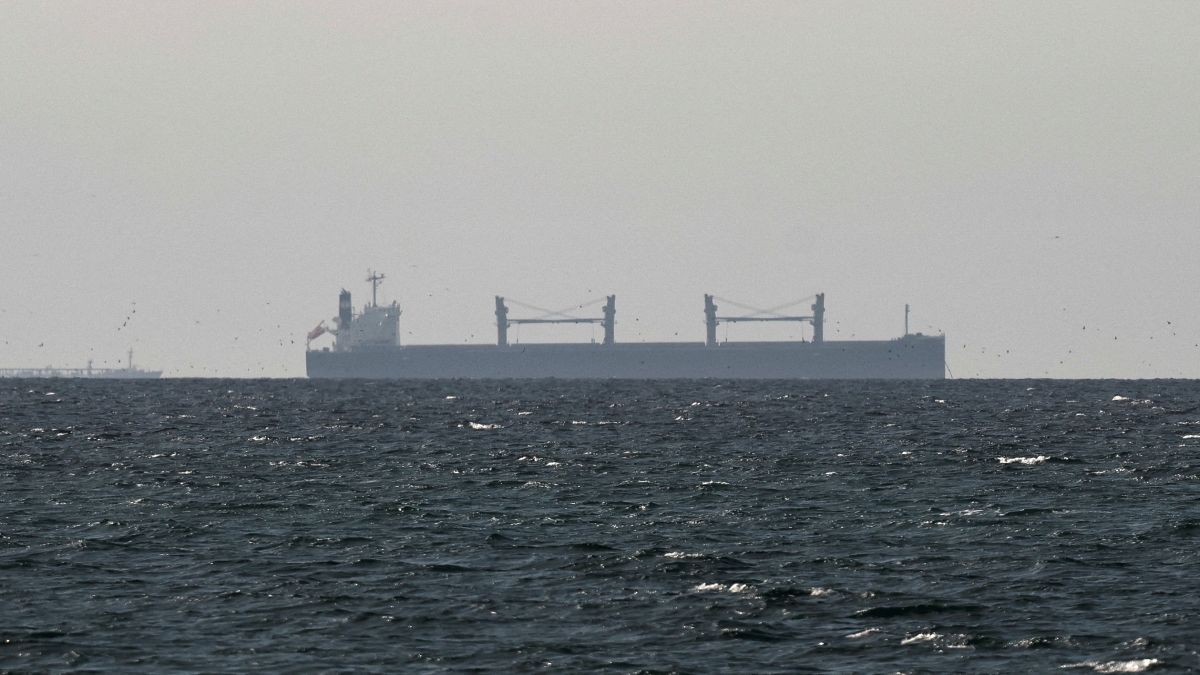 "Saudi Arabia activates full 7mn bpd pipeline capacity to keep oil moving amid Strait of Hormuz woes")
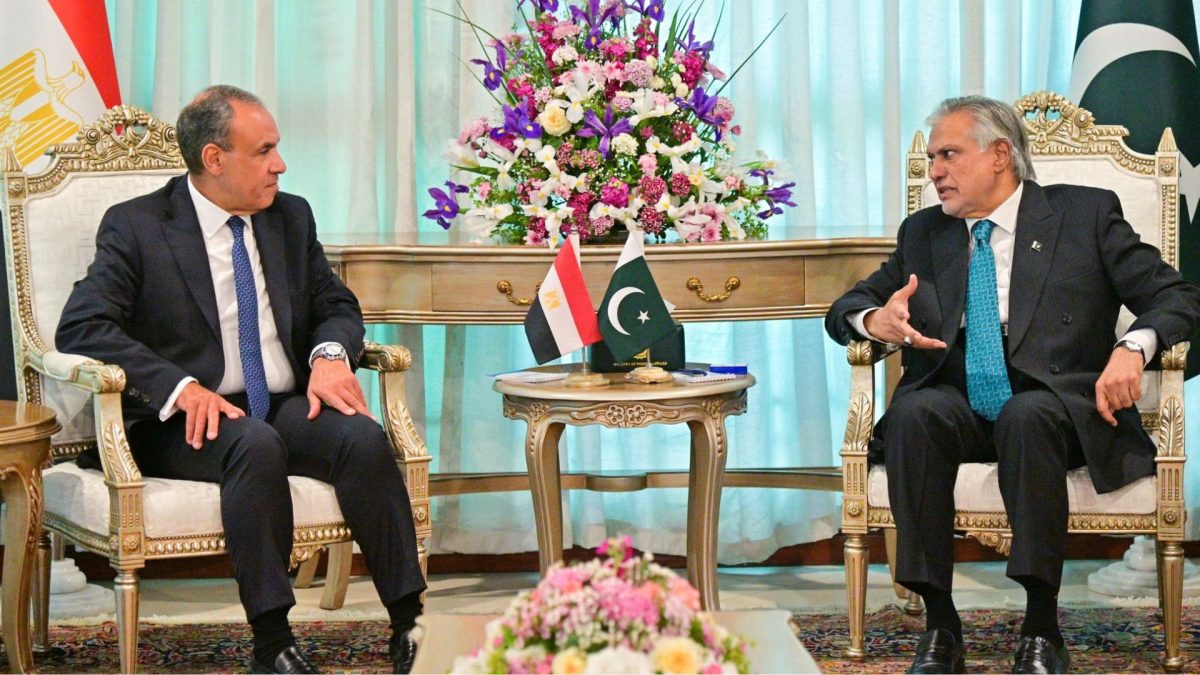 "Pakistan and Egypt hold high-level bilateral talks ahead of quadrilateral summit in Islamabad")
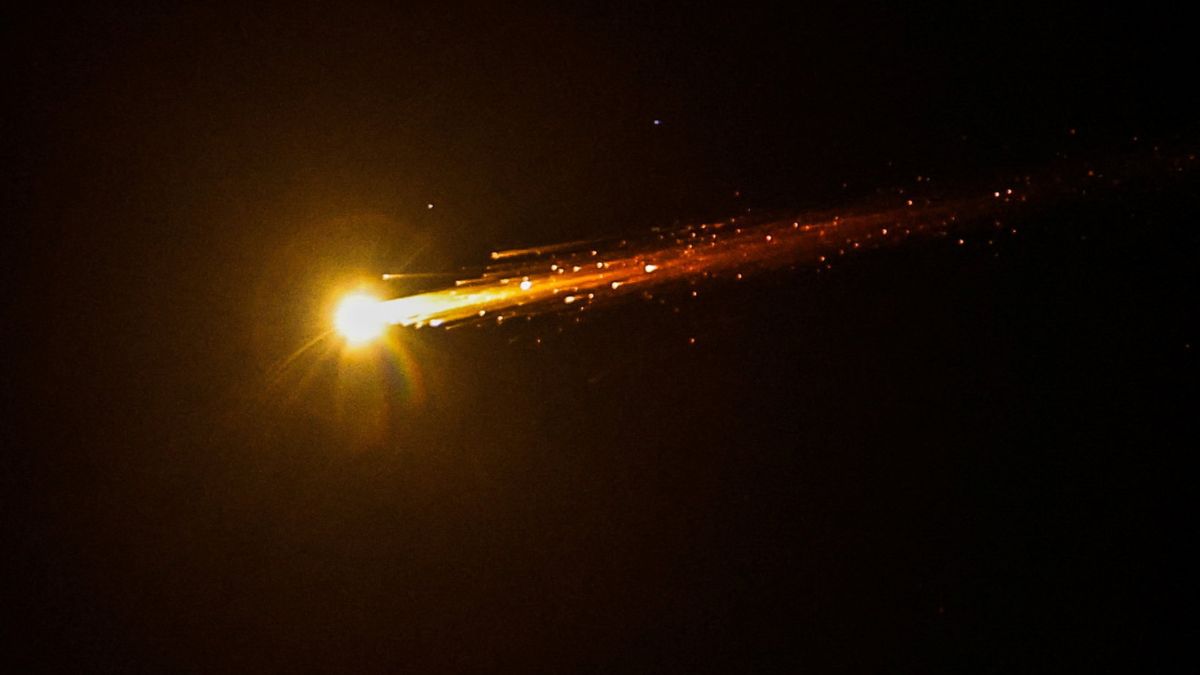 "US-Israel-Iran War Live Updates: Strikes hit Tehran command centres as deadly attack targets Iranian port")
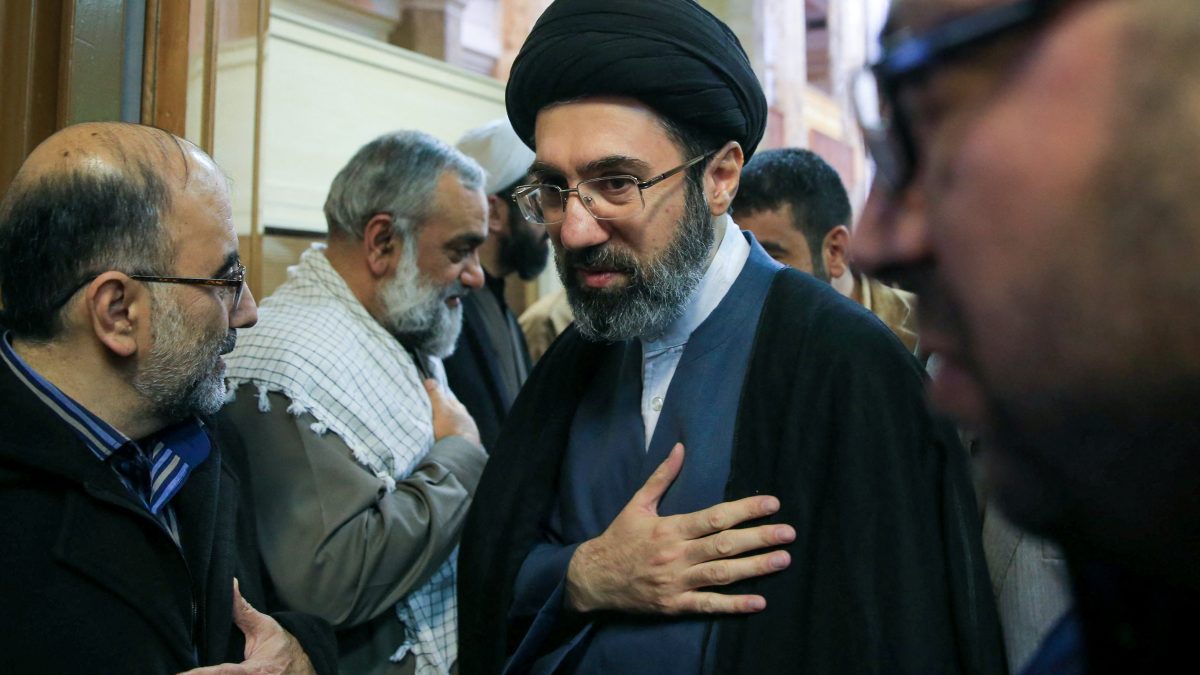 "Mediation window opens? Iran backs Pakistan channel for US talks, insists on end to attacks first, says report")
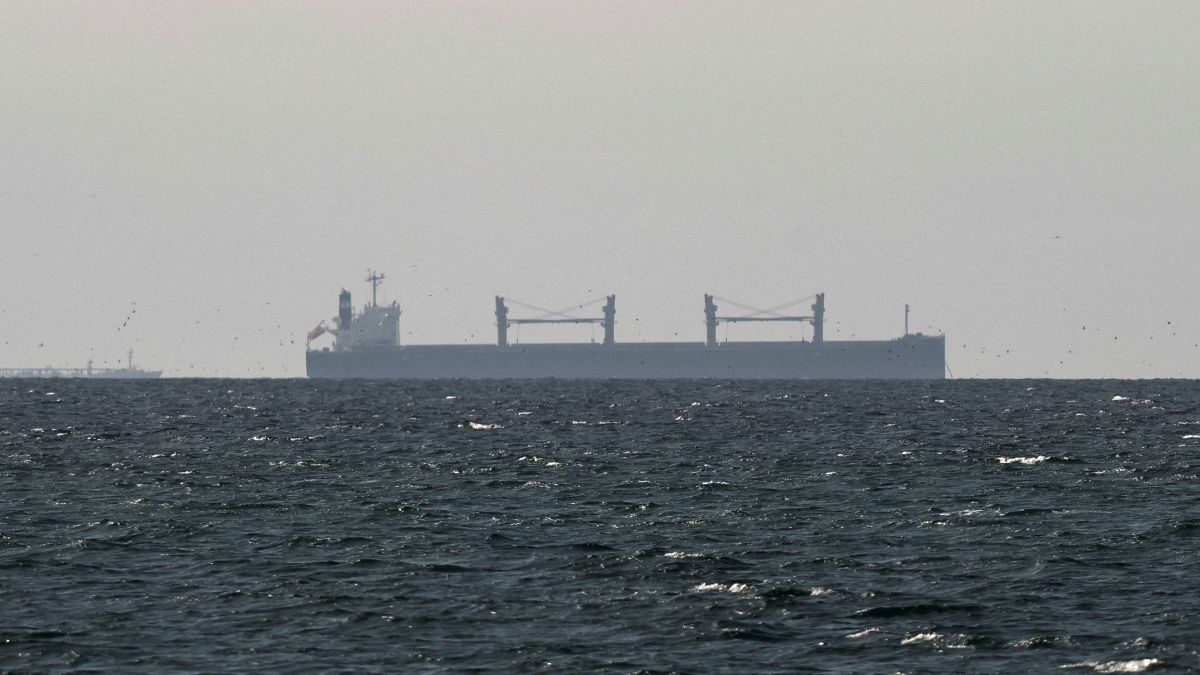 "Saudi Arabia activates full 7mn bpd pipeline capacity to keep oil moving amid Strait of Hormuz woes")
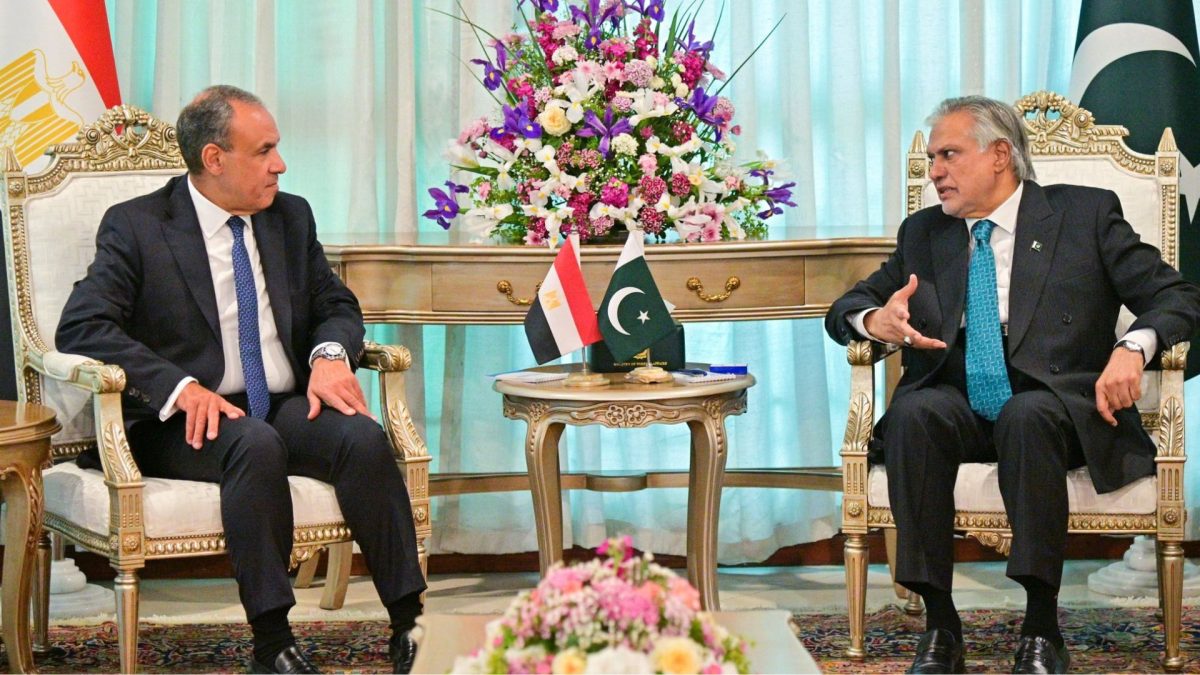 "Pakistan and Egypt hold high-level bilateral talks ahead of quadrilateral summit in Islamabad")