

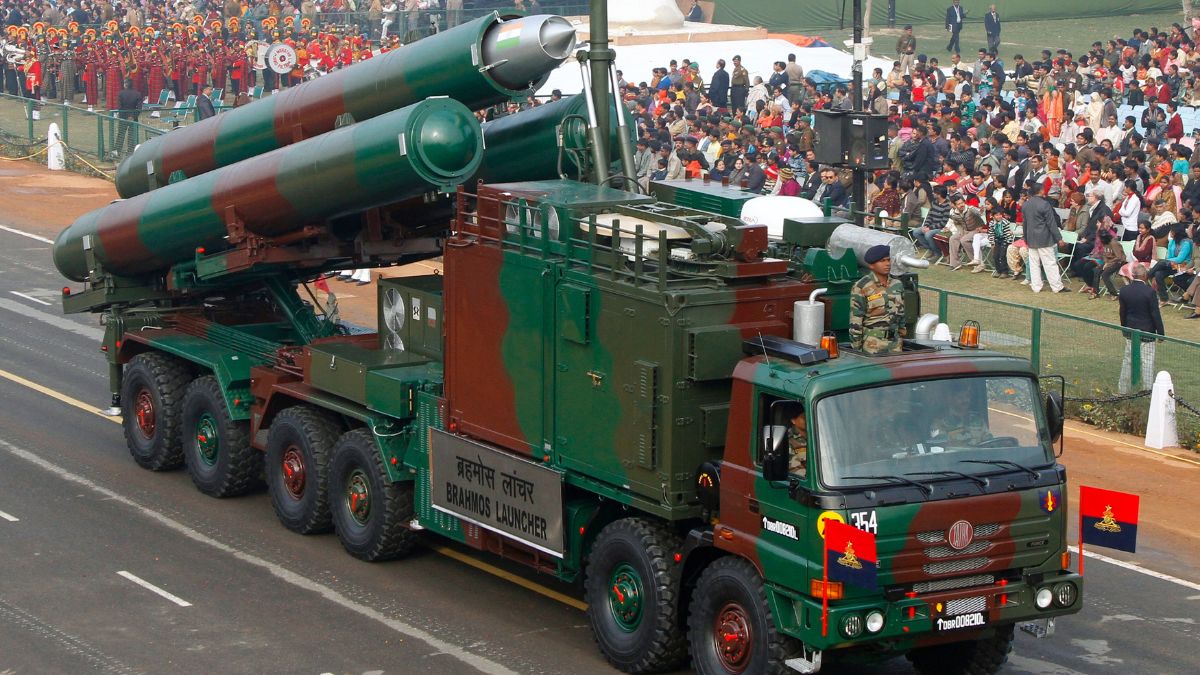
 "How India’s BrahMos missile deal with Indonesia signals a new strategic era")
India’s near-finalisation of a $450 million deal to supply BrahMos supersonic cruise missiles to Indonesia marks a turning point not only in New Delhi’s defence export trajectory but also in Southeast Asia’s search for strategic autonomy.
The agreement discussed during the third India-Indonesia Defence Ministers’ Dialogue co-chaired by Rajnath Singh and Sjafrie Sjamsoeddin would make Indonesia only the second Asean nation, after the Philippines in 2022, to acquire the BrahMos system. With Vietnam reportedly in advanced talks for deals estimated at $700 million, a pattern is emerging across the region: India is no longer just a diplomatic partner but an increasingly central security actor.
For decades, the defence landscape of Southeast Asia was effectively bipolar. Countries were pressured to operate within the US security umbrella or risk drifting toward China’s sphere of influence. But this binary logic has grown deeply unpopular among regional middle powers eager to avoid entanglement in great-power rivalries. Against this backdrop, India’s offer of advanced, affordable, and non-coercive defence technology has found fertile ground.
A Strategic Breakthrough for India
“This is not just another arms contract,” observed Gaurav Kumar of the United Service Institution of India. His comment strikes at the heart of the matter. The BrahMos sale is as much about geopolitics as economics, signalling India’s growing capability to shape security environments far beyond its immediate neighbourhood.
BrahMos Aerospace, jointly owned by India’s DRDO (50.5 per cent) and Russia’s NPO Mashinostroyenia (49.5 per cent), has long been projected as a flagship example of India–Russia defence collaboration. The missile’s proven speed, precision, and versatility have made it one of the most sought-after systems in the Indo-Pacific. With negotiations reportedly complete and only Moscow’s formal clearance pending, India stands on the cusp of its most consequential defence export yet.
The Philippines’ $375 million contract in 2022 opened the door. Indonesia’s interest and Vietnam’s proximity to a deal have pushed it wide open. These purchases collectively signal a recalibration of regional power dynamics, with India positioning itself as an alternative defence partner who brings neither ideological baggage nor strategic pressure.
Quick Reads
View AllA Long-Awaited Choice
Analysts widely agree that India’s appeal stems from its strategic neutrality. Unlike the US, India’s defence sales come without political conditionalities or sanctions risks. Unlike China, they carry no hegemonic undertones. “India offers a third pathway: one that comes without sanctions risks, without hegemonic baggage, and without intrusive conditions,” said Robinder Sachdev of the Imagindia Institute.
For Indonesia, concerns extend beyond the contested Natuna region. Safeguarding the broader maritime domain, including the Natuna Sea, critical shipping lanes, and approaches to the Malacca Strait, has become paramount. A supersonic cruise missile like BrahMos strengthens deterrence across a wide geographical arc, not just against a single adversary.
In an era when Washington’s reliability is increasingly questioned and China’s belligerence is increasingly resented, Southeast Asian states are incentivised to diversify. Buying from the US risks economic retaliation from China; buying from China risks defence vulnerabilities and political dependency. India, however, provides stability without strings.
Shaping a New Deterrence Architecture
If Indonesia, the Philippines, and Vietnam all operationalise BrahMos, the Indo-Pacific could witness the emergence of what Kumar calls a “triangular deterrence matrix”. Spanning the Luzon Strait, Natuna Sea, and the Sunda-Malacca axis, this network could significantly complicate China’s maritime calculations.
Such a development would mark the first time regional states have collectively turned to a non-superpower to balance an assertive China. It underscores how India’s role is expanding not because Southeast Asia is choosing sides but because it wants the freedom not to choose.
Ivan Lidarev of the National University of Singapore notes that the BrahMos export push is part of a broader strategy: enhancing India’s geopolitical presence while advancing its “Make in India” manufacturing ambitions. For Jakarta and others, this means access to high-quality defence systems without the political risks associated with Western or Chinese weaponry.
Non-Aligned but Not Irrelevant
India’s strategic advantage lies precisely in its independence. It is not a treaty ally of the United States, nor does it have territorial claims in the South China Sea. This places India in a rare category: a major power that can offer military capability without raising fears of interference or domination.
Nilanthi Samaranayake of the East-West Centre emphasises that these deals are simultaneously symbolic and substantive. They reflect India’s growing diplomatic weight and its long-term effort to embed itself in Southeast Asia’s security architecture. With defence exports reaching an unprecedented ₹236.2 billion (US$2.64 billion) in 2024–25, India is emerging as a reliable arms supplier exactly when the region needs one.
Recent Indian contracts worth over ₹40 billion in just one month, as announced by Rajnath Singh, underscore the accelerating demand. While the ministry did not disclose clients, Indonesia and Vietnam were widely understood to be among them.
The Road Ahead
Southeast Asia is entering a new era of defence diversification. India’s BrahMos system, celebrated for its speed and precision, is rapidly becoming the missile of choice for countries seeking autonomy without antagonism.
For Indonesia, the deal represents a strategic upgrade. For India, it marks the maturation of its defence diplomacy and the internationalisation of its military-industrial complex. For Southeast Asia, it signals the emergence of a long-sought third option, one that balances ambitions, mitigates vulnerabilities, and reinforces sovereignty.
As more Asean nations look to hedge in an increasingly unstable Indo-Pacific, BrahMos may well become the symbol of a new strategic order: an Indo-Pacific where middle powers strengthen each other and where India stands not on the sidelines but as a decisive regional security provider.
(The writer is a techie, political analyst, and author. He pens national, geopolitical, and social issues. His social media handle is @prosenjitnth. Views expressed in the above piece are personal and solely those of the author. They do not necessarily reflect Firstpost’s views.)


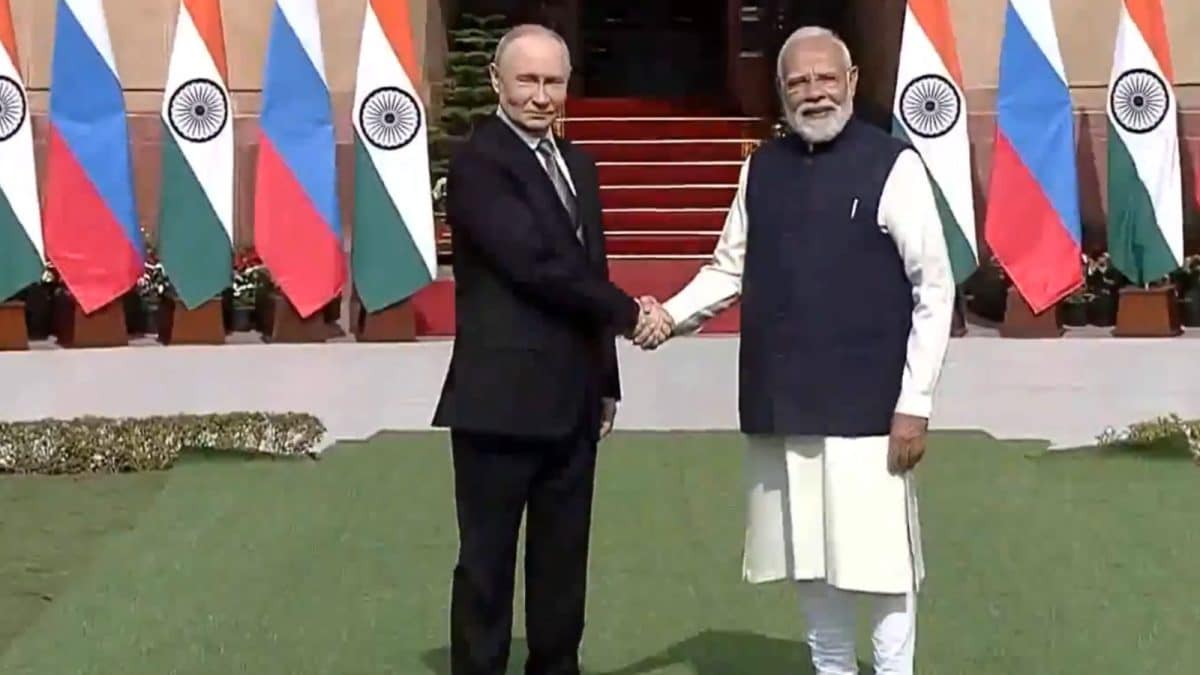 "Putin India Visit LIVE Updates: India and Russia sign Vision 2030 to boost economic cooperation, explore FTA with EEU, says PM Modi")
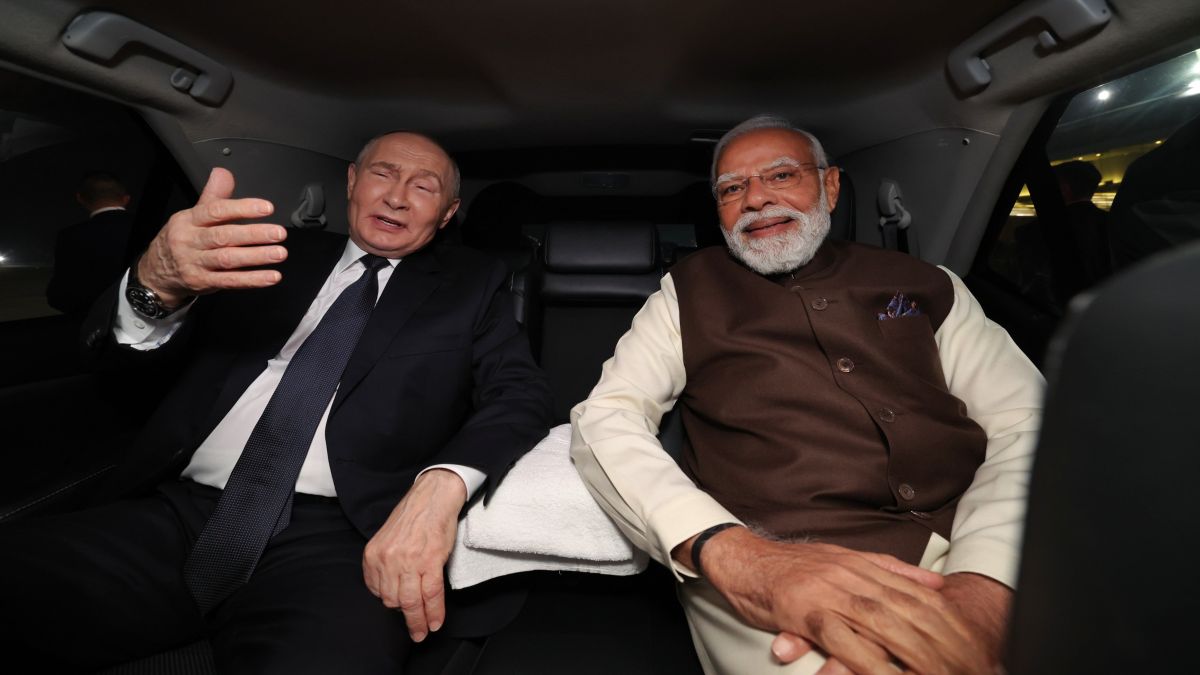 "India, Russia agree to boost trade, investments after Modi-Putin talks")
 "DGCA puts new pilot rest rule behind IndiGo flight cancellations on hold")
 "'India is not neutral...': How Modi's diplomacy has triumphed amid the Russia-Ukraine war")
 "Putin India Visit LIVE Updates: India and Russia sign Vision 2030 to boost economic cooperation, explore FTA with EEU, says PM Modi")
 "India, Russia agree to boost trade, investments after Modi-Putin talks")
 "DGCA puts new pilot rest rule behind IndiGo flight cancellations on hold")
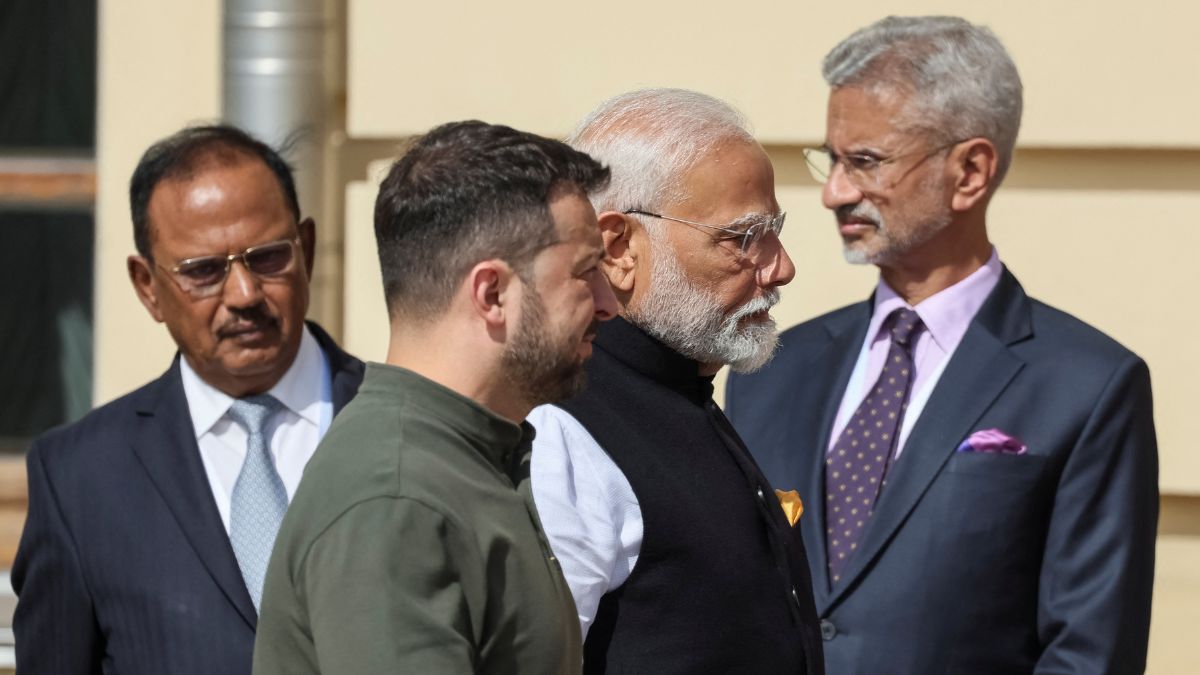 "'India is not neutral...': How Modi's diplomacy has triumphed amid the Russia-Ukraine war")



