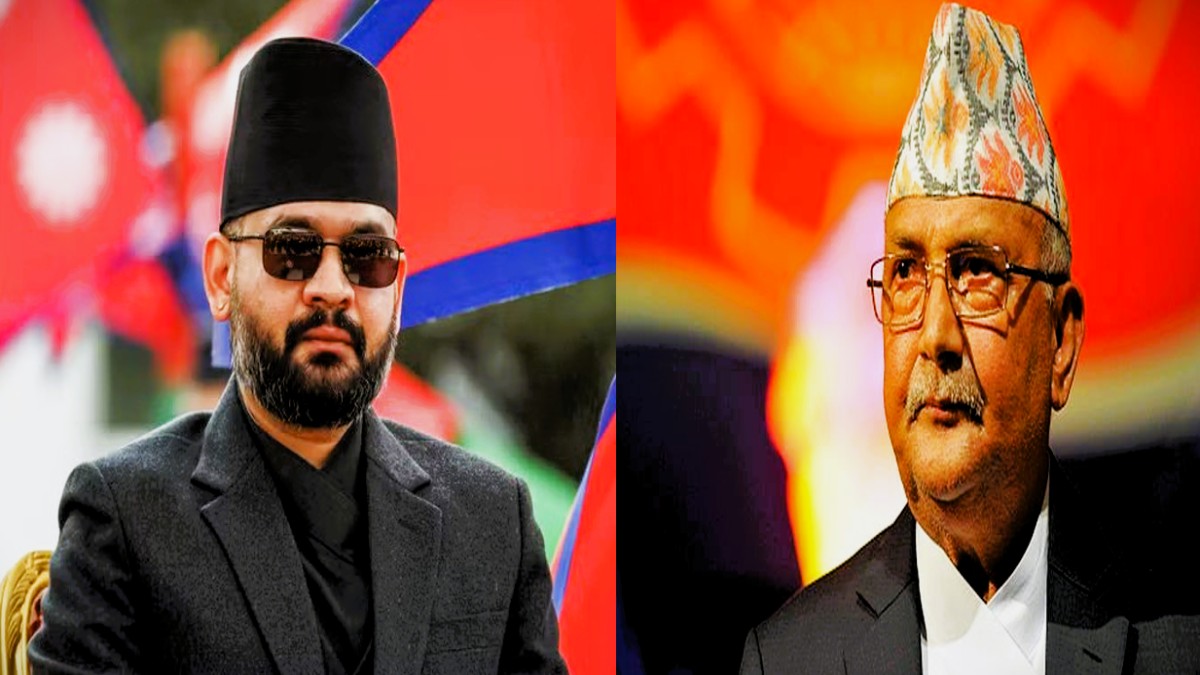
 "Balen Shah assumes office with ambitious reforms, while KP Sharma Oli’s arrest marks a turning point—Nepal stands at the crossroads of change, with its future yet to be written. Representational image")
In a bold move, former Prime Minister and CPN-UML Chairman KP Sharma Oli and the former Home Minister have been arrested for the human and material damages caused during the September Gen Z protests. Both leaders are likely to be charged under provisions that carry a maximum prison sentence of up to 10 years. Apart from them, the report recommended action against the then police chief, Chandra Kuber Khapung, and dozens of other officials.
The arrest comes after the newly formed government led by Prime Minister Balen Shah decided to implement the report prepared by the probe commission led by former Special Court Chair Gauri Bahadur Karki.
The immediate and real test for Shah as an instrument of change was implementing the findings of the Karki Commission, formed by the interim Sushila Karki government. The commission was tasked with investigating the killings and property damage during the Gen Z protests that left 77 people dead and many injured. The first cabinet meeting has shown the good signs of implementing the report.
Nepal’s rapper-turned-politician Balendra Shah, widely known as Balen, was sworn in as prime minister on Friday after his party scored a landslide victory in the country’s first election since last year’s youth-led protests. President Ram Chandra Paudel appointed Shah as the prime minister of Nepal on Friday. Balen, 35, is a symbol of change in the country, and his rise marks an important shift in the politics of the Himalayan country.
Quick Reads
View AllBefore taking the office on Friday, Balen released a rap urging unity. “Undivided Nepali, this time history is being made,” he rapped in Nepali in a track that garnered tens of thousands of views within minutes of its release on social media.
Shah’s Rastriya Swatantra Party, founded barely four years ago, has made history, securing the largest mandate in Nepal’s modern electoral era. It secured 182 of 275 seats. Shah has defeated former prime minister KP Sharma Oli by a wide margin in Jhapa-5. The power in Nepal has largely rotated between major parties, including the Nepali Congress, the Communist Party of Nepal, and the Maoist Centre, for several years. Voter anger with entrenched parties has been evident for years, but the sweep suggests something more decisive – a willingness to reset the political order rather than merely reshuffle it.
Nestled between China and India, Nepal has been plagued for decades by political instability. Nepal has witnessed a revolving door of coalition governments, largely dominated by three parties for more than two decades. Corruption allegations, patronage networks and weak service delivery have eroded public trust. Youth unemployment remains stubbornly high, pushing many to seek work abroad. Protests in recent years, including those that turned violent, underscored how quickly frustration can spill over.
The real test for the new government will be turning aspirations of people into lasting change. It should work on ending corruption in the country, establishing good governance, creating jobs within the country, providing transparent and prompt delivery service to people, economic development and social justice.
As mayor, Shah did quite a bit of good work. He brought down commercial and residential buildings that were built without proper permits. He widened the pavements of Kathmandu’s major cities, and his administration managed garbage collection efficiently, implementing several measures to improve cleanliness, including daily road cleaning and maintenance. Now, he should scale that up nationally after he becomes the Prime Minister.
The new government should prioritise the basic demands of people.
None of this will be easy. Governing Nepal has always been harder than campaigning, which is about promises and energy. But governing means dealing with fragile coalitions, bureaucracy, and constant political bargaining.
So, the road is steep. The expectations are heavy. But there is hope. Shah’s young cabinet has shown good signs in the beginning. Shah emphasised transparency, accountability, and citizen-focused governance. He merged ministries to streamline operations. He started implementing the investigation report.
If Balendra Shah keeps the beat steady, Nepal might finally move forward together.
(The writer is a columnist. His articles have appeared in various publications like The Independent, The Globe and Mail, South China Morning Post, The Straits Times, etc. Views expressed in the above piece are personal and solely those of the author. They do not necessarily reflect Firstpost’s views.)