

 "Mountain Echoes 2019: On Day 1, discussions about the Indian Ocean, Buddha’s wife and regional languages")
It’s tough to not be mesmerised by Bhutan; the sunflowers, seemingly endless rivers, trees laden with apples, and the unfailing politeness of people don’t allow it. But Bhutan isn’t just these travelogue-esque descriptors – it’s also the group of seven hip-hop dancers who swayed to Backstreet Boys’ ‘Everybody’ at the Royal University of Bhutan at Thimphu. The performance of these dancers – a troupe called Gokab – preceded a talk by Sanjeev Sanyal about the impact of the Indian Ocean on world history. It’s an example of the diverse conversations that find a place at the Mountain Echoes festival. *** Drawing from the research that went into his book The Ocean of Churn, Sanyal, who serves as the Principal Economic Adviser, painted a holistic picture of the trade that was enabled by the Indian Ocean, from India to places as far as Rome. “India is the only country to have an ocean named after it… The story of this ocean has been told through the point of view of Europeans thus far. It has been the cradle of civilisation,” he said. [caption id=“attachment_7218011” align=“alignnone” width=“825”] 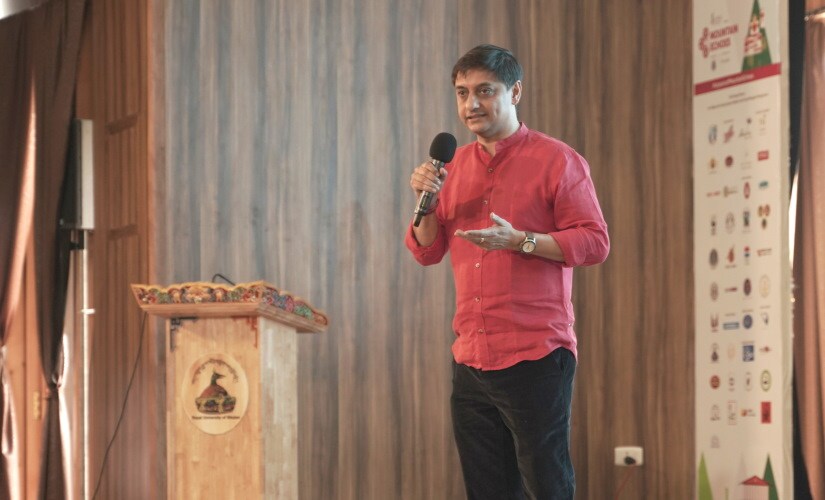 Sanjeev Sanyal discusses the impact of the Indian Ocean on world history. All images courtesy of Mountain Echoes[/caption] From the trade of the Indus Valley Civilisation with the Persian Gulf, to voyages from Odisha and Bengal first along the East coast and then to Sri Lanka and other parts of South East Asia, Sanyal illustrated how this part of the world was ‘globalised’ centuries before the term was even coined. The stories were colourful, from a Gujarati merchant in Oman who helped the locals to free themselves from the Portuguese, to how the first mention of India in South East Asian texts was found in Vietnam – the record of a marriage alliance between a Naga tribe queen and the captain of a ship sailing through the Mekong Delta. Perhaps the most enlightening session on Day 1 featured Vanessa R Sasson and Dr Tashi Zangmo. Sasson is a professor of religious studies in Canada and the author of Yasodhara: A Novel About Buddha’s Wife. She spoke about her experience of writing about Prince Siddhartha’s wife, an individual who is central to his story but remains relatively unknown. “I wanted to write a love story. Siddhartha and Yashodhara were reborn at the same moment across lifetimes. It’s not just a love story, it’s the ultimate love story, “ she said. Describing the protagonist of her book as audacious and fiery, Sasson says that she had to build the plot using Buddhist texts and fill up gaps where there were no references or information, such as rituals concerning girls. “We’re so focused on Siddhartha becoming the Buddha that we forget he was a husband and father,” she said, while narrating the story of how he left the palace at night. When asked if whether retellings of ancient epics and mythology can help re-interpret texts from newer, often ignored perspectives or if this endeavour leads to further complication, she said, “I think we should not shy away from complexity. These texts are made to be told and re-told. If they weren’t so rich, we wouldn’t find material to base our new interpretations on.” [caption id=“attachment_7218021” align=“alignnone” width=“825”] 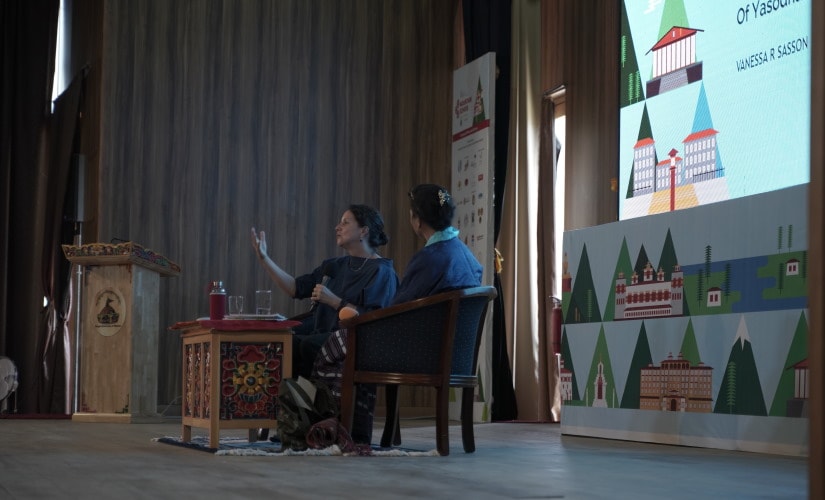 Vanessa R Sasson and Dr Tashi Zangmo[/caption] Journalist and author Tony Joseph spoke about his book Early Indians, with an emphasis on how all of our genetic identities are mixed. “All major population groups are caused by multiple migrations… We should avoid using the word ‘invasion’ in the context of the Aryans because of the new evidence that has emerged: The Harappan civilisation declined due to a drought, not an invasion,” he said. He added that the Harappans are ancestors of both North and South Indians, contrary to popular opinion. “Our understanding of history is partial, not respectful enough. The way we study history is to distort it. We don’t relate to our own history,” he said about the state of scholarship in the country. [caption id=“attachment_7218031” align=“alignnone” width=“825”] 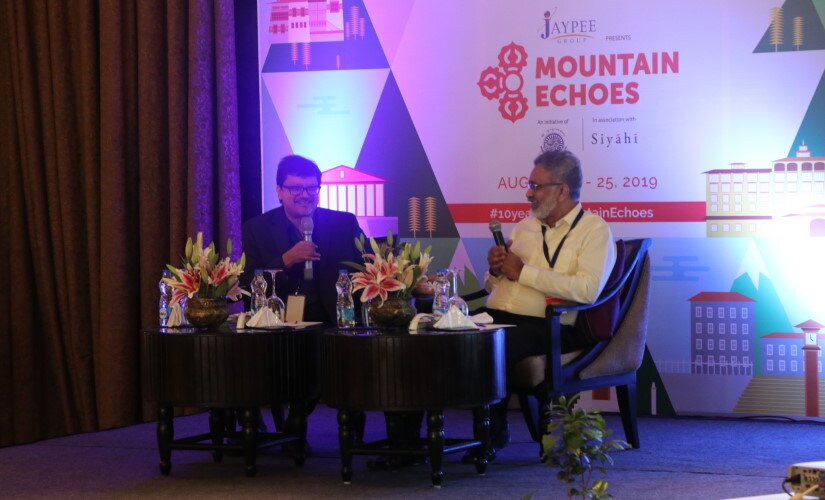 Tony Joseph spoke about his book Early Indians[/caption] Punctuating the discussions and talks were experiences that brought us closer to everyday life in Bhutan. On a walk between venues, festival volunteer Chimi told us about how his name means ‘the one who will not die’ – “A powerful name but it cannot be true!” he quipped. In the morning, a group of nuns dedicated a song to the late father of the Queen Mother Ashi Dorji Wangmo Wangchuck – a song that sounded like a string of chants, sung with a delicate lilt. Musician Kheng Sonam Dorji gave the audience a glimpse into the life of the man who created Bhutan’s national anthem – Aku Tongmi, who was a pioneer in the field of music in the country. He started Bhutan’s first brass band and was among the country’s first artists to record their music. Dorji is also the curator of an ongoing exhibition at the literature fest about Bhutan’s music. On display are a variety of instruments, some of which are many centuries old. “Music is woven into the very life of Bhutan. The instruments are made of objects found in nature, sometimes they do not involve any intervention and are used as they appear naturally. Sadly, despite a rich tradition of religious and folk music, the youth isn’t taking great interest in the art form, instead preferring Bollywood’s love songs,” he laments. [caption id=“attachment_7218051” align=“alignnone” width=“825”] 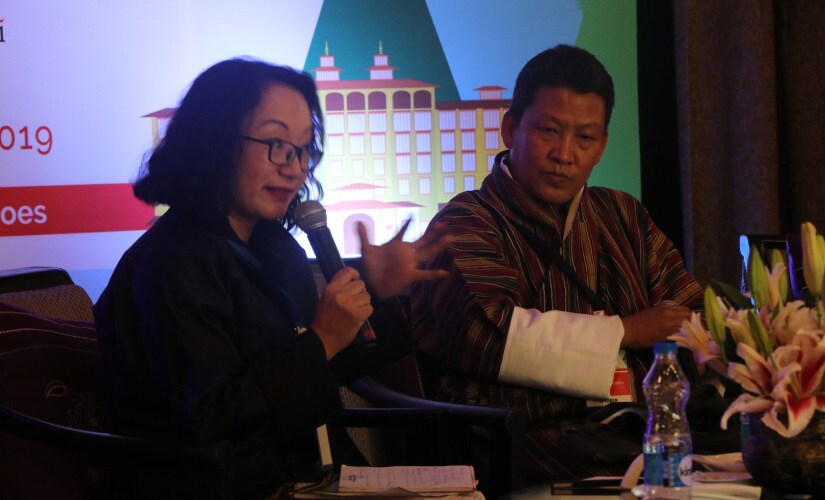 Musician Kheng Sonam Dorji (right)[/caption] In ‘Hindinama’, Pavan K Varma, Vani Tripathi Tikoo and Rahul Mahajan spoke about the issues that ail the Hindi language’s existence and future, and ways to ensure it is preserved. Mahajan spoke about the classist bias towards Hindi, that many see it as the language of non-elites. “Many people think social status is associated with fluency and accent… If you can speak clearly in the language you are comfortable in, it is enough,” Varma asserted, adding that all languages should be respected. The panellists discussed the issues that plague Hindi publishing, particularly the rapidly falling number of books that are sold and the inability of writers to earn adequately. “Badly written English has a market, while well-written books in regional languages suffer,” Varma said. He was of the opinion that English should not be the lingua franca in a country which is home to rich linguistic diversity. Tripathi Tikoo said that the current generation is not to be blamed for having limited knowledge about Hindi. “The fault is of the previous generation who could not cultivate a reading and writing culture.” Day 2 promises a variety of conversations – about food, Mount Everest, novel writing and artificial intelligence.
Diverse conversations that find a place at the Mountain Echoes festival on Day 1 — from Sanjeev Sanyal discussing the impact of the Indian Ocean on world history to Vanessa R Sasson talking about her experience of writing about Prince Siddhartha’s wife.
Advertisement
End of Article

 "Israel targets top Hamas leaders in Doha; Qatar, Iran condemn strike as violation of sovereignty")
 "Nepal: Oli to continue until new PM is sworn in, nation on edge as all branches of govt torched")
 "Who is CP Radhakrishnan, India's next vice-president?")
 "Israel informed US ahead of strikes on Hamas leaders in Doha, says White House")
 "Israel targets top Hamas leaders in Doha; Qatar, Iran condemn strike as violation of sovereignty")
 "Nepal: Oli to continue until new PM is sworn in, nation on edge as all branches of govt torched")
 "Who is CP Radhakrishnan, India's next vice-president?")
 "Israel informed US ahead of strikes on Hamas leaders in Doha, says White House")



](https://images.firstpost.com/wp-content/uploads/2019/08/01.jpg)
](https://images.firstpost.com/wp-content/uploads/2019/08/02.jpg)
](https://images.firstpost.com/wp-content/uploads/2019/08/03.jpg)
](https://images.firstpost.com/wp-content/uploads/2019/08/04.jpg)