

 "Leslie Howard on two-piano concerts, playing in India and being the only person to record the entire works of Liszt")
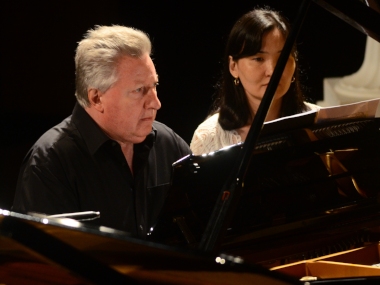
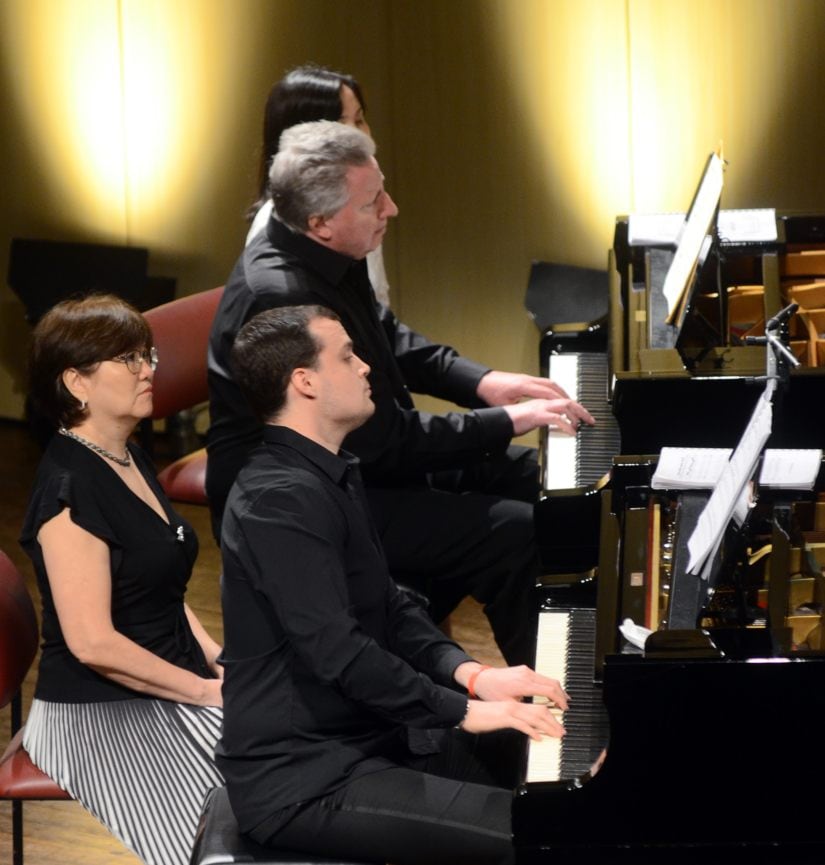
The notes were woven together seamlessly, layers of harmony taking shape as eminent pianists Dr Leslie Howard and Ludovico Troncanetti played on two pianos at the National Centre for Performing Arts (NCPA) in Mumbai on 5 April. The sound that the pair creates together is akin to a cloth made of two different but equally beautiful fabrics: They intermesh to create layers that ultimately materialise into a comprehensive whole. The duo has played together on numerous occasions and in various formats, and sound absolutely flawless. So it was no surprise when, at the end of their performance in Mumbai, the audience applauded Howard and Troncanetti for so long that the artists obliged them with an encore. Neither Howard nor Troncanetti had ever played for an Indian audience before, and they had little knowledge of what to expect — save for what little Howard had gathered from his Indian students over the years. So they chose their program carefully: pieces that are written “in a simple musical language and sound popular”, even if people weren’t aware of them. The program included pieces like the Rubinstein Fantaisie Op. 73 and Liszt Reminiscences de Norma S 655, as well as works by Mozart-Grieg and Arensky. Two-piano concerts – a pleasure and conundrum Playing a two-piano concert comes with an inherent challenge: Both players need to be able to play in sync with each other. “You can’t just decide to do something different, because you now have someone playing with you,” said Howard, “You need to be able to be attentive and see what the other person is playing and go accordingly.” None of that is required when playing solo, as it is up to the individual artist to play as they wish, to slow down the tempo of the piece or change the mood. [caption id=“attachment_6451271” align=“alignnone” width=“825”]
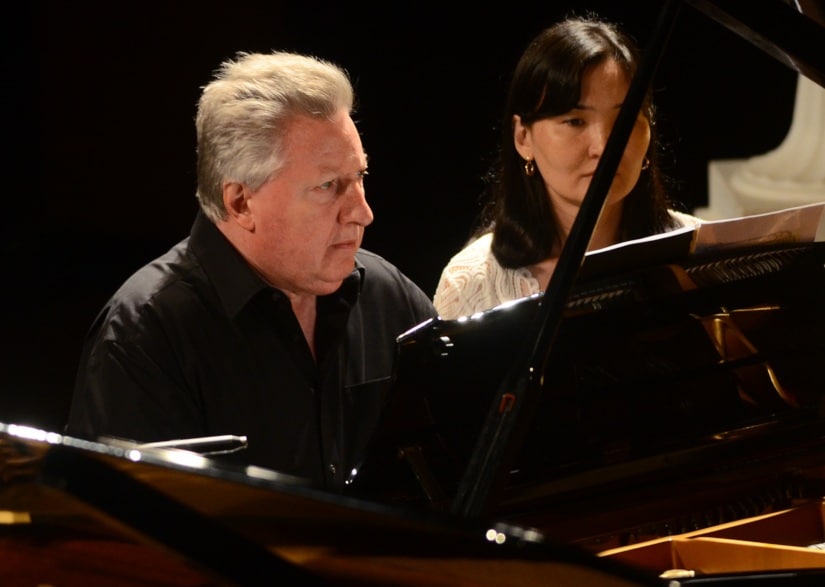 Leslie Howard in performance, in Mumbai. All images courtesy of the NCPA[/caption] Despite the musical experience they offer, two-piano concerts also aren’t as popular as solo ones because of the extra expenses attributed to using two pianos. Howard also mentioned that it is difficult to find a hall that houses two pianos, let alone ones that are in decent condition. On mentorship and the need for music education A world-renowned pianist, musicologist, and composer, Howard has found through experience that performing with emerging players is important. He feels it gives them a platform to gain recognition in classical music circles and helps further their careers. This is part of the reason why he played with Ludovico Troncanetti. Priorly, Troncanetti was his student before beginning to play four-hand pieces and two-piano concerts with Howard. “There is a lot to learn from teaching students, but I am unable to teach full-time because of my schedule.” He does, however, teach master classes at the Royal College of Music and instructs students of a certain proficiency with the piano. Howard is also of the opinion that both governments and modern society give little importance to the education and practice of classical music. He remarked that most people learn with the end goal of making money. While learning subjects like Math and languages is important, so is music; it provides a complete education, he said. “Music,” he added “also gives one the ability to understand and relate to things in a different way.”
Pianism is a dying tradition, says Leslie Howard, as fewer students and quality performers are emerging as the years go by
Advertisement
End of Article

 "Israel targets top Hamas leaders in Doha; Qatar, Iran condemn strike as violation of sovereignty")
 "Nepal: Oli to continue until new PM is sworn in, nation on edge as all branches of govt torched")
 "Who is CP Radhakrishnan, India's next vice-president?")
 "Israel informed US ahead of strikes on Hamas leaders in Doha, says White House")
 "Israel targets top Hamas leaders in Doha; Qatar, Iran condemn strike as violation of sovereignty")
 "Nepal: Oli to continue until new PM is sworn in, nation on edge as all branches of govt torched")
 "Who is CP Radhakrishnan, India's next vice-president?")
 "Israel informed US ahead of strikes on Hamas leaders in Doha, says White House")



](https://images.firstpost.com/wp-content/uploads/2019/04/LeslieHoward-1.jpg)