

 "More flights, relaxed visa rules: Flying in Asia-Pacific to be easier, says report")
If Asia-Pacific has been sitting high on your travel wishlist, the timing may be finally lining up. Passenger demand across the Asia-pacific region continues to surge. Travellers are feeling it in the form of busier airports and expanding route maps.
International Air Transport Association (IATA) forecasts global passenger traffic to grow 4.9 per cent year-on-year in 2026 likely to be led by Asia-Pacific air travel.
While this marks a slight slump from 2025, it reflects strong and sustained travel demand rather than weakening interest. As of October 2025, global passenger traffic had already risen 5.3 per cent compared to the previous year.
For travellers, this growth means more flight routes and improved connections, particularly within Asia-Pacific. Markets such as China, India and Vietnam are driving both domestic and international travel, fuelled by growing middle classes and rising tourism demand. As airlines rebuilt networks, regional travel is set to benefit the most.
Asia-Pacific is home to eight of the world’s top 15 trending summer travel destinations, according to Travel trends 2025, the annual Mastercard Economics Institute (MEI) report on consumer spending in the travel economy.
That said, travellers should expect fuller flights. Limited aircraft availability and labour shortages continue constrain supply, keeping load factors at record highs. While planes may be busier, these constraints are also pushing airlines to focus on reliability and efficiency rather than rapid chaotic expansion.
The improving financial health of airlines could also translate into a more stable travel experience. IATA expects airlines to post a combined $41 billion profit in 2026, with a net margin of 3.9 per cent.
According to IATA Director General Willie Walsh, this profitability reflects the industry’s ability to absorb shocks from rising costs, geopolitical tensions and supply chain disruptions.
In Asia-Pacific, airlines are projected to post a net profit of $6.6 billion in 2026. China and India remain key growth engines, backed by strong economic outlooks, For travellers, this supports continued route expansion and better connectivity, even as airlines remain cautious about aggressive discounting.
Some long-haul travel constraints remain. Flights between the United States and China are still limited by bilateral caps, keeping frequencies well below pre-Covid levels. However, regional connectivity is seeing meaningful progress.
Direct flights between China and India have resumed after a five year suspension, restoring a key corridor that once carried nearly one million passengers annually. The move is expected to reduce travel time and costs for business travellers, students and tourists.
Visa policies are also making travel smoother. South Korea has temporarily introduced visa free entry for Chinese group tourists while China has expanded visa free access as part of its broader reopening. These changes are likely to boost short-term tourism, especially during peak holiday periods.
For those hoping this growth will bring cheaper airfares, IATA does not indicate any such relief. With high demands and constrained capacities, airlines are prioritizing stable pricing over fare wares.
The bottom line for travellers? Asia-Pacific travel is opening up in tangible ways. With more routes, better regional links and temporary relaxed visa rules reflect towards a smoother travel experience.

 "Zelenskyy says he will meet Trump in ‘near future’, hopes for peace breakthrough 'before New Year'")
 "Why did Trump order strikes on Islamic State targets in Nigeria?")
 "Who was Shivank Avasthi, the Indian student shot dead near Toronto University campus?")
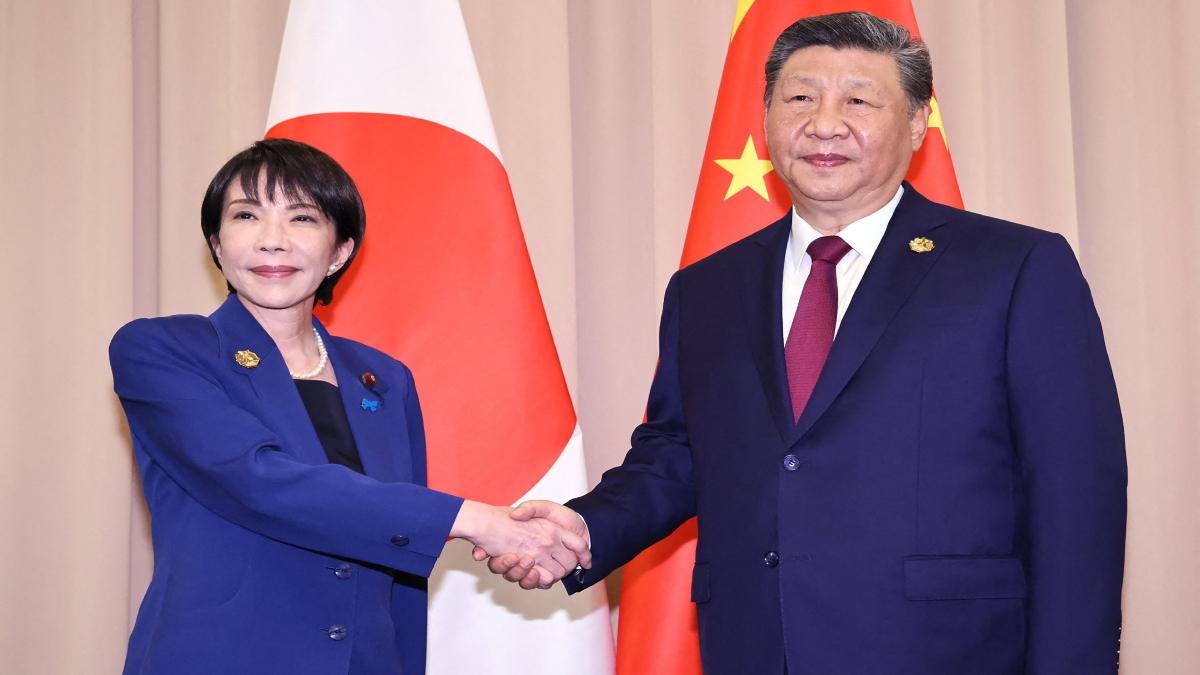 "Taiwan remarks hurting Japan's tourism sector, Takaichi says 'door remains open' for China")
 "Zelenskyy says he will meet Trump in ‘near future’, hopes for peace breakthrough 'before New Year'")
 "Why did Trump order strikes on Islamic State targets in Nigeria?")
 "Who was Shivank Avasthi, the Indian student shot dead near Toronto University campus?")
 "Taiwan remarks hurting Japan's tourism sector, Takaichi says 'door remains open' for China")



