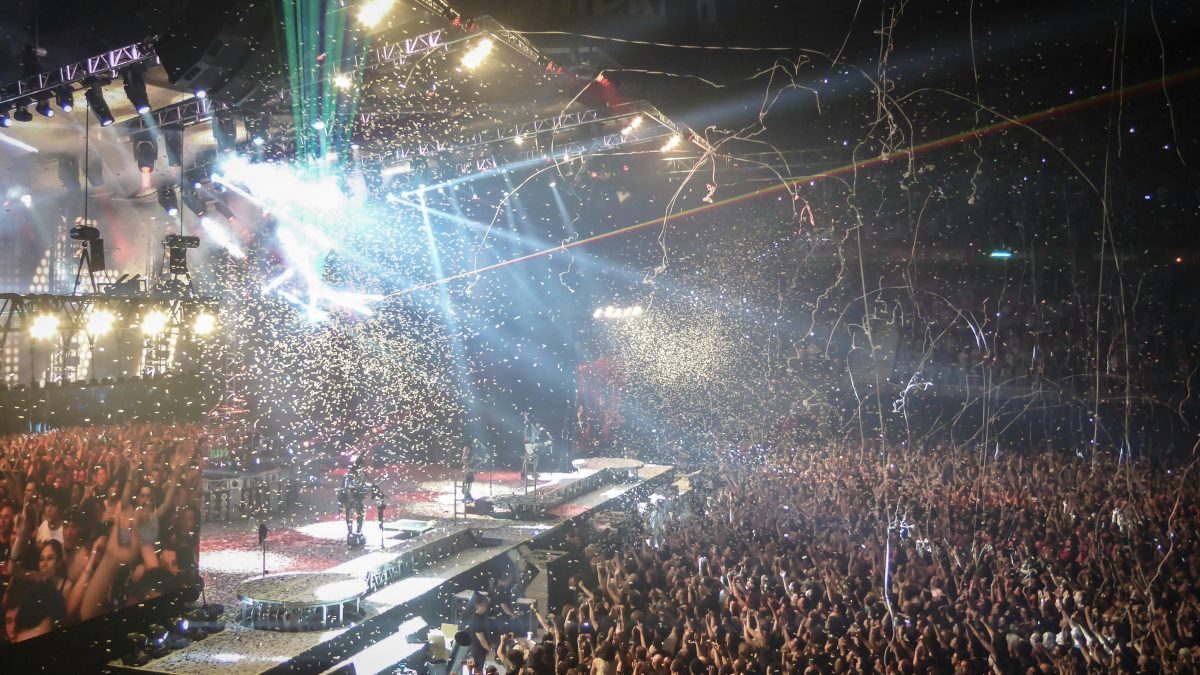
 "From stadiums to small cities, live concerts are turning into big business in India")
Not long ago, live concerts in India were seen as occasional indulgences: big-city spectacles that arrived once in a while, sold out quickly, and disappeared just as fast. In 2026, that perception no longer holds. What was once a niche cultural event is fast turning into one of India’s most powerful entertainment engines, reshaping how audiences spend money and even mark time.
From stadium-filling global tours to sold-out domestic acts and multi-city festival circuits, live music has become a defining feature of India’s lifestyle economy. And unlike films or streaming platforms, concerts offer something that cannot be replayed, or scrolled past: presence.
From occasion to lifestyle
Recent industry estimates value India’s live entertainment market at over ₹20,800 crore, with projections suggesting it could nearly double by the end of the decade. But numbers alone don’t explain what’s changed. The real transformation lies in audience behaviour.
A major shift is underway in how Indian audiences, especially younger ones, consume entertainment. For Gen Z and young millennials, concerts are no longer “special occasions”; they are social rituals. Travel plans are being built around tour dates, friendships around shared fandoms, and savings around ticket drops.
Industry observers note that India’s live entertainment sector is now growing at double-digit rates, fuelled by rising disposable incomes, improved infrastructure, and a cultural turn towards experiences over ownership. The result is a concert economy that now rivals cinema and digital content in influence, if not yet in scale.
India joins the global touring circuit
A major reason behind this momentum is India’s new status on the global touring circuit. International artists who once bypassed the country now see it as commercially and culturally viable. Stadium-scale concerts, once considered risky, are proving otherwise.
Take Coldplay’s India shows, which reportedly generated an estimated ₹600+ crore in economic impact when accounting for travel, hospitality, food, local transport and merchandise. That figure matters not just for scale, but for what it reveals: concerts function as economic multipliers, not isolated performances.
Domestic artists are scaling up, too. Punjabi pop stars, indie bands, electronic producers and regional performers are selling out multi-city tours, demonstrating that fandom-driven concert culture is no longer dependent on Western acts alone.
Quick Reads
View AllBeyond the metros
Another quiet but important shift is geographic. While Delhi, Mumbai and Bengaluru remain key markets, live music demand is spreading to Tier-II and Tier-III cities. Shillong, Guwahati, Pune, and Ahmedabad are increasingly part of national touring routes, drawing audiences willing to travel across states. These cities have hosted big international acts like Post Malone, The Script, Ed Sheeran, alongside homegrown stars, turning local venues into hubs of major live music culture.
This expansion has cultural consequences. Concerts in non-metro cities are not just entertainment imports; they become local moments tied to regional pride, youth culture and community gathering. The concert economy is no longer centralised, and that decentralisation is part of its strength.
The ecosystem grows up
Behind the scenes, the business of live entertainment has matured. Ticketing platforms now derive a significant share of their revenue from live events. Brands are investing heavily in concert sponsorships, viewing them as spaces of high cultural credibility rather than loud advertising zones. Even policymakers are beginning to treat concerts as tools of tourism and soft power.
The Ministry of Information & Broadcasting recently launched a Live Events Development Cell, aimed at supporting structured growth, streamlining permissions and positioning India as a global hub for live entertainment by the end of the decade. The move signals a broader shift in how concerts are perceived, not as occasional spectacles, but as cultural and economic infrastructure.
Why concerts resonate now
In an era dominated by streaming platforms and infinite content, live concerts offer something increasingly rare: collective presence. Thousands of people sharing a moment that cannot be paused, replayed or algorithmically curated.
For younger audiences especially, concerts are where music, fashion, travel and identity intersect. They are spaces of self-expression, community and memory. Social media may amplify these moments, but the value lies in physical attendance, in being there.
This emotional intensity is precisely why audiences are willing to pay premium prices, travel long distances, and plan months in advance.
Looking ahead
As 2026 unfolds, live concerts are no longer a cultural afterthought in India’s entertainment economy. They are shaping consumption patterns, city economies and youth culture in ways cinema once did.
If the last decade belonged to streaming, the next may belong to stages and shared sound. Loud, fleeting and unforgettable, live concerts are not just back. They are becoming big business.

 "Economic Survey 2026 Live Updates: ‘Trade no longer reciprocal, markets no longer neutral’")
 "With new security pact, India and EU eye win-win defence ties as US, China rival in arms race")
 "Did the IAF bomb Pakistan’s Kirana Hills during Op Sindoor? A video suggests…")
 "Robust growth, record demand and low inflation: Key takeaways from Economic Survey 2026")
 "Economic Survey 2026 Live Updates: ‘Trade no longer reciprocal, markets no longer neutral’")
 "With new security pact, India and EU eye win-win defence ties as US, China rival in arms race")
 "Did the IAF bomb Pakistan’s Kirana Hills during Op Sindoor? A video suggests…")
 "Robust growth, record demand and low inflation: Key takeaways from Economic Survey 2026")