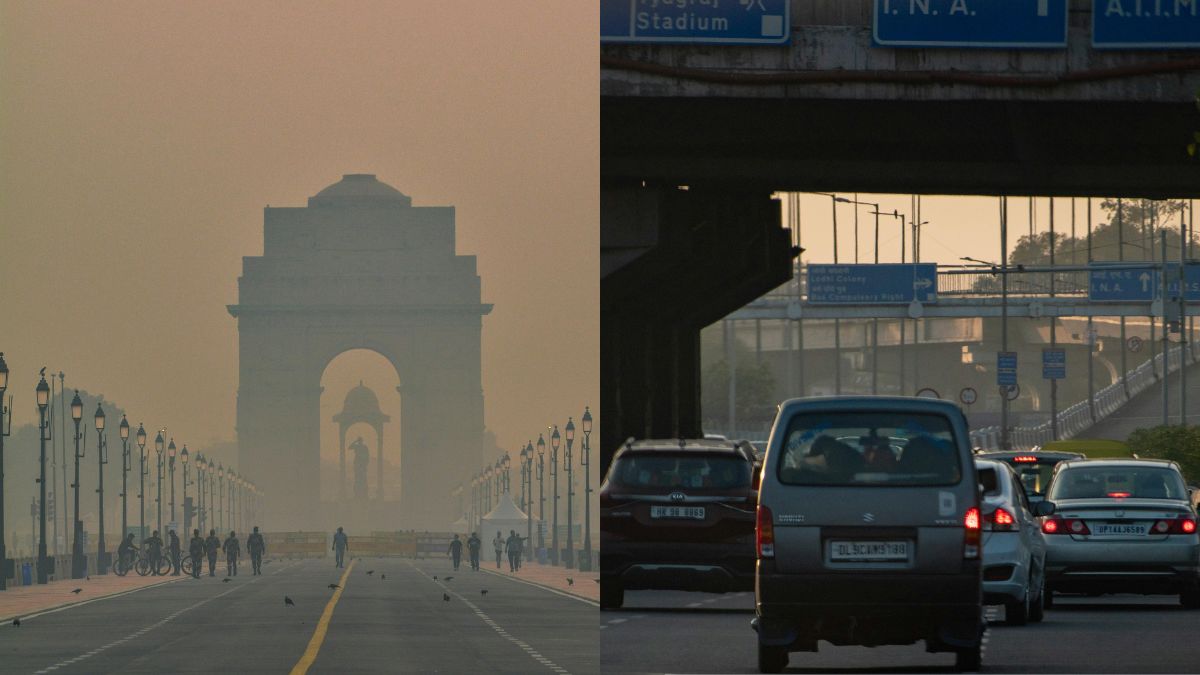
 "Delhi may get smog-eating roads soon — and the idea is surprisingly simple. Pexels")
Delhi’s battle with air pollution could soon take a futuristic turn. Yes, you read that right!
In a new initiative, the Delhi government has partnered with the Indian Institute of Technology (IIT) Madras to explore whether roads and buildings can actively help reduce smog levels.
What’s the idea?
At the heart of this project is a concept called “smog-eating surfaces” - materials that can break down harmful pollutants in the air.
The Delhi government and IIT Madras have signed an agreement to conduct a pilot study to test these surfaces across the city.
The goal is simple but ambitious: apply special coatings to roads, pavements, and buildings and let these surfaces neutralise pollutants as vehicles and people move through the city.
How does it actually work?
The technology relies on a process known as photocatalysis.
The coating contains materials like titanium dioxide (TiO₂), which when exposed to sunlight, becomes chemically active.
It then reacts with pollutants such as nitrogen dioxide (NO₂) and volatile organic compounds (VOCs), converting them into less harmful compounds.
In short, roads and surfaces could act like passive air purifiers, working continuously without electricity.
Where will this be used?
If the pilot proves successful, the technology could be applied across concrete and asphalt roads, building facades, glass and metal surfaces, and even panels mounted on rooftops or streetlights.
Researchers will first test the materials in a controlled lab environment, followed by real-world trials in Delhi to see how they perform under actual conditions.
What’s the timeline?
The study is expected to run for around six months, during which scientists will evaluate how effective the coatings are in reducing pollution, their durability in Delhi’s weather, and whether they are cost-effective for large-scale use.
If results are promising, the government could consider rolling out the technology across high-pollution areas in the city.
The bigger picture
While the idea of “roads eating smog” sounds futuristic, similar technologies have been tested in parts of Europe and other regions.
However, experts caution that results can vary depending on sunlight, traffic, and climate, and the technology is not a standalone solution, but part of a broader strategy.
Quick Reads
View AllAnuj is a senior sub-editor (lifestyle desk) at Firstpost who covers food, travel, health, and fitness, mostly because they’re all excellent excuses to leave the house. Powered by coffee, he spends his downtime airplane-spotting and exploring spirituality, hoping one day to understand both turbulence and the universe.