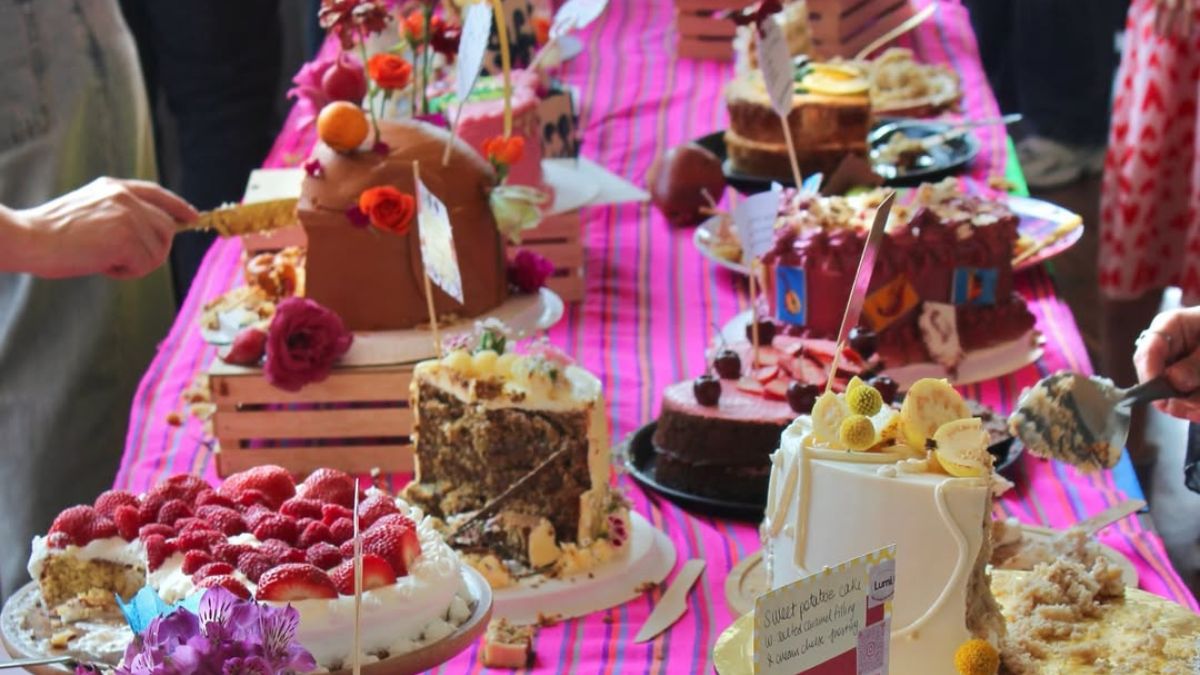
 "1000+ cakes, one rule: Inside the cake picnic trend taking over cities")
There are picnics, and then there are cake picnics, where the only rule is simple: no cake, no entry.
What started in San Francisco as a low-effort way to eat more dessert has turned into a global spectacle. When the trend landed in Melbourne last weekend, it wasn’t a small gathering; it was 1,600 cakes deep.
Rows of trestle tables stretched across Kings Domain, layered with everything from chocolate raspberry sponges to towering buttercream creations, all of it brought in by strangers and then, just as quickly, taken apart slice by slice.
From one baker’s idea to a global phenomenon
The cake picnic began in 2024 with Elisa Sunga, an amateur baker in San Francisco who, by her own admission, simply wanted to eat more cake than she had the patience to bake herself.
That impulse, low-stakes, slightly indulgent, has since scaled rapidly. The event has now travelled across multiple cities, with each iteration growing larger, looser and more visually overwhelming than the last. By the time it reached Melbourne, the numbers had tipped into the surreal. “Just think of how many ovens in Melbourne were being used,” Sunga said. “How much sugar, butter, flour… all of the love and energy poured into the cakes we are sharing.”
1,600 cakes, zero competition
Despite its scale, the event resists becoming a competition. There are judges, technically, including baker Alice Bennett, who goes by Miss Trixie Drinks Tea, but the point isn’t to win.
It’s to bring one cake and leave, having tried dozens.
“I’m aiming for 1,000, but I’ll be sad if I don’t get to taste at least 50,” Bennett joked, moving through rows of honey cakes topped with apple slices, matcha chiffons and elaborate vintage-style bakes. For attendees like Polly Stokes, who travelled over 600km with her daughter Milly, the appeal is less about showcasing skill and more about the atmosphere. “We’re here for the fun of it,” she said. “It’s such a beautiful, relaxed environment.”
Quick Reads
View AllA soft kind of chaos
If the premise is simple, the execution is anything but. Guests arrive in waves, dropping off cakes onto long white-clothed tables before being let loose with pizza boxes to collect slices. There are no strict queues, no slice limits and yet, somehow, it works.
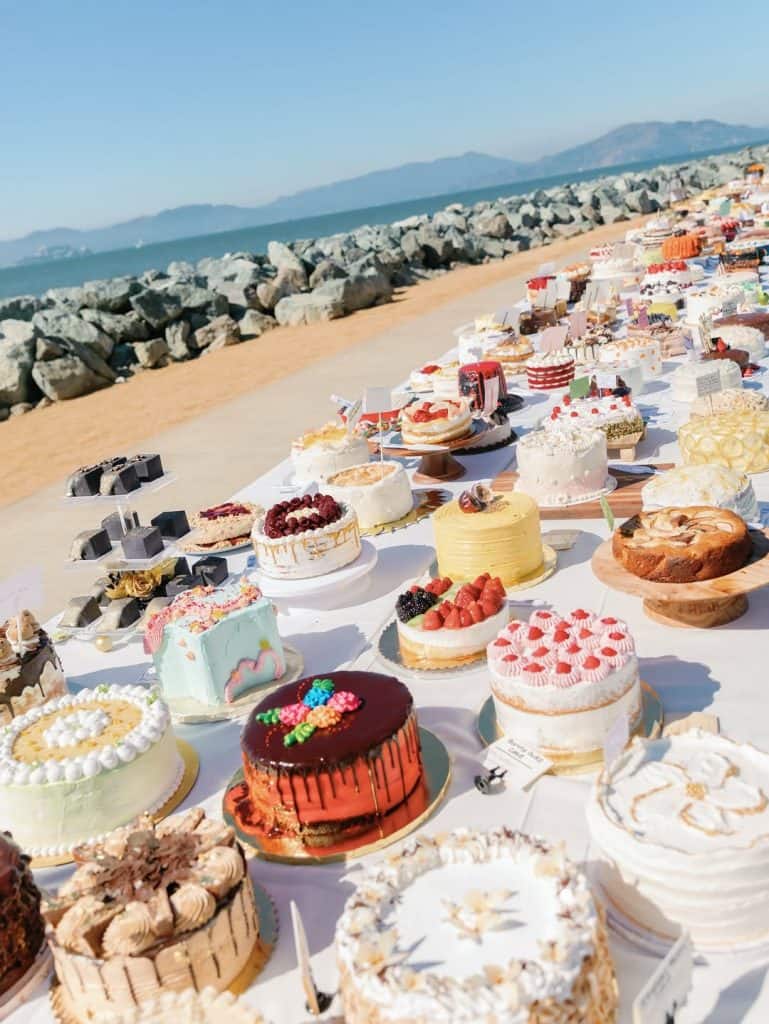
The Guardian described it as “cakenomic redistribution,” a system where everyone contributes, and everyone consumes, without hierarchy or pressure. Even the baking itself feels different. “When it’s for birthdays, it’s still labour,” said attendee Hannah Millicer. “This felt like we could do whatever we wanted.” Her cake — a chocolate fudge layered with blueberry jam and Swiss meringue buttercream — cost nearly $150 to make. “$28 on butter alone,” she added, laughing.
Why cake picnics are going viral
Part of the appeal is obvious: the visuals are irresistible. Gingham dresses, pastel icing, hundreds of cakes arranged in near-perfect symmetry. But the deeper pull is harder to quantify. In a culture defined by productivity, the cake picnic is deliberately purposeless. There’s no networking, no performance, no end goal beyond eating and sharing.
Sunga herself questions why cake is so often reserved for milestones. “Why not cake on a random Saturday in March?” she asked.
By the end of the day, after thousands of slices had been claimed and the tables stripped bare, she described the experience simply as a “sugar dream cake high”. The scale may keep growing — more cities, more cakes, more crowds — but the premise remains stubbornly small. Bring a cake. Share it. Eat as much as you can.