 "Why India is witnessing one of its coldest, wettest winters this year")
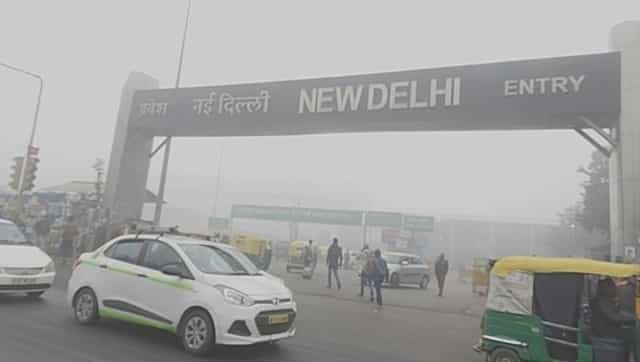
It was supposed to be a chilly winter, thanks to the La Nina weather phenomenon. And it turned out to be so, with Delhi recording this winter’s coldest day on Tuesday with the maximum temperature of 12.1°C. This was also the coldest day for the month of January since 2013, when the maximum temperature fell to 9.8-degree Celsius on 3 January 2013, at the Safdarjung weather observatory. Even Mumbai has witnessed its coldest January in a decade, with the minimum temperature dropping by 6-degree Celsius on Monday, and is expected to be at 14 degrees on Tuesday. The cold is expected to last for a few more days before temperatures rise again.
If weather officials are to be believed, the nip in the air is primarily because of a dust storm from neighbouring Pakistan, caused by a Western Disturbance — a storm system that forms in the Middle East and brings sporadic winter rain and snow to northern India in the first 10 days of January. The impact sometimes extends to parts of central India and even the western coast.
What’s a Western Disturbance?
A Western Disturbance is an extratropical storm or a cold front system that originates from the Mediterranean, Caspian and the Black sea. It moves from West to East with moisture carried on mid to upper atmosphere and also embedded in the mid-latitude subtropical westerly jet stream.
In India, the impact is observed annually but with more dedication during the winter months when they are the only source of snowfall over the Himalayas and rains in the plains of north India. It has great importance in agriculture particularly on Rabi crops.
In January 2022, north India was impacted by six Western Disturbances till the 24th of the month, out of which three turned out to be active and intense in nature. Two Western Disturbances in quick succession between 3 and 9 January brought above-average rain in most parts of northwest India. After a gap of about 10 days, fresh active Western Disturbance affected northwest India during 21-24 January leading to record-breaking precipitation across north India making it the wettest January ever for many stations.
Quick Reads
View AllAs per the data from Indian Meteorological Department (IMD), till 24 January northwest India recorded a total of 76.0 mm rainfall against the normal of 23.1 mm; this is 229 more than the normal rainfall.
January rainfall so far
• Himachal Pradesh: 166.4mm against the normal of 58.8mm, 183 percent more than normal.
• Jammu and Kashmir, Ladakh: 162.0 mm against the normal of 65.7mm, 147 percent above normal.
• Punjab: 104.1 mm against the normal of 12.2 mm, 753 percent departure from normal.
• Uttarakhand: 100.7 mm against the normal of 26.3mm, 283 percent departure from normal.
• Haryana, Chandigarh and Delhi: 70.2 mm against the normal of 9.0 mm, departure from normal is 679 percent.
• West Uttar Pradesh: 59.2 mm against the normal of 8.1mm, departure from normal is 631 percent.
• East Uttar Pradesh: 26.4mm against the normal of 8.4mm, departure from normal is 214 percent.
• East Rajasthan: 24.7 mm against the normal of 3.2 mm, 672 percent departure from normal.
• West Rajasthan: 24.2 mm against the normal of 2.2 mm, 1001 percent departure from normal.
Why wettest January in 2022
When a Western Disturbance approaches north India, a cyclonic circulation gets induced over the plains of Pakistan or India which changes the wind direction and moist southeast winds start blowing over the region.
The cyclonic circulation attracts moisture feeding southwest winds from the Arabian sea. This time between 3 and 9 January cyclonic circulation strengthens into a low-pressure area. Similarly, during the 21-24th January Western Disturbances, it became a well-marked low-pressure area. In such conditions, extreme moisture incursions can take place, resulting in excessive rainfall in plains and snowfall over the hills of north India.
Another global climate phenomenon that can be attributed to colder and wetter weather is persistent La Nina conditions. During a La Niña period, the sea surface temperature across the eastern equatorial part of the central Pacific Ocean will be lower than normal by 3–5°C.
Some interesting data from Northwest India in January so far:
Record January rainfall in north India stations
• Nahan: 288.6 mm (new all-time record (ATR) for January; previous 164.8 mm in 1979)
• Una: 210.2 mm (new ATR; previous 110.8 mm in 2012)
• Dharamshala: 202.3 mm; highest since 2005
• Sundernagar: 174.0 mm (highest since 2005; ATR 176.8 mm in 2004)
• Shimla and Manali: 146.3 mm and 193.0 mm respectively (both third highest since 2005)
• Katra: 302 mm (highest since 2012; ATR 305.4 mm in 2006)
• Jammu: 201.8 mm (highest since 2012; ATR 235.7 mm in 1950)
• Katra: 95.2 mm on 8 January (highest 24-hour rainfall since 2012; ATR 102.7 mm in 1981)
• Jammu: 83.5 mm on 8 January (new 24-hour record; previous 81.4 mm in 2000)
• Amritsar: 108.1 mm (highest at least since 2012; ATR 117.1 mm in 1957)
• Ludhiana: 105 mm (highest at least since 2012; ATR 203.5 mm in 1911)
• Patiala: 143.3 mm (new ATR; previous 108.6 mm in 1983)
• Delhi Palam: 110 mm (new ATR; previous 55 mm in 1973)
• Delhi Safdarjung: 88.2 mm (new ATR since 1901)
• Dehradun: 144.4 mm (highest at least since 2012; ATR 229.9 mm in 1911)
• Bikaner: 28.8 mm (highest at least since 2009; ATR 60.5 mm in 1894)
• Meerut: 103.4 mm (highest at least since 2012; ATR 144.8 mm in 1919)
• Chandigarh: 203.9 mm (new ATR; previous 166.6 mm in 1983)
• Hisar: 64.2 mm (highest at least since 2012; ATR 98.3 mm in 1954)
• Ganganagar: 52 mm (highest at least since 2011; ATR 58.7 mm in 1948)
• Churu: 35 mm (highest at least since 2010; ATR 37.8 mm in 1982)
• Jaisalmer: 28.8 mm (new ATR; previous 16.2 mm in 1971)
• Ajmer: 60.2 mm (highest at least since 2010; ATR 86.9 mm in 1948)
• Jaipur: 48.5 mm (highest at least since 2010; ATR 76.5 mm in 1948)
Weather forecast for the week
Mainly dry weather is expected across northwest India till 30 January. Between 27 and 30 January, a cold wave is expected to sweep the hills and plains of north India as very cold northwest winds from snow-clad mountains are expected to enter plains. The minimum temperature may fall below 5.0°C in Delhi and Uttar Pradesh; below 3.0°C is Haryana and Punjab; and 0°C or even below in some parts of Rajasthan. There are chances of sunshine from Thursday/Friday onwards but the bone-chilling cold may persist.
The author, better known as the Rohtak Weatherman, interprets and explains complex weather patterns. His impact-based forecasts @navdeepdahiya55 are very popular in north India.
Read all the Latest News, Trending News, Cricket News, Bollywood News,
India News and Entertainment News here. Follow us on Facebook, Twitter and Instagram.

 "Zelensky suggests 'trilateral' talks between Russia, US, Ukraine in UAE")
 "Trump finds new raid target? Report says US actively seeking regime change in Cuba by 2026-end")
 "Power shift in Hanoi: Vietnam party list hints PM and president losing clout")
 "Can Trump’s Board of Peace replace the United Nations?")
 "Zelensky suggests 'trilateral' talks between Russia, US, Ukraine in UAE")
 "Trump finds new raid target? Report says US actively seeking regime change in Cuba by 2026-end")
 "Power shift in Hanoi: Vietnam party list hints PM and president losing clout")
 "Can Trump’s Board of Peace replace the United Nations?")