

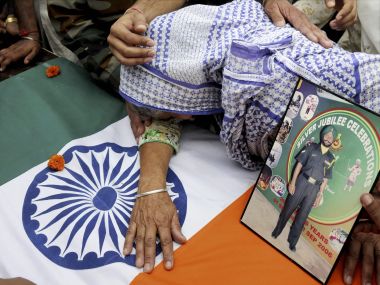
 "Soldiers beheaded at LoC: Pakistan cannot be allowed to blackmail India, test its red lines to buy peace")
There are currently two assumptions behind Pakistan army’s decapitating of two Indian soldiers in the Krishna Ghati sector of Poonch on Monday. The act, a flagrant violation of all international norms and conventions, is considered extremely provocative and serves as an open invitation for retaliatory violence. Pakistan army has carried out such barbarisms in the past (1999, 2000, 2013, and twice in 2016). None of these instances have gone unanswered. The Pakistan army has slipped into habitual denial but unless the Indian soldiers at the LoC decapitated themselves, the denial is meaningless. Details of the act and overwhelming evidence point to Pakistan army’s collusion and even active involvement. In a media statement, on Wednesday, shortly after Pakistan envoy Abdul Basit was summoned,
India’s Ministry of External Affairs said: “It was significant that the attack was preceded by covering fire from Pakistani posts in Battal sector. Blood samples of the Indian soldiers that have been collected and the trail of blood on Roza Nala clearly shows that the killers returned across the Line of Control.” [caption id=“attachment_3421632” align=“alignleft” width=“380”] Late Naib Subedar Paramjit Singh’s mother mourns near her son’s body. PTI[/caption] There is little doubt that Constable Prem Sagar and Naib Subedar Paramjit Singh, who had gone to verify some intelligence about landmines being planted on the Indian side of LoC, were ambushed by Pakistan’s Border Action Team that had earlier sneaked in under heavy cover fire from rival army posts. This is clear. The pertinent question is, why is the Pakistan army risking an escalation of conflict with India at this time? One of the reasons, as discussed in
my previous column , could be that Pakistan army felt threatened by Nawaz Sharif’s hosting of Sajjan Jindal. The Indian businessman is reportedly close to both Narendra Modi and the Pakistan prime minister and the Sharif-Jindal meeting was widely interpreted in Pakistan as a back-channel device to cool the heat around Kulbhushan Jadhav. The Pindi khakis want nothing more than to retain their status as Pakistan state’s sole power broker and one way of sabotaging Jindal was to re-escalate the conflict. Praveen Swami of The Indian Express writes of a second possibility. Quoting sources, he says the act could have been authorised by Pakistan Army chief General Qamar Javed Bajwa — who visited Pakistani military position on 30 April in Haji Pir — as a retaliation for the deaths of seven to 10 Pakistani soliders in an 17 April Indian artillery assault. Which brings us to the central question. If the act of barbarism is a provocation and is sure to invite some sort of Indian reprisal, what gives Pakistan army the stomach for escalation against an army that is considerably more powerful? Failure of India’s successive political establishments to tackle this question central to Pakistan’s asymmetric warfare has resulted in the situation that we find ourselves in now. Pakistan is forever pushing the envelope of India’s tolerance because it feels that the bar has been set higher each time. Its army, which in all purposes is synonymous to the state, is turning an ideological war into a tactical victory because India is inconceivably bound by a moral burden and has shown an unbelievable willingness to be blackmailed on this count. In dealing with an adversary that respects no rules, conventions or norms and is bound by no compunctions, moral or ethical, India has shown a marked failure in being agile. General Shankar Roy Choudhary, one of our most decorated war heroes, was roundly criticised when he proposed setting up of India’s own fidayeen squads following the Uri attacks. This is the problem. As a nation we are so intoxicated by the prospect of taking the moral high ground that we lose connection with reality. And the reality is that Pakistan army is fixated on an enduring rivalry with India. Do we lack the capability to teach Pakistan a lesson? No. Our problem is not capability but intent. We want “peace” against a neighbour that was born out of a two-nation theory and has since suffered from a pathological hatred of ‘Hindustan’. Its army, the self-appointed guardian of Pakistan’s Islamic identity, has made the ’eternal civilisational clash’ an existential and tactical necessity. This war is aimed not only at containing India’s rise as a regional hegemon — a project in which it gets Chinese help — but also at distracting people’s attention from deep structural inabilities that plague Pakistan. Finally, its revisionism on Kashmir, as Professor C Christine Fair’s argues in her seminal work Fighting to the End, is indicative of its nature as a fundamentally ‘greedy nation’ driven by the need to increase its stature, religion or ideology. Therefore, efforts from India to normalise relationship through talks or ‘strategic restraint’ is meaningless. Discussions can carry on till the next millennium but that won’t deter Pakistan from engaging India in the ’eternal war’ through all tools at its disposal, be it guerrilla tactics, low-intensity conflicts, Islamist proxies or terrorism (Fair, 2014). When the motive behind enmity is existential and ideological, ‘strategic patience’ will be interpreted as weakness and any concessions (even if territorial) will, instead of satisfying Pakistan, may increase its greed and lead to even more regional instability. To quote from Fair’s Fighting to the End, Oxford university Press, (Page 4), “Pakistan’s revisionism persists in regards to its efforts not only to undermine the territorial status quo in Kashmir but also to undermine India’s position in the region and beyond. Pakistan will suffer any number of defeats in its efforts to do so, but it will not acquiesce to India. This, for the Pakistan army, is genuine and total defeat.” It follows that the only way ahead for India is to either raise cost of Pakistan’s asymmetric war, or better still, carry out proactive, preemptive strikes while staying within the nuclear threshold. Pakistan’s task has been made simpler by the fact that India, instead of testing Pakistan’s army’s limits in this regard, suffers from a paranoiac fear of nuclear conflict. This is a self-imposed fear because Pakistan army, for all its ideological idiosyncrasies, isn’t stupid. The surgical strikes had provided ample proof to the extent that Pakistan army denied such a thing had happened to control the ladder of escalation. Put simply, Pakistan dares to provoke India time and time again because it is secure in the knowledge of India’s reluctance to test the boundaries of Pakistan’s nuclear rhetoric and limitations of political will. The key word here is political, not military. This self-imposed limitation has resulted in a psychological defeat for us. As Rajeswari Pillai Rajagopalan writes in Outlook, "… India should not fall for such hyped up fears of nuclear escalation. Pakistan is a rational actor that understands the limitations of nuclear weapons – the actual use of nuclear weapons is far difficult except under extreme circumstances. In addition, if Pakistan does use nuclear weapons, even tactical nuclear weapons against Indian forces in Pakistan-occupied Kashmir, the Indian nuclear doctrine suggests its response will be “massive”. Therefore, it is a not an easy decision for Pakistan to contemplate the actual use of nuclear weapons but certainly the rhetoric of the use has worked for them." This self-imposed limitation has also proved quite costly for India. We suffer from an inability to teach Pakistan the kind of lesson it deserves and consequently, we encourage it to further instabilise the region. In an article in War on the Rocks, Fair writes, “Nuclear weapons raise the cost of any Indian punishment because they pose the risk that any conflict can escalate to nuclear use. Second, they coerce the international community to intervene after any Pakistan-sponsored terror attack in India to persuade India not to escalate. This essentially protects Pakistan from the consequences of its action. Third, they permit Pakistan to blackmail the international community to continue providing lucrative economic bailouts that allow the state to continue with these dangerous policies. The sooner India comes out of this self-defeating tactic, the better it is for us and South Asian region. The important question is, does our political establishment have the intent and stomach for a fight? Posturing post Poonch raises no such prospects. Congress and BJP have looked more interested in collecting brownie points by milking the tragic incident instead of arriving at a consensus on national security. At the end of day, as R Jagannathan has written in Swarajya magazine, “
Pakistan Isn’t The Problem, It’s Us”.
The Pakistan army has slipped into habitual denial but unless the Indian soldiers at the LoC decapitated themselves, the denial is meaningless. Details of the act and overwhelming evidence point to Pakistan army’s collusion and even active involvement.
Advertisement
End of Article


 "US ready to ‘impose costs’ on Russia if war in Ukraine drags on, says Hegseth")
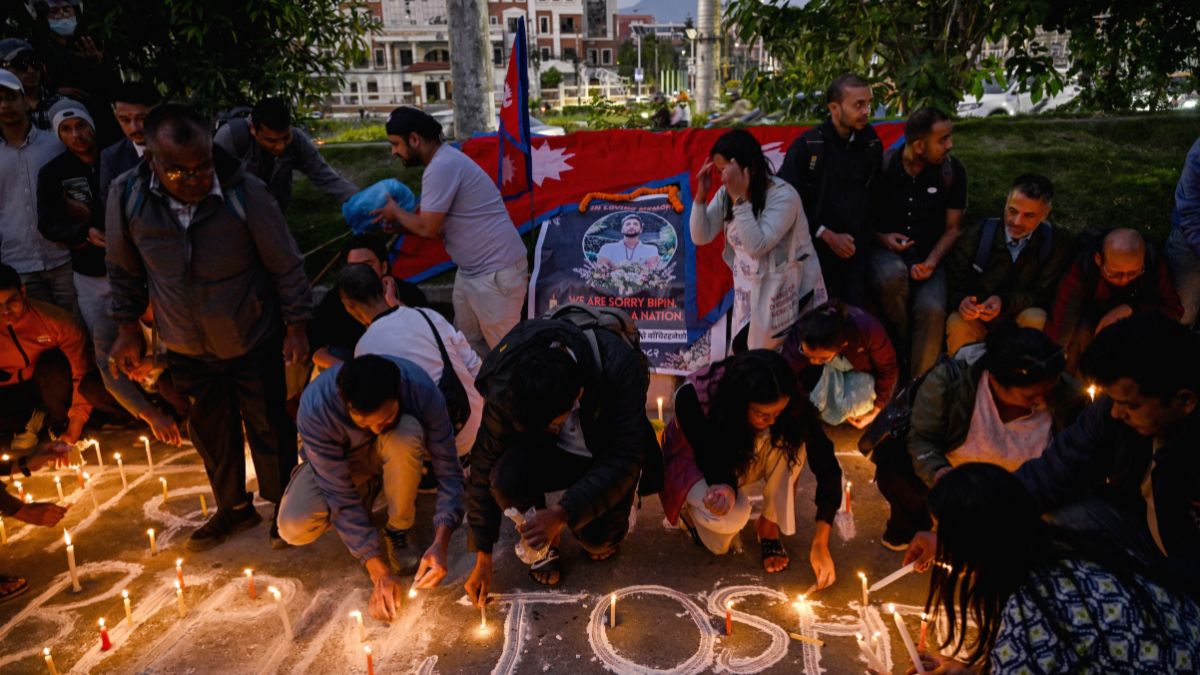 "US tells Hamas to stop violence against Gaza civilians and disarm 'without delay'")
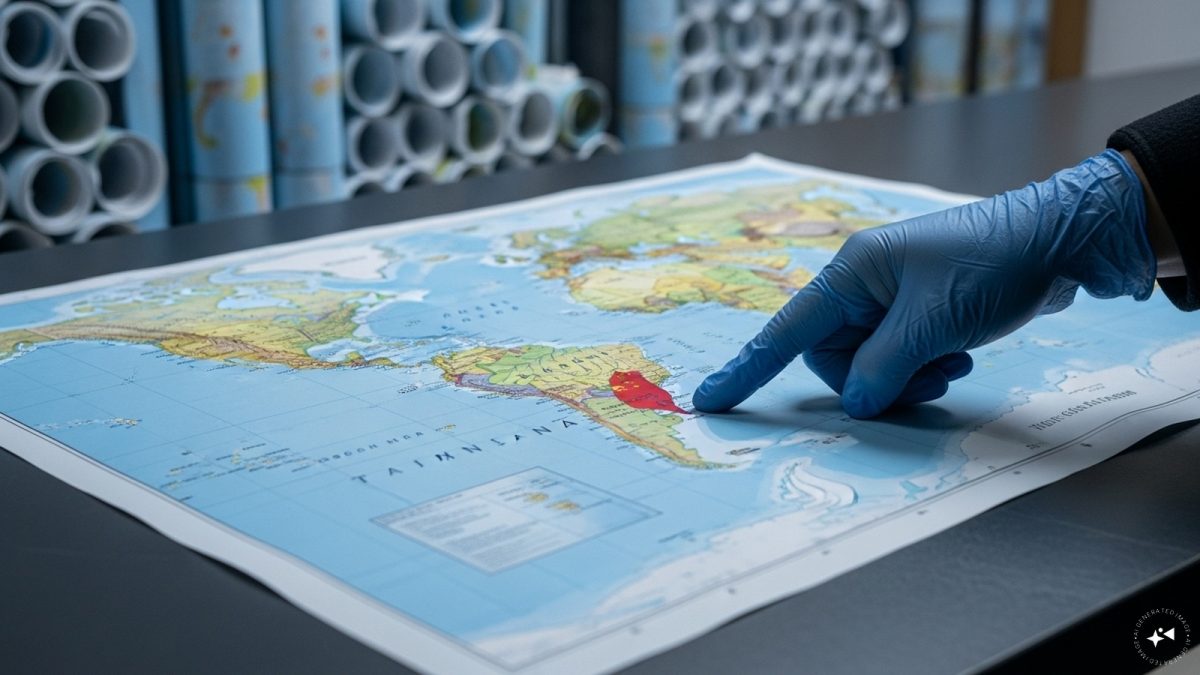 "China seizes 60,000 maps mislabelling Taiwan, omitting South China Sea islands")
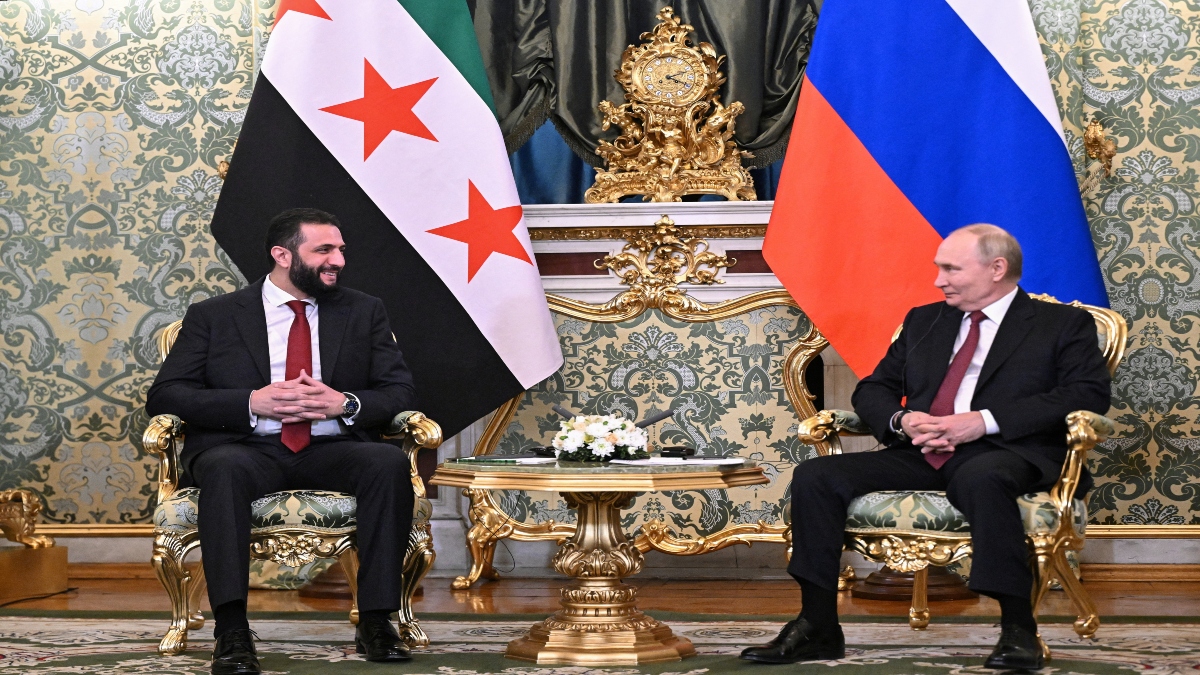 "Syria’s Sharaa pledges to honor Russia ties, seeks economic and military support in Kremlin visit")
 "US ready to ‘impose costs’ on Russia if war in Ukraine drags on, says Hegseth")
 "US tells Hamas to stop violence against Gaza civilians and disarm 'without delay'")
 "China seizes 60,000 maps mislabelling Taiwan, omitting South China Sea islands")
 "Syria’s Sharaa pledges to honor Russia ties, seeks economic and military support in Kremlin visit")



