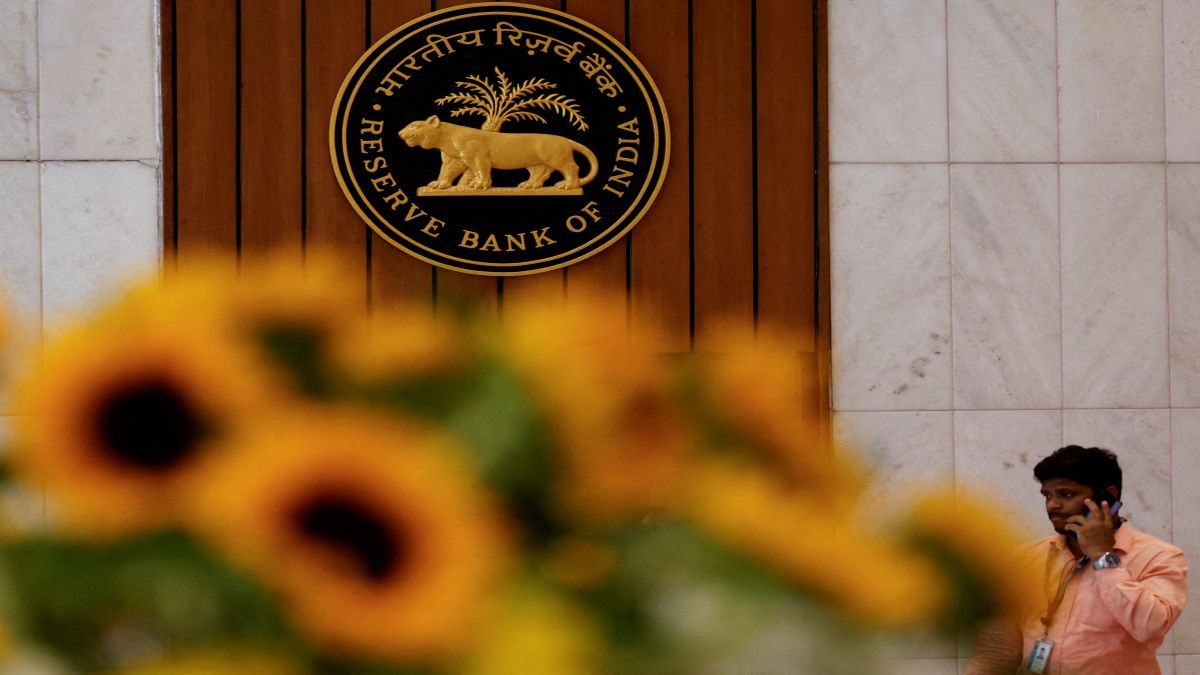
 "Representational image. Reuters")
According to a State Bank of India (SBI) report, the Reserve Bank of India (RBI) is projected to lower the repo rate by 50 basis points (bps) in its next monetary policy statement on June 6.
The report stated that a big rate decrease might help resuscitate the credit cycle, with the overall rate cut for the easing cycle potentially reaching 100 basis points.
SBI stated: “We expect a 50-basis point rate cut in June'25 policy as a large rate cut could reinvigorate a credit cycle”.
According to the report, the banking system’s liquidity is now in a prolonged surplus phase.
As a result, liabilities are being repriced more quickly throughout the ongoing rate-easing cycle. Banks have already reduced interest rates on savings accounts to a threshold of 2.70%.
In addition, fixed deposit (FD) rates have been decreased by 30-70 basis points since February 2025.
The research also stated that the transmission of rate cuts to deposit rates is projected to be robust in the coming quarters.
SBI reports that domestic liquidity and financial stability worries have subsided. Inflation is likely to stay within the RBI’s tolerance range.
Given this, the report says that maintaining the growth momentum should be the main focus of the monetary policy, which supports the case for a “jumbo” rate cut.
Impact Shorts
More ShortsOn the economic front, India’s GDP grew by 7.4 per cent in the fourth quarter of FY25, compared to 8.4 per cent in the same quarter of the previous fiscal year. From the expenditure side, this growth was mainly supported by a strong rise in capital formation, which saw a 9.4 per cent year-on-year increase.
The report also pointed out other positive developments such as the Indian Meteorological Department’s (IMD) forecast of an above-normal monsoon, strong arrival of crops, and falling crude oil prices. These factors have led SBI to revise its CPI inflation estimate for FY26 to around 3.5 per cent with a downward bias.
SBI further said that higher expected household savings, as mentioned in the latest RBI Annual Report, would be enough to fund the country’s growth without causing demand-driven price pressures in FY26.